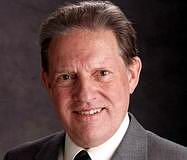
Byron Smith
Murderer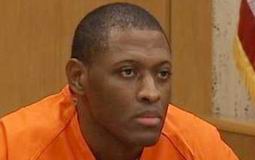 Leon Davis Jr.
Murderer · USA · 2007
Leon Davis Jr. was sentenced to death on April 29, 2011, for the execution-styl…
5 victims
Leon Davis Jr.
Murderer · USA · 2007
Leon Davis Jr. was sentenced to death on April 29, 2011, for the execution-styl…
5 victims
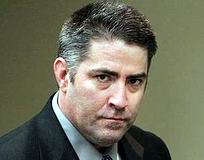 Raymond Lee Oyler
Murderer · USA · 2006
Raymond Lee Oyler was convicted for starting the 2006 Esperanza fire in Riversi…
5 victims
Raymond Lee Oyler
Murderer · USA · 2006
Raymond Lee Oyler was convicted for starting the 2006 Esperanza fire in Riversi…
5 victims
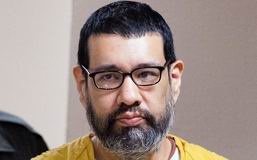 Anthony Garcia
Murderer · USA · 2008
Anthony Garcia was a former doctor who was found guilty on all counts including…
4 victims
Anthony Garcia
Murderer · USA · 2008
Anthony Garcia was a former doctor who was found guilty on all counts including…
4 victims
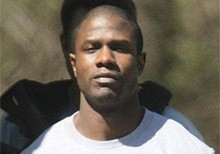 Brian Gene Nichols
Murderer · USA · 2005
Brian Gene Nichols was born December 10, 1971. He was known for his escape and…
4 victims
Brian Gene Nichols
Murderer · USA · 2005
Brian Gene Nichols was born December 10, 1971. He was known for his escape and…
4 victims
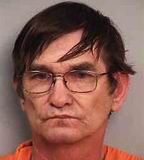 Bruce Mendenhall
Murderer · USA · 2007
Bruce Mendenhall grew up in Crawford County, Illinois. He was married and has t…
4 victims
Bruce Mendenhall
Murderer · USA · 2007
Bruce Mendenhall grew up in Crawford County, Illinois. He was married and has t…
4 victims
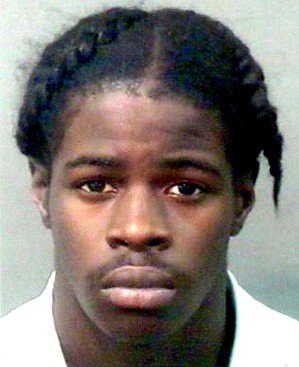 Demarcus Ralls
Murderer · USA · 2002
Demarcus Ralls Demarcus Ralls was 21 during his trial and testified in the pena…
4 victims
Demarcus Ralls
Murderer · USA · 2002
Demarcus Ralls Demarcus Ralls was 21 during his trial and testified in the pena…
4 victims
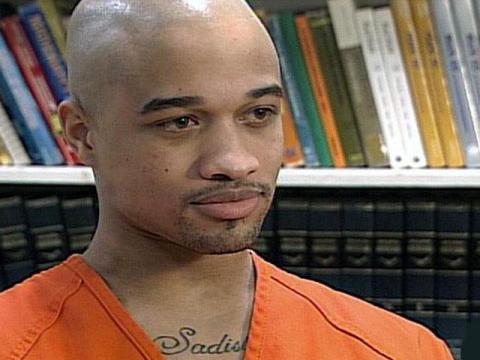 Ulysses Handy
Murderer · USA · 2006
Ulysses Handy III was 24 when he walked into court and entered pleas regarding…
3 victims
Ulysses Handy
Murderer · USA · 2006
Ulysses Handy III was 24 when he walked into court and entered pleas regarding…
3 victims
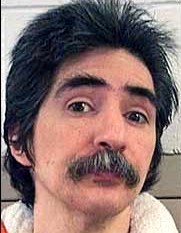 Roberto Arguelles
Serial killer · USA · 1992
Roberto Arguelles was serving a sentence for child molestation when he confesse…
4 victims
Roberto Arguelles
Serial killer · USA · 1992
Roberto Arguelles was serving a sentence for child molestation when he confesse…
4 victims
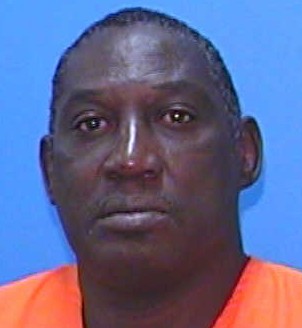 Roger Lee Cherry
Murderer
06/28/86 — Roger Lee Cherry murdered an elderly couple during the commission of…
1986 victims
Roger Lee Cherry
Murderer
06/28/86 — Roger Lee Cherry murdered an elderly couple during the commission of…
1986 victims
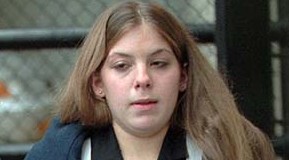 Amy Grossberg
Homicide · USA · 1996
Amy Grossberg (born 1978) dated Brian C. Peterson while both were students at R…
1 victim
Amy Grossberg
Homicide · USA · 1996
Amy Grossberg (born 1978) dated Brian C. Peterson while both were students at R…
1 victim
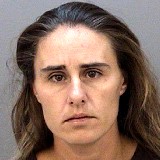 Christina Lyons
Murderer · USA · 2010
Christina Suzanne Lyons was a Kyle day care owner. She ran an at-home daycare c…
1 victim
Christina Lyons
Murderer · USA · 2010
Christina Suzanne Lyons was a Kyle day care owner. She ran an at-home daycare c…
1 victim
- Gender
- male
- Country
- USA
- Location
- Belle Prairie Township, Morrison County, Minnesota , USA
- Date of birth
- June 11, 1948
- Age at first offence
- 64
- Characteristics
- rape, torture
- Victim profile
- Haile Elaine Kifer, 18, and her cousin, Nicholas Brady Schaeffel, 17
- Method of murder
- Shooting
- Date(s) of murder
- November 22, 2012
- Years active
- 2012
- Date of arrest
- Next day
- Status
-
Life imprisonment
Sentenced to life in prison without parole on April 29, 2014
Case record: Byron Smith
Background
Byron Smith, 65, was involved in the killings of two teenage intruders in his home in Little Falls, Minnesota, in the United States.
Smith was armed with a Ruger Mini-14. He shot the teens separately and minutes apart as they entered the basement where he was, later stating to police he was worried about them being armed. The case sparked debate over the so-called “Castle doctrine,” which allows a homeowner to defend his home with lethal force. The prosecution alleged that Smith's actions showed aspects of premeditation and that he used excessive force in relation to the threat. Smith was convicted and sentenced to life in prison.
Smith was described as a retired from the U.S. State Department and as having a history of international travel to Moscow, Bangkok and Beijing. His brother described him as a retired security engineering officer.
Prior to the incident, Smith had been burglarized at least half a dozen times over the past few months. Items stolen included thousands of dollars in cash, the watch his father had received after spending nearly a year as a POW in World War II, medals and ribbons Smith had earned in the Air Force during the Vietnam War, several firearms, and jewelry. Smith began routinely wearing a holster with a loaded gun inside his home.
There was some evidence that Haile Kifer and Nicholas Brady committed at least a couple of the previous break-ins and were being investigated for prior robberies, including one earlier on the day they were killed. Smith installed a security system to protect himself.
The offence
On November 22, 2012 (Thanksgiving Day), Haile Kifer, 18, and her cousin, Nicholas Brady, 17, broke into the home of Byron Smith, 65, in Little Falls, Minnesota.
Video surveillance captured the teens casing the property prior to the break-in. By his own account to police, Smith was in the basement when he shot Brady twice at the top of the basement stairs and once in the face fatally after Brady fell to the bottom of the stairs. Minutes later, when Kifer entered the basement, Smith shot her at the top of the stairs.
Wounded, Kifer fell down the stairs. After Smith’s rifle jammed, he shot Kifer multiple times in the chest with a .22-caliber revolver, dragged her across the floor to set her beside the body of her cousin, and then shot her fatally under the chin. Smith then waited until Friday to have a neighbor call police, saying that he did not want to bother law enforcement on Thanksgiving.
Audio and video of the events was recorded by Smith’s security system.
In his statements to police, Smith described delivering killing shots to the heads of both victims after he had shot them on the stairs and they had fallen to the basement floor wounded. In his statement, Smith said that Kifer had let out a short laugh after she fell down the stairs, saying “If you're trying to shoot somebody and they laugh at you, you go again.”
Smith acknowledged in police interviews that he fired “more shots than I needed to” and that he fired “a good clean finishing shot” into Kifer’s head.
Following the shootings, Smith captured a number of statements, including:
"I am not a bleeding heart liberal. I felt like I was cleaning up a mess - not like spilled food, not like vomit, not even like…not even like diarrhea - the worst mess possible. And I was stuck with it…in some tiny little respect…in some tiny little respect. I was doing my civic duty. If the law enforcement system couldn’t handle it, I had to do it. I had to do it. The law system couldn’t handle her and if it fell into my lap and she dropped her problem in my lap…and she threw her own problem in my face. And I had to clean it up.”
Investigation
The deaths were not immediately reported to police. Smith waited until the next day to notify police of the shootings, claiming he didn't want to bother the police on Thanksgiving.
Morrison County Sheriff Michel Wetzel acknowledged that Brady and Kifer were there to rob Smith's residence.
Brady's sister claimed Brady stole drugs from her home August 28 in a case that was still under investigation.
Evidence recovered from the car driven by Brady was linked to a burglary of the residence of a retired teacher the night before he and Kifer were killed by Byron Smith.
Castle doctrine debate Legal analysts stated that the initial shootings most likely would have been justified under Minnesota's Castle law, but that subsequent shots were not justified once any threat had been removed. Sheriff Wetzel said that the law "doesn't permit you to execute somebody once a threat is gone."
Hamline University School of Law professor Joseph Olson said:
"I think the first shot is justified. After the person is no longer a threat because they're seriously wounded, the application of self-defense is over."
Police noted aspects of the case inconsistent with self-defense, including that Smith moved his truck earlier in the day. He claimed it was in order to clean his garage. Prosecutors argued at his trial that it was an attempt to make the house look abandoned in order to lure the burglars into his home.
Smith recorded at least 6 hours of audio on a digital recorder in the basement of the residence. Smith sat in a chair at the bottom of the stairs with a loaded rifle and a tape recorder that captured not only the shootings, but also a monologue by Smith.
Prior to the break-in, Smith was heard saying:
“In your left eye.”
and "I realize I don’t have an appointment but I would like to see one of the lawyers here".
The prosecution noted that Kifer was later shot in the left eye by Smith and alleged that the other statement was a rehearsal of what he would say after the shooting.
Jury and court context about evidence During the trial, prosecutors used Smith's own recorded statements, including audio of the shootings and aftermath, and argued it supported charges including premeditation and second-degree murder.
Arrest
Bail was later set at $50,000, which Smith posted.
Trial
Charges and trial posture
Smith faced two counts of second-degree murder initially. In April 2013, he was indicted on two counts of first degree murder.
At trial, Smith claimed that he acted in defense of himself and his home when he killed 18-year-old Haile Kifer and 17-year-old Nick Brady after they broke into his home. His defense attorneys tried to show evidence that Smith was terrified after a set of prior break-ins in which guns were stolen.
Prosecutors contended that Smith crossed a legal line into cold execution when he continued to shoot Brady and Kifer as they descended his basement stairs about 10 minutes apart. Prosecutors secured a grand jury indictment for first-degree premeditated murder.
Smith was charged with two counts each of first-degree premeditated murder and second-degree intentional murder. Jurors were instructed to consider whether Smith acted as a reasonable person would have under the circumstances when he killed Kifer and Brady.
Minnesota law was described as allowing a person to take a life to avert death or great bodily harm or to prevent a felony in his or her home, and as permitting the jury to consider the defendant’s perception of the gravity of the situation in a reasonable way and whether the decision to shoot was reasonable in light of the danger. Because Smith was in his home, he had no duty to retreat.
Defense counsel Steve Meshbesher was Smith’s attorney.
Prosecution counsel Prosecutors were identified as including Pete Orput and Todd Kosovich, and opening statements were described as made by prosecutor Brent Wartner.
Pre-trial bail hearing In an audio tape, Smith taunted and cursed at the 18-year-old victim, and told her, "You're dying."
At a court hearing described as December 18, 2012, prosecutor Todd Kosovich sought an increase in Smith’s $1 million bail. Judge Douglas Anderson ordered that Smith could be released from jail if he posted $50,000 in cash or a $500,000 bond and met conditions, including surrendering his passport. Smith, 64 at that time, turned over the passport to authorities Monday night but remained in Morrison County Jail as relatives worked to raise the bail money. Smith was charged with two counts of second-degree murder in the deaths of Haile Kifer and Nicholas Brady.
In asking for lower bail, Anderson's attorney Steve Meshbesher said Smith was a Little Falls native who retired after 16 years with the Department of Homeland Security in a computer job. Meshbesher also said Smith wrote a memo to the sheriff's office about his Oct. 27 burglary and others in the area. His basement door on a walkout level had been kicked in, and a lock broken, and guns, cash and other items stolen. Meshbesher said Smith told police his story because he wanted assistance and guidance, calling Smith a concerned, good citizen.
Kosovich argued that Smith was a danger to the community, noting that “he admitted he sat with the bodies for 24 hours.”
Witness testimony and family impact Jurors heard about family and friends describing Smith as an honest man, including testimony identified as from Smith’s brother Bruce Smith of California, neighbor Kathleen Lange, 16-year-old neighbor John Lange, and Bruce Smith.
Smith had been living with the Langes since the shootings. On John Lange’s cross-exam, prosecutor Pete Orput asked:
“It’s well known around here that you don’t mess with that guy”?
Meshbesher objected to that question and asked for a mistrial.
After court recessed for the day, Brady’s grandfather Steve Schaeffel said the family had been “a wreck” through the trial and that hearing and seeing evidence of the cousins’ deaths was “brutal.”
Evidence and recordings
The jury was exposed to audio recordings of the shootings and aftermath. Prosecutors played the interview on the first day of the trial a week earlier. Smith waived his right to testify.
About the audio recordings, jurors named them as the biggest influence on their decision, and described them as “the most damning piece of evidence” in juror Wes Hatlestad’s mind. Wes Hatlestad said:
"That was the most damning piece of evidence in my mind,"
and "That audio recording of the actual killings and the audio recording of Mr. Smith's interview immediately after his arrest ... pretty much convinced me that we were dealing with a deranged individual."
At court and during trial, recorded audio captured statements including Smith muttering as the teens lay dead, including:
“I don’t see them as human. I see them as vermin.”
In surveillance audio and police interviews, Smith stated he assumed the intruders were thieves and that he decided it was “shoot or be shot.”
Opening statements In opening statements, prosecutor Brent Wartner portrayed Smith as a vigilante who sat waiting in his basement in a chair between two bookcases, with loaded weapons, water and food. Wartner highlighted that Smith had an audio recorder running for six hours before, during and after the shootings. Wartner claimed Smith waited before calling anyone because he “wanted to be ready” for when he thought the neighbor girl’s father would come looking for her.
Prosecutors said Smith set an ambush, and in closing statements described as making a “trap” and arguing Smith moved his truck, activated an audio recorder in his basement, loaded his guns, and settled into a basement reading chair with water, snacks and a novel.
Orput told the jury:
“Some of you hunters will think this sounds like deer hunting,”
Orput showed a photograph of the chair where Smith sat and called it the scene Smith’s “deer stand.”
Orput questioned why Smith did not call police or shout a warning before shooting, asking:
“Is that reasonable?”
Defense arguments Meshbesher argued Smith was increasingly scared as burglaries increased at his home and was frozen in fear once he saw shadows outside and heard someone break glass in his upstairs bedroom window the day of the shootings. Meshbesher said:
“Homes are where we live to feel safe, and it’s our castle in this country,”
Meshbesher also said Smith grew more and more afraid to live in his own home and that he carried a gun around with him inside.
Juror deliberations and verdict
On April 29, 2014, Byron David Smith was found guilty on two counts of first-degree murder with premeditation and on two counts of second-degree murder after three hours of jury deliberations. The jury audio recordings were named as the biggest influence.
The jury deliberated only three hours before convicting Smith. It convicted him on two counts each of first-degree murder and second-degree murder for the shooting deaths of Haile Kifer, 18, and Nick Brady, 17. Jurors were instructed on whether Smith acted as a reasonable person would have under the circumstances.
Juror quotes included comments about the jury deliberation pace. Juror Thomas Strandberg said:
“For the most part, we were all pretty much in agreement from the start,”
and “We just wanted to make sure that we thought about all the evidence that was in front of us, and we wanted to go over everything that we had in front of us. Other than that, there wasn’t a whole lot of sticking points, so to speak.”
Juror Evelyn Mrosla said another juror held out for a while but “but it just went fast, though.”
Sentencing after verdict
The audio recordings were described as influencing jurors’ decision. The audio recordings of the shootings and the audio recording of Smith’s interview immediately after his arrest were characterized by Wes Hatlestad as convincing him that “we were dealing with a deranged individual.”
Sentencing
Smith was immediately sentenced on April 29, 2014. He was sentenced to life in prison without parole.
Judge Douglas Anderson imposed two concurrent life sentences.
Prosecutor Pete Orput had asked for consecutive life sentences, but the judge declined.
Jurors and courtroom participants After the jury’s verdict, deputies took Smith into custody as he left the courtroom. When asked if he wanted to speak before sentencing, Smith declined, saying:
“Thank you for the opportunity, your honor. I decline.”
Smith’s attorney Steve Meshbesher told the judge that Smith planned to appeal.
Appeals
Smith planned to appeal, as stated by his attorney Steve Meshbesher after sentencing.
Outcome
Byron David Smith was convicted on April 29, 2014, on two counts of first-degree murder with premeditation and on two counts of second-degree murder, and he received a mandatory term of life in prison without parole.
Other details
Pre-trial and trial timelines described in the narrative
The prosecution described the case as ongoing for 17 months, with a jury deliberation and verdict leading to sentencing.
Smith’s trial and deliberations were described as occurring in Little Falls, Minnesota.
Victim and family impact statements
Relatives gave victim impact statements before Judge Douglas Anderson imposed the two concurrent life sentences.
Kifer’s aunt Laurie Skipper said:
“Now there are two empty seats at every one of them.”
Brady’s grandmother Bonnie Schaeffel said:
“Smith was robbed of things. Nick and Haile were robbed of their lives.”
Prosecutor and sheriff statements
After the verdict, Morrison County Sheriff Michel Wetzel said:
“This isn’t a case about whether you have the right to protect yourself in your home. You very clearly do. That’s a given,”
and “Rather, this was a case about where the limits are, before and after a threat to you or your home occurs. In this case, a jury decided there are limits and they decided where they are.”
Prosecutor Pete Orput said outside the courtroom:
“We’ve got two dead kids over nothing,”
Defense attorney Steve Meshbesher said Smith was “very distraught, he was emotionally upset.”
Additional quotations and descriptions
During the trial, the audio recordings captured shots and Smith speaking, including:
“you’re dead”
and
In recorded audio and police interview accounts, Smith described actions including moving bodies and using a tarp, and said:
“I was far over the edge,”
and “I was reacting.”
Smith told a sheriff’s sergeant:
“I shoot him in the face. I want him dead,”
Smith said:
“My thinking was, I’m not going to ask if there’s a gun,”
Smith said:
“Yes I fired more shots than I needed to,”
Smith said:
“I was no longer willing to live in fear.”
Smith described:
“a good clean finishing shot,”
Smith said:
“She gave out the death twitch.”
Smith said:
“The first couple hours I was just shaking and I gradually shifted into worrying,”
and “I was pretty much afraid to do anything.”
Smith said:
“I saw it as a static situation,”
Meshbesher said:
“Mr. Smith is the person who shot and killed those two people, but he is not criminally responsible for their deaths.”
In closing arguments or trial discussion described in the narrative, Orput used additional language including calling a scene “deer stand.”
Bail and passport detail
At the December 18, 2012 hearing, Smith’s friends and relatives worked to raise bail money after bail was lowered. Smith had turned over his passport after being ordered to surrender it as a condition for release.
References to other people
The narrative mentioned other public figures and community members, including Hamline University professor Joseph Daly and Fox News host Sean Hannity, but no specific legal outcomes for them were described.
Hamline law professor emeritus Joseph Daly commented that the laws around the case were dividing the Little Falls community. Daly said:
"In some states, somebody breaks into your home you are allowed to shoot them dead. Period,"
and said that Minnesota had “what's known as a reasonable person doctrine.” Daly said: “If a reasonable person would see if you are in fear of great bodily harm of death. That's our statute. It comes down to what would a reasonable person see in this situation for Mr. Smith?”
Republican Representative Tony Cornish said:
“justice prevailed.”
Cornish said:
“It proves we do have a castle doctrine and it does work,”
and “If somebody tries to claim the doctrine in absurd times, it doesn’t hold.”
A friend and neighbor Bill Anderson testified that Smith became fearful after repeated break-ins and that Smith was the victim. Anderson said:
“Byron Smith is one of the nicest gentlemen you’re ever going to meet,”
and “If one of you people would have a flat tire in front of the courthouse today … that gentleman would go buy you a new tire and send you on your way.”
Juror Thomas Strandberg and juror Evelyn Mrosla were described as discussing deliberation pace and unanimity.
Video and audio equipment and settings described
Smith recorded using a digital recorder capturing at least 6 hours in the basement, and he sat in a chair at the bottom of the stairs. The audio recorded prior to the break-in and statements after the shootings were presented in court.
Case statements about what was heard on recording
In recorded audio accounts described in the narrative, Smith said “You're dead,” and described dragging bodies and speaking during or after the shootings. The narrative included the quoted statement “Oh, sorry about that” from Smith after a rifle jam.
Spotted an error, or have more information about this case?