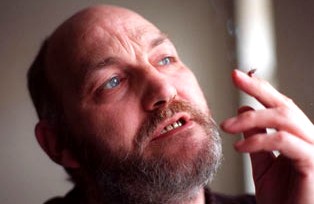
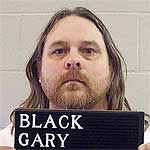
Robert Black
Serial killer Bruce Lee
Serial killer · United Kingdom · 1973
Bruce Lee was born Peter George Dinsdale in 1960. He later changed his name to…
26 victims
Bruce Lee
Serial killer · United Kingdom · 1973
Bruce Lee was born Peter George Dinsdale in 1960. He later changed his name to…
26 victims
 Dennis Nilsen
Serial killer · United Kingdom · 1978
Dennis Andrew Nilsen was born on November 23, 1945. He lived in London. He was…
16 victims
Dennis Nilsen
Serial killer · United Kingdom · 1978
Dennis Andrew Nilsen was born on November 23, 1945. He lived in London. He was…
16 victims
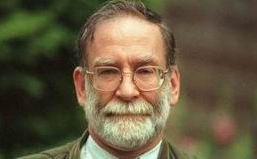 Dr. Harold Shipman
Serial killer · United Kingdom · 1974
Harold Fredrick Shipman was an English doctor who was convicted as a serial kil…
15 victims
Dr. Harold Shipman
Serial killer · United Kingdom · 1974
Harold Fredrick Shipman was an English doctor who was convicted as a serial kil…
15 victims
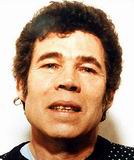 Frederick West
Serial killer · United Kingdom · 1967
Frederick West (29 September 1941 – 1 January 1995) was an English serial kille…
13 victims
Frederick West
Serial killer · United Kingdom · 1967
Frederick West (29 September 1941 – 1 January 1995) was an English serial kille…
13 victims
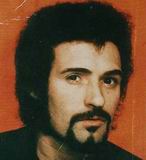 Peter Sutcliffe
Serial killer · United Kingdom · 1975
Peter William Sutcliffe (born 2 June 1946) was an English serial killer dubbed…
13 victims
Peter Sutcliffe
Serial killer · United Kingdom · 1975
Peter William Sutcliffe (born 2 June 1946) was an English serial killer dubbed…
13 victims
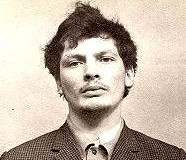 Patrick David Mackay
Serial killer · United Kingdom · 1973
Patrick David Mackay was born on September 25, 1952, in England. He was the son…
11 victims
Patrick David Mackay
Serial killer · United Kingdom · 1973
Patrick David Mackay was born on September 25, 1952, in England. He was the son…
11 victims
 Son Vu Khay Tran
Homicide · USA · 1997
Tran was sentenced to death on January 4, 2001. His sentence was commuted to li…
4 victims
Son Vu Khay Tran
Homicide · USA · 1997
Tran was sentenced to death on January 4, 2001. His sentence was commuted to li…
4 victims
 Lance Chandler
Murderer · USA · 1993
February 7, 1993 — Lance Chandler, Geral-dine Fernandez, Dwight Wyatt, and Geor…
1 victim
Lance Chandler
Murderer · USA · 1993
February 7, 1993 — Lance Chandler, Geral-dine Fernandez, Dwight Wyatt, and Geor…
1 victim
 Joseph Donald Ture
Serial killer · USA · 1978
Joseph Donald Ture was indicted by a Stearns County grand jury on four counts o…
6 victims
Joseph Donald Ture
Serial killer · USA · 1978
Joseph Donald Ture was indicted by a Stearns County grand jury on four counts o…
6 victims
 Evan Nakahara
Murderer · USA · 1989
Evan Teek Nakahara was convicted in Los Angeles County of his girlfriend Beatri…
1 victim
Evan Nakahara
Murderer · USA · 1989
Evan Teek Nakahara was convicted in Los Angeles County of his girlfriend Beatri…
1 victim
- Gender
- male
- Country
- United Kingdom
- Location
- United Kingdom
- Date of birth
- April 21, 1947
- Age at first offence
- 22
- Characteristics
- child molester, kidnapping, rape
- Victim profile
- Susan Maxwell, 11 / Caroline Hogg, 5 / Sarah Harper, 10 / Jennifer Cardy, 9
- Method of murder
- Strangulation
- Date(s) of murder
- 1969 - 1990
- Years active
- 1969–1990
- Date of arrest
- J uly 14, 1990
- Status
-
Life imprisonment
Sentenced to life in prison (minimum 35 years) on May 19, 1994
Case record: Robert Black
Status
Robert Black was sentenced to life in prison (minimum 35 years) on May 19, 1994.
Timeline
- 1958 — Margaret Tulip died.
- 1982 — Jack and Margaret Tulip had fostered Robert Black; Robert Black sexually abused and attempted to rape girls from an early age, and Susan Maxwell was abducted and murdered.
- July 30, 1982 — Susan Maxwell was abducted, raped and strangled; her body was later found near Uttoxeter.
- July 8, 1983 — Caroline Hogg was abducted.
- July 18, 1983 — Caroline Hogg’s body was found in a lay-by at Twycross in Leicestershire.
- March 26, 1986 — Sarah Harper went missing; she was kidnapped, raped and murdered.
- April 14, 1990 — Robert Black was arrested near Stow, Scotland, after snatching a six-year-old girl and bundling her into his van.
- May 19, 1994 — The jury found Black guilty of three murders; the court sentenced him to life imprisonment and set a minimum of 35 years before parole consideration.
- May 19, 1994 — Black was to be eligible for parole in 2029 at the earliest if he was still alive.
Background
Robert Black was born on 21 April 1947 in Grangemouth, Scotland. His natural mother, Jessie Hunter Black, refused to put a father's name on his birth certificate and had him fostered. Jessie Hunter Black married Francis Hall, had four more children, and died in 1982, but Black never had any further contact with her or his half-siblings.
Black was raised by Jack and Margaret Tulip in Kinlochleven, near Glencoe in the West Highlands. Locals and neighbours reported that Black was often frequently and heavily bruised during his childhood. Acquaintances from primary school described him as “A bit of a loner but with a tendency to bully.” He preferred to spend time with younger children and committed random, sudden acts of violence.
Margaret Tulip died in 1958 when Black was 11, and Black was once again deprived of a mother. After her death, Black was sent to a Children’s Home near Falkirk, close to where he was born. Black later attended Red House in Musselburgh and entered Musselburgh Grammar School, where he developed an interest in football and swimming.
Black later told a prison psychologist, Ray Wyre, about early sexual self-awareness and specific practices:
“I used to push things up my anus”.
Black said that he had inserted objects into his anus at an early age, and during later recollections he described a preference for being a girl and described intense fantasies about his anus and excreting and rubbing faeces in.
The offence
Convictions for murders
Robert Black was convicted of three murders involving the abduction, rape and killing of:
- Susan Maxwell (11-year-old)
- Caroline Hogg (5-year-old)
- Sarah Harper (10-year-old)
The jury found him guilty on all counts related to the murders and associated offences at his trial held in 1994.
Attempted abduction and sexual offences connected to his case
The case included an attempted abduction of Mandy Wilson:
- July 1990 — Mandy Wilson was abducted and sexually assaulted; she survived and was found tied up, gagged and stuffed into a sleeping bag.
Black had earlier indecent assault convictions connected to a girl in March 1967:
- March 1967 — Black was found guilty of three counts of indecent assault and sentenced to a year of borstal training to be served at Polmont near Grangemouth.
He also attempted rape at age 12 as described in his account:
- At age 12, he made an “inept attempt at rape” in a field with a girl of the same age, when penetration could not be completed.
Investigation
Policing and information handling
Investigators treated the three murders as linked and believed the killer travelled as part of his occupation. The investigation faced pressure to solve the crimes, with newspapers comparing them to the Moors Murders. The inquiry used the HOLMES computer system, described as logging, processing, collating and comparing information.
Police later gathered information about suspect links through tracing work records and fuel credit receipts.
Quotations and statements during the investigation
A member of the public who observed the abduction of the six-year-old girl provided a key statement:
- David Herkes later told police in his statement, “All I could see were her little feet standing next to the man's. Suddenly they vanished and I saw him making movements as if he were trying to stuff something under the dashboard. He got into the van, reversed up the driveway the child had just come from and sped off towards Edinburgh.”
When the police were nearby, David Herkes said:
- “I was standing near the spot where the child had been abducted, briefing the police and the girl's distraught father about what had happened. Suddenly I saw the van again and shouted 'That's him'. The officer dashed into the road and the van swerved to avoid him before coming to a halt.”
Robert Black told Ray Wyre about his fantasies and dissociation. In describing his earlier behaviour during the attempted rape, he told Ray Wyre:
“Me and two other boys went into a field with a girl the same age. We took her knickers off, lifted her skirt and all tried to put our penises in.”
When asked about consent, Black told Wyre:
“I was forcing her, like, you know?”
During the account of the Mandy Wilson abduction and assault, Black told Ray Wyre:
“I pulled her pants to one side and I had a look. I thought I'd just sort of stroked [her vagina]... but there was bruising on the inside - I don't know how.”
Black also told Wyre what he would have done if he had not been caught:
“When I'd done the delivery in Galashiels down the road, I would have assaulted Mandy sexually. I would have probably stripped her from the waist down, but I would have untied her and probably took the plaster off her mouth. And if she called out when I was assaulting her, then I might have put the gag back on.”
In relation to other objects he might have used, Wyre recorded a quotation from Dr Baird, psychologist for the Crown, describing what Black said:
“he would have put things into her vagina 'to see how big she was'. He would have put his fingers in and also his penis. When asked about other objects, he agreed he might have put other objects into her vagina, and when asked for an example, he saw a pen with which I was writing... ”
After the abduction, Black told officers that the incident was:
“a rush of blood”
He added:
“I have always liked little girls since I was a kid.”
Arrest
Robert Black was arrested on July 14, 1990 near Stow, Scotland. He was seen snatching a six-year-old girl off the street and bundling her into his van. An alert member of the public called the police, and officers chased after the van, apprehended Black and discovered the child tied up, gagged and stuffed into a sleeping bag.
The little girl’s father was a police officer present at the scene and discovered the child in the back of the van. The child suffered shock but was uninjured. A search of Black’s home revealed a large collection of child pornography.
Trial
First trial (kidnapping conviction and sentence)
Following Black’s arrest, he was convicted of kidnapping the girl and was given a life sentence in the following month (described in the record as “The following month”).
Second trial (murders and additional offences)
In the spring of 1994, Black stood trial at Moot Hall in Newcastle. He denied the charges.
The prosecution sought to rely on similarities across the offences and argued they were part of a series. The record includes how juries were not usually allowed to know about past convictions, but in this case the judge allowed it.
Mr John Milford, leading for the Crown, began his opening speech at two o’clock on the afternoon of Wednesday 13 April 1994 in the Moot Hall in Newcastle. Milford aimed to prove the murders of Susan Maxwell, Caroline Hogg and Sarah Harper, and the abduction of Teresa Thornhill, were part of a series committed by the same person.
The trial described pre-trial legal disputes about jurisdiction, severance and similar fact evidence, with the abduction of Mandy Wilson being contested as similar fact evidence.
Verdict and sentencing
- Thursday 19th May 1994 — The jury found Black guilty of three murders and he was sentenced to life imprisonment.
- The court told him he should serve at least 35 years behind bars before being considered for parole.
- The record states that this would keep him behind bars until at least 2029, when he would be 82 years old if still alive.
During sentencing, Mr Justice Macpherson recommended minimum terms for the murders:
“I propose to make a public recommendation that the minimum term will be 35 years on each of these convictions.”
As Black was taken down after the verdict, the record states:
“Well done, boys.”
Sentencing
At trial, Robert Black received life imprisonment for the murders. The court set a minimum term of 35 years before parole consideration, meaning he would not be eligible until at least 2029 if still alive.
Outcome
Robert Black remained serving life imprisonment with a minimum term of 35 years after being convicted of the murders of three girls.
After his conviction, the record states that police asked Black about the disappearance of up to nine other girls whose fates remained unknown, and that the files on the missing children remained open.
Other details
Early sexual behaviour and childhood accounts
Black described pushing objects up his anus and included police-discovered photographs showing him with a wine-bottle up his anus, a telephone-handset, and a table leg. He claimed he wanted to see how much he could fit.
He described fantasising about excreting on his hands and rubbing faeces in, and he said he always had an uneasy feeling that he preferred to have been a girl. The record states that he was not homosexual in his desires.
Black described childhood memories involving undressing and looking at sexual parts, interest in girls’ skirts, and taking a neighbour’s baby’s nappy off to look at her vagina.
Foster care and schooling references
The record states that Jack and Margaret Tulip were in their 50’s and had fostered children on several occasions. Jack died when Robert was just five. Black spent the majority of his years in care with Margaret Tulip.
Black had academic ability slightly above average and was interested in football, swimming and athletics. Later, his love of swimming continued and he worked as a life-guard for a time.
Victim details included in the record
The record included these victim names and ages:
- Susan Maxwell — 11-year-old
- Caroline Hogg — 5-year-old
- Sarah Harper — 10-year-old
- Mandy Wilson — 15-year-old (attempted abduction)
- Teresa Thornhill — 15-year-old
- Mandy Wilson’s father is referred to as Mr Wilson
- The record also refers to a six-year-old girl abducted in 1990
Additional alleged unsolved cases discussed in the record
The record listed additional unsolved abductions and murders said to match Black’s MO:
- April Fabb — abducted in Norfolk in 1969
- Christine Markham — snatched in Scunthorpe in 1973
- Genette Tate — disappeared in Devon in 1978
- Suzanne Lawrence — found dead in Essex in 1979
- Colette Aram — found strangled and sexually assaulted in a field in Nottingham in 1983
- Patsy Morris — found dead near Heathrow in 1990
- Marion Crofts — 1990
- Lisa Hession — 1990
It further states that a meeting was held in Newcastle in July 1994 to consider Black’s involvement in similar murders, and that investigators believed there were up to ten unsolved abductions and murders in England that bore Black’s MO.
Murder narratives included in the record
The record described:
- Susan Maxwell — abduction after tennis across the border in Coldstream, rape and strangling, body dumped near Uttoxeter.
- Caroline Hogg — abduction after leaving her home to play near her house on the outskirts of Edinburgh, later found in Leicestershire; the record states the cause of death could not be determined due to decomposition and absence of clothes suggested a sexual motive.
- Sarah Harper — disappearance after leaving home to buy bread, later found dumped in the River Trent near Nottingham; her injuries were described as being inflicted pre-mortem, and the record included a statement that her assailant violently explored both her vagina and her anus.
Mandy Wilson abduction account included in the record
The record described Mandy Wilson walking to a friend’s house, David Herkes observing a van with its passenger door open, the abduction, police response, Mandy being found in a sleeping bag, and Black’s admission of sexually assaulting her. It also included quotations attributed to the court and prosecution-side psychological reporting as described above.
Trial figures and comparison points included in the record
The record included the following similarities Milford highlighted:
- All victims were young girls.
- Susan and Caroline were abducted on hot July days.
- All victims were taken from public places.
- Susan and Sarah were abducted in Transit-type vans.
- After abduction, all victims were taken some miles south.
- Bodies showed signs of a sexual motive: Susan’s pants were removed, Caroline was naked, and Sarah was found to have suffered injury.
- “None suffered any gross bruising or broken bones.”
- Both Susan and Sarah were unclothed and then reclothed; all three victims had their shoes removed.
- No real attempt was made to hide the bodies.
- Bodies were dumped in a “Midlands Triangle”, described as a 26-mile area encompassing parts of Nottinghamshire, Staffordshire and Leicestershire.
Named people and roles included in the record
The record named:
- Ray Wyre (prison psychologist)
- Jack and Margaret Tulip (foster parents)
- Jessie Hunter Black (natural mother)
- Francis Hall (Jessie’s husband)
- Arthur Meadows (found Susan’s body)
- Hector Clark (Deputy Chief Constable in charge of joint inquiry)
- John Stainthorpe (headed Sarah Harper investigation)
- Lord Fraser (Lord Advocate)
- Lord Ross (Lord Justice Clerk)
- Mr Justice Macpherson (sentenced Black and recommended minimum terms)
- John Milford (leading for the Crown)
- Herbert Kerrigan (leading for the defence)
- Thomas Ball (defence witness)
- Sharon Binnie (defence witness)
- Joan Jones and husband (defence witnesses)
- Alan Day and Peter Armstrong (defence witnesses)
- Michelle Robertson (witness)
- Kevin Catherall and Ian Collins (witnesses)
- James Fraser (Lothian and Borders police forensics laboratory)
- Ronald Stalker (superintendent quoted during Caroline Hogg investigation)
- Michael Collier (former landlord of the Baring Arms)
- Eric Bristow (former world darts champion)
- Eddie and Kathy Rayson (lodgers)
- Joyce Bonella (niece recalling Jessie Hunter Black)
Quotations from named individuals included in the record
The record included these quoted descriptions:
- Colin McDougall said: “A bit of a loner but with a tendency to bully.”
- Colin McDougall said: “We had a gang but he insisted on being leader of his own gang. The members were always a couple of years younger than him.”
- Jimmy Minnes said: “He gave the poor lad a terrible hammering. He just jumped on top of him as he was walking over the bridge to school one day. Black just punched and kicked him for no reason.”
- Sandy Williams said: “needed a smack round the ear to keep him in line.” and said he “didn't give a damn - no respect for authority. He had a dangerous spirit”
- Teresa Thornhill said: “I will never forget his hairy arms, sweaty hands and smelly T-shirt. He came over to me and got me in an all-encompassing bear hug which I could not get out of because he was very strong. I tried to struggle free and began shouting for my mum. I was looking around for something to hit him with, but there was nothing there. Then I grabbed him between the legs.”
- Teresa Thornhill’s attacker description included: “Get off her, you fat fucking bastard.” attributed to Andrew.
- Annette Hogg said: “We really miss her. I really miss her.”
- Superintendent Ronald Stalker said: “I am afraid that all we have to say at this stage is that we have turned up nothing at all.”
- Clark was quoted: “Once we had exhausted all our lines of inquiry the best chance of catching the man responsible was if he struck again.”
- Clark said: “My biggest hope, however, was that he would be caught before he went too far and killed a girl.”
- Milford described the offence similarities and said Milford submitted that the murders were “are so unusual, the points of similarity so numerous and peculiar that it is submitted to you that you can safely conclude that they were all the work of one man.”
- Hector Clark was quoted during trial on the investigation scale: “the largest crime inquiry ever held in Britain”.
- Thwaites said: “This series of cases,” and called it “reeks of failure, disappointment and frustration.” and also said: “There is nothing automatic about that.” and “There is no evidence against Black.”
Spotted an error, or have more information about this case?