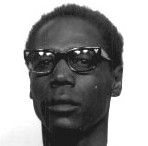
Samuel Christopher Hawkins
Murderer Ervil LeBaron
Murderer · USA · 1972
Ervil Morrell LeBaron (1925 to August 16, 1981) was the leader of a polygamous…
35 victims
Ervil LeBaron
Murderer · USA · 1972
Ervil Morrell LeBaron (1925 to August 16, 1981) was the leader of a polygamous…
35 victims
 Brian Kevin Rosenfeld
Murderer · USA · 1985
Brian Kevin Rosenfeld Brian Kevin Rosenfeld was sentenced to three concurrent l…
23 victims
Brian Kevin Rosenfeld
Murderer · USA · 1985
Brian Kevin Rosenfeld Brian Kevin Rosenfeld was sentenced to three concurrent l…
23 victims
 Marvin Gray
Murderer · USA · 1975
Marvin Gray was convicted killer who claimed responsibility for 23 slayings and…
23 victims
Marvin Gray
Murderer · USA · 1975
Marvin Gray was convicted killer who claimed responsibility for 23 slayings and…
23 victims
 Yahweh ben Yahweh
Murderer · USA · 1980
Yahweh ben Yahweh was born and legally named Hulon Mitchell Jr. (October 27, 19…
23 victims
Yahweh ben Yahweh
Murderer · USA · 1980
Yahweh ben Yahweh was born and legally named Hulon Mitchell Jr. (October 27, 19…
23 victims
 Latasha Pulliam
Murderer · USA · 1991
Latasha Pulliam received clemency from the Governor of Illinois in March 2003 f…
1 victim
Latasha Pulliam
Murderer · USA · 1991
Latasha Pulliam received clemency from the Governor of Illinois in March 2003 f…
1 victim
 Reginald Reeves
Murderer · USA · 1993
September 5, 1993 — Sharon Forte and Jenny Lynn Weeks agreed to run away from a…
1 victim
Reginald Reeves
Murderer · USA · 1993
September 5, 1993 — Sharon Forte and Jenny Lynn Weeks agreed to run away from a…
1 victim
 Veronica Gonzales
Murderer · USA · 1995
Defendant: Veronica Utilia Gonzales (Veronica Gonzales) · Alias/names used in p…
1 victim
Veronica Gonzales
Murderer · USA · 1995
Defendant: Veronica Utilia Gonzales (Veronica Gonzales) · Alias/names used in p…
1 victim
 Virginia Christian
Homicide · USA · 1912
Virginia Christian was the first woman to die in the electric chair in Virginia…
1 victim
Virginia Christian
Homicide · USA · 1912
Virginia Christian was the first woman to die in the electric chair in Virginia…
1 victim
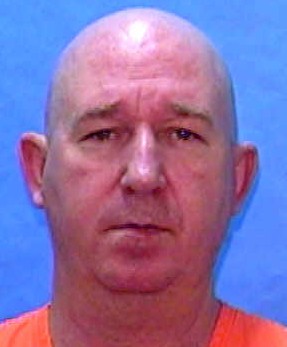 Faunce Pearce
Murderer · USA · 1999
Faunce Pearce was sentenced to death on February 14, 2002. He was indicted and…
1 victim
Faunce Pearce
Murderer · USA · 1999
Faunce Pearce was sentenced to death on February 14, 2002. He was indicted and…
1 victim
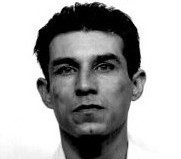 Henry Martinez Porter
Murderer · USA · 1975
July 9, 1985 — Henry Martinez Porter was pronounced dead at 12:31 a. m. followi…
1 victim
Henry Martinez Porter
Murderer · USA · 1975
July 9, 1985 — Henry Martinez Porter was pronounced dead at 12:31 a. m. followi…
1 victim
- Gender
- male
- Country
- USA
- Location
- Lubbock County, Texas, USA
- Date of birth
- September 1, 1943
- Age at first offence
- 33
- Characteristics
- rape
- Victim profile
- Rhonda Keys, 12 / Abbe Rodgers Hamilton, 19 (six months pregnant)
- Method of murder
- St abbing with hunting knife
- Date(s) of murder
- 1976 / 1977
- Years active
- 1976–1977
- Date of arrest
- June 30, 1977
- Status
-
Executed
Executed by lethal injection in Texas on February 21, 1995
Case identification
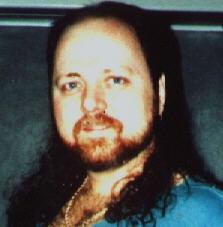
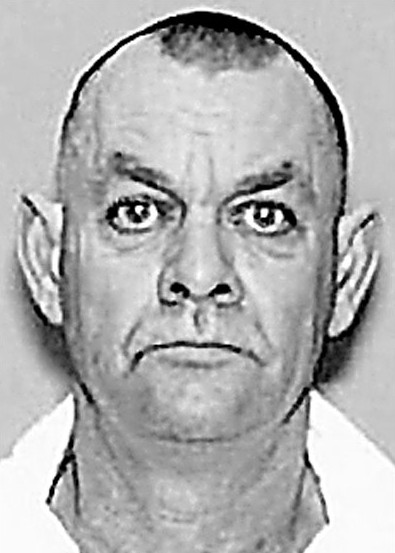
Samuel Christopher Hawkins
Status
Hawkins was executed by lethal injection in Texas on February 21, 1995.
Background
Hawkins was under sentence of death since March 1978.
Hawkins was aged 51 when he was executed.
According to his attorney, testimony presented at trial indicated that Hawkins was suffering from mental problems at the time of the crime.
Hawkins was nicknamed the “traveling rapist” for the numerous women he attacked throughout the states of Texas, Oklahoma, and Colorado.
The offence
Capital murder in Amarillo in 1976
The first murder took place in Amarillo in 1976.
Hawkins walked into a home and kidnapped Rhonda Keys, 12.
He later raped and murdered her.
Police officials later identified her body tossed underneath a bridge.
Capital murder in Borger in 1977
The second murder took place in Borger, Texas, in 1977.
In the appeal for this particular case, Hawkins admitted to casing a neighborhood and looking for an open door.
His modus operandi involved searching for homes with open doors, entering, checking for a woman alone in bed, then throwing a pillowcase over her head, and raping her.
On the morning of May 3, 1977, Hawkins entered the home of Abbe Rodgers Hamilton, 19.
Hamilton was alone in bed and was six-months pregnant.
Awakened by Hawkins, she attempted to remove the pillowcase from her face when Hawkins started stabbing her.
Hamilton was stabbed numerous times with several severe wounds about the neck.
Officer Bruce Lemery of the Borger Police Department testified that the victim had been stabbed numerous times with several severe wounds about the neck, and that although the victim was still clothed in a gown, she was no longer wearing panties.
A pair of panties was found a short distance from the bed.
The jury convicted Hawkins of capital murder for killing Abbe Rodgers Hamilton while attempting aggravated rape.
Dr. Jose Diaz-Esquivel performed an autopsy upon the deceased.
His examination revealed four wounds to the neck which appeared to have been made with a knife-like instrument.
One of the wounds was approximately one and three-quarters inches deep and had severed the victim's jugular vein.
Diaz-Esquivel stated that the victim had bled to death as a result of her neck wounds.
Tests revealed that the victim had intercourse within twenty-four hours of her death.
Investigation
William Hamilton testified he and his wife, Abbe, lived in Borger.
On May 2, 1977, Hamilton left his home late in the evening in order to report to work by 11:30 p.m.
Before Hamilton left for work, he and his wife had sexual intercourse.
At the time he left, Hamilton's wife was in bed, clothed in a gown and a pair of panties.
When he returned home the following morning at 9:00 a.m., Hamilton found his wife still asleep in the bed.
Hamilton then left the house for approximately 45 minutes.
Upon returning, Hamilton found his wife who was six months pregnant lying in the blood-soaked bed with her hands and feet bound with pieces of red and white cloth.
Hamilton immediately attempted to call an ambulance but discovered that the phone line had been cut.
He then went to the home of a neighbor, Hollis Mahon, who notified authorities of the discovery of Hamilton's wife.
Grace Mahon testified that after Hamilton used her phone, she went to Hamilton's house and saw his wife's body.
She related that her efforts to locate a pulse were unsuccessful.
Officer J.D. Reimer of the Lubbock Police Department collected several hair samples from Hawkins's head.
Reimer turned these samples over to FBI Special Agent Robert Neill.
Neill was a specialist in the field of forensic microscopy which is the study of fibers, hairs and textiles using microscopic methods.
An examination of the napkins found under the victim's body revealed numerous human hairs.
Neill found some of the hairs on the napkin to have been of a "negroid origin."
A comparison of the hair samples received from Reimer and those found on the napkin showed all of the hairs to have the same range of microscopic characteristics.
Neill's analysis revealed twenty similarities between Hawkins's hair and the hair found on the napkin at the scene of the offense.
The comparison between the hairs did not show any dissimilar characteristics.
Neill testified that it was his opinion that the hairs found on the napkins had come from Hawkins or some other person with an identical range of hair characteristics.
Sheriff Lon Blackmon of Hutchinson County testified he took custody of various items of evidence found at the scene of the offense.
Among these items were the panties, two napkins found underneath the victim's body, and the pillowcases off the bed.
Blackmon sent these items to the Federal Bureau of Investigation (FBI) laboratory in Washington, D.C., for analysis.
Special Agent Robert Spalding of the FBI testified that he worked in the field of forensic serology, the study of blood and body fluids in stain form.
Spalding related that tests run upon the panties he received from Blackmon proved positive for the presence of seminal materials or stains.
William Hamilton testified no blacks lived near his home and that he had never had a black person enter his home.
Christine Cantrell testified she lived near the Hamilton home.
Cantrell testified that at 9:30 a.m. on the morning of the offense, she noticed a light two-tone car in the victim's driveway.
She testified that the car she saw was of the same type which was later discovered at Hawkins's home.
Cantrell further stated that she saw a tall slender black man standing next to the car in the victim's driveway.
Larry Clark testified he was Hawkins's supervisor at the Iowa Beef plant.
The plant was shown to be approximately fifty miles from Borger.
Clark stated that Hawkins reported for work at 2:40 p.m. on the day of the offense.
Clark stated that Hawkins was employed as a trimmer on a fleshing crew at the plant.
Hawkins's work called upon him to be semi-skilled in the use of an instrument called a skinner's knife.
Detective James LaFavers of the Amarillo Police Department testified that Hawkins was arrested for an unrelated offense on June 30, 1977.
Following his arrest, Hawkins signed a written statement concerning the instant offense.
A portion of Hawkins's written statement read: "My name is Samuel Christopher Hawkins ... A short while ago, I can't remember exactly when, I drove to Borger, Texas with a friend.... We went in my friends car. The man I was with met one of his old girl friends and stayed with her so I took his car. I started looking around Borger for somebody to rape. I drove to the south part of Borger. I started checking doors and came to a house that had one open. This house was facing west, and it had a drive way that went north and south. The house was a red color and they were building a room on the end of it. There was a red Monte Carlo, I think it was about a 1976 model, parked in the driveway. There was also another small car in the driveway and I think it was a Pinto or a Vega. I parked my car in the area of the driveway, right behind the Monte Carlo and Pinto. I checked the door and it was open. I walked straight into a bedroom that seems like it was kind of behind the kitchen and to the left. I had a hunting knife that I had bought at the T.G. & Y. store on 24th. and North Grand st. (sic) in my hand. I noticed a woman lying on a bed on her side. I put the knife to the womans throat and she jumped. When the woman jumped, the knife went into her neck. The woman got hysterical and reached up and felt the blood on her neck and started screaming 'give me a towel, give me a towel.' When the woman got hysterical, I did to. I started stabbing the woman in the neck but I don't know how many times I stabbed her. When the woman became hysterical, she grabbed the telephone and was going to call on it. I guess this is when I cut her again. The woman was holding the phone, and I took the knife and cut the wire. I then went into the dining area and got some red and white napkins. The red and white design was in squares. I made an attempt to calm her down and tie her up. I had cut the napkins with the knife that I had and used these to tie her with. The woman wouldn't give up so this is when I cut her again. I couldn't tie the woman up as such so the knots stayed loose. I did not think that the woman was dead when I left but I didn't know for sure. I did not rape this woman but I intended to when I went in the house. I got scared when I stabbed the woman and this is why I didn't rape her and I ran out of the house...."
In appeal-related testimony, it was stated that a young boy recognized Hawkins from a police sketch posted on television.
The boy ran back into his house, grabbed a weapon, and ran back out into the front yard.
Upon seeing the boy, Hawkins ran back to his car, got in, and sped off.
The boy took down the license plate number of Hawkins’s car before Hawkins could make a clean break.
Police traced the plate number to Hawkins.
Arrest
Detective James LaFavers testified that Hawkins was arrested for an unrelated offense on June 30, 1977.
Trial
Hawkins represented himself in federal court proceedings.
Hawkins challenged his conviction of capital murder and sentence of death by a Lubbock County, Texas, jury.
He urged that his conviction should be set aside for three reasons, arguing that:
- his "trial was had by use of perjured testimony[,] ... [t]he confession was extracted and obtained in violation of petitioner's right not to be compelled to give evidence against himself [, and] ... [t]he evidence is insufficient to sustain the conviction and verdict of the jury."
The jury answered the special questions required by Texas law, and Hawkins was sentenced to die.
Under the Texas Penal Code, intentional murder while attempting aggravated rape was described as a capital crime.
A person commits aggravated rape by:
- causing serious bodily injury or attempting to cause death, or
- rape by threats of death, serious bodily injury, or kidnapping.
The offense of attempt was established by evidence of specific intent to commit aggravated rape and "an act amounting to more than mere preparation."
Hawkins argued that the evidence was lacking because his confession did not "mention the killing of Abbe Rogers (sic) Hamilton ... [and] ... [n]o one is named in the confession or statement[,] ... [and there is] ... no evidence of attempted sexual intercourse without ... consent[,] ... no evidence to show that she was compelled to submit by the use of a threat[,] ... no weapon was introduced to show what the deceased ... was killed with."
The jury’s findings and the reviewing court’s view of reasonable inferences led to rejection of that argument.
The court described that Hawkins's confession placed him at the scene, that the cuts about the neck, the placement of the napkins, and the similarity of hair samples collectively confirmed Hawkins's confession, and that there was evidence the victim's panties had been removed and found near the bed.
It also noted that Hawkins admitted he intended to rape her.
Sentencing
Hawkins was sentenced to die.
In April 1978, Hawkins's motion for new trial was denied.
Appeals
State appellate proceedings
The Court of Criminal Appeals rejected all grounds of error except appointed counsel's contention that Hawkins was entitled to a competency hearing before his trial.
The court remanded the case to the trial court for a "retrospective competency determination," with instructions to order a new trial if a retrospective determination was not possible or if Hawkins was found to have been incompetent to stand trial.
Both the state and Hawkins sought rehearing.
On August 9, 1983, Hawkins filed with the Court of Criminal Appeals a request to waive the competency issue.
Finally, on October 19, 1983, the court accepted the waiver and affirmed Hawkins's conviction.
Hawkins did not seek review by the Supreme Court and did not request any state habeas corpus relief.
Federal habeas corpus proceedings
While his conviction was pending before the Court of Criminal Appeals, Hawkins petitioned for federal habeas relief in the Northern District of Texas and suffered a dismissal for want of exhaustion of remedies.
He filed a second petition for federal habeas relief in November 1983.
The federal district court rejected his request for stay as premature, but on April 30, 1984, after formal sentencing by the state court, granted the stay.
After waiting for the Supreme Court's decision in McKaskle v. Wiggins, the federal district court ordered a competency hearing to assure Hawkins's competency to decide to proceed without a lawyer.
After examination at a federal hospital in Springfield, Missouri, a magistrate conducted an evidentiary hearing and concluded Hawkins was competent to decide.
The magistrate warned Hawkins of the risks of proceeding without counsel and questioned him on the record to confirm he still wanted to proceed.
The magistrate granted Hawkins's request to discharge appointed counsel.
The magistrate gave Hawkins leave to amend to assert any additional claims at any time before January 15, 1985, later extended to August 19, 1985.
Hawkins filed no additional claims.
On September 30, 1985, a magistrate filed an order identifying what he believed to be seven grounds of error and recommended dismissal of the habeas petition.
Hawkins disagreed, insisting he had only the following four points of error:
- "The trial court erred in committing aggravated (sic) perjury, also committed with and agreed to by the State's Attorneys Steve Cross and Linda Walden, Defense Counsels (sic) Russell Busby and Gene Storrs."
- "The Trial Court erred in introducing the confession into evidence over Petitioner's objection and motion to suppress."
- "The Court erred in sentencing Petitioner to death because the evidence is insufficient to sustain the Jury's verdict."
- "The State did not prove the allegations in this case and they are left unproved."
The state responded by waiving any failure to exhaust state remedies.
In a lengthy report, the magistrate rejected the four arguments and recommended dismissal of the habeas petition without an evidentiary hearing.
The district court dismissed the habeas petition on October 21, 1986, over written objections of Hawkins, but granted a certificate of probable cause and stay of execution pending appeal.
On appeal, the court informed Hawkins by letter that it would appoint counsel for him and warned him of the risks of representing himself.
Hawkins replied in writing, again insisting he did not want a lawyer, and to date the record described that Hawkins represented himself in this appeal.
United States Court of Appeals decision
The case was described as: 844 F.2d 1132 Samuel Christopher Hawkins, Petitioner-Appellant, v. James A. Lynaugh, Director, Texas Department of Corrections, Respondent-Appellee. Federal Circuits, 5th Cir. April 29, 1988.
The opinion stated the court reviewed the sufficiency of the evidence by constitutional measure and addressed Hawkins's claims about perjured testimony and voluntariness of the confession.
The court concluded the contentions lacked merit and affirmed.
The court issued an order ending with "AFFIRMED."
Other details
Confession and suppression dispute
Hawkins argued that his confession was extracted and obtained in violation of his right not to be compelled to give evidence against himself, including claims that it was induced by promises of psychological and psychiatric help through the court system, that he was denied counsel, and that he was not given Miranda rights.
The state trial court, after an extensive hearing before trial, denied Hawkins's motion to suppress confession.
The trial court found Hawkins "was not coerced into making any statement by any force, threats, persuasion or promises or any other improper influence" and that he "waived his right to be represented by counsel."
The Texas Court of Criminal Appeals affirmed the ruling.
The federal appellate decision described the state's witnesses and their testimony as follows.
Hawkins was arrested at his home on June 30 at approximately 11:30 a.m., taken directly to the Amarillo police station, and received Miranda warnings.
Officers suspected Hawkins was responsible for a series of rapes and murders.
Detective Garner interviewed Hawkins around noon; Hawkins made no statement then.
Hawkins was booked into city jail at approximately 3:00 p.m., where he remained until approximately 6:00 p.m. when he was put in a lineup.
The officers testified Hawkins never requested a lawyer, twice talked with his wife by phone, and once visited alone with her in mid-afternoon.
Testimony stated Officer Kirkwood questioned Hawkins for approximately 30 minutes at around 9:00 p.m., and Lieutenant Jimmy Boyston interviewed him until approximately 10:40 p.m.
A black officer, Isaiah Garrett, spoke with Hawkins alone, and Hawkins indicated he wanted to talk.
Detective James LaFavers and Captain Smith again warned Hawkins of his Miranda rights before taking his statement.
They turned a tape recorder on around 11:30 p.m., and the tape recorder taped for only one hour.
Sometime during the early morning hours, officers gave Hawkins a carton of milk and a piece of pie.
Hawkins ultimately confessed to three offenses and signed three statements typed by a police officer.
The second statement approved by Hawkins at 4:05 a.m. described the murder of Abbe Hamilton.
The officers testified they gave Hawkins a hamburger and french fries in mid-evening.
Officer Garrett testified that Captain Smith asked Hawkins if he was tired and wanted to resume the next day after he had slept, but Hawkins replied that he could not sleep and wanted to get it over with.
The officers denied making any promises to Hawkins regarding help for mental illness.
Hawkins testified differently.
He testified he was not warned of his rights and was denied counsel despite repeated requests for a lawyer.
He testified that Detective Eaton told him he was schizophrenic.
He testified that Officer Garrett told him he was sick and that "they" wouldn't hold it against him but would get him help.
He testified that Detective LaFavers told him that if he confessed he would get treatment.
Hawkins testified he was allowed to telephone his wife on two occasions and meet with her in mid-afternoon.
He testified that he asked his wife to contact a local lawyer named Broadfoot.
Broadfoot testified that Hawkins's wife called him in late evening, that he called the station sometime after 10:30 p.m., and that he was told Hawkins was suspected in some area rapes and murders.
Broadfoot explained that he then reported this to Hawkins's wife but was not hired.
A Justice of the Peace of Potter County testified his normal hours were from 8:30 a.m. until 5:00 p.m. but that he occasionally arraigned prisoners at other hours.
He testified that he would ordinarily appoint counsel at arraignment if a prisoner was indigent.
He testified Hawkins first appeared before him at 2:35 p.m. for a bond hearing with counsel.
Verbatim recorded exchanges
The federal appellate decision included the following verbatim exchanges from the taped portion.
Detective James LaFavers said: "LAFAVERS: Mr. Hawkins its a ... you know a lot of the problem in life is the fact that you have the ability to admit that problem to yourself. You know its a its not as much what you admit to others as it is being of the personality that you can admit it to yourself and I think you are doing it now and I think you are probably overcoming a lot of the problem that you have been suppressing over the years. Its ... Its something that I can understand. It a ... It's something that you yourself can't hold yourself at fault for. It a ... It is something that occasionally happens to some of us, but its nothing that can't be helped. Its something that we can help you with and we'll try. We will do that. We understand what your situation is, we do. We're not here to in any way punish you or criticize you because it is understandable what your situation is. Then, toward the end of the taped portion, after Hawkins had confessed to a series of rapes and attempted rapes and as the officers were preparing a typed statement for Hawkins to sign, the following exchange took place: HAWKINS: Will they sentence me to die for that? LAFAVERS: Huh? HAWKINS: Will they sentence me to die for that? LAFAVERS: Sam, to be honest with you I would ... I would think that the courts in your situation wouldn't 17 be very lenient. I really do. I think that they will observe the fact that you need help ... you're trying to seek that help already psychological--psychiatric help and a ... I think they would recommend a psychiatrist. Okay. GARRETT: Sam, this is a sickness that started when you was a kid. LAFAVERS: The thing to do Sam--this drive that you are talking about is something that has been eating at you and any time you have a drive that eats at you with the severity that this was. We are talking about sickness. Its nothing that gets .. its like .. you know. It's just as real to have an illness of this type and when you really have a possession of this type and it happens to several people. You're not alone in this. It ... it happens to thousands and thousands of people so don't be a ... ashamed of the fact that your illness happens to be mental instead of physical because this is not more your fault than if you had caught cold. HAWKINS: But why me?"
Identity of detective who took the taped confession
James LaFavers, a detective for the Amarillo Police Department, was identified as the individual who took Hawkins's taped confession.
LaFavers was described as being unaware his captain was recording it.
Detective Garner quote on self-representation in capital case
Derrell Garner, another detective for the Amarillo Police Department, followed the investigation into Hamilton's murder.
After reviewing the facts of the case, Garner said he couldn't guess what prompted Hawkins's stream of violence.
Garner commented on one unique characteristic to Hawkins's first trial, quoting: “Well, I thought the grounds for one of his appeals was the fact that in one case, he defended himself and to the best of my knowledge, no one had ever represented themselves in a capital punishment case before,” Garner said. “We thought, for sure, that fact would take his case to the Supreme Court.”
Outcome
The federal appellate court affirmed the district court’s judgment and wrote "AFFIRMED."
Spotted an error, or have more information about this case?