
Veronica Gonzales
Murderer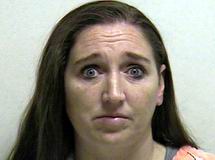 Megan Huntsman
Murderer · USA · 1996
Megan Huntsman was 40 at sentencing. She was a mother of three children who wer…
6 victims
Megan Huntsman
Murderer · USA · 1996
Megan Huntsman was 40 at sentencing. She was a mother of three children who wer…
6 victims
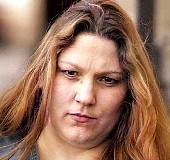 Angela Johnson
Murderer · USA · 1993
Angela Jane Johnson was convicted in federal court of aiding and abetting the m…
5 victims
Angela Johnson
Murderer · USA · 1993
Angela Jane Johnson was convicted in federal court of aiding and abetting the m…
5 victims
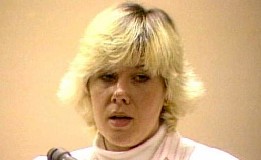 Catherine May Wood
Murderer · USA · 1987
Catherine May Wood was an American caregiver who worked at the Alpine Manor Nur…
5 victims
Catherine May Wood
Murderer · USA · 1987
Catherine May Wood was an American caregiver who worked at the Alpine Manor Nur…
5 victims
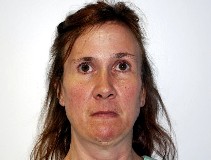 Michele Kalina
Murderer · USA · 1996
Michele Kalina pleaded guilty to murder for one of five infants she initially w…
5 victims
Michele Kalina
Murderer · USA · 1996
Michele Kalina pleaded guilty to murder for one of five infants she initially w…
5 victims
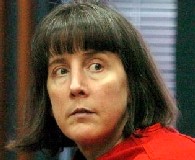 Amy Bishop
Murderer · USA · 1986
Amy Bishop — biology professor and perpetrator · James Anderson — Bishop’s husb…
4 victims
Amy Bishop
Murderer · USA · 1986
Amy Bishop — biology professor and perpetrator · James Anderson — Bishop’s husb…
4 victims
 Susan Eubanks
Murderer · USA · 1996
Susan Dianne Eubanks, also referred to as Susan Eubanks, was convicted by a jur…
4 victims
Susan Eubanks
Murderer · USA · 1996
Susan Dianne Eubanks, also referred to as Susan Eubanks, was convicted by a jur…
4 victims
 Thomas Shanks
Murderer · United Kingdom · 1998
Vickie Fletcher was a 21-year-old nurse who began working at Pontefract General…
1 victim
Thomas Shanks
Murderer · United Kingdom · 1998
Vickie Fletcher was a 21-year-old nurse who began working at Pontefract General…
1 victim
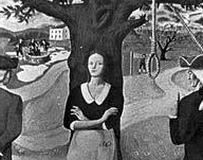 Bathsheba Spooner
Murderer · USA · 1778
Bathsheba Ruggles Spooner (February 15, 1746 – July 2, 1778) was executed by ha…
1 victim
Bathsheba Spooner
Murderer · USA · 1778
Bathsheba Ruggles Spooner (February 15, 1746 – July 2, 1778) was executed by ha…
1 victim
 Betty Smithey
Murderer · USA · 1963
Betty Smithey was a live-in babysitter who murdered a 15-month-old child, Sandy…
1 victim
Betty Smithey
Murderer · USA · 1963
Betty Smithey was a live-in babysitter who murdered a 15-month-old child, Sandy…
1 victim
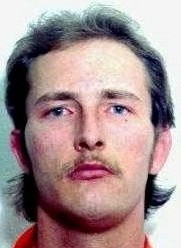 Robert James Anderson
Murderer · USA · 1992
Robert James Anderson was executed in Huntsville, Texas. Audra Ann Reeves was t…
1 victim
Robert James Anderson
Murderer · USA · 1992
Robert James Anderson was executed in Huntsville, Texas. Audra Ann Reeves was t…
1 victim
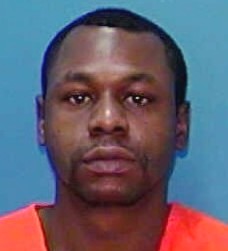 Jermaine Foster
Murderer · USA · 1992
Jermaine Foster was tried together with codefendants Booker, Henderson, and Cat…
2 victims
Jermaine Foster
Murderer · USA · 1992
Jermaine Foster was tried together with codefendants Booker, Henderson, and Cat…
2 victims
- Gender
- female
- Country
- USA
- Location
- San Diego, California, USA
- Date of birth
- 1968
- Age at first offence
- 27
- Characteristics
- torture
- Victim profile
- Genny Rojas, 4 (her niece)
- Method of murder
- S calded to death in a bathtub
- Date(s) of murder
- July 21, 1995
- Years active
- 1995
- Date of arrest
- Next day
- Status
-
Sentenced to death
Sentenced to death on July 20, 1998
Case information
- Defendant: Veronica Utilia Gonzales (Veronica Gonzales)
- Alias/names used in proceedings: Veronica Gonzales
- Victim: Genny Rojas (Genevieve Rojas), a Latin female aged 4
- Age at the time of the crime: 26
- Case name: People v. Gonzales
- Court citation: 51 Cal.4th 894 (2011)
- No.: S072316
- Disposition on appeal: The judgment was affirmed.
Timeline
- 7-21-1995 — Genny Rojas was murdered.
- 5 — A jury convicted Gonzales in May of first-degree murder with special circumstances of torture and mayhem.
- 7-20-1998 — Veronica Gonzales was sentenced to death.
- 7-21-1998 — A report described the death sentence being imposed.
- 6-3-2011 — The state Supreme Court upheld the death sentence.
- 2011 — The Supreme Court issued its opinion affirming the judgment in its entirety.
The offence
Veronica Gonzales was convicted of murdering Genny Rojas. The jury found as special circumstances that the murder was intentional and involved the infliction of torture, and that it occurred while Gonzales was engaged in the commission and attempted commission of mayhem. The jury returned a verdict of death.
Background
Genny Rojas was the aunt’s niece of Veronica Gonzales. Genny and her siblings were removed from the custody of Gonzales’s sister Mary Rojas after Mary went into a drug rehabilitation program and her husband was arrested for child molestation. Genny was first placed with Gonzales’s mother, but Gonzales agreed to take Genny in because her mother had other children to care for.
In early 1995, when Genny was four years old, Genny came to live with Gonzales, her husband Ivan, and their six children in an apartment in Chula Vista. Gonzales’s husband Ivan was convicted and sentenced to death in January, tried separately from Gonzales.
The torture and murder
During the trial, evidence described a prolonged and varied course of abuse. The jurors were told that Genny was beaten repeatedly and abused for months, including being burned with a blow dryer on her face and upper body, and being handcuffed and hung from a bar inside a closet for hours at a time.
The evidence described that on 7-21-1995:
- Marisa Lozano, a young neighbor, heard a child crying in Gonzales’s apartment, then heard “like if something hit a wall.”
- The crying stopped.
- Ivan Gonzales looked out a window, shut it, and closed the curtains.
- A few minutes later, Ivan came out of the apartment, slammed the door, and left looking angry.
- Marisa later heard a commotion and someone said that a little girl had died.
- Officers William Moe and Barry Bennett of the Chula Vista police arrived at about 9:20 p.m.
- Moe met Gonzales as she approached the apartment. Gonzales told him she had put the baby in the bathtub and later found her not breathing.
- The child was found with signs of trauma including a ligature mark under her throat, injuries on her face and scalp, and signs suggesting rigor mortis.
- The fire department arrived; the fireman found the victim cold and without a pulse and did not try CPR due to locked jaw and signs of rigor mortis.
Medical examiner and autopsy findings
A medical examiner arrived around 1:00 a.m. An autopsy was performed later that morning. The examiner noted:
- A thermal burn extending irregularly from the top of Genny’s head down and across the back of her scalp, with infection; estimated to be from six days to several weeks old.
- Hair loss in the burn area and thinning and bald patches elsewhere on the scalp.
- Scars on Genny’s shoulders consistent with burn injuries matching the burned area on the back of her head.
- A subdural hematoma inside the skull, life-threatening for a four-year-old; estimated to be a few hours old, possibly caused by a blow or violent shaking.
- A subarachnoid hemorrhage, typically caused by a direct impact; estimated to be weeks or perhaps months old.
- Petechiae in the white of Genny’s right eye, estimated to be a few days old, with bruising around the right eye; left eye bruised.
- Abrasions above both eyes and linear abrasions extending across Genny’s face from her left ear, with skin worn away on the bridge of her nose.
- Skin worn off on the rim of both ears exposing cartilage.
- Bruises on Genny’s right cheek and chin.
- Recent burns in a grid pattern on both cheeks matching the grille of a blow dryer found in the Gonzales apartment; these appeared to have occurred within hours before death.
- A laceration inside Genny’s lower lip, inflamed and could have been several days old.
- Linear scars on her neck consistent with a long period of hanging with weight partially supported by her feet, probably one to three weeks old.
- Linear ulcerated scars around her upper arms consistent with handcuffs over an extended period.
- Ulcerated areas on the backs of her ankles several days to a couple of weeks old.
- Spleen and thymus gland atrophied, a sign of chronic stress.
- A deep third-degree burn on Genny’s lower body removing the superficial layer of skin, with sparing patterns indicating kneeling when burned.
- The examiner found the burn on her lower body to be the cause of death, describing it as a forcible immersion burn held for long enough to cause the skin and toenails to slough off; it appeared recent and probably hours old. The examiner testified there was no evidence of splashing consistent with escape and that the burn could have been inflicted in three to ten seconds at temperatures between 140 and 148 degrees.
- The examiner ruled out drowning because there was no water in the victim’s lungs and deemed death a homicide because the burn did not appear accidental.
A pediatrician with expertise in injuries caused by child abuse testified consistently with the medical examiner’s account. The doctor testified:
- The areas on Genny’s buttocks were less burned than surrounding areas, suggesting she had been held down so the buttocks did not contact the hot water.
- Based on the pattern of a single splash mark burn on the torso, the water was between 140 and 150 degrees and that Genny entered the water vigorously.
- Based on the overall pattern, Genny was immersed for around 10 seconds in a fully filled tub of hot water with knees flexed and leaning forward, and considerable force was applied.
- Shock was the likely cause of death and death would have occurred soon after the state of shock progressed without prompt treatment.
- The doctor testified that with modern burn care the survival rate would be about 90 percent, though the victim would have permanently scarred and might face long-term problems such as joint deformity.
- The doctor said the injury on the back of Genny’s head was inconsistent with spilling hot food and unlikely to be caused by hot tap water unless Genny was lying under the tap with her head tilted back; it could have been caused by pouring hot liquid onto the scalp while tilting the head back.
- The doctor described burn marks on her shoulders as consistent with burns inflicted by a barrel-shaped object like a curling iron.
Investigation and evidence
An evidence technician came to the Gonzales apartment the night Genny died and found residue of human skin, including toenails, in the bathtub.
Evidence included:
- Water temperature from the tap reached 156 degrees, then dropped to 148 degrees after five minutes.
- After running for 15 minutes, the water in the tub reached 140 degrees.
- A bedroom door had a rag tied around both doorknobs, attached to twine tied to a drawer handle on a nightstand near the door, with a blanket in the area between the door, the nightstand, and the wall.
- The blanket was moist, smelled of urine and feces, and appeared bloodstained.
- An indentation in the wall about 36 inches from the floor matching the size of Genny’s head and stained with what appeared to be blood or diluted blood, with similar stains elsewhere.
- A cutoff section of pant leg found tied on one side to form a cap/hood with hair and bloodstains found on the material.
- A closet contained a large wooden box and a sliding door removed and leaned into the closet, propped against the box and braced by a desk outside the closet.
- Blood/feces-consistent material collected from the top edge of the box; a toeprint stain and other stains inside the box plus feces.
- A brace supporting the wooden clothes bar above the box, with a strong steel hook attached.
- A hole in the closet door positioned so that looking through the hole from outside one would see the hook.
- Bloodstains on the underside of the clothes bar, the brace, the inside of the closet door, and the back wall of the closet above the box.
- A small footprint above the box.
- A bloodstain pattern analysis expert testified the stains were consistent with a 38-inch-tall child with a head injury having been fastened to the hook by the neck while standing on the box, with shaking or rubbing blood onto surfaces, and that there were a number of such episodes.
Arrest and police interviews
The prosecutor presented two videotaped interviews Gonzales gave to police after waiving her right to remain silent. Transcripts were provided to the jury. The prosecutor began with the second interview, conducted on July 24, 1995, several days after Genny’s death.
Interview conduct and statements
In her second interview (July 24, 1995), Gonzales stated:
- She began making dinner around 7:00 on the night Genny died.
- She put Genny in a lukewarm bath around 7:30.
- She looked in on Genny after seven to ten minutes.
- After Ivan went to the store and came back in less than five minutes, about twenty minutes after her first check, Gonzales took away a blow dryer from her children because they had been playing with it and it was hot.
- As she walked past the bathroom, she saw Genny lying in the tub faceup but turned to the side; the water was now very hot.
- She said she pulled Genny from the tub and called Ivan, and they took her into a bedroom, used a fan to cool her, used rubbing alcohol to cool her and to rouse her with the smell, blew on her, and attempted CPR.
- She said water was coming out of Genny’s mouth.
- After five or ten minutes, Genny was not responding, and Gonzales went to Patti’s apartment for help.
In the same interview, Gonzales said:
- She saw Genny was red and her skin was peeling.
- She said she could not explain the ligature mark on Genny’s neck, which she said had been there about a week.
- She said she could not explain marks on Genny’s arms, which she also said were about a week old.
- She said she had no explanation why Genny’s upper body was not burned in the bathtub.
The interview also included disputes about responsibility, including Gonzales asserting she did not hold Genny in the water and later implicating Ivan, with Gonzales stating:
- “he would hit her too”
- “he has a heavier arm than me.”
- She said, “I can put that on him maybe.”
Gonzales admitted:
- She and Ivan put the handcuffs on Genny to keep her from picking at her wounds.
- Ivan once put them on her for the entire night.
- They tied Genny to the hook in the closet at times, and she described Genny spending the night once tied to the hook.
The interview included Gonzales’s account of the burn to Genny’s head:
- She maintained the burn happened while Ivan was away, when Genny climbed up on the stove and reached for a hot pot.
- She denied putting Genny under the tap to try to get the bugs out of her hair.
- She said she did not seek treatment for the burn because she did not have Medi-Cal and was afraid she might be blamed for Genny’s scars and abrasions.
Gonzales acknowledged that someone must have held Genny down, but insisted it was not her. When asked about what she heard, Gonzales stated:
- Genny told Ivan, “please don't drown me.”
- Ivan responded, “you don't tell me what to do.”
- Gonzales said Ivan went to the store, and about 15 minutes later she found Genny in the tub burned.
She described Ivan returning with bread, beer, and cigarettes, leaving and Gonzales going to Patti’s apartment to get help. Gonzales claimed she said “don't call the cops” at Patti’s because Ivan told her they would blame her, and because she wanted help for Genny rather than contacting police. She said Ivan also told her to say the head was burned by a hot pot.
In her earlier July 22 interview at 6:25 a.m., Gonzales was described as “less coherent.” Methamphetamine paraphernalia were found in a closet in the apartment.
Trial
Jury findings
The jury convicted Gonzales of first-degree murder and found special circumstances of:
- torture,
- mayhem (including attempted mayhem), and returned a verdict of death.
Prosecution evidence (guilt phase)
Gonzales’s trial evidence included testimony from neighbors and responding officers. Noemi Espinoza testified that Gonzales told her:
- “said not to call the police because they will get blamed for it.”
Officers William Moe and Barry Bennett testified about the condition of the body and about what Gonzales told them regarding the bathtub.
The state presented videotaped interviews and transcripts of Gonzales’s statements to police.
Defense
The defense called a forensic pathologist and a forensic psychologist experienced in child abuse cases.
The defense recalled videotapes and audiotapes of interviews with Gonzales’s oldest child, Ivan, Jr. The defense also presented testimony from:
- Cynthia Bernee, a marriage and family therapist,
- Victor Negrette (husband of defendant’s sister Anita),
- Anita (Gonzales’s sister),
- Cynthia Bernee,
- Edna Lyons (therapist),
- Karen Oetken (social worker),
- and multiple other witnesses including Eugene Luna, Jr.’s testimony on rebuttal.
In her testimony, Gonzales denied killing, torturing, maiming, burning, beating, hanging, or disfiguring Genny. She described:
- childhood sexual molestation by her stepfather,
- dependency court proceedings initiated after reporting molestation at age 15,
- guardianship with her older sister,
- alleged lack of prosecution of her stepfather,
- abusive treatment by her mother, including verbal and physical abuse,
- meeting Ivan when she was 15 and marrying when she was 16,
- Ivan’s alleged abuse and control,
- her use of marijuana and crystal methamphetamine alongside Ivan,
- welfare payments being spent on drugs,
- the apartment being dirty and children having lice at the time of Genny’s death,
- her affair with Eugene Luna, Jr.,
- her claim that after Genny’s head burn the abuse got worse,
- her allegations that Ivan taped Genny’s hands and burned her head with hot water in the bathtub, and that Ivan would not let her take Genny to the doctor,
- her claims that she called a 24-hour nurse and said Genny had been burned by a pot of hot water because Ivan told her to say so,
- her allegations that Ivan hit and kicked Genny and kept her in the parents’ bedroom apart from the other children,
- her allegations that Ivan used handcuffs and tied Genny’s hands with bootlaces,
- her own use of a cloth tie on Genny’s hands,
- her claims that Genny got less to eat after being kept in the bedroom,
- her claims she did not report Ivan’s abuse out of fear.
Gonzales testified about the events leading to Genny’s death:
- she and Ivan had been up for two or three days using methamphetamine,
- that afternoon Ivan was confronted by a grocery store owner about an unpaid bill,
- Gonzales began cooking dinner and drew a warm bath for Genny,
- she heard Ivan yelling at Genny to hurry up,
- Gonzales heard Genny tell Ivan, “please don't drown me,”
- she saw Ivan holding Genny down by the shoulders with her arms on the side of the tub,
- she yelled at Ivan, and he let go; she picked up Genny,
- she carried Genny into the parents’ bedroom while Ivan told her to shut up and closed the window,
- Gonzales described Ivan blowing in Genny’s mouth and she described she did not move or make a sound,
- Gonzales claimed she believed Genny was dying,
- Ivan told Gonzales to stay, that he was going to the store, and that people would blame her because only he knew what had happened,
- she stated Ivan returned with bread, beer, and cigarettes, she went to Patti’s apartment for help, and she claimed she lied during police interviews because she was afraid of Ivan.
The defense also presented an addiction specialist, and psychologists/therapists who gave competing views on battered woman syndrome, posttraumatic stress disorder, and the validity of psychological testing results.
Rebuttal evidence
The prosecution presented rebuttal witnesses, including:
- Eugene Luna, Jr. (coworker and affair partner), who testified that Gonzales initiated the encounter and that he believed she “had the upper hand,”
- Luna’s father,
- the wife of the grocery store owner,
- Rosemarie Price (childhood friend),
- Lorena Peevler (friend of Ivan’s),
- Ivan’s sisters Patricia Andrade and Guadalupe Baltazar,
- Mark Mills, a forensic psychiatrist for the prosecution, and
- Nancy Kaser-Boyd, a psychologist for the prosecution.
Mark Mills testified that he offered an opinion on three issues including that the death penalty provided a motive for malingering and that inconsistency in Gonzales’s accounts made reliable diagnosis of posttraumatic stress disorder impossible.
Nancy Kaser-Boyd testified about testing results and stated her view that Gonzales’s test results were inconsistent with typical battered women profiles and consistent with a subject exaggerating symptoms, and that she could not say whether Gonzales suffered from battered woman syndrome due to her tendency to exaggerate and give inconsistent accounts.
Sentencing
Superior Court Judge Michael Wellington sentenced Gonzales to death on July 20, 1998 after accepting the jury’s recommendation. The judge denied motions by defense lawyers for a new trial and for a reduction of the conviction from first-degree murder to second-degree murder.
Appeals
Automatic appeal and Supreme Court review
In its 2011 opinion, the Supreme Court affirmed the judgment in its entirety.
The Supreme Court described the case as including a number of claims about:
- battered woman syndrome theory,
- expert testimony disputes,
- restrictions regarding interviews and psychiatric evaluations,
- admission of testimony including child abuse history,
- instructional issues,
- sufficiency of evidence supporting torture and mayhem findings,
- cumulative guilt phase error,
- penalty phase issues including cross-examination of Mary Rojas and prosecutorial closing argument,
- and additional claims about capital trial procedures.
The Supreme Court concluded:
- it affirmed the conviction and death sentence, and
- it held there was no reasonable possibility of prejudice from the guilt phase and penalty phase issues raised.
Outcome
The Supreme Court affirmed the judgment. The death sentence remained in effect.
Other details
- Gonzales’s husband was named Ivan Gonzalez in parts of the case description and was tried separately.
- The special circumstances found by the jury included torture and mayhem (including attempted mayhem).
- The Supreme Court identified improper portions of the prosecutor’s penalty-phase “letter to Genny,” and described that portions were “plainly improper,” while concluding the improper argument was harmless under the applied standard.
Spotted an error, or have more information about this case?