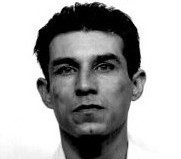
Henry Martinez Porter
Murderer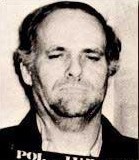 Ervil LeBaron
Murderer · USA · 1972
Ervil Morrell LeBaron (1925 to August 16, 1981) was the leader of a polygamous…
35 victims
Ervil LeBaron
Murderer · USA · 1972
Ervil Morrell LeBaron (1925 to August 16, 1981) was the leader of a polygamous…
35 victims
 Brian Kevin Rosenfeld
Murderer · USA · 1985
Brian Kevin Rosenfeld Brian Kevin Rosenfeld was sentenced to three concurrent l…
23 victims
Brian Kevin Rosenfeld
Murderer · USA · 1985
Brian Kevin Rosenfeld Brian Kevin Rosenfeld was sentenced to three concurrent l…
23 victims
 Marvin Gray
Murderer · USA · 1975
Marvin Gray was convicted killer who claimed responsibility for 23 slayings and…
23 victims
Marvin Gray
Murderer · USA · 1975
Marvin Gray was convicted killer who claimed responsibility for 23 slayings and…
23 victims
 Yahweh ben Yahweh
Murderer · USA · 1980
Yahweh ben Yahweh was born and legally named Hulon Mitchell Jr. (October 27, 19…
23 victims
Yahweh ben Yahweh
Murderer · USA · 1980
Yahweh ben Yahweh was born and legally named Hulon Mitchell Jr. (October 27, 19…
23 victims
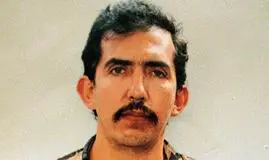 Luis Alfredo Garavito
Serial killer · Colombia/Ecuador · 1992
Luis Alfredo Garavito Cubillos, also known as "La Bestia" ("The Beast") or "Tri…
192 victims
Luis Alfredo Garavito
Serial killer · Colombia/Ecuador · 1992
Luis Alfredo Garavito Cubillos, also known as "La Bestia" ("The Beast") or "Tri…
192 victims
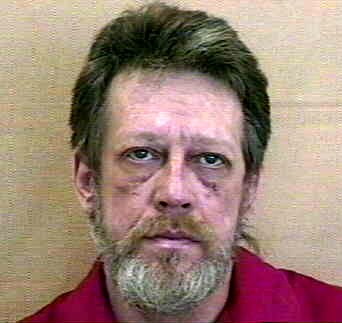 William Dillard Powell
Murderer · USA · 1991
William Dillard Powell (also known as William Dillard “Bugsy” Powell) was execu…
1 victim
William Dillard Powell
Murderer · USA · 1991
William Dillard Powell (also known as William Dillard “Bugsy” Powell) was execu…
1 victim
 Tommy Ray Pruitt
Murderer · USA · 2001
Tommy Ray Pruitt was sentenced to death on November 21, 2003. · November 21, 20…
1 victim
Tommy Ray Pruitt
Murderer · USA · 2001
Tommy Ray Pruitt was sentenced to death on November 21, 2003. · November 21, 20…
1 victim
 Dusty Ray Spencer
Murderer · USA · 1992
Dusty Ray Spencer (DOB: 02/13/52) was convicted and sentenced to death for the…
1 victim
Dusty Ray Spencer
Murderer · USA · 1992
Dusty Ray Spencer (DOB: 02/13/52) was convicted and sentenced to death for the…
1 victim
 George Emil Banks
Mass murderer · USA · 1982
George Emil Banks was an American mass murderer and a former Camp Hill prison g…
13 victims
George Emil Banks
Mass murderer · USA · 1982
George Emil Banks was an American mass murderer and a former Camp Hill prison g…
13 victims
 Lindsay Haugen
Murderer · USA · 2015
Lindsay April Haugen was an Army veteran. At the time of the killing, she was a…
1 victim
Lindsay Haugen
Murderer · USA · 2015
Lindsay April Haugen was an Army veteran. At the time of the killing, she was a…
1 victim
- Gender
- male
- Country
- USA
- Location
- Tarrant County, Texas, USA
- Date of birth
- December 12, 1941
- Age at first offence
- 34
- Characteristics
- attempted rape, drug addict, history of mental illness, motive unknown, police officer
- Victim profile
- Henry Paul Mailloux, 28 (Fort Worth police officer)
- Method of murder
- Shooting
- Date(s) of murder
- November 29, 1975
- Years active
- 1975
- Date of arrest
- —
- Status
-
Executed
Executed by lethal injection in Texas on July 9, 1985
Timeline
- July 9, 1985 — Henry Martinez Porter was pronounced dead at 12:31 a. m. following execution by lethal injection in Texas.
- March 28, 1979 — Porter appealed in the state courts.
- October 21, 1981 — Porter appealed in the state courts.
- May 14, 1984 — The Supreme Court considered Porter’s petition for writ of certiorari; the petition was denied.
- November 29, 1975 — Henry Martinez Porter shot Officer Henry Paul Mailloux after the officer asked Porter to pull his car over.
- 1976 — Porter was tried in Texas for the murder of a policeman; he was convicted and sentenced to death.
- 1973 and 1974 — Porter was on federal parole; a file pertaining to Porter’s conduct during this time included materials introduced into evidence.
- 1982 — Porter brought a federal habeas corpus suit; the District Court denied relief without oral argument or an evidentiary hearing, and the Court of Appeals for the Fifth Circuit affirmed.
- October 28, 1982 — The District Court denied habeas relief without oral argument or an evidentiary hearing (No. C-82-159).
- 1983 — The Court of Appeals for the Fifth Circuit affirmed the denial of habeas relief (Porter v. Estelle, 709 F.2d 944).
Background
Henry Martinez Porter was executed by lethal injection in Texas on July 9, 1985. He was identified as Henry Porter #551. His last statement included statements about spiritual help, friendship, and his view of the legal process.
Porter expressed that he believed he was called “a cold-blooded killer” and that he shot a man who shot him first. He also argued that his punishment reflected that “I am a Mexican and that he was a police officer,” and he criticized what he described as unequal justice. He added that he hoped God would forgive him for his sins and be merciful to society as God had been to him, and he said, “I’m ready, Warden.”
Porter argued that a thirteen-year-old boy who was handcuffed in the back seat of a police car was killed by a policeman and that people did not “hollered for the life of the policeman” who killed the boy. He also referred to a Houston police officer who “beat up and drowned Jose Campo Torres and threw his body in the river” and argued people did not call for justice for that officer.
The Supreme Court materials included that petitioner Henry Martinez Porter had a history relevant to competency. Among the materials considered in the proceedings were reports describing Porter’s heroin addiction and psychiatric history, including hallucinations and a psychopathic personality, along with paranoid schizophrenic behavior.
The offence
On the morning of November 29, 1975, Henry Martinez Porter of San Antonio, 43, shot Officer Henry Paul Mailloux, 28, after Officer Mailloux asked Porter to pull his car over.
Porter was shot in the side during the struggle and then shot Mailloux, claiming that he pulled the trigger in self-defense. Porter claimed that Mailloux said that he was going to kill him for robberies that had taken place in that area.
Investigation
As part of the proceedings discussed in later review, materials from a file pertaining to Porter’s conduct while on federal parole during 1973 and 1974 were introduced into evidence. The materials included reports that cast doubt on Porter’s sanity and capacity to understand legal proceedings.
These reports included: a director of a drug abuse treatment center who described Porter’s debilitating and apparently incurable heroin addiction and concluded that Porter’s “serious mental and emotional handicaps” had a “Rehabilitative rating is very poor.” Another report quoted unnamed psychologists stating that Porter had “a psychopathic personality” and had manifested “paranoid schizophrenic behavior.”
In addition, after the prosecutor discovered a presentence report prepared in 1959, the report revealed that while incarcerated on a robbery charge Porter was sent from a reformatory to a psychiatric hospital “because he had hallucinations of seeing his father and speaking to him.” After being held at the hospital for a month, Porter escaped.
Arrest
Officer Mailloux asked Porter to pull his car over prior to the shooting on November 29, 1975.
Trial
In 1976, Porter was tried in Texas for the murder of a policeman. He was convicted and sentenced to death.
The Texas Court of Criminal Appeals overturned Porter’s conviction because Porter’s constitutional right to confront witnesses against him had been violated by the introduction into evidence of materials from a file pertaining to Porter’s conduct while on federal parole during 1973 and 1974. Porter v. State, 578 S.W.2d 742 (Tex.Cr.App.1979).
Porter was retried before the same judge who had presided over his first trial. After the jury had been selected but before it was empaneled, the prosecutor discovered a presentence report prepared in 1959 describing a psychiatric episode in Porter’s past and revealing that Porter had hallucinations of seeing his father and speaking to him. After being held at the hospital for a month, Porter escaped.
Porter’s counsel informed the trial judge that he was concerned about the bearing of the newly revealed evidence on Porter’s competency to stand trial and requested the judge to order a psychiatric examination of Porter. Counsel also asked for a ruling that the results of such an examination would be admissible only for the purpose of assessing Porter’s competency and would be excluded from the penalty phase of the trial.
The prosecutor acceded to the request for an exam but objected to the proposed limitation on admissibility of the results.
The trial judge ruled that he would grant the request for a psychiatric exam only if the material disclosed thereby were admitted into the record and could be used by either side for any purpose. In response, defense counsel withdrew his request for a competency exam.
At the conclusion of the second trial, Porter was once again convicted and sentenced to death. The Texas Court of Criminal Appeals affirmed (Porter v. State, 623 S.W.2d 374 (Tex.Cr.App.1981)). The Court denied certiorari, 456 U.S. 965, 102 S.Ct. 2046, 72 L.Ed.2d 491 (1982).
Sentencing
Porter was sentenced to death following both his 1976 conviction and his retrial.
Appeals
Porter appealed twice in the state courts, first on March 28, 1979 and then on October 21, 1981. He also filed a petition considered by the Supreme Court on May 14, 1984. His earlier execution dates were stayed because of these appeals.
After exhausting state remedies, Porter brought a federal habeas corpus suit in Federal District Court seeking a writ of habeas corpus on the ground, inter alia, that the trial judge’s ruling on his request for a psychiatric examination violated the Due Process Clause. The District Court denied relief without oral argument or an evidentiary hearing (No. C-82-159 (SD Tex., Oct. 28, 1982)). The Court of Appeals for the Fifth Circuit affirmed (Porter v. Estelle, 709 F.2d 944 (1983)).
The Supreme Court considered the petition for writ of certiorari to the United States Court of Appeals for the Fifth Circuit. The petition for writ of certiorari was denied (466 U.S. 984 104 S.Ct. 2367 80 L.Ed.2d 838; Henry Martinez Porter v. Dan V. McKaskle, Acting Director, Texas Department of Corrections, No. 83-5808). Justice MARSHALL, with whom Justice BRENNAN joined, dissented, stating a view that the petition should be granted and describing the recurring question concerning the standard for determining when a trial judge has a constitutional obligation to order a psychiatric examination to determine a defendant’s competency to stand trial.
Justice MARSHALL, with whom Justice BRENNAN joins, dissenting. This case presents a recurring question concerning the standard for determining when a trial judge has a constitutional obligation to order a psychiatric examination to determine a defendant's competency to stand trial. Especially because the correct answer to that question determines whether petitioner lives or dies, I would grant the petition. 1
Justice MARSHALL, dissenting. In 1976, petitioner, Henry Martinez Porter, was tried in Texas for the murder of a policeman. He was convicted and sentenced to death. However, the Texas Court of Criminal Appeals overturned his conviction on the ground that petitioner's constitutional right to confront witnesses against him had been violated by the introduction into evidence of materials from a file pertaining to petitioner's conduct while on federal parole during 1973 and 1974. Porter v. State, 578 S.W.2d 742 (Tex.Cr.App.1979). Among those materials were various reports that cast doubt on petitioner's sanity and capacity to understand legal proceedings.
Justice MARSHALL, dissenting. [The dissent described] heroin addiction and psychiatric episode including hallucinations of seeing his father and speaking to him; after being held at the hospital for a month, petitioner escaped.
Outcome
Porter’s petition for writ of certiorari was denied by the Supreme Court, and he remained under a death sentence.
He was executed by lethal injection in Texas on July 9, 1985.
Aftermath
Porter was pronounced dead at 12:31 a. m. on July 9, 1985.
Other details
Last statement
Porter’s last statement included the following verbatim words:
“I want to thank Father Walsh for his spiritual help. I want to thank Bob Ray (Sanders) and Steve Blow for their friendship. What I want people to know is that they call me a cold-blooded killer when I shot a man that shot me first. The only thing that convicted me was that I am a Mexican and that he was a police officer. People hollered for my life, and they are to have my life tonight. The people never hollered for the life of the policeman that killed a thirteen-year-old boy who was handcuffed in the back seat of a police car. The people never hollered for the life of a Houston police officer who beat up and drowned Jose Campo Torres and threw his body in the river. You call that equal justice. This is your equal justice. This is America’s equal justice. A Mexican’s life is worth nothing. When a policeman kills someone he gets a suspended sentence or probation. When a Mexican kills a police officer this is what you get. From there you call me a cold-blooded murderer. I didn’t tie anyone to a stretcher. I didn’t pump any poison into anybody’s veins from behind a locked door. You call this justice. I call this and your society a bunch of cold-blooded murderers. I don’t say this with any bitterness or anger. I just say this with truthfulness. I hope God forgives me for all my sins. I hope that God will be as merciful to society as he has been to me. I’m ready, Warden. Henry Martinez PORTER”
Execution day conduct and meals
As his third execution date approached, Porter instructed his lawyer, A. Deniz Tor, not to try any last minute legal attempts to stop his execution.
Porter visited and joked with family and friends including his daughter, Imelda Cortinas, and his brother Edward Porter. He dined on steak, refried beans, tossed salad, jalapenos, tortillas, chocolate cake and iced tea.
Quoted mental health material referenced in later proceedings
The later Supreme Court dissent and case discussion quoted medical statements including:
- “serious mental and emotional handicaps,”
- “Rehabilitative rating is very poor.”
- “a psychopathic personality”
- “paranoid schizophrenic behavior.”
- “because he had hallucinations of seeing his father and speaking to him.”
Spotted an error, or have more information about this case?