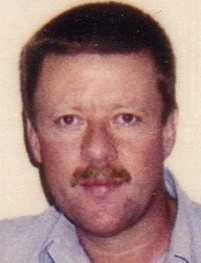
Wilburn Henderson
Murderer Ervil LeBaron
Murderer · USA · 1972
Ervil Morrell LeBaron (1925 to August 16, 1981) was the leader of a polygamous…
35 victims
Ervil LeBaron
Murderer · USA · 1972
Ervil Morrell LeBaron (1925 to August 16, 1981) was the leader of a polygamous…
35 victims
 Brian Kevin Rosenfeld
Murderer · USA · 1985
Brian Kevin Rosenfeld Brian Kevin Rosenfeld was sentenced to three concurrent l…
23 victims
Brian Kevin Rosenfeld
Murderer · USA · 1985
Brian Kevin Rosenfeld Brian Kevin Rosenfeld was sentenced to three concurrent l…
23 victims
 Marvin Gray
Murderer · USA · 1975
Marvin Gray was convicted killer who claimed responsibility for 23 slayings and…
23 victims
Marvin Gray
Murderer · USA · 1975
Marvin Gray was convicted killer who claimed responsibility for 23 slayings and…
23 victims
 Yahweh ben Yahweh
Murderer · USA · 1980
Yahweh ben Yahweh was born and legally named Hulon Mitchell Jr. (October 27, 19…
23 victims
Yahweh ben Yahweh
Murderer · USA · 1980
Yahweh ben Yahweh was born and legally named Hulon Mitchell Jr. (October 27, 19…
23 victims
 Dedrick Owens
Homicide · USA · 2000
Perpetrator: Dedrick Owens (born in 1993), a 6-year-old first grader. · Victim:…
1 victim
Dedrick Owens
Homicide · USA · 2000
Perpetrator: Dedrick Owens (born in 1993), a 6-year-old first grader. · Victim:…
1 victim
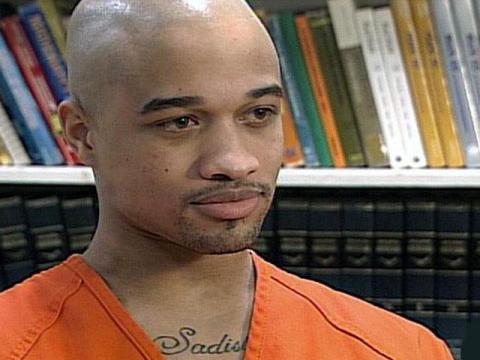 Ulysses Handy
Murderer · USA · 2006
Ulysses Handy III was 24 when he walked into court and entered pleas regarding…
3 victims
Ulysses Handy
Murderer · USA · 2006
Ulysses Handy III was 24 when he walked into court and entered pleas regarding…
3 victims
 Orville Majors
Serial killer · USA · 1994
Orville Lynn Majors (born 24 April 1961) was a former licensed practical nurse…
6 victims
Orville Majors
Serial killer · USA · 1994
Orville Lynn Majors (born 24 April 1961) was a former licensed practical nurse…
6 victims
 Franklin Lynch
Serial killer · USA · 1987
Franklin Lynch was involved in the case prosecuted as a serial murder matter co…
3 victims
Franklin Lynch
Serial killer · USA · 1987
Franklin Lynch was involved in the case prosecuted as a serial murder matter co…
3 victims
- Gender
- male
- Country
- USA
- Location
- Sebastian County, Arkansas, USA
- Date of birth
- 1942
- Age at first offence
- 38
- Characteristics
- robbery, history of mental illness
- Victim profile
- Willa Dean O'Neal ( used-furniture store owner )
- Method of murder
- Shooting ( .22-caliber handgun)
- Date(s) of murder
- November 26, 1980
- Years active
- 1980
- Date of arrest
- —
- Status
-
Executed
Executed by lethal injection in Arkansas on July 8, 1998
Case record: Wilburn Henderson
Background
Wilburn A. Henderson was convicted of capital murder involving the killing of Willa Dean O'Neal. Three times Wilburn Henderson was tried for the murder of Willa Dean O'Neal, and three times he was convicted and sentenced to death. The first conviction was voided as a result of juror exposure to pretrial publicity. The second conviction was invalidated when the U.S. Court of Appeals for the Eighth Circuit affirmed the district court's grant of habeas corpus relief in Henderson v. Sargent, 926 F.2d 706 (8th Cir. 1991), modified, 939 F.2d 586 (8th Cir. 1991). The third conviction was the subject of a later appeal.
In November 1980, Willa Dean O'Neal was found shot to death behind the counter of the family furniture store in Fort Smith, Arkansas. She was murdered between approximately 1:40 p.m. and about 2:00 p.m. The cash register was found open and empty.
The offence
Willa Dean O'Neal was killed with a shot from a .22-caliber handgun. The police testimony described her as being found shot to death behind the counter of the furniture store she owned and operated with her husband.
The police established that Willa Dean O'Neal was murdered between the time when her husband Bob O'Neal, daughter Glenda Fleetwood, and son-in-law Ricky Fleetwood last saw her and the time when a mail carrier and several customers discovered the body. Prosecutors stated that before her killing, Henderson retrieved a .22-caliber gun from a pawn shop and returned it to the pawn shop later. Ballistics experts could not conclusively match the bullet to Henderson's gun.
Prosecutors said the robbery netted $41. The coroner testified that he believed Willa Dean O'Neal was shot in the head as she sat in a chair.
Investigation
Suspicion fell on Henderson when a folded sheet of yellow paper with two telephone numbers, the name of a real estate agent, and a description of a lake cabin was found on the floor. The victim's daughter testified she had not seen the paper there earlier in the day. Police contacted the real estate agent, who stated Henderson made an appointment to discuss the lake cabin described on the sheet of paper, and that Henderson did not keep the appointment.
Further investigation revealed Henderson had taken a .22 caliber pistol out of pawn a few days before the murder and had returned it after the murder. Ballistic testing showed that Willa Dean O'Neal was killed by a .22 caliber pistol but could not conclusively match the bullet to Henderson's gun.
Aware he was a suspect, Henderson fled to Houston where he was later arrested by Houston police. Arkansas police traveled to Houston to question Henderson. Henderson admitted that he was at the murder scene and claimed he had witnessed the murder. Henderson later recanted the statement, stating he confessed because he feared police would harm him.
During the investigation, the police had little direct evidence linking Henderson to the murder. At the first trial, jurors were told a yellow piece of paper showed Henderson had been in the furniture store; Henderson conceded the paper was his and stated he must have dropped it when he was in the store several days before. Jurors also heard about a long, rambling statement Henderson gave police after his arrest in which another man committed the crime and Henderson happened to be in the store at the time. Henderson later recanted the statement, stating he feared police would harm him.
Other possible suspects were discussed, including Clarence Wilson, John Hysell, Harry Anderson, Ollie Brown, and Ruby Kiser. The record also referenced that some suspects had taken lie-detector tests, and that O'Neal had not taken a lie-detector test.
A statement attributed to Bob O'Neal during Henderson's trial was also described in the record. The coroner testified that the victim had been sitting at the time she was shot, and Bob O'Neal turned to Mr. Hudspeth, sitting next to him, and said: "No, that's not the way it was. She dove out of the chair to miss the bullet." The statement was said to have never been explained by the state.
Arrest
Henderson was arrested in Houston after fleeing there. Police discovered by then that Henderson had taken a .22 caliber pistol out of pawn a few days before the murder and had returned it after the murder.
Trial
First and second trials
At the first trial, Henderson's conviction was challenged after several jurors admitted they had seen extensive media publicity about the case, leading to a mistrial. Henderson was later convicted of capital murder.
At the first trial, the prosecution presented the yellow piece of paper found on the floor and tied it to Henderson through telephone numbers and a real estate agent. Police also presented evidence that Henderson obtained a gun from a pawnshop and then pawned it back just after the murder, although ballistics tests were inconclusive about whether that gun was used in the slaying.
Henderson testified that he was in Springdale, Arkansas, at 12:00 noon the day of the murder and could not possibly have driven to Fort Smith in time to commit the murder. His alibi was corroborated by Selena Henderson, his wife at the time, who claimed to have been with him in Springdale on that day. Henderson explained he must have dropped the yellow sheet of paper when he was shopping in the O'Neals' store a few days before the murder.
At the penalty phase, Henderson's mother testified that he was a loving son. Another witness testified that Henderson had been doing good Christian work while in jail. Defense counsel presented no other mitigating evidence. The jury sentenced him to death.
Habeas and new trial
After the second conviction, Henderson filed a petition contending that his trial counsel had failed to investigate and present evidence implicating the victim's husband, Bob O'Neal, as the killer. The evidence described included Bob O'Neal's history of violence and marital infidelity, Willa Dean O'Neal's desire for a divorce, and Bob O'Neal's suspicious behavior on the day of the murder.
The district court issued a writ of habeas corpus after extensive evidentiary hearings. The U.S. Court of Appeals for the Eighth Circuit affirmed the district court's grant of the writ, finding Henderson's counsel constitutionally defective in the second trial by failing to develop this evidence and bring it before the jury. Henderson was assigned new counsel and tried again.
Third trial: rebuttal testimony by Clarence Wilson
In the third trial, the defense further explored the evidence implicating Bob O'Neal, including the facts recited about the couple's routine on the day of the murder and Henderson's alleged alibi.
After the defense's presentation, the government called Clarence Wilson as a rebuttal witness. Wilson testified that he checked with Ms. O'Neal between 10:00 and 11:00 a.m. on the day of the murder to see if she had work for him. He testified he returned to the store around 1:00 p.m. and that Ms. O'Neal told him that her family had stopped for lunch but had left. Wilson testified he then left the store and did not return until after the murder. The record described that Wilson's testimony that he had seen Ms. O'Neal alive after her husband left effectively undermined defense contentions that Mr. O'Neal was the killer.
On cross-examination, defense counsel asked why Wilson had only mentioned being at the store twice and not three times at the habeas hearing two years before. Wilson responded that it must have "slipped [his] mind." Trial Tr. at 1565.
On redirect examination, the state referred to a statement Wilson made to police shortly after the murder that detailed all three trips to the store. Over defense objection, the trial court received the evidence. The jury convicted Henderson again.
Sentencing
At the first trial's penalty phase, Henderson's mother testified he was a loving son, and another witness testified he had been doing good Christian work while in jail. The jury sentenced Henderson to death. Henderson was sentenced to death again after the second trial and again after the third trial.
Appeals
U.S. Court of Appeals: habeas corpus case
Henderson challenged his conviction for capital murder on the grounds that his trial counsel was ineffective in both the guilt and penalty phases of his trial. The district court found trial counsel failed to investigate and develop evidence implicating other suspects in the murder, and that this evidence created significant doubt about Henderson's guilt. The district court also found trial counsel failed to present mitigating evidence in the penalty phase indicating Henderson suffered from mental illness and possibly was not in complete control when he evaded police and confessed to witnessing the murder. The district court ordered the state to either retry Henderson or release him.
The U.S. Court of Appeals affirmed with regard to the guilt phase claim and did not reach the penalty phase claim.
The U.S. Court of Appeals also summarized the original guilt-phase evidence: Henderson's conviction for capital murder, the mistrial after juror exposure to media publicity, the evidence that Willa Dean O'Neal was shot to death behind the counter, the time window from about 1:40 p.m. to about 2:00 p.m., and the cash register found open and missing at least $41. The court described the yellow sheet of paper found on the floor, the real estate agent contact, and Henderson's failure to keep the appointment. The court also described Henderson's flight to Houston and his confession that he was at the murder scene, his claim that he saw Ollie Brown kill O'Neal, and the later recantation.
The U.S. Court of Appeals further described the finding that trial counsel failed to investigate evidence implicating Bob O'Neal, including testimony from Glenda Fleetwood and others. It described Henderson's alibi defense and the district court's view that counsel's decision not to investigate was not justified as strategic.
The U.S. Court of Appeals described additional possible suspects as testified to in the evidentiary hearing, including John Hysell, Harry Anderson, and Ollie Brown and Ruby Kiser. It also included a discussion of John Hysell living in Kansas, being said to be capable of murder, and being connected to a robbery in Kansas and being seen in Fort Smith pawning coins two days after the murder. It described Harry Anderson, a man with a criminal history and known to carry guns, seen loitering "nervously" across the street from the store on the day of the murder. It described that Ollie Brown, and Ruby Kiser, were possible suspects.
The court noted that Henderson's counsel did not interview the family members and did not request polygraph test results, and that the investigation made by counsel was essentially limited to reading the police file. The court concluded that trial counsel's failure to adequately investigate plausible defense theory fell below the objective standard and that adequate representation probably would have produced a different result. The U.S. Court of Appeals affirmed the grant of habeas corpus vacating Henderson's conviction.
Later appeal: Wilson's testimony and evidence rulings
After exhausting state remedies, Henderson filed a section 2254 petition. The district court denied relief, and Henderson appealed.
Henderson argued that the district court violated due process by allowing Wilson's testimony in rebuttal rather than in the case-in-chief, and by allowing reference to Wilson's police statement. The appeal concluded that the timing of Wilson's testimony was not fundamentally unfair, that Wilson's identity was hardly unknown to the defense because Wilson had testified at Henderson's first habeas corpus hearing and had been subpoenaed by the defense for the third trial, and that reference to Wilson's police statement did not constitute grossly unfair prejudice.
Henderson also argued that his trial counsel was ineffective in cross-examining Wilson and in failing to offer the transcript of Wilson's habeas corpus testimony into evidence. The appeal held that Henderson failed to show constitutionally infirm cross-examination, and that counsel's failure to introduce the transcript did not constitute ineffective assistance because Henderson had not shown Wilson's day-of-murder statement was less accurate than the later habeas testimony and because the habeas testimony could not have been properly admitted as substantive evidence under state law. The appeal also found no prejudice from its absence because the jury was already informed of the contradiction through cross-examination.
Henderson further contended that his police statement was involuntary due to his mental state. The appeal referenced state court determinations that Henderson had been in custody for two days, had been informed of and appeared to understand his rights, willingly spoke with Arkansas police, had normal intelligence, and gave no indication of psychosis during interrogation. It held that Henderson had not alleged coercive police conduct, which was necessary to conclude a confession was involuntary. The appeal rejected the claim and affirmed denial of habeas relief.
Henderson argued cumulative error, but the appeal concluded cumulative error did not warrant habeas relief because each habeas claim must stand or fall on its own.
Outcome
Wilburn Henderson's conviction was vacated after habeas corpus relief was granted. After additional trials, he was executed.
Henderson was executed by injection on July 8, 1998.
At the time of execution, Henderson was asked if he had a final statement, and he said: "Yes sir, I am an innocent man. God forgive you for what you do."
He also told the warden: "I am an innocent man" and "God forgive you for what you do."
Aftermath
Willa Dean O'Neal's children were allowed to witness Henderson's execution under a 1997 Arkansas law that permitted relatives of a murder victim to witness the execution of the killer. O'Neal's children said they were tired of grieving every July 8 and described the execution as enabling them to celebrate their mother's birthday.
The record described that Henderson was the 17th person executed in Arkansas since the state resumed killing death-row inmates in 1990. It also described that execution dates had been frustrated by 16 years of appeals and that four successive execution dates were set by four successive governors of Arkansas, with President Clinton, while governor of Arkansas, setting four of the execution dates for Henderson.

Spotted an error, or have more information about this case?