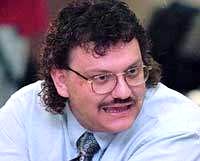
Orville Majors
Serial killer Glen Edward Rogers
Serial killer · USA · 1993
Glen Edward Rogers was a spree killer whose cross-country rampage in 1994-95 le…
70 victims
Glen Edward Rogers
Serial killer · USA · 1993
Glen Edward Rogers was a spree killer whose cross-country rampage in 1994-95 le…
70 victims
 Efren Saldivar
Serial killer · USA · 1989
Efren Saldivar (born 30 September 1969) was an American serial killer who murde…
50 victims
Efren Saldivar
Serial killer · USA · 1989
Efren Saldivar (born 30 September 1969) was an American serial killer who murde…
50 victims
 Charles Cullen
Serial killer · USA · 1984
Charles Cullen (born February 22, 1960) was a former nurse and the most prolifi…
45 victims
Charles Cullen
Serial killer · USA · 1984
Charles Cullen (born February 22, 1960) was a former nurse and the most prolifi…
45 victims
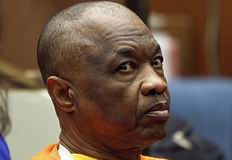 Lonnie Franklin
Serial killer · USA · 1985
Lonnie Franklin was convicted as the “Grim Sleeper” serial killer, a nickname u…
25 victims
Lonnie Franklin
Serial killer · USA · 1985
Lonnie Franklin was convicted as the “Grim Sleeper” serial killer, a nickname u…
25 victims
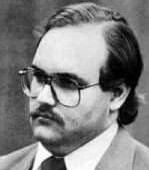 Richard Angelo
Serial killer · USA · 1987
Richard Angelo was 26 years old when he went to work at Good Samaritan Hospital…
25 victims
Richard Angelo
Serial killer · USA · 1987
Richard Angelo was 26 years old when he went to work at Good Samaritan Hospital…
25 victims
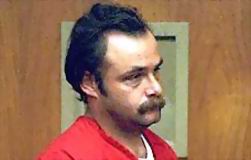 Wesley Shermantine
Serial killer · USA · 1984
Wesley Shermantine Wesley Shermantine was sentenced to death in California on M…
24 victims
Wesley Shermantine
Serial killer · USA · 1984
Wesley Shermantine Wesley Shermantine was sentenced to death in California on M…
24 victims
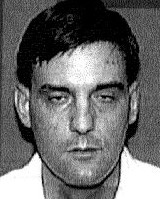 Scott Louis Panetti
Murderer · USA · 1992
Scott Louis Panetti was a white male aged 45. He had a long history of serious…
2 victims
Scott Louis Panetti
Murderer · USA · 1992
Scott Louis Panetti was a white male aged 45. He had a long history of serious…
2 victims
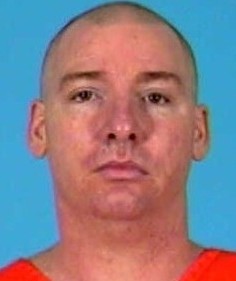 Michael Seibert
Murderer · USA · 1998
Name: Michael Seibert · Date of birth: 01/12/68 · Court opinion: Supreme Court…
1 victim
Michael Seibert
Murderer · USA · 1998
Name: Michael Seibert · Date of birth: 01/12/68 · Court opinion: Supreme Court…
1 victim
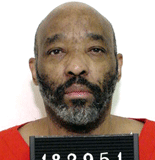 Sherman Noble
Murderer · USA · 1985
Sherman Noble was a death row inmate in Kentucky. He died in prison on October…
4 victims
Sherman Noble
Murderer · USA · 1985
Sherman Noble was a death row inmate in Kentucky. He died in prison on October…
4 victims
 Brenda Spencer
Homicide · USA · 1979
Brenda Spencer was convicted after a school shooting at Grover Cleveland Elemen…
2 victims
Brenda Spencer
Homicide · USA · 1979
Brenda Spencer was convicted after a school shooting at Grover Cleveland Elemen…
2 victims
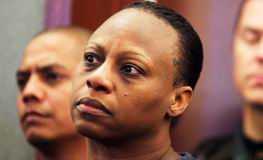 Brenda Stokes Wilson
Murderer · USA · 2012
Brenda Stokes Wilson, 50, was a former blackjack dealer. She was accused of kil…
1 victim
Brenda Stokes Wilson
Murderer · USA · 2012
Brenda Stokes Wilson, 50, was a former blackjack dealer. She was accused of kil…
1 victim
 Angela Camacho
Murderer · USA · 2003
Angela Camacho was convicted in a case involving the decapitation deaths of her…
3 victims
Angela Camacho
Murderer · USA · 2003
Angela Camacho was convicted in a case involving the decapitation deaths of her…
3 victims
- Gender
- male
- Country
- USA
- Location
- Clinton, Vermillion County, Indiana, USA
- Date of birth
- 1941
- Age at first offence
- 53
- Characteristics
- poisoner, nurse, alcohol
- Victim profile
- Mary Ann Alderson, 69; Dorothea Hixon, 80; Cecil Smith, 74; Luella Hopkins, 89; Margaret Hornick, 79; Freddie Wilson, 56; and Derek Maxwell, Sr., 64 (patients)
- Method of murder
- Poisoning (lethal doses of potassium chloride and epinephrine)
- Date(s) of murder
- 1994 - 1995
- Years active
- 1994–1995
- Date of arrest
- December 29, 1997
- Status
-
Imprisoned
Sentenced to 360 years in prison on November 13, 1999
Case record: Orville Majors
Background
Orville Lynn Majors (born 24 April 1961) was a former licensed practical nurse from Clinton, Indiana. His nursing license was suspended in 1995, leading to termination of his employment.
He was suspected in connection with more than 100 suspicious deaths at Vermillion County Hospital, where he worked.
The offence
Orville Majors was convicted of murdering patients. Though he was only tried for six murders, he was believed to have committed as many as 130 between 1993 and 1995, the period of time for which he was employed by the hospital where the deaths occurred and for which he was investigated.
He was believed to have injected potassium chloride and epinephrine as his murder weapons.
The accused killings involved elderly patients who were described as “demanding, whiny, or disproportionately added to his work load.”
During the period from 1993 to 1995, the deaths occurred over a 13-month span.
Patients whose deaths were part of the trial
Majors was accused of giving lethal doses of potassium chloride and epinephrine to the following patients:
- Mary Ann Alderson, 69
- Dorothea Hixon, 80
- Cecil Smith, 74
- Luella Hopkins, 89
- Margaret Hornick, 79
- Freddie Wilson, 56
- Derek Maxwell, Sr., 64
Jurors were able to reach decisions in six cases, but jurors were hopelessly deadlocked in Cecil Smith’s case, and a mistrial was declared on that charge.
Investigation
Suspicion first developed when a large number of deaths began occurring at Vermillion County Hospital where Majors worked. Prior to Majors starting employment at the hospital, an average of around 26 patients died annually. After he started working there, the rate increased to more than 100 per year, with nearly one out of every three patients admitted to the hospital dying.
A supervisory study determined that nearly twice as many patients died when Majors was on duty than with any other nurses. Majors was the only nurse present at the deaths of seven patients.
Police found containers of lethal drugs at Majors’ house and in his van. Prosecutors said the deaths were consistent with injections of potassium chloride, epinephrine, or both.
State medical examiners exhumed and performed autopsies and told jurors that most of the patients experienced a sudden rise in blood pressure before their hearts suddenly stopped. State medical experts believed this was consistent with excessive amounts of potassium and epinephrine being injected directly into an IV line.
Investigators recovered potassium vials and syringes from Majors’ former residence and from a vehicle driven by the defendant.
Police exhumed Russell Firestone Sr.’s body as part of the investigation; Firestone Sr. was not among the seven murders with which Majors was charged.
Arrest
Majors was arrested in December 1997 after the state of Indiana launched a criminal investigation.
Trial
A total of 79 witnesses were called to the stand at his trial.
Majors’ trial involved seven deaths, but jurors were unable to reach a verdict on the seventh patient. After more than 40 hours of deliberations over three-and-half days, an Indiana jury found Majors guilty of murder in six of the seven patients he was accused of killing. The jury was unable to reach a verdict on Cecil Smith, and a mistrial was declared on that charge.
Defence position and evidence
Majors maintained his innocence and his lawyers planned to appeal his conviction.
Majors’ defence attempted to cast reasonable doubt on the prosecution’s case. Defence counsel I. Marshall Pinkus called the patients’ family physicians, who testified that the alleged victims suffered from serious preexisting illnesses at the time of their deaths and likely died from those diseases or natural causes.
Through doctors’ testimony, the defence showed:
- Dorothea Hixon had been hospitalized on 20 different occasions for congestive heart failure in the two years leading up to her death.
- Mary Ann Alderson had long suffered from chronic lung disease.
- Derek Maxwell, Sr. was a diabetes patient who did not always follow his doctor’s advice.
Pinkus also suggested that police unfairly focused on Majors rather than other doctors and nurses who had contact with the patients.
Pinkus had the lead investigator in the case, Detective Frank Turchi, admit on the stand that he performed a background check on Majors but not on the defendant’s colleagues. Turchi also admitted that investigators requested blood and fingerprint samples only from Majors, but not from other people who came in contact with the patients.
A pretrial ruling restricted the prosecution’s use of an incriminating report that linked Majors to the deaths. An independent report by one of Majors’ former nursing supervisors, Dawn Stirek, concluded that most of the patients died suddenly and unexpectedly and that patients were 42.96 times more likely to die during Majors’ shift. Judge Ernest Yelton barred prosecutors from using such data at trial when Majors was being tried for specific murders, ruling that the supervisory study was inadmissible because Majors was only being tried for six murders, while allowing prosecutors to mention it very generally.
Judge Ernest Yelton restricted the prosecution’s use of the study, siding with defense attorneys who claimed it would unfairly implicate Majors in the alleged murders of patients other than the seven victims. The study did not have an impact on the outcome of the case.
Majors chose not to testify at trial.
Prosecution evidence and testimony
Prosecutors presented evidence that suggested Majors’ presence during these patients’ deaths was more than a coincidence.
Three of the patients’ relatives saw their loved ones die almost immediately after Majors gave them a shot.
Investigators told jurors they recovered potassium vials and syringes at Majors’ former residence and in a vehicle driven by the defendant.
The prosecution also cast doubt on the motives of hospital physicians who came to Majors’ defence. When Drs. Joel Elias and John Albrecht maintained they had no reason to suspect Majors of any wrongdoing, prosecutor Nina Alexander pointed out that the doctors were the subject of a negligence suit filed by several patients’ families.
Since Majors’ arrest in 1997, 65 families had filed suit against Vermillion County Hospital and several officials claiming that doctors were negligent in their supervision of Majors.
As a licensed nurse, Majors was not legally authorized to give unsupervised injections.
Statements and remarks presented at trial
Witness testimony included the following remarks attributed to Majors:
- A former roommate, Andy Harris, told jurors that Majors often said that old people “should be gassed”.
- An acquaintance, Donald Miller, testified that in 1996 Majors admitted using potassium chloride to kill patients.
The defence noted that Miller never told police about Majors’ alleged confession until they approached the witness.
The defence also relied on evidence that Majors referred to elderly patients with derogatory terms, including that he referred to elderly patients as “a waste” and by various derogatory terms.
Some witnesses testified that he hated elderly people and that he believed that they “should be gassed”.
Juror misconduct claims and ruling during trial appeals process
After conviction, the judge rejected Majors’ claims of juror misconduct. Clay Circuit Judge Ernest Yelton said he found no evidence of alcohol misuse by jurors as claimed in a defence motion for Majors.
Yelton also rejected claims that jurors were subjected to improper influence by law enforcement officers during the six-week trial. The defence cited statements made by juror Ronda Baldwin, who said she was particularly bothered by social gatherings for the jurors at the home of the Clay County sheriff. Baldwin said the gatherings included free alcohol and were attended by some members of the State Police, the primary agency that investigated Majors. Baldwin said the gatherings made her feel uncomfortable. Yelton ruled that none of the officers who attended the outings had any part in the investigation.
Yelton repeatedly questioned Baldwin’s credibility, writing:
"She focuses on an innocent snippet of fact and then proceeds to weave it into a negative inference,"
Baldwin told The Indianapolis Star that she believed then—and did now—that some incidents during the trial were “out of place.” She said:
"I was telling the truth, what I experienced."
Yelton defended the right of jurors to reasonable diversions when court was adjourned for the day. He noted jurors spent most of the trial away from their families in Miami County, were tasked with digesting testimony of 77 witnesses and thousands of pages of evidence, and he wrote that they deserved consideration.
Yelton said he approved two get-togethers to lessen stress and that after some jurors requested that there be beer there, he bought them some with his own money. Yelton gave no credence to Baldwin’s attempt to portray fellow juror Beverly Chapman as drunk after one court session at the end of the trial, writing:
"None of the other . . . jurors described her as over-indulgent."
Regarding alcohol claims, Yelton said there was no credible evidence any juror drank to intoxication during their off-hours and that all 11 other jurors filed sworn statements denying excessive drinking and denying seeing any juror drunk.
Among the key defence allegations was that jurors drank after deliberations had begun Oct. 14. Baldwin claimed juror James Christensen said he drank 11 beers one night at the hotel where jurors stayed. Yelton wrote that Christensen said only that he felt like drinking 11 beers, and Christensen said he drank no alcohol once deliberations began.
Yelton noted one juror who drank alcohol after the case went to the jury: Baldwin. Yelton said she admitted drinking two beers at the hotel. Yelton wrote:
"Perhaps other jurors could obtain replenishing sleep by prayer and meditation. Others may exercise before retiring,"
and added:
"then so be it."
Yelton denied Baldwin’s assertions about jurors improperly talking about the case during the trial. He conceded there probably were comments made in the jury room or at the hotel about attorneys on both sides, but he said alleged comments about defence attorney I. Marshall Pinkus’ “propensity to sweat”—noting the courtroom was warm—and conjecture about Deputy Prosecutor Nina Alexander’s hair bun being real “hardly qualify as discussions about the case.”
Sentencing
In November 1999, Majors was sentenced to 360 years in prison.
Judge Ernest Yelton sentenced Majors to six consecutive 60-year sentences. Majors would have to serve at least 180 years before being eligible for early release.
Judge Ernest Yelton’s remarks at sentencing included:
"It is the judgment of this court that the maximum penalty is the minimally reasonable sentence in this case,"
and: "At long last, may the souls of Mary Ann Alderson, Dorothea Dixon, Luella Hopkins, Freddie Dale Wilson, Derek Maxwell and Cecil Smith rest in peace,"
At sentencing, the victims’ relatives made emotional pleas for the longest possible sentence, including a plea from Kathryn, Maxwell’s wife:
"Mr. Majors, if you don't want the fruit of sin, then stay out of the devil's orchard,"
Defense attorney Carolyn Rader offered no evidence that might have lessened the sentence, saying she did not believe it would make a difference. She left immediately after the hearing without speaking to reporters.
Appeals
After the conviction, Majors’ bid for a new trial suffered a setback when Judge Ernest Yelton rejected Majors’ claims of juror misconduct.
Gregory Lewis, a deputy state public defender handling Majors’ case after conviction, declined comment except to say the verdict would be appealed to the Indiana Supreme Court.
Outcome
An Indiana jury found Orville Lynn Majors guilty of murdering six patients at Vermillion County Hospital. Jurors were unable to reach a verdict on the seventh patient, Cecil Smith, and a mistrial was declared on that charge.
Other details
Majors was accused of killing patients at Vermillion County Hospital in Clinton, Indiana.
Majors reportedly showed no emotion as verdicts were read. His sister, Debbie McClelland, said:
"They're wrong. ... Lynn never killed anybody."
Majors maintained his innocence and his lawyers were planning to appeal the verdict.
Paula Holdaway, daughter of victim Dorothea Hixon, felt vindicated and said:
"Mother is now at peace."
The alleged murders were connected to the deaths of the patients over a 13-month span from 1993 to 1995.
In 1995, after Majors’ nursing license was suspended and he left the hospital, Vermillion’s death rate dropped back to prior levels.
During the time described as Majors’ employment at the hospital, the death rate in 1994 reached 101, and in just six months between July and December 1994, 67 people died, with 63 dying during Majors’ shift.
Across Majors’ 22-month tenure, 147 patients died in the ICU, and 121 died during hours worked by Majors.
Before Majors started working at the hospital, 26 people died per year in the intensive care unit.
During the trial, Judge Yelton barred prosecutors from using statistical studies showing the number of deaths rose during Majors’ employment when Majors was only being tried for six murders.
Assistant prosecutor Nina Alexander said the state could prove its case without the statistical studies, though prosecutors had not said what evidence they had beyond what was in the public case file.
The exhumation investigation began with police digging Russell Firestone Sr.’s body out of a rural cemetery as part of investigating more than 100 suspicious deaths. Russell Firestone Jr. told police he wanted answers about what happened to his father.
Firestone’s statement included:
"I want some answers,"
He said a male nurse jabbed a syringe into his father’s chest on Dec. 12, 1994, just moments before his death.
Prosecutors whittled charges down to seven cases they believed exhibited the strongest evidence that Majors gave patients unauthorized and lethal injections.
A consultant who studied patient charts and nurses’ time cards found patients were 43 times more likely to die when Majors was on duty; Judge Ernest Yelton barred prosecutors from using such data at trial.
Police say vials containing traces of those drugs and syringes found at Majors’ home and in his van were traced to shipments from medical suppliers to Vermillion County Hospital.
Doctor John Albrect, who testified twice, said he believed Majors was innocent.
Detective Frank Turchi admitted to performing a background check on Majors but not on the defendant’s colleagues, and to requesting blood and fingerprint samples only from Majors, not from other people who came in contact with the patients.
A former nursing supervisor, Dawn Stirek, produced an independent report concluding most patients died suddenly and unexpectedly, and that patients were 42.96 times more likely to die during Majors’ shift.
Judge Ernest Yelton described the proceedings as involving jurors who were not subjected to “security of unemotional British Beefeater guards,” and that they deserved consideration.
Spotted an error, or have more information about this case?