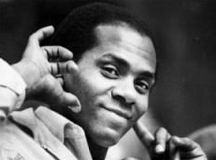
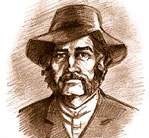
Franklin Lynch
Serial killer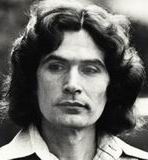 Rodney Alcala
Serial killer · USA · 1977
Rodney James Alcala (born August 23, 1943) was also known as Rodrigo Jacques Al…
100 victims
Rodney Alcala
Serial killer · USA · 1977
Rodney James Alcala (born August 23, 1943) was also known as Rodrigo Jacques Al…
100 victims
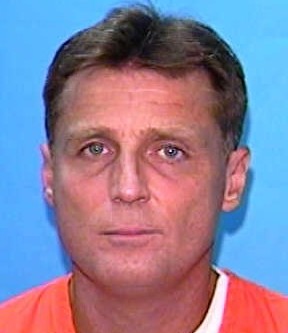 Glen Edward Rogers
Serial killer · USA · 1993
Glen Edward Rogers was a spree killer whose cross-country rampage in 1994-95 le…
70 victims
Glen Edward Rogers
Serial killer · USA · 1993
Glen Edward Rogers was a spree killer whose cross-country rampage in 1994-95 le…
70 victims
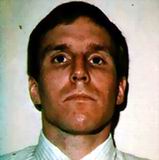 Michael Swango
Serial killer · USA · 1981
Michael Swango (Joseph Michael Swango) was a physician and American serial kill…
60 victims
Michael Swango
Serial killer · USA · 1981
Michael Swango (Joseph Michael Swango) was a physician and American serial kill…
60 victims
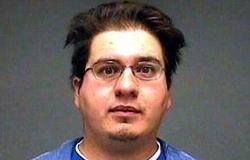 Efren Saldivar
Serial killer · USA · 1989
Efren Saldivar (born 30 September 1969) was an American serial killer who murde…
50 victims
Efren Saldivar
Serial killer · USA · 1989
Efren Saldivar (born 30 September 1969) was an American serial killer who murde…
50 victims
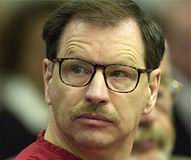 Gary Ridgway
Serial killer · USA · 1982
Gary Leon Ridgway Ridgway was born 18-February-1949 in Salt Lake City, UT. He w…
49 victims
Gary Ridgway
Serial killer · USA · 1982
Gary Leon Ridgway Ridgway was born 18-February-1949 in Salt Lake City, UT. He w…
49 victims
 Charles Cullen
Serial killer · USA · 1984
Charles Cullen (born February 22, 1960) was a former nurse and the most prolifi…
45 victims
Charles Cullen
Serial killer · USA · 1984
Charles Cullen (born February 22, 1960) was a former nurse and the most prolifi…
45 victims
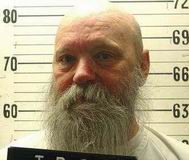 Oscar Franklin Smith
Murderer · USA · 1989
Oscar Franklin (Frank) Smith was the defendant. He was sentenced to death by a…
3 victims
Oscar Franklin Smith
Murderer · USA · 1989
Oscar Franklin (Frank) Smith was the defendant. He was sentenced to death by a…
3 victims
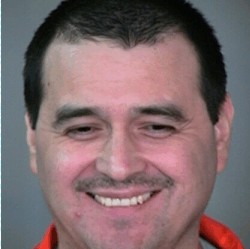 Toribio Rodriguez
Murderer · USA · 1988
Toribio Rodriguez attacked Dawn Dearing in her Tucson apartment. On August 25,…
1 victim
Toribio Rodriguez
Murderer · USA · 1988
Toribio Rodriguez attacked Dawn Dearing in her Tucson apartment. On August 25,…
1 victim
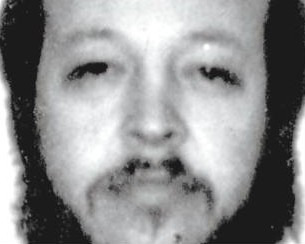 Lem Tuggle
Murderer · USA · 1971
Lem Tuggle was executed by lethal injection in Virginia on December 12, 1996. L…
2 victims
Lem Tuggle
Murderer · USA · 1971
Lem Tuggle was executed by lethal injection in Virginia on December 12, 1996. L…
2 victims
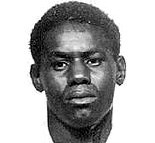 Sammie Felder
Murderer · USA · 1975
March 13, 1975 — Felder worked his usual day shift, 6:00 a.m. to 2:00 p.m., whi…
1 victim
Sammie Felder
Murderer · USA · 1975
March 13, 1975 — Felder worked his usual day shift, 6:00 a.m. to 2:00 p.m., whi…
1 victim
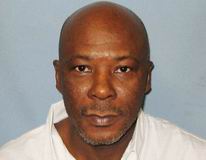 Leroy White
Murderer · USA · 1988
Leroy White was convicted of the capital murder of his estranged wife, Ruby Whi…
1 victim
Leroy White
Murderer · USA · 1988
Leroy White was convicted of the capital murder of his estranged wife, Ruby Whi…
1 victim
- Gender
- male
- Country
- USA
- Location
- San Leandro, California, USA
- Date of birth
- 1955
- Age at first offence
- 32
- Characteristics
- —
- Victim profile
- Pearl Larson, 76; Adeline Figuerido, 89; and Ruth Anna Constantine, 73
- Method of murder
- Asphyxiation - Beating
- Date(s) of murder
- June-August 1987
- Years active
- 1987
- Date of arrest
- October 23, 1987
- Status
-
Sentenced to death
Sentenced to death in April 1992
Case identification
Franklin Lynch was involved in the case prosecuted as a serial murder matter connected to 13 slayings of elderly women since 1980.
The offence
Lynch was convicted of murdering while robbing their San Leandro homes in the summer of 1987. He was sentenced to death for the Aug. 13 1987 beating of Ruth Constantine, 73, of San Leandro.
Lynch was linked to a series of slayings and brutal attacks on elderly women that frightened communities across Northern California. He was connected to 13 slayings of elderly women since 1980.
Lynch was also convicted of robbing two other Hayward-area women.
A forensic pathologist testified at Lynch's trial that Adeline Figuerido died from as many as a dozen blows to the head, neck and face, suffering a brain hemorrhage and numerous broken bones. Adeline Figuerido’s daughters found her on the dining-room floor, with her hands tied behind her back and a blanket tied around her head.
Victims
Three women were named as victims connected to the conviction for murdering while robbing their San Leandro homes in the summer of 1987:
- Pearl Larson, 76
- Adeline Figuerido, 89
- Anna Constantine, 73
Ruth Constantine, 73, of San Leandro was named in connection with the Aug. 13 1987 beating for which Lynch was sentenced to death.
Two other women in the Hayward area were named as additional robbery victims.
Investigation and arrest
Lynch, already suspected in a string of robberies and homicides, was the subject of a manhunt a month before the first of the three slayings for which he would eventually be convicted. FBI agents arrested him in Los Angeles in October 1987.
Trial
Lynch’s trial involved proceedings described as an automatic, direct appeal process bypassing the Court of Appeal and going straight to the state's highest court.
During the trial:
- Alameda County assistant district attorney Jim Anderson called Lynch a "human reptile" and a "murder machine."
- Lynch was identified by witnesses at a police lineup.
Lynch’s trial attorneys included Michael Ciraolo, who thought the length of time before the appeal was unusual, saying: "Eighteen years, is that some kind of record?"
Sentencing
Lynch was sentenced to death in April 1992 and was sent to San Quentin State Prison's death row in April 1992.
Pam Figuerido, of Fremont, wife of Adeline Figuerido's grandson, Gary, said the family had been told when Lynch was sentenced that it would probably be about 14 years until his execution. Pam Figuerido said: "We thought, 'Fourteen years, what a waste of the taxpayers' money,'" "And we're still paying for him to sit here after he has murdered? It was vicious, what he did to this woman, and we're letting him live his life?"
Appeals
Lynch’s automatic, direct appeal was described as bypassing the Court of Appeal and going straight to the state's highest court. The opening brief in his automatic, direct appeal was not filed until 2004. The state's response was filed a year later, and Lynch's reply was filed in 2007.
The full record, about 17,000 pages, was not filed until 2002. Records showed it was in 1997, more than five years after Lynch's sentencing, that the State Public Defender's Office was named to represent him. It was two years later that his lawyers made a motion to correct, complete and settle the trial record.
Lynch tried to fire the State Public Defender's Office in 2003, but his motion was denied. Between each event, the court granted requests for more time.
In his 481-page appeal brief, Lynch cited reasons why his conviction should be overturned, including that:
- the trial judge erred by not letting him fire his attorneys and represent himself;
- the trial judge removed four prospective jurors who said they would have trouble reaching a death verdict;
- the trial judge refused to sever the crimes into separate trials so jurors would have to weigh them separately rather than aggregating them;
- he was not represented by counsel at a police lineup in which he was identified by witnesses;
- a prosecutor made an improper, prejudicial statement to the jury during closing arguments;
- California's death-penalty law was unconstitutional and violated international law.
The state Attorney General's Office refuted these arguments, including that:
- the trial judge didn't err or abuse his discretion;
- jurors were properly excused;
- Lynch had two lawyers at the police lineup;
- his absence from certain hearings, even if in error, was harmless.
Alameda County assistant district attorney Jim Anderson said that besides the direct appeal Lynch also had a pending habeas corpus case before the state Supreme Court involving a reinvestigation of the whole case in which new evidence could be brought in or existing evidence could be recast. Anderson also said that after that was done, Lynch could file a habeas corpus case in federal court.
Jim Anderson said: "We're looking probably at another 15 years. What a joke," "Once again it just shows you how the California Supreme Court and the 9th Circuit have slowed things down to make the death penalty an absolute farce in California."
Timeline
- Aug. 13 1987 — Lynch was sentenced to death for the beating of Ruth Constantine, 73, of San Leandro.
- October 1987 — FBI agents arrested Lynch in Los Angeles.
- April 1992 — Lynch was sent to San Quentin State Prison's death row and sentenced to death.
- 1997 — The State Public Defender's Office was named to represent Lynch.
- 2002 — The full trial record, about 17,000 pages, was filed.
- 2003 — Lynch tried to fire the State Public Defender's Office; his motion was denied.
- 2004 — The opening brief in Lynch's automatic, direct appeal was filed.
- 2005 — The state's response was filed.
- 2007 — Lynch's reply was filed.
Other details
The case was described as People v. Lynch, Serial murder, heard by the Supreme Court of California.
Pam Figuerido described the impact of Adeline Figuerido’s death and the aftermath, saying: "Something like this never goes away, the whole situation was a nightmare," "You can't get the image out of your mind of her lying on the autopsy table, seeing what he did to her. You don't even treat animals like that."
Lynch was to appear before the California Supreme Court to plead for his life 18 years after his death sentence.
Lynch was described as being connected to robberies and homicides and as arriving before the California Supreme Court this week to plead for his life.
Pending habeas corpus proceedings were described as being available first in the state Supreme Court and then in federal court after reinvestigation.
Spotted an error, or have more information about this case?