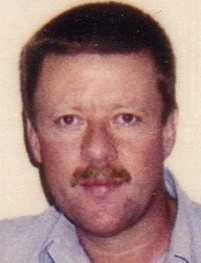
Steve Henley
Murderer Brian Kevin Rosenfeld
Murderer · USA · 1985
Brian Kevin Rosenfeld Brian Kevin Rosenfeld was sentenced to three concurrent l…
23 victims
Brian Kevin Rosenfeld
Murderer · USA · 1985
Brian Kevin Rosenfeld Brian Kevin Rosenfeld was sentenced to three concurrent l…
23 victims
 Marvin Gray
Murderer · USA · 1975
Marvin Gray was convicted killer who claimed responsibility for 23 slayings and…
23 victims
Marvin Gray
Murderer · USA · 1975
Marvin Gray was convicted killer who claimed responsibility for 23 slayings and…
23 victims
 Yahweh ben Yahweh
Murderer · USA · 1980
Yahweh ben Yahweh was born and legally named Hulon Mitchell Jr. (October 27, 19…
23 victims
Yahweh ben Yahweh
Murderer · USA · 1980
Yahweh ben Yahweh was born and legally named Hulon Mitchell Jr. (October 27, 19…
23 victims
 Russell Ellwood
Murderer · USA · 1991
Russell Ellwood was a former taxi driver. Authorities suspected him of killing…
20 victims
Russell Ellwood
Murderer · USA · 1991
Russell Ellwood was a former taxi driver. Authorities suspected him of killing…
20 victims
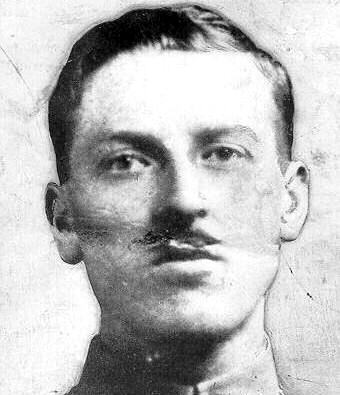 John Robinson
Murderer · London England United Kingdom · 1927
John Robinson was an estate agent who struggled to stay in business. He rented…
1 victim
John Robinson
Murderer · London England United Kingdom · 1927
John Robinson was an estate agent who struggled to stay in business. He rented…
1 victim
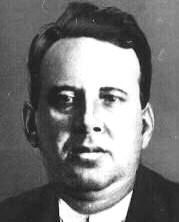 Sylvestre Matuschka
Mass murderer · Hungary · 1931
Sylvestre Matuschka (born 1892, date of death unknown) (in Hungarian publicatio…
22 victims
Sylvestre Matuschka
Mass murderer · Hungary · 1931
Sylvestre Matuschka (born 1892, date of death unknown) (in Hungarian publicatio…
22 victims
- Gender
- male
- Country
- USA
- Location
- Jackson County, Tennessee, USA
- Date of birth
- November 25, 1953
- Age at first offence
- 32
- Characteristics
- robbery, arson
- Victim profile
- Fred, 67, and Edna Stafford, 64
- Method of murder
- Shooting ( .22 rifle )
- Date(s) of murder
- July 24, 1985
- Years active
- 1985
- Date of arrest
- —
- Status
-
Executed
Executed by lethal injection in Tennessee on February 4, 2009
Case record: Steve Henley
Background
Steve Henley was convicted in Tennessee of the 1985 murders of Fred Stafford and Edna Stafford and of aggravated arson related to their burned-out farmhouse.
Fred and Edna Stafford lived on Pine Lick Creek Road in Jackson County, near a farm owned by Steve Henley’s family where his grandmother lived. On the day of the murders, Henley visited his grandmother. Co-defendant Terry Flatt was with Henley.
On July 24, 1985, Henley obtained some mechanical parts for work he was doing and the two men later drove about tending to business affairs of Henley’s. During that time they consumed some beer and also had taken drugs referred to in the record as Dilaudids.
Henley maintained that he had not fatally shot Fred and Edna Stafford and that he did not set their home on fire.
Henley was sentenced to death for both murders.
Henley had a prior conviction for transporting stolen property across state lines in 1981, for which he received a two-year sentence on probation.
Henley had also filed for bankruptcy over his farming losses and was in a dispute over what he owed.
The offence
Confrontation and shootings
Fred and Edna Stafford were standing by a bridge near their residence when Henley stopped the truck, jumped out, and told them: “I want your money, if you don't give it to me this man in the truck here, he's going to kill me.”
Henley directed the Staffords to go to the house. Mr. Stafford said: “Steve, if you want money or something, I got $80, maybe $100, you can have it.”
At gunpoint, Henley forced the Staffords onto the porch and ordered Flatt to bring the .22 rifle while Henley followed behind them. When the men were within 20 or 30 feet of the house, Henley told Flatt to give him the rifle and to go back to the truck to get a plastic jug of gasoline.
Flatt complied. As Henley reached the porch, he began to shoot. He first shot Fred Stafford and then turned and shot Edna a time or two while she was laying on the floor moaning and groaning. Henley threw the rifle to Flatt, took out his pistol, and shot Edna again with the pistol. Henley directed Flatt to pour out some of the gas.
Flatt endeavored to pour out a small amount. When he could not finish pouring it out, Henley took the container of gas from him and finished pouring it out. Henley then directed Flatt to light it. When Flatt said he could not, Henley struck the match and as the flames went up the men ran to the truck.
The fire and discovery of bodies
The house burned to the ground. The bodies of Fred and Edna Stafford were found in the ashes.
All that remained of Fred Stafford’s body was part of the right leg and the trunk area. It was determined that Fred died from a gunshot wound to the chest with the bullet passing through his heart.
Edna Stafford’s death was caused by burns and inhalation of noxious gases from the fire. It was the opinion of the medical examiner that Edna lived a minute or longer after the fire began.
Investigation
Shell casings were found on August 2 only after Flatt told authorities his story.
The pistol was discovered a day or two after the rifle when the sheriff instructed officials to go back and search the location of the rifle again.
Only one shell casing was found inside the house, and the others were outside.
Of the nine shells which were tested, only one was fired from the rifle, and it was not tested to see if it endured a fire.
On August 1, after Henley and Flatt were arrested, Flatt told Ishmul Wood of the Fire Marshall’s office that he poured gasoline in a general area of the house, though Wood took no samples. Wood took no samples from the road where the gasoline had reportedly been poured from one can to another.
Wood testified that he could not say whether the shells were placed at the scene before or after the fire and had no evidence that the fire was arson.
It was also stated that the crime scene may not have been secured during the investigation.
The state never produced the plastic gas can which Flatt claimed Henley used.
Henley interacted with a variety of people around the time of the murders, and no one noticed anything unusual about his behavior.
Henley was picked up by the police a few days later on a contempt of court charge for owing money to Production Credit Association for a farming debt.
Arrest
Henley and co-defendant Terry Flatt were arrested on August 1.
Trial
Charges and verdict
In 1986, a Tennessee jury convicted Henley of two counts of first-degree murder and one count of aggravated arson.
The jury recommended a death sentence.
Sentencing jury findings and sentence
The trial court sentenced Henley to death for each murder and to twenty years imprisonment for the aggravated arson conviction.
After the jury convicted Henley of two counts of premeditated murder and arson, the case proceeded to sentencing.
The State relied on proof introduced at the guilt phase.
The jury sentenced Henley to death for both murders, finding that each murder was “especially heinous, atrocious, or cruel in that it involved torture or depravity of mind.” Tenn. Code Ann. § 39-2-203(I)(5) (1982).
Defense position during trial
At trial, Henley attempted to discredit the prosecution’s evidence, particularly the testimony of co-defendant Flatt, which was crucial to the State’s case.
Henley maintained his innocence and attempted to discredit prosecution evidence.
Henley acknowledged spending the day in the company of Flatt and admitted drinking some beer. Henley denied that he was intoxicated or under the influence of drugs and denied abusing drugs. Henley testified that Flatt was the one intoxicated and under the influence of Dilaudid.
Henley testified that he dropped Flatt off before arriving at his grandmother’s house because of Flatt’s intoxication.
Henley said Flatt left the truck with Henley’s .22 gauge rifle planning to hunt rabbits.
Henley testified he remained at his grandmother’s for about 40 to 45 minutes to an hour and that he had no knowledge of Flatt’s activities during the intervening time frame.
Henley claimed he did not see the fire at the Staffords’ home and was not aware of their deaths until the next day.
On cross-examination, Henley admitted that he previously had pleaded guilty to transporting stolen goods in interstate commerce.
Henley admitted that he owed a substantial farming debt near the time of the killings and had filed for bankruptcy.
Testimony relevant to mitigation during sentencing
During the sentencing hearing, the defense called Henley’s grandmother Bertha Henley, and Henley also testified.
Henley’s mother, Dorothy Henley, was called to testify in the presence of the jury. Defense counsel J.H. Reneau, III requested and was granted a short recess, during which Henley’s mother exited the courtroom with Dorothy Henley. After the sentencing hearing resumed, she did not take the stand, and the jury was not given an explanation for her failure to testify.
In the sentencing hearing record, Dorothy Henley said: “I want to talk to you Mr. Reneau.”
Bertha Henley testified about Henley’s relationship with his grandparents. She testified that Henley lived in her household from the time he was born until he was two years old, and that he spent every weekend and summer vacation thereafter in her home until he completed high school.
Bertha Henley testified that Henley had a close relationship with his grandfather, that Henley helped with farm work, and that she described Henley as a “good child” who “minded” her well and who “always loved” her.
Bertha Henley testified that Henley married when he was eighteen-years-old and had two children, Gregg and Leanne.
Bertha Henley testified that Henley moved from Tennessee to Maryland but returned to Tennessee in May 1976 when his grandfather was diagnosed with cancer, living with his family in a trailer across from his grandparents’ home so he could help his grandfather with farm work.
Bertha Henley testified that after her husband died of cancer in July 1976, Henley began working on the family farm full time and continued in that occupation from 1977 to 1983.
She testified that during that time Henley visited her almost every day and continued checking on her regularly thereafter. She testified she could not drive because she suffered a heart attack, and that Henley drove her to the doctor and into town once a week to pay bills and buy groceries.
Bertha Henley described Henley as a “tender hearted” person who would cry when his feelings were hurt. She testified Henley had always been kind and good to her.
The State did not cross examine Bertha Henley at sentencing.
Henley testified and described his relationship with his grandparents and said: “I'd just love them more than anything in the world. There's no way to explain my granddaddy, I don't guess. He was just the best person in the world.”
Henley testified that he gave up his job in Maryland as a certified marine mechanic to return to Tennessee and assist his grandfather when he was diagnosed with cancer.
Henley testified that his farming difficulties began with a drought in 1980 or 1981. He testified that to compensate for losses during the drought, he planted nearly seven hundred acres of wheat, and that severe flooding prevented him from harvesting and caused him to lose his entire crop and ultimately file for bankruptcy protection.
When trial counsel gave Henley an opportunity to make a final comment to the jury, Henley said: “I think each and everyone of you has made a mistake, and it's a mistake you all will have to live with. And one day and time when we're all, wherever we go, we'll all have to face that.”
The State did not cross examine Henley at the sentencing hearing.
Co-defendant testimony and disputes at trial
The defense showed that by testifying, Flatt obtained a plea bargain agreement under which Flatt was allowed to plead guilty to two counts of second degree murder, two counts of armed robbery and one count of aggravated arson. Flatt was sentenced as a Range I offender to twenty-five years for each of the murders, ten years for each of the robberies, and ten years for the arson, all to run concurrently, for an effective sentence of twenty-five years.
Execution witness
Tennessee Department of Corrections staff said a nephew of the Staffords, Jack Stafford, witnessed the execution from another room.
Sentencing
Direct trial sentencing
The jury sentenced Henley to death for both murders and sentenced him to twenty years imprisonment for aggravated arson.
Trial court and post-conviction discussion about counsel performance
A trial judge later denied post conviction relief on all grounds alleged, finding that Henley had been afforded his constitutional right to effective assistance of counsel at the sentencing phase.
The trial court stated it would have liked additional witnesses and would have liked for the mother to have testified when she refused, but characterized the decision as trial strategy and referenced that counsel called Henley’s grandmother, who testified about Henley’s life.
The Court of Criminal Appeals reversed the death sentence and ordered a new sentencing hearing, concluding that Henley had been denied effective assistance of counsel because counsel failed to adequately investigate and prepare witnesses and failed to adequately investigate Henley’s mental condition and request a mental evaluation.
The Tennessee Supreme Court later reversed the Court of Criminal Appeals and reinstated denial of post conviction relief.
Appeals
Direct appeal (Tenn.)
In State v. Henley, 774 S.W.2d 908 (Tenn. 1989), the Supreme Court affirmed the convictions and sentences.
The Supreme Court held that:
- Any errors resulting from remarks made by the prosecutor during the course of trial were harmless.
- Evidence apart from accomplice testimony was sufficient to support convictions.
- Although the jury verdict was possibly ambiguous regarding the degree of murder of which Henley was found guilty with respect to one victim, the record made clear that the verdict was guilty of first-degree murder of both victims.
- The death penalty was properly imposed and was not excessive punishment.
On petition to rehear, the Supreme Court held that the statutory aggravating circumstance regarding heinous and atrocious homicides was not unconstitutionally vague, and affirmed and denied the petition.
Post-conviction (Tenn.)
In Henley v. State, 960 S.W.2d 572 (Tenn. 1997), Henley sought post-conviction relief after the Supreme Court affirmed his convictions and death sentences.
The trial court, Jackson County, denied application. The Court of Criminal Appeals reversed and ordered a new sentencing hearing, holding Henley was denied his right to effective assistance at sentencing.
The Tennessee Supreme Court reversed the Court of Criminal Appeals and reinstated the trial court’s decision denying post conviction relief.
Federal habeas (6th Cir.)
Henley v. Bell, 487 F.3d 379 (6th Cir. 2007), affirmed denial of habeas corpus relief.
The Court of Appeals held that:
- Supreme Court’s decision in Campbell v. Louisiana announced a “new rule” of criminal procedure that did not apply retroactively.
- Defense counsel’s failure to call additional lay witnesses to testify during penalty phase did not constitute ineffective assistance of counsel.
- Counsel’s failure to call a psychiatric expert to testify during sentencing phase was not ineffective.
- Petitioner failed to establish cause sufficient to excuse the procedural default of due process claims.
- Remarks during closing argument did not constitute prosecutorial misconduct.
- Instructions did not require the jury to be unanimous in finding the existence of a mitigating factor.
Outcome
Steve Henley was executed by lethal injection in Tennessee on February 4, 2009.
Aftermath and execution-related statements
Execution timing and pronouncement
Henley was pronounced dead at 1:33 a.m.
Warden Ricky Bell pronounced Henley dead at 1:33 a.m.
Approximately 16 minutes elapsed from the time the procedure began until Warden Ricky Bell pronounced Henley dead.
Henley was revealed to family members and media witnesses at 1:17 a.m. already strapped to the death gurney.
An execution viewing occurred with Henley’s family members and media witnesses.
Henley’s last statements and maintained innocence
Henley’s final words included a statement maintaining innocence: “As I have said ever since this happened, I didn’t kill them,” Henley said during his final words of his victims, Fred and Edna Stafford. “I hope they can rest easier after this procedure is done.”
Henley also said: “I would like to say I hope this gives Fred and Edna’s family some peace,” Henley said. “In my experience in life, it won’t. The death of a family member never brings anything but pain.”
Henley also said: “I’m an innocent man.”
Henley also stated he hoped for peace and said: “I’d like to say I hope this gives Fred and Edna’s family some peace,” Henley said in his last statement. “From my experience in life it won’t.
During his last statement, Henley also said: “Stop that crying,” Henley told his family as he playfully stuck out his tongue. “Y’all are a pitiful bunch.”
In another set of final remarks, Henley told his family: “Bye,” Henley said, making kissing motions with his mouth to his family. “Stop that crying. Stop it. I’ll see you on the other side. Ya’ll are a pitiful bunch.”
In a further account of his final words, Henley was described as saying: “The state of Tennessee just killed an innocent man,” and “I forgive them, but two wrongs don’t make a right. I hope they know that.”
Family and witness statements and actions
Gregory Henley read a statement from the family after the execution. He said: “I forgive the state of Tennessee for executing our loving Daddy,” he said. “I want them to know I am praying for both our sides of the family and Fred and Edna Stafford’s family. But I also want you to know you are executing an innocent man.”
Another statement reported after execution included: “I forgive the state of Tennessee for executing our loving daddy,” Greg Henley said. “I want them to know I’m praying for both our side of the family and Fred and Edna Stafford’s family. But I also want you to know you executed an innocent man.”
Henley’s spiritual adviser of 10 years, Stacy Rector, led the family’s recitation of the Lord’s Prayer as they clung to each other.
Leanne Henley blew him a kiss, and Gregory Henley gave a thumbs-up.
Leanne Henley vomited into a trash can between her feet.
Stephanie Worley attended and had statements reported during the execution: “They killed my brother for nothing!” and “I don’t see a tear back here.” She also said: “I guess human life has no meaning anymore. Like a bunch of dogs.”
A nephew of the victims also witnessed the execution from a separate room.
Protestors and opponents present
Outside the prison in subfreezing temperatures, 66 death penalty opponents gathered around space heaters and held posters as they protested the execution.
A separate reported crowd count stated that more than 60 demonstrators gathered near the prison to show opposition to the death penalty.
Legal citations mentioned in the case record
- State v. Henley, 774 S.W.2d 908 (Tenn. 1989) (Direct Appeal)
- Henley v. State, 960 S.W.2d 572 (Tenn. 1997) (PCR)
- Henley v. Bell, 487 F.3d 379 (6th Cir. 2007) (Habeas)
Other details
Execution protocol and related litigation at the U.S. Supreme Court
Henley’s execution used Tennessee’s three-drug protocol for lethal injection, which Henley’s attorneys argued was unconstitutional.
Henley’s attorneys filed last minute briefs to the U.S. Supreme Court and argued the execution method was unconstitutional, as late as yesterday evening just hours before the appointed execution date and time.
A request made to Gov. Phil Bredesen for a 30-day reprieve was denied.
Final written statement attributed to Henley
Henley stated:
- “My name is Steve Henley. I am a 55 year old man who has spent the last 23 years on Tennessee’s death row for a crime I did not commit.”
- “I have said that I was innocent of this crime from day one, and my statement and story have never changed.”
- “On July 24, 1985, I believe that Terry Wayne Flatt robbed and murdered Fred and Edna Stafford. He then set fire to their home.”
- “I believe this to be true because Flatt implicated himself during questioning.”
- “The sheriff of Jackson County at the time, Wayne Mahaney urged Flatt to accept a plea bargain and turn state’s evidence against me.”
- “There is a 12 minute audio tape detailing the deal made between Terry Flatt and Sheriff Wayne Mahaney.”
- “Bobby Hunter bought my family’s farm and home at an auction on the courthouse steps for $53,000.”
- “On August 1, 1985, both Flatt and I were driven to Nashville for polygraph tests, along with Sheriff Mahaney and Bobby Hunter's son, Tony Hunter.”
- “I currently have a civil lawsuit pending against Jackson County and Sheriff Mahaney for the inhumane treatment I received in jail and the violation of my 8th amendment constitutional rights—that no man shall receive cruel and unusual treatment—along with the pain and mental torture that is still part of my life to this day.”
- “Sincerely, Steve Henley”
Spotted an error, or have more information about this case?