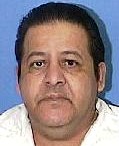
Rodolpho Hernandez
Murderer Brian Kevin Rosenfeld
Murderer · USA · 1985
Brian Kevin Rosenfeld Brian Kevin Rosenfeld was sentenced to three concurrent l…
23 victims
Brian Kevin Rosenfeld
Murderer · USA · 1985
Brian Kevin Rosenfeld Brian Kevin Rosenfeld was sentenced to three concurrent l…
23 victims
 Marvin Gray
Murderer · USA · 1975
Marvin Gray was convicted killer who claimed responsibility for 23 slayings and…
23 victims
Marvin Gray
Murderer · USA · 1975
Marvin Gray was convicted killer who claimed responsibility for 23 slayings and…
23 victims
 Yahweh ben Yahweh
Murderer · USA · 1980
Yahweh ben Yahweh was born and legally named Hulon Mitchell Jr. (October 27, 19…
23 victims
Yahweh ben Yahweh
Murderer · USA · 1980
Yahweh ben Yahweh was born and legally named Hulon Mitchell Jr. (October 27, 19…
23 victims
 Russell Ellwood
Murderer · USA · 1991
Russell Ellwood was a former taxi driver. Authorities suspected him of killing…
20 victims
Russell Ellwood
Murderer · USA · 1991
Russell Ellwood was a former taxi driver. Authorities suspected him of killing…
20 victims
 Wayne Lo
Murderer · USA · 1992
Wayne Lo (born November 14, 1974) was a Taiwanese-American who perpetrated a sc…
2 victims
Wayne Lo
Murderer · USA · 1992
Wayne Lo (born November 14, 1974) was a Taiwanese-American who perpetrated a sc…
2 victims
 Stephen Barbee
Murderer · USA · 2005
Stephen Dale Barbee received a death sentence for the capital murder of Lisa Un…
2 victims
Stephen Barbee
Murderer · USA · 2005
Stephen Dale Barbee received a death sentence for the capital murder of Lisa Un…
2 victims
 David Santiago Renteria
Murderer · USA · 2001
David Santiago Renteria (TDCJ Number 999460) was born on 11/22/1969 and was rec…
1 victim
David Santiago Renteria
Murderer · USA · 2001
David Santiago Renteria (TDCJ Number 999460) was born on 11/22/1969 and was rec…
1 victim
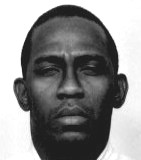 Gerald Cornelius Eldridge
Murderer · USA · 1993
Gerald Cornelius Eldridge (defendant) · Cynthia Bogany (former girlfriend; vict…
2 victims
Gerald Cornelius Eldridge
Murderer · USA · 1993
Gerald Cornelius Eldridge (defendant) · Cynthia Bogany (former girlfriend; vict…
2 victims
- Gender
- male
- Country
- USA
- Location
- Comal County, Texas, USA
- Date of birth
- November 18, 1949
- Age at first offence
- 36
- Characteristics
- robbery, rape, armed robbery, shooting spree
- Victim profile
- Victor Manuel Serrano Cervan, 20 (illegal mexican immigrant)
- Method of murder
- Shooting
- Date(s) of murder
- March 7, 1985
- Years active
- 1985
- Date of arrest
- 6 days after
- Status
-
Executed
Executed by lethal injection in Texas on April 30, 2002
Case record
Parties
Rodolfo Baiza Hernandez was convicted and sentenced to death for the capital murder of Victor Manuel Serrano Cervan in Comal County, Texas, in connection with a robbery occurring in early March 1985.
Jesse Garibay was identified as Hernandez’s brother-in-law and was involved in the events in Comal County, Texas. Garibay was convicted for Theft and sentenced to 4 years imprisonment for Theft.
Victor Manuel Serrano Cervan was the only one of five victims who died; the other four survived and testified against Hernandez at trial.
Susan Garibay testified at trial. Anthony Urbano testified at trial.
Richard was Hernandez’s brother and was seated between Hernandez and Garibay in the front seat during the transport of the five men.
The offence
In early March 1985, five young men in Mexico boarded a box car that would transport them into the United States. When they disembarked in San Antonio, they were approached by Rodolfo Baiza Hernandez, who asked what they were doing.
Hernandez learned that the five men were trying to reach Denton, Texas, where they hoped to find work on a farm or ranch. Hernandez took the five illegal aliens to his house in an attempt to find transportation to Denton. While the men waited outside the house, Hernandez awakened his brother-in-law Jesse Garibay and arranged for Garibay to transport the men in the family car for a fee.
Garibay drove, Hernandez sat in the passenger’s seat, and Hernandez’s brother Richard sat between them in the front seat, while the five men sat in the back. Richard was dropped off at his place of employment and the other seven men continued north into Comal County.
After reaching a secluded part of the county away from any main highway, Garibay and Hernandez stopped the car and pretended that they were having car trouble. One of them opened the car trunk and took out several firearms. Garibay and Hernandez asked their passengers if any of them wanted to get out and urinate; when none did, Garibay and Hernandez ordered the men out of the car at gunpoint.
One man tried to run away but Hernandez shot him in the back and he fell down. Hernandez then ordered all five men to lie face up on the ground and to hand over their money. Hernandez went from one to another, taking whatever they had and shooting each one in the neck. Garibay and Hernandez then sped away and returned home to San Antonio.
One of the five victims, Victor Manuel Serrano Cervan, died; the other four survived. Two of the survivors testified against Hernandez at trial.
Investigation and evidence
Two handguns that Hernandez had given to a friend to sell were recovered and identified as the weapons used in the shootings by firearms experts. Firearms experts testified that the two pistols were the ones that fired the bullets recovered from the five victims.
After Hernandez and Garibay returned home, Susan Garibay observed her husband, Jesse Garibay, covering himself with blankets and acting scared. Hernandez sat watching television while slinging a gun on his little finger.
When a news report came on about the shootings in Comal County, Hernandez told his sister that he was "a gunslinger" and that President Reagan had told him that "Texas was overpopulated and had instructed him to get rid of some of San Antonio's illegal aliens." Hernandez was laughing and joking so Susan Garibay did not take the statements seriously.
Several days later, Hernandez and Garibay were staying with a neighbor, Anthony Urbano. Again, a news report appeared on television about the multiple shootings near New Braunfels. Hernandez bragged to Urbano that he had shot the men and killed one of them while swinging two little guns on his fingers.
Soon after these incidents, Hernandez took two guns to a friend and asked the friend to sell them for him. Police later recovered the guns, and firearms experts testified they were the ones that had fired the bullets recovered from the five victims.
Criminal history and background evidence introduced at punishment phase
During the punishment phase of the trial, the State called Bob Steele and Al Cuellar, both Texas Rangers, to testify that Hernandez was not a peaceful and law-abiding citizen.
The State introduced evidence reflecting that Hernandez was convicted on two counts of aggravated robbery in 1974.
Mary Van Sickle, Hernandez’s parole officer from 1982 to 1983, testified that the court revoked Hernandez’s parole in 1983 because he illegally possessed two handguns, a .25-caliber handgun and a .38-caliber handgun with ammunition. After the revocation, Hernandez was returned to the Texas Department of Corrections. Van Sickle did not recall when Hernandez was again released from prison.
Hernandez contended that he was innocent of the killings, stating that the charges against him "were made up to make me look bad."
Trial
Charges and verdict
Hernandez was indicted for the capital murder of Victor Manuel Serrano Cervan during robbery.
A jury found Hernandez guilty of capital murder.
Evidence and testimony at trial (relationship and events)
There was some confusion at trial concerning the exact nature of the relationship between Hernandez and Garibay. Susan Garibay, who testified that she and Garibay had been ceremonially married less than a month before Hernandez’s trial, varied in her testimony as to whether a common law marriage had previously existed.
Susan Garibay and Anthony Urbano provided testimony about Hernandez’s conduct and statements after the shootings. Two of the surviving victims testified against Hernandez at trial.
Appellate issues raised on appeal
On appeal, Hernandez brought five points of error, complaining that:
- the trial court erred in admitting penalty-stage testimony from a psychiatrist concerning the results of appellant's pre-trial competency exam;
- the trial court should have instructed the jury to disregard an alleged reference to extraneous offenses;
- another reference to an extraneous offense during the penalty phase called for a mistrial;
- the trial court should have stated its reasons on the record for allegedly allowing the jury to view appellant in chains; and
- a mistrial should have been granted when several jurors were in position to see appellant in chains on several occasions outside the courtroom.
The appeals court affirmed the judgment of the trial court. The court stated that since the sufficiency of the evidence was not challenged, it would provide only a brief recitation of the events surrounding the offense.
Sentencing
Following a separate punishment hearing, Hernandez was sentenced to death.
At the punishment phase, the State relied on Texas Rangers testimony, evidence of prior aggravated robbery convictions, and testimony from Hernandez’s parole officer about the handgun possession that led to parole revocation.
Appeals
Hernandez v. State, 805 S.W.2d 409 (Tex.Cr.App. 1990) (Direct Appeal). The Texas Court of Criminal Appeals affirmed the conviction and sentence in October 1990.
Hernandez v. Johnson, 248 F.3d 344 (5th Cir. 2001) (Habeas). The Fifth Circuit affirmed the district court’s denial of habeas relief in April 2001.
Hernandez v. Cockrell, 122 S.Ct. 621 (2001) (Cert. Denied). Hernandez’s petition for writ of certiorari was denied on November 26, 2001.
Hernandez filed a petition for a state writ of habeas corpus on August 15, 1991. Special master proposed findings of fact and conclusions of law on October 7, 1993. The trial court adopted findings and conclusions denying all relief on October 27, 1993. In an unpublished order, the Texas Court of Criminal Appeals denied relief on June 28, 1994.
Hernandez filed a second petition for writ to the Court of Criminal Appeals on September 26, 1994, and the Supreme Court denied the petition on January 9, 1995, with execution set for February 22, 1996.
A stay was granted and Hernandez was ordered to file his federal habeas petition by June 30, 1996, on February 7, 1996. On April 11, 1997, after nearly one year of extensions, Hernandez filed his federal habeas petition. On August 12, 1998, the district court denied habeas corpus relief. On April 11, 2001, the Fifth Circuit affirmed the district court’s denial of habeas relief. On November 26, 2001, Hernandez’s petition for writ of certiorari was denied.
Approximately three days before his March 21, 2002 scheduled execution, Hernandez filed a subsequent state habeas application, which was denied on March 20, 2002.
Timeline
- early March 1985 — Five young men in Mexico boarded a box car and later disembarked in San Antonio; Hernandez arranged to transport them toward Denton; Garibay and Hernandez stopped in Comal County, opened the trunk and used firearms to order the men out; Hernandez shot one man in the back and then ordered all five men to lie down and shot each in the neck; Victor Manuel Serrano Cervan died and four other men survived.
- May 15, 1985 — Hernandez was indicted for the capital murder of Victor Manuel Serrano Cervan during robbery.
- September 25, 1985 — A jury found Hernandez guilty of capital murder.
- September 26, 1985 — After a separate punishment hearing, Hernandez was sentenced to death.
- October 24, 1990 — Texas Court of Criminal Appeals affirmed the conviction and sentence.
- December 5, 1990 — Texas Court of Criminal Appeals denied rehearing.
- June 3, 1991 — The United States Supreme Court denied Hernandez’s petition for writ of certiorari.
- August 15, 1991 — Hernandez filed a petition for a state writ of habeas corpus.
- October 7, 1993 — Special master submitted proposed findings of fact and conclusions of law.
- October 27, 1993 — Trial court adopted findings and conclusions denying all relief.
- June 28, 1994 — Texas Court of Criminal Appeals denied relief.
- September 26, 1994 — Hernandez filed a second petition for writ to the Court of Criminal Appeals.
- January 9, 1995 — Supreme Court denied the petition; execution set for February 22, 1996.
- February 7, 1996 — Stay granted and Hernandez ordered to file his federal habeas petition by June 30, 1996.
- April 11, 1997 — Hernandez filed his federal habeas petition.
- August 12, 1998 — District court denied habeas corpus relief.
- April 11, 2001 — Fifth Circuit affirmed the district court’s denial of habeas relief.
- November 26, 2001 — Hernandez’s petition for writ of certiorari was denied.
- March 20, 2002 — Hernandez’s subsequent state habeas application was denied.
- March 21, 2002 — The Texas governor granted Hernandez’s request for a 30-day reprieve based on information he allegedly possessed regarding other crimes committed in Bexar County, Texas; execution was rescheduled for April 30, 2002.
- April 25, 2002 — Hernandez filed another petition for writ of certiorari review from the state court’s March 20, 2002 dismissal of his subsequent state habeas application.
- April 30, 2002 — United States Supreme Court denied Hernandez’s petition for writ of certiorari and his motion for a stay of execution.
- April 30, 2002 — Hernandez was executed by lethal injection in Texas.
Outcome
Hernandez was executed by lethal injection in Texas on April 30, 2002.
Aftermath and execution details
Reprieve and rescheduling
Hernandez was originally scheduled for execution on March 21, 2002, but received a 30-day reprieve on March 21. The reprieve was based on information he allegedly possessed regarding other crimes committed in Bexar County, Texas. His execution was rescheduled for April 30, 2002.
Confession and police interviews
On March 19, two days before his scheduled execution date, Hernandez had confession with a priest. Afterward, he felt he had not cleared his conscience enough and that further confession was necessary. He then wanted to confess not to a priest, but to police, about some other murders that he had committed.
Detectives Robert Moffitt and Barney Whitson drove to death row after receiving a phone call requesting them to come to death row in Livingston. After leaving and beginning their return to San Antonio, prison officials called to say Hernandez wanted them to come back and that he would be more cooperative. Hernandez spent several hours Wednesday evening giving Moffitt and Whitson details of at least 12 other murders he either committed or witnessed. Most occurred from 1980 to 1985 and had gone unsolved.
On the way to requesting an emergency stay, at 5:15 p.m., 45 minutes before his execution was to begin, they faxed Governor Rick Perry asking for an emergency stay of execution. Hernandez was told Governor Perry had granted him a stay two minutes before 6:00 p.m.
Amputation and prosthetic request
While on death row, Hernandez had to have his left leg amputated as a result of diabetes complications. One account stated that he had his left leg amputated 4 inches below the knee in July 2001. Another account stated that he had to have his left leg amputated as a result of diabetes complications during his time on death row.
Hernandez requested an artificial leg so that he could "walk like a man" to his execution. A prison spokesman said that a prosthetic leg would cost taxpayers $8,000 and was not considered a medical necessity. Another account stated prison officials said he could not use a prosthesis because of a recurring infection.
Hernandez was transported to the execution in a wheelchair. At the time of his execution, he had no prosthetic leg.
Final words and statements at execution
Hernandez’s final meal consisted of two double meat cheeseburgers (all the way), french fries, three beef skirt tacos, guacamole salad, salt, and two fried chicken breasts.
Hernandez’s final words were:
"Everybody will be all right because y'all are going where I am going. Remember what I said -- I want to see you all where I'm going. God, come and do your will. I'm ready, warden."
Other verbatim statements recorded around the execution included:
As he was strapped to a gurney in the death chamber, Hernandez told several friends witnessing his death:
As lethal injection proceeded, he repeated:
"Here I am, God. I'm coming to do your will," three times.
As he looked at the ceiling of the death chamber, Hernandez said:
"Here I am, God, I come to do your will. Here I am, God, come and do your will."
As he was taken to be executed, Hernandez asked the prison warden why he was strapped down. Hernandez said:
"You're supposed to strap down the people who want to escape," indicating that he was ready for execution.
At the time he learned of the reprieve, Hernandez said:
"I sure feel like eating now," before finishing his last meal of two cheeseburgers and French fries and heading back to death row.
He also said:
"I feel relieved," and "Now I can breathe."
Other details
At punishment phase of trial, the State called Bob Steele and Al Cuellar, Texas Rangers, to testify about Hernandez’s lack of peaceful and law-abiding citizenship.
In the trial facts recitation, the appeals court stated there was confusion at trial about the exact nature of the relationship between Hernandez and Garibay. Susan Garibay testified about ceremonial marriage and whether a common law marriage had previously existed.
The firearms experts’ testimony supported that the bullets recovered from the five victims were fired by the two recovered pistols.
Hernandez’s procedural history included denials of certiorari and habeas relief, including the United States Supreme Court denial of certiorari on April 30, 2002, and denial of his motion for a stay of execution.
Jesse Garibay was convicted and sentenced to 4 years imprisonment for Theft.
Spotted an error, or have more information about this case?