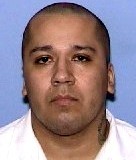
Rodrigo Hernandez
Murderer Brian Kevin Rosenfeld
Murderer · USA · 1985
Brian Kevin Rosenfeld Brian Kevin Rosenfeld was sentenced to three concurrent l…
23 victims
Brian Kevin Rosenfeld
Murderer · USA · 1985
Brian Kevin Rosenfeld Brian Kevin Rosenfeld was sentenced to three concurrent l…
23 victims
 Russell Ellwood
Murderer · USA · 1991
Russell Ellwood was a former taxi driver. Authorities suspected him of killing…
20 victims
Russell Ellwood
Murderer · USA · 1991
Russell Ellwood was a former taxi driver. Authorities suspected him of killing…
20 victims
 Robert Martines Perez
Murderer · USA · 1994
Name: Robert Martines Perez · Other name used in proceedings: Robert Martinez P…
15 victims
Robert Martines Perez
Murderer · USA · 1994
Name: Robert Martines Perez · Other name used in proceedings: Robert Martinez P…
15 victims
 Billy Frank Vickers
Murderer · USA · 1993
Billy Frank Vickers Vickers was executed by lethal injection in Texas on Januar…
14 victims
Billy Frank Vickers
Murderer · USA · 1993
Billy Frank Vickers Vickers was executed by lethal injection in Texas on Januar…
14 victims
 Joe Metheny
Serial killer · USA · 1976
Joe Roy Metheny was sentenced to death on November 13, 1998. The death sentence…
10 victims
Joe Metheny
Serial killer · USA · 1976
Joe Roy Metheny was sentenced to death on November 13, 1998. The death sentence…
10 victims
 Jack Unterweger
Serial killer · USA / Czechoslovakia · 1976
Johann “Jack” Unterweger was an Austrian serial killer. He was born in 1950 in…
12 victims
Jack Unterweger
Serial killer · USA / Czechoslovakia · 1976
Johann “Jack” Unterweger was an Austrian serial killer. He was born in 1950 in…
12 victims
 Wesley Gareth Evans
Murderer · Canada · 1984
Defendant: Wesley Gareth Evans Victim: Lavonne Willems (age 27), of Vancouver V…
2 victims
Wesley Gareth Evans
Murderer · Canada · 1984
Defendant: Wesley Gareth Evans Victim: Lavonne Willems (age 27), of Vancouver V…
2 victims
 Jesusa Tatad
Murderer · USA · 2011
Jesusa Tatad was 41 years old at the time of her sentencing. She had divorced R…
1 victim
Jesusa Tatad
Murderer · USA · 2011
Jesusa Tatad was 41 years old at the time of her sentencing. She had divorced R…
1 victim
- Gender
- male
- Country
- USA
- Location
- Michigan/Bexar County, Texas, USA
- Date of birth
- J une 27, 1973
- Age at first offence
- 18
- Characteristics
- rape
- Victim profile
- Muriel Stoepker, 77 (homeless woman) / Susan Verstegen, 38
- Method of murder
- Shooting / Strangulation
- Date(s) of murder
- September 1991 / February 19, 1994
- Years active
- 1991–1994
- Date of arrest
- 2 002
- Status
-
Executed
Sentenced to death on April 7, 2004; executed by lethal injection in Texas on January 26, 2012
Case record: Rodrigo Hernandez
Background
Rodrigo Hernandez was convicted in 2004 of the rape and capital murder of Susan Verstegen and sentenced to death. He filed state and federal habeas proceedings challenging his conviction and death sentence, including claims of ineffective assistance of counsel.
Hernandez had been placed on probation in 1992 for burglarizing a sporting goods store. He had committed numerous violations of the conditions of that probation. As a “youthful offender” facing sentencing for his first felony, he had been granted probation for burglarizing a home but had not successfully completed probation and had been sentenced to jail. He also had been convicted of felony assault with intent to do great bodily harm, indecent exposure, and misdemeanor malicious destruction of property and engaging in an illegal gambling business. A former high-school girlfriend testified that Hernandez had assaulted her.
During the penalty phase, the jury learned that Hernandez had been convicted of multiple criminal offenses in Michigan. During the guilt-innocence phase, rules of evidence prevented certain prior criminal acts from being presented to a jury.
At trial, Hernandez presented testimony from a court-appointed psychiatrist and from a licensed social worker. The psychiatrist testified about pervasive conditions during Hernandez’s upbringing, including social conflicts and discord, substance abuse, incarceration of family members, and mental illness. The psychiatrist also described environmental risk factors Hernandez faced. The psychiatrist pointed out that a CT scan of Hernandez’s head revealed the presence of a bullet in the left frontal bone of his skull, and conceded that the injury had occurred after the July of 1990 offense. The psychiatrist noted that Hernandez had been twenty years old in 1994 and thirty at the time of trial, and offered his opinion that there had been some maturation and some indication that Hernandez’s behavior had become less anti-social. He also noted that Hernandez’s abuse of multiple substances had ended and was not likely to recur in an incarcerated setting, and that the two rule violations committed while incarcerated had been minor and had not disrupted the penal facility or created violence.
Hernandez also presented testimony from a licensed social worker who had prepared a social report. Her testimony was based upon interviews with Hernandez and his family members and a review of Hernandez’s school, jail, and prison records. The social worker opined that Hernandez did well in a highly structured setting, such as incarceration.
The state did not present psychiatric or psychological testimony.
The offence
In the early morning hours of February 18, 1994, Susan Verstegen was re-stocking snack products at a San Antonio grocery store from the storage bin in back of the store. While working at the storage bin, Verstegen was attacked, sexually assaulted, and strangled by Hernandez.
After the attack, the unknown assailant transported Verstegen’s body to a nearby church and left it in a garbage barrel. A later account described the body as being found dumped in a garbage barrel behind a San Antonio church.
The offense remained unsolved until 2002. In Hernandez’s written statement introduced into evidence, he described his actions in attacking, sexually assaulting, and killing Verstegen and disposing of her body. Hernandez’s confession included: “I had been smoking weed, drinking beer and mixed drinks and did not realize what I was doing.” Another quotation from a written statement included: “I want to say I am sorry and wish it was me instead of her.”
A separate report described that Hernandez told Detective George Saidler, after the DNA match was discovered in 2002, that he was high on marijuana and alcohol and that he grabbed Verstegen, wrapped his hands around her neck when she struggled, drove off in her car, and threw her body in the trash can when he realized she was not breathing.
Hernandez was charged with capital murder by an indictment alleging, in separate paragraphs, murder in the course of committing and attempting to commit aggravated sexual assault and murder in the course of committing and attempting to commit kidnapping. The indictment alleged the two paragraphs were listed consecutively as “Paragraph A” and “Paragraph B” without any connector.
Investigation
The case remained unsolved until 2002. DNA evidence from the crime scene and entered into a national database was matched to DNA from a sample collected from Hernandez by the State of Michigan and also entered into the same national database. After the reported match, another sample from Hernandez was tested and the DNA pattern matched the DNA pattern from the crime-scene sample. Hernandez’s written statement detailing the actions against Verstegen was introduced into evidence.
In 2009, while Hernandez was on death row, Michigan detectives also connected him to the 1991 rape and fatal shooting of Muriel Stoepker, 77, a homeless woman.
A statement about a later development indicated that the 2010 Michigan connection to Stoepker’s murder meant he would not be tried because he was already on death row in Texas.
Trial
On Dec. 11, 2002, Hernandez was indicted for capital murder by a Bexar County grand jury. On March 18, 2004, Hernandez was convicted of capital murder. After a separate punishment proceeding, Hernandez was sentenced to death on March 22, 2004. A jury found Hernandez guilty of murdering Susan Verstegen in 2004.
In the capital murder trial, the jury’s answers to special issues resulted in a sentence of death.
The defense presented no evidence to the jury in the guilt phase, and during the penalty phase Hernandez was argued to have a criminal history and no remorse. Prosecutors presented arguments that Hernandez had a criminal history and showed no remorse. Defense counsel was Mario Trevino; Texas Attorney General counsel listed included Mario Trevino.
Prosecution(s) included Jim Wheat and Melisa Skinner.
During the punishment phase, the jury heard psychiatric testimony from the defense.
The court described a “10-12 rule” jury instruction, including that: “The jury may not answer the first issue ‘Yes’ unless there is unanimous agreement of the individual jurors upon that answer. The jury may not answer the first issue ‘No’ unless ten or more jurors agree upon that answer. The jury may not answer the second issue ‘No’ unless there is unanimous agreement of the individual jurors upon that answer. The jury may not answer the second issue ‘Yes’ unless ten or more jurors agree upon that answer.”
At trial, one issue involved the medical testimony of the mechanism and timing of strangulation. Dr. Bux testified that the marks on Verstegen’s neck indicated she was likely strangled by a ligature or a combination of ligature and hands, and that it was possible that only hands were used. During Dr. Bux’s testimony and questioning, the following exchange occurred:
Q: How long would a person then have to hold Susan Verstegen's neck before she would not come back to consciousness?
A: That's a good question. We know that they'll come back in 100 seconds. We don't know what the magic number is after that. It would be at least two to three minutes, and it might be longer in somebody that's young and healthy like she was....
Q: Is it fair to say that the absolute minimum that a person would have to hold a ligature on Susan Verstegen's neck after she lost consciousness is two minutes?
A: Yes, sir. I think that would be very conservative.
During closing argument, the prosecutor summarized Bux’s testimony and said: “some type of ligature was used—either ligature alone or ligature and hands.”
A reported defense position included an argument that his acts were impulsive and that he was intoxicated on alcohol and marijuana when very young, and that those factors tended to disprove future dangerousness.
Sentencing
The trial court sentenced Hernandez to death after the separate punishment proceeding. The sentencing was on March 22, 2004.
Appeals
Hernandez’s conviction and sentence were affirmed by the Texas Court of Criminal Appeals on Feb. 15, 2006.
Hernandez sought review in the U.S. Supreme Court, and the Court denied certiorari review on Oct. 2, 2006.
Hernandez filed a state application for habeas corpus relief, and it was denied by the Court of Criminal Appeals on April 30, 2008.
On April 22, 2009, Hernandez filed a petition for writ of habeas corpus in the U.S. District Court for the Western District of Texas, San Antonio Division. The federal court denied this petition on Feb. 25, 2010.
On Oct. 18, 2010, the U.S. Court of Appeals for the Fifth Circuit rejected Hernandez’s appeal and affirmed the denial of habeas corpus relief by the district court.
Hernandez filed a petition for writ of certiorari in the U.S. Supreme Court on Jan. 14, 2011, but the Court denied certiorari review on April 18, 2011.
Hernandez filed an application for a post-conviction writ of habeas corpus and a brief in support on Jan. 17, 2012; the writ was pending.
On Jan. 18, 2012, Hernandez filed a motion to withdraw the execution date in the trial court. On Jan. 19, 2012, the trial court denied the motion to withdraw the execution date.
On Jan. 23, 2012, the Texas Court of Criminal dismissed Hernandez’s application for a post-conviction writ of habeas corpus.
On Jan. 24, 2012, Hernandez filed a writ of certiorari petition and a motion to stay in the Supreme Court. On Jan. 24, 2012, the Texas Board of Pardons and Paroles voted against a reprieve/commutation for Hernandez.
On Jan. 25, 2012, the State filed its brief in opposition to Hernandez’s certiorari petition and motion for stay. On Jan. 26, 2012, the U.S. Supreme Court denied Hernandez’s writ of certiorari petition and motion for a stay of execution.
The Fifth Circuit described that it denied a certificate of appealability (COA) and denied a stay in Hernandez v. Thaler, 398 Fed.Appx. 81(5th Cir. 2010) (Habeas).
In the direct appeal, Hernandez v. State, Not Reported in S.W.3d (Tex.Crim.App. 2006) (Direct Appeal) affirmed the judgment. The unanimous opinion of the court delivered by JOHNSON, J. overruled points of error one, two, three, four, and five, and affirmed the judgment of the trial court.
Specific points of error addressed included future dangerousness sufficiency, Apprendi and Blakely claims, mitigation instruction constitutionality, and the “10-12 rule” instruction, as well as ineffective assistance of counsel arguments that were described as inadequately briefed.
Outcome
Hernandez was convicted of capital murder of Susan Verstegen and sentenced to death.
He was executed by lethal injection on January 26, 2012 in Texas.
The Texas Court of Criminal Appeals had previously affirmed the conviction and sentence on Feb. 15, 2006, and the Supreme Court denied certiorari review on April 18, 2011. The U.S. Supreme Court denied a final petition and stay on Jan. 26, 2012 earlier in the day.
During final statements before execution, Hernandez said: “I want to tell everybody that I love everybody. We are all family, people of God Almighty. We're all good. I'm ready . . . This stuff stings, man.”
Another final set of quoted statements included: “I want to tell everybody in the world I love everybody,” Hernandez said. “Keep your heads up. We’re all good. I’m ready.”
A report included: “This stuff stings, man. Almighty,” although a different quotation of his statement provided “This stuff stinks, man.” in the context of hearing him speak.
A statement attributed to Hernandez included: “I want to tell everybody that I love everybody. Keep your heads up,” and “We are all family, people of God almighty.” Another quote attributed to Jason Clark included: “This stuff stings, man.”
Aftermath
A media advisory indicated that Rodrigo Hernandez was scheduled for execution after 6 p.m. on Jan. 26, 2012 pursuant to a court order by the 144th District Court of Bexar County.
A report stated he was pronounced dead at 6:19 p.m., 10 minutes after the lethal dose began.
Charles Monney, Susan Verstegen’s son, witnessed the execution and stated: “Nearly 18 years ago, Susan Verstegen, a woman in the prime of her life, was killed by a stanger.” He also stated: “... Today’s execution doesn’t change the fact that my kids will never hear the sweet laugh or feel the tender embrace of their grandmother who would have been crazy for them. Every holiday or family get together will forever be missing something.”
Another report included a statement by Anna Verstegen that: “It’s never too late,” and “We’re just praying for him. The kind of God I believe in can forgive.”
A report included that Michigan officials said the case was to be closed upon Hernandez’s death.
Other details
Hernandez v. 2006) (Direct Appeal) included references to the indictment, trial evidence, and appellate discussion of points of error.
Hernandez v. Thaler, 398 Fed.Appx. 81(5th Cir. 2010) (Habeas) described that counsel was not found ineffective across multiple claims including failures relating to suppressing Hernandez’s confession, medical examiner questioning, closing argument, residual doubt mitigation, and dental expert retention. It also described that a COA and a stay were denied.
In the habeas discussion, the district court noted that Hernandez did not raise two arguments in state habeas proceeding and that the state did not assert procedural default. The habeas court analyzed claims on the merits and denied COA and stay.
The habeas court discussed a request to raise an Atkins claim based on alleged mental retardation and cited Atkins v. Virginia, 536 U.S. 304 (2002). It stated the claim was denied and explained the denial of a stay based on a meritless unexhausted claim and a time-bar discussion.
A search warrant had authorized detectives to take dental impressions of Hernandez, and the habeas decision described testimony about potential bite marks, autopsy report omissions, and the role of a dental expert.
Spotted an error, or have more information about this case?