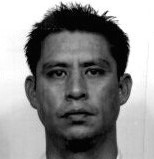
Leonel Torres Herrera
Murderer Ervil LeBaron
Murderer · USA · 1972
Ervil Morrell LeBaron (1925 to August 16, 1981) was the leader of a polygamous…
35 victims
Ervil LeBaron
Murderer · USA · 1972
Ervil Morrell LeBaron (1925 to August 16, 1981) was the leader of a polygamous…
35 victims
 Brian Kevin Rosenfeld
Murderer · USA · 1985
Brian Kevin Rosenfeld Brian Kevin Rosenfeld was sentenced to three concurrent l…
23 victims
Brian Kevin Rosenfeld
Murderer · USA · 1985
Brian Kevin Rosenfeld Brian Kevin Rosenfeld was sentenced to three concurrent l…
23 victims
 Marvin Gray
Murderer · USA · 1975
Marvin Gray was convicted killer who claimed responsibility for 23 slayings and…
23 victims
Marvin Gray
Murderer · USA · 1975
Marvin Gray was convicted killer who claimed responsibility for 23 slayings and…
23 victims
 Yahweh ben Yahweh
Murderer · USA · 1980
Yahweh ben Yahweh was born and legally named Hulon Mitchell Jr. (October 27, 19…
23 victims
Yahweh ben Yahweh
Murderer · USA · 1980
Yahweh ben Yahweh was born and legally named Hulon Mitchell Jr. (October 27, 19…
23 victims
 Russell Ellwood
Murderer · USA · 1991
Russell Ellwood was a former taxi driver. Authorities suspected him of killing…
20 victims
Russell Ellwood
Murderer · USA · 1991
Russell Ellwood was a former taxi driver. Authorities suspected him of killing…
20 victims
 Miguel Angel Soto
Murderer · USA · 1999
Miguel Angel Soto was a convicted offender who was sentenced to death on August…
2 victims
Miguel Angel Soto
Murderer · USA · 1999
Miguel Angel Soto was a convicted offender who was sentenced to death on August…
2 victims
 Matthew Cushing
Murderer · USA · 2008
Matthew Cushing was convicted for killing his mother, stepfather, and stepbroth…
3 victims
Matthew Cushing
Murderer · USA · 2008
Matthew Cushing was convicted for killing his mother, stepfather, and stepbroth…
3 victims
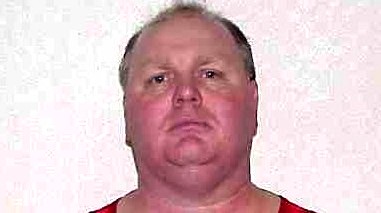 Michael Dale St. Clair
Serial killer · USA · 1990
Michael Dale St. Clair was born on 1-15-57. St. Clair called himself the “$5 mi…
6 victims
Michael Dale St. Clair
Serial killer · USA · 1990
Michael Dale St. Clair was born on 1-15-57. St. Clair called himself the “$5 mi…
6 victims
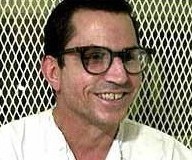 Johnny Paul Penry
Murderer · USA · 1979
Johnny Paul Penry (born May 5, 1956) was a Texas Death Row convict. He was sent…
1 victim
Johnny Paul Penry
Murderer · USA · 1979
Johnny Paul Penry (born May 5, 1956) was a Texas Death Row convict. He was sent…
1 victim
- Gender
- male
- Country
- USA
- Location
- Cameron County, Texas, USA
- Date of birth
- September 17, 1947
- Age at first offence
- 34
- Characteristics
- rape?, the bodies were never found, to avoid arrest
- Victim profile
- David Rucker and Enrique Carrisalez ( Texas police officers )
- Method of murder
- Shooting
- Date(s) of murder
- September 29, 1981
- Years active
- 1981
- Date of arrest
- 5 days after
- Status
-
Executed
Executed by lethal injection in Texas on May 15, 1993
Case record: Leonel Torres Herrera
Status and outcome
Leonel Torres Herrera was executed by lethal injection in Texas on May 15, 1993.
Herrera’s last statement was: "I am innocent, innocent, innocent. Make no mistake about this; I owe society nothing. Continue the struggle for human rights, helping those who are innocent, especially Mr. Graham. I am an innocent man, and something very wrong is taking place tonight. May God bless you all. I am ready."
Herrera declined a last meal.
A Supreme Court of the United States proceeding occurred under the title Herrera v. Collins related to a clemency petition, and an execution date was referenced as May 12, 1993 in connection with the offender’s life dates.
Names and parties
- Leonel Torres Herrera — offender; petitioner-appellant; petitioner-appellee in different appellate captions; convicted for capital murder; sentenced to death.
- David Rucker — Texas Department of Public Safety Officer; victim.
- Enrique Carrisalez — Los Fresnos police officer; victim; peace officer; died nine days after being shot.
- Enrique Hernandez — civilian; accompanied Carrisalez; witnessed shots fired on Carrisalez; provided identification statements.
- Raul Herrera — Herrera’s brother; murdered; alleged to have confessed to attorney and others.
- Raul Jr. — Raul Herrera’s son; nine at the time of the killings; signed an affidavit alleging he witnessed the killings.
- Jose Ybarra, Jr. — schoolmate of the Herrera brothers; signed an affidavit alleging Raul Sr. told him in 1983 that he had shot the two police officers.
- Hector J. Villareal — attorney who represented Raul Herrera on a charge of attempted murder; submitted an affidavit.
- Franco Palacios — cell mate of Raul Herrera; submitted an affidavit.
- James A. Collins — Director, Texas Department of Criminal Justice, Institutional Division; respondent-appellee/appellant in appellate proceedings.
- Justice Rehnquist — authored the Supreme Court discussion quoted in connection with Herrera’s actual innocence claim.
- Justice Blackmun — dissented and wrote the quoted passage about execution of a person who can show innocence.
Background
Leonel Torres Herrera (September 7, 1947 – May 12, 1993) was sentenced to death for murdering two Texas police officers, David Rucker and Enrique Carrisalez. The murders occurred on September 29, 1981 at separate locations along a highway between Brownsville and Los Fresnos.
Herrera alleged that law enforcement officials were aware of Jose Ybarra, Jr.’s statement and had withheld it in violation of Brady v. Maryland.
The offence
On the evening of September 29, 1981, at approximately 10:40 p.m., the body of Texas Department of Public Safety Officer David Rucker was discovered 6.2 miles east of Los Fresnos, Texas. Rucker was killed by a gunshot wound to the head. There were no witnesses to the shooting. Herrera’s social security card was discovered near the body.
Ten minutes later, Los Fresnos police officer Enrique Carrisalez stopped a speeder traveling west on the road from where Rucker’s body was found. Carrisalez parked on the shoulder with his headlights illuminating the driver’s side of the speeding car. Carrisalez radioed the driver’s license plate number to the dispatcher. As Carrisalez approached the car, the driver stepped toward Carrisalez and fired one or more shots. Carrisalez was shot in the chest and died nine days later from the wound.
Civilian Enrique Hernandez was accompanying Carrisalez on the night of the shooting. Hernandez witnessed the shots fired on Carrisalez and immediately took cover on the seat of the patrol car. When Hernandez looked over the dashboard again, he saw Carrisalez fire four shots as the car that had been stopped sped away. Hernandez radioed in a description of the suspect’s automobile.
A license plate check showed that the stopped car belonged to Herrera’s live-in girlfriend.
Investigation and identification evidence
Enrique Hernandez was interviewed by police officers almost immediately after the shooting. A few hours later, on the morning of September 30, Hernandez gave a statement to Texas Ranger Bruce Casteel.
Also on the morning of September 30, Hernandez was called to the Harlingen police station and shown a display of six photographs. Hernandez picked out three photographs and said that anyone of them could have been the killer; a photograph of Hernandez was among those selected.
The next afternoon, two officers went to the hospital room of Officer Carrisalez. The officers showed Carrisalez one photograph of Herrera and asked Carrisalez three times if he could identify it. Although Carrisalez was unable to speak, he nodded his head, thereby identifying Herrera as the assailant.
Later in the day, Hernandez was shown the same photograph and positively identified Herrera as the gunman. The photograph was a mug shot that carried the notation "Edinburg Police Department."
On October 4, Herrera was apprehended.
Two days later, Hernandez picked Herrera’s photograph from a second photo lineup. The photograph of Herrera used in this instance was not the same photograph earlier shown to both Carrisalez and Hernandez.
Finally, on October 24, Hernandez picked Herrera out of a five person live lineup.
Pre-trial identification challenges
Herrera asserted that he had been denied due process because the pre-trial identification procedures were impermissibly suggestive and created a substantial likelihood of misidentification such that the in-court identification was unduly tainted.
The district court found the procedures employed by the authorities in showing a single photograph to Hernandez were suggestive, but not impermissibly so. The appellate court stated that even if the procedures were assumed impermissibly suggestive, it could not conclude that there was a substantial likelihood of misidentification.
The appellate court discussed the Supreme Court rules from Simmons v. United States and Manson v. Brathwaite, including the statement that:
"reliability is the linchpin"
It also referenced factors from Neil v. Biggers.
The appellate court stated that the district court did not err in assessing reliability under the totality of the circumstances, including that Hernandez was approximately fifteen feet from the suspect and testified he had about fourteen seconds during which he was looking directly at the assailant. The appellate court also noted that headlights and emergency lights were on and positioned so that the entire left side of the assailant’s car was illuminated, and it cited Hernandez’s special army training and years riding with police officers.
The appellate court also concluded that it could not disturb the district court’s assessment of the accuracy of the description and Hernandez’s level of certainty.
The appellate court included verbatim language attributed to the district court:
"while identification arising from single photograph displays are to be viewed with suspicion, there are sufficient indicia of reliability to find that, considering the totality of the circumstances, the showing of the photograph did not create a substantial likelihood of misidentification."
Statement of identification by Carrisalez and hearsay/dying declaration issue
Herrera attacked the district court’s refusal to exclude Officer Carrisalez’ statement of identification on two grounds: impermissibly suggestive identification procedures and improper admission under the dying declaration exception to the hearsay rule.
The district court concluded that the identification procedures were not impermissibly suggestive under the circumstances. The appellate court stated that showing a single photograph to an officer while he was in a hospital bed was suggestive, but not impermissibly so given exigent circumstances, including that the perpetrator was known to be armed and still at large.
The appellate court referenced Stovall v. Denno and described the circumstances as involving the witness in serious condition and authorities needing to apprehend the suspect quickly. The appellate court also stated there was no indication the police exerted pressure or indicated custody of the subject of the photo, and it quoted the nurse’s testimony that:
- upon viewing the photo, Carrisalez became agitated and remained agitated even after officials left.
The appellate court stated Carrisalez was alert, had not been given sedatives for 22 hours prior to the showing, and had sufficient time to view the attacker.
The appellate court further stated that even if the district court erred in finding no impermissible suggestiveness, the totality of the circumstances indicated Carrisalez’ identification was reliable and did not offend due process.
For the dying declaration issue, Herrera argued the statement should have been excluded due to failure to lay a proper predicate under what is now Tex.R.Crim.Evid. 804(b)(2). The appellate court stated the district court properly denied relief, and it discussed that the circuit resists collateral habeas challenges to evidentiary matters absent fundamental fairness.
The appellate court concluded there was no reversible error and that any error was harmless, stating that the state’s case hinged on neither Hernandez nor Carrisalez identification and that other substantial evidence supported the verdict.
Other evidence admitted at trial
The appellate court referenced additional evidence admitted to the jury:
- a letter written by Herrera on the back of several envelopes in which Herrera essentially admitted to the killing of both officers and a positive identification of Herrera’s car which was streaked with blood matching Officer Rucker’s blood type.
Conviction and direct appeal
A jury found Leonel Torres Herrera guilty of capital murder. Punishment was assessed at death.
The jury found Herrera guilty of the capital murder of Enrique Carrisalez, a peace officer acting in the course of his official duties. After the jury answered special issues affirmatively, punishment was assessed at death.
The Texas Court of Criminal Appeals affirmed the conviction on direct appeal.
Habeas corpus proceedings and stays
Herrera filed an application for State writ of habeas corpus pursuant to Tex. Code Crim. Proc. Ann. art. 11.07. Relief was denied.
In federal court, Herrera filed a federal petition for writ of habeas corpus and motion for stay of execution in the United States District Court for the Southern District of Texas. The federal district court granted an unopposed stay on August 12, 1985. The federal district court later granted the State’s motion for summary judgment and denied Herrera federal habeas relief.
On June 25, 1990, the United States Court of Appeals, Fifth Circuit affirmed the district court’s denial of habeas relief and vacated Herrera’s stay of execution. The Supreme Court denied certiorari.
The Supreme Court denied certiorari in Herrera v. Collins and Herrera filed a second application for state writ of habeas corpus on December 12, 1990. On January 14, 1991, the trial court withdrew an earlier order, entered findings of fact and conclusions of law, and denied habeas relief. On May 29, 1991, the Court of Criminal Appeals denied relief and vacated a stay of execution.
On February 16, 1992, Herrera filed an application for federal writ of habeas corpus in the district court raising five claims for relief. The district court initially denied relief on claims 2, 3, 4, and 5 on grounds of writ abuse, but it required a hearing on one issue related to the Brady claim upon reconsideration and scheduled it for February 21, 1992. The district court also granted a stay of execution pending the hearing and granted a stay to permit further litigation in state court for the second prong of the first claim—actual innocence.
The district court issued a Rule 54(b) judgment dismissing claims 2-5 and issued a certificate of probable cause as to these claims. Collins appealed the order granting a stay of execution and moved to vacate the stay.
The appellate court later vacated the stay of execution and vacated the certificate of probable cause as improvidently granted.
The appellate court stated that claims 2, 3, 4, and 5 were barred because Herrera abused the writ and found no substantial grounds upon which relief might be granted.
Claims related to actual innocence and affidavits
In 1984, after Herrera’s brother Raul was murdered, Raul’s attorney Hector J. Villareal came forward and signed an affidavit stating Raul told him he had killed Rucker and Carrisalez.
A former cellmate of Raul signed a similar affidavit.
Raul’s son Raul Jr., who was nine at the time of the killings, signed a third affidavit stating he had witnessed the killings.
Jose Ybarra, Jr. signed a fourth affidavit. Ybarra alleged that Raul Sr.
Herrera petitioned for a new trial based on these affidavits, but state courts denied relief. One court dismissed Herrera’s Brady claim due to lack of evidence.
At the federal habeas stage, Herrera attached two affidavits supporting his actual innocence claim:
- Hector J. Villareal’s affidavit stating Raul confessed to him that Raul, not petitioner, murdered both Rucker and Carrisalez.
- Franco Palacios’s affidavit stating Raul confessed to him that Raul had murdered Rucker and Carrisalez.
Herrera also attached additional evidence, including an affidavit of his nephew Raul Herrera, Jr., dated about two weeks before January 29, 1992, stating he was with his father on the date of the murders and saw his father kill both Rucker and Carrisalez, and that the petitioner was not present. Raul Jr. stated he told a police officer what occurred, but the officer told him never to repeat it. Raul Jr. stated that no attorney representing the petitioner had ever asked him about the events until recently.
The appellate discussion included that Herrera’s Brady theory relied on affidavits and newspaper clippings attempting to suggest the prosecutor knew Raul rather than Leonel Herrera committed the murders. The appellate court stated that the pleadings did not allege specific evidence that the state withheld favorable evidence prior to trial and characterized Herrera’s reliance on the exhibits as insufficiently particularized.
Supreme Court discussion and dissent
In January 1993, the U.S. Supreme Court ruled that Herrera's claim of actual innocence was not a bar to his execution. The appellate summary included Justice Rehnquist’s statement:
"presumption of innocence disappears"
The dissenting Justice Blackmun wrote:
"The execution of a person who can show that he is innocent comes perilously close to simple murder."
The appellate narrative stated that Herrera was executed by lethal injection on May 12, 1993, four months after the Supreme Court ruling.
Appellate case captions and dates present in the record
The record contained:
- Leonel Torres Herrera, Petitioner-Appellant, v. James A. Collins, Director, Texas Department of Criminal Justice, Institutional Division, Respondent-Appellee, United States Court of Appeals, Fifth Circuit, with an appeal date of June 25, 1990 and an opinion opening dated June 25, 1990.
- Leonel Torres HERRERA, Petitioner-Appellee, v. James A. COLLINS, Director, Texas Department of Criminal Justice, Institutional Division, Respondent-Appellant, United States Court of Appeals, Fifth Circuit, No. 92-2114, with a date of Feb. 18, 1992, describing that the director appealed an order staying execution and referencing scheduled execution for February 19, 1992 between midnight and dawn.
Related points included in the record
- The Texas Court of Criminal Appeals affirmed the conviction and death sentence; Herrera v. State, 682 S.W.2d 313 (Tex.Crim.App.1984) (en banc).
- The United States Supreme Court denied certiorari in Herrera v. Texas with a reference to 471 U.S. 1131 and related reporter citations as given in the record.
- A state court issue of a warrant of execution ordering Herrera to be executed by lethal injection before sunrise on August 16, 1985 was referenced.
- Herrera’s habeas petition and stays included procedural details, including a district court hearing and a direction to dismiss the claim without prejudice if a successive state habeas petition was filed.
Timeline (dated events that appear in the record)
- September 7, 1947 — Leonel Torres Herrera was born.
- September 29, 1981 — The murders of David Rucker and Enrique Carrisalez occurred at separate locations along a highway between Brownsville and Los Fresnos.
- October 4, 1981 — Herrera was apprehended.
- October 24, 1981 — Hernandez picked Herrera out of a five person live lineup.
- 1984 — After Raul was murdered, Raul’s attorney Hector J. Villareal signed an affidavit stating Raul told him he killed Rucker and Carrisalez.
- July 2, 1985 — Herrera filed an application for State writ of habeas corpus pursuant to Tex. Code Crim.Proc.Ann. art. 11.07.
- August 12, 1985 — The federal district court granted an unopposed stay of execution.
- August 16, 1985 — A warrant of execution ordered Herrera to be executed by lethal injection before sunrise.
- October 19, 1989 — The district court granted a certificate of probable cause.
- October 1989 — The federal district court rejected Herrera’s habeas petition and dissolved the stay of execution.
- June 25, 1990 — The Fifth Circuit affirmed the district court judgment and vacated Herrera’s stay of execution.
- December 12, 1990 — Herrera filed his second application for state writ of habeas corpus.
- January 14, 1991 — The trial court withdrew an earlier order, entered findings of fact and conclusions of law, and denied habeas relief.
- May 29, 1991 — The Court of Criminal Appeals denied relief and vacated a stay of execution.
- December 17, 1991 — Herrera filed a petition for writ of certiorari in the United States Supreme Court.
- February 16, 1992 — Herrera filed the instant application for federal writ of habeas corpus in the district court.
- January 29, 1992 — The affidavit of Raul Herrera, Jr. was dated about two weeks earlier, with January 29, 1992 stated.
- February 18, 1992 — The Fifth Circuit opinion date for the subsequent caption was stated.
- May 12, 1993 — May 12, 1993 was referenced in connection with Herrera’s last statement and execution.
- May 15, 1993 — Executed by lethal injection in Texas on May 15, 1993 was stated in the case status.
Other details
The record included:
- A note that Herrera’s alleged Brady claim was dismissed by one court due to lack of evidence.
- A statement that Herrera alleged suppression in violation of Brady v. Maryland.
- A representation that the Supreme Court ruled actual innocence was not a bar to execution and required procedural errors for relief.
- The Fifth Circuit discussed the propriety of granting a stay of execution, referencing Delo v. Stokes and Barefoot v. Estelle standards, and then vacated the stay.
- The Fifth Circuit referenced that claims of newly discovered evidence are not cognizable in federal habeas corpus as a rule, and that Texas adopted a similar rule via Ex parte Binder.
- The appellate court stated the district court erred in granting a stay of execution to allow presenting additional affidavits in a piecemeal fashion in state court.
- The appellate court addressed a certificate of probable cause as improvidently granted and vacated it.
The record included additional discussion language in the portion labeled in the appellate opinion about the single-photo display: "Only hours after the shooting had occurred [Hernandez] was unable to identify Petitioner from a photographic display consisting of six pictures. He did, however, choose three pictures from the display, one of which was Petitioner. What occurred between this initial uncertainty and the eventual certitude Hernandez expressed at the second photographic display, the live lineup, and the trial was the display to Hernandez of Petitioner's picture uncomplicated by any accompanying array. Under normal circumstances, this Court would not hesitate [sic] to find this procedure impermissibly suggestive. The Supreme Court and this Circuit have repeatedly condemned the showing of a single photograph as one of the most suggestive methods of identification. ... However, because of the circumstances existing at the time the single photograph was shown, it cannot be said that this procedure was impermissible. [T]he Supreme Court [has] justified a suggestive identification procedure [where a serious felony has been committed, the perpetrator is at large, and the officials needed to act swiftly.] [In the instant case, it] was crucial for the law enforcement officers to act quickly. Moreover, there is no indication that the police did or said anything suggestive while showing the picture to Hernandez. Granted this procedure is less than ideal, but under the circumstances the Court does not find it impermissibly suggestive. District Court Opinion at 9."
Spotted an error, or have more information about this case?