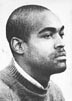
John Hicks
Murderer Brian Kevin Rosenfeld
Murderer · USA · 1985
Brian Kevin Rosenfeld Brian Kevin Rosenfeld was sentenced to three concurrent l…
23 victims
Brian Kevin Rosenfeld
Murderer · USA · 1985
Brian Kevin Rosenfeld Brian Kevin Rosenfeld was sentenced to three concurrent l…
23 victims
 Marvin Gray
Murderer · USA · 1975
Marvin Gray was convicted killer who claimed responsibility for 23 slayings and…
23 victims
Marvin Gray
Murderer · USA · 1975
Marvin Gray was convicted killer who claimed responsibility for 23 slayings and…
23 victims
 Yahweh ben Yahweh
Murderer · USA · 1980
Yahweh ben Yahweh was born and legally named Hulon Mitchell Jr. (October 27, 19…
23 victims
Yahweh ben Yahweh
Murderer · USA · 1980
Yahweh ben Yahweh was born and legally named Hulon Mitchell Jr. (October 27, 19…
23 victims
 Russell Ellwood
Murderer · USA · 1991
Russell Ellwood was a former taxi driver. Authorities suspected him of killing…
20 victims
Russell Ellwood
Murderer · USA · 1991
Russell Ellwood was a former taxi driver. Authorities suspected him of killing…
20 victims
 Vernon Lee Evans
Murderer · USA · 1983
Vernon Lee Evans was a Maryland Death Row inmate. In 1984, he was convicted and…
2 victims
Vernon Lee Evans
Murderer · USA · 1983
Vernon Lee Evans was a Maryland Death Row inmate. In 1984, he was convicted and…
2 victims
 Miranda Barbour
Murderer · USA · 2013
Miranda Barbour, 19, defendant. · Elytte Barbour, 22, defendant and husband of…
100 victims
Miranda Barbour
Murderer · USA · 2013
Miranda Barbour, 19, defendant. · Elytte Barbour, 22, defendant and husband of…
100 victims
 Kayoko Nakai
Murderer · Japan · 2000
Kayoko Nakai was 66 and ran a rival telephone dating club in Kobe at the time o…
4 victims
Kayoko Nakai
Murderer · Japan · 2000
Kayoko Nakai was 66 and ran a rival telephone dating club in Kobe at the time o…
4 victims
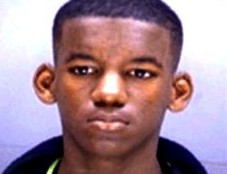 Quincy Javon Allen
Murderer · USA · 2002
Quincy Javon Allen was sentenced to death in South Carolina on February 20, 200…
4 victims
Quincy Javon Allen
Murderer · USA · 2002
Quincy Javon Allen was sentenced to death in South Carolina on February 20, 200…
4 victims
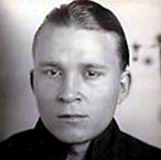 Rufus Franklin
Murderer · USA · 1938
Rufus Franklin was an American criminal who served a life sentence in Alcatraz.…
1 victim
Rufus Franklin
Murderer · USA · 1938
Rufus Franklin was an American criminal who served a life sentence in Alcatraz.…
1 victim
- Gender
- male
- Country
- USA
- Location
- Hamilton County, Ohio, USA
- Date of birth
- J uly 31, 1956
- Age at first offence
- 29
- Characteristics
- drug addict, alcohol, robbery
- Victim profile
- Brandy Green, 5 (his stepdaughter) and Maxine Armstrong, 56 (his mother-in-law)
- Method of murder
- Strangulation / Asphyxiation
- Date(s) of murder
- August 2, 1985
- Years active
- 1985
- Date of arrest
- 2 days after
- Status
-
Executed
Executed by lethal injection in Ohio on November 29, 2005
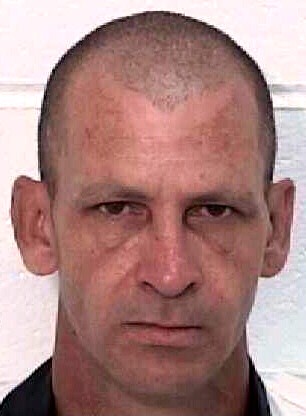
Case record: John Hicks
John Hicks was executed by the state of Ohio on November 29, 2005, by lethal injection.
Status and execution details
Hicks, aged 49, died at 10:20 a.m. EST (1520 GMT) after an injection of lethal chemicals at the Southern Ohio Correctional Facility in Lucasville.
Just before his execution, Hicks told those present that he was sorry for the pain he caused and said he loved both of the people he killed and wished he could bring them back. He also said: "It began with a syringe in my arm," and that day was ending with a needle in his arm and that it had “come full circle” and he was “at peace with it.”
Hicks spoke his last words: "I know it's been 20 years of pain and hurt, but during those 20 years I suffered, too. I cared and I loved, too, for Maxine and Brandy. It began with a syringe in my arm and this day is ending with a needle in my arm. It's come full circle." He thanked his attorneys and singled out four death row inmates to "hang in there and stay strong. Take care, 'cause I'm coming home.Lord, hallelujah.Yes, thank you."
Warden Edwin Voorhies Jr. declared the time of death to be 10:20 a.m.
Victims and offenses
Hicks was convicted of the aggravated murder of Maxine Armstrong and the aggravated murder of Brandy Green, and the aggravated robbery of Maxine Armstrong.
Hicks killed his mother-in-law, Maxine Armstrong, and his 5-year-old stepdaughter, Brandy Green.
Background and relationship details
On August 2, 1985, Hicks was twenty-nine years of age. He worked as a boiler operator in the power plant of a public high school in Cincinnati, Ohio. He was married to Ghitana Hicks and lived with Ghitana and her five-year-old daughter, Brandy Green.
Ghitana brought Brandy to spend the night with Ghitana’s mother, Maxine Armstrong, at Maxine Armstrong’s apartment. Brandy fell asleep on her grandmother’s couch.
Timeline
- 8/2/1985 — Hicks acquired cocaine in Cincinnati, Ohio; he ingested cocaine and took the videocassette recorder (VCR) from the home he shared with his wife, Ghitana, and stepdaughter, Brandy Green; he gave the VCR to a drug trafficker as security for a cocaine purchase; after consuming the cocaine, he realized he had no money to redeem the VCR and decided to rob Maxine Armstrong to redeem the VCR; Hicks went to Armstrong’s apartment, found Brandy asleep, woke her, put her to bed, and strangled Armstrong with a clothes line; he stole approximately $300 and some credit cards; he returned after midnight to kill Brandy and used a pillow and duct tape; he digitally penetrated Brandy; he attempted to dismember Armstrong’s body in the bathtub but abandoned the effort after nearly cutting one of her legs off; he searched the apartment again, taking a checkbook, a ring, a .32 caliber pistol, and a box of ammunition.
- 8/3/1985 — Relatives of Maxine Armstrong entered her apartment at about 10:30 a.m., found the bodies, and summoned police; sometime in the early afternoon Hicks reached Knoxville, Tennessee, and surrendered himself to police; he confessed and was returned to Cincinnati for prosecution.
- 8/4/1985 — Hicks surrendered to police in Knoxville, Tennessee, and confessed that he had murdered Armstrong and Brandy in Cincinnati.
- 8/5/1985 — Hicks was returned to Cincinnati and made further statements to Cincinnati homicide detectives Robert Hennekes and Joe Hoffmann; he told Knoxville detective Thomas Stiles about purchasing cocaine from a man named “Ray” in Walnut Hills, and he told the Cincinnati detectives that he got the cocaine from someone known as "G Man."
- 12/10/1985 — The trial court found Hicks competent to stand trial.
- 2/3/1986 — Jury selection commenced.
- 2/6/1986 — Jury selection was completed and the trial itself commenced.
- 2/12/1986 — Hicks was found guilty as he stood charged in all the counts and specifications of the indictment.
- 2/14/1986 — The penalty phase commenced; the jury recommended imprisonment for thirty years without parole for murdering Maxine Armstrong and recommended a sentence of death for murdering Brandy Green.
- 2/21/1986 — The court ordered Hicks to be put to death on the murder of Brandy Green count; to serve a life sentence involving at least thirty full years without parole on the murder of Maxine Armstrong count; and to be imprisoned for ten to twenty-five years on the aggravated robbery count.
- 1988 — The Court of Appeals affirmed Hicks’s convictions.
- 5/17/1989 — The Ohio Supreme Court affirmed Hicks’s conviction and death sentence on direct appeal.
- 4/17/2001 — The federal district court denied Hicks’s petition for a writ of habeas corpus.
- 9/15/2004 — The 6th Circuit affirmed the district court’s denial of Hicks’s petition for a writ of habeas corpus.
- 12/7/2004 — The 6th Circuit denied Hicks’s petition for rehearing en banc.
- 12/30/2004 — The 6th Circuit granted Hicks’s motion to stay the mandate pending the filing of a petition for a writ of certiorari in the U.S. Supreme Court.
- 11/29/2005 — Hicks was executed by the state of Ohio.
The offence
Hicks’s stated motive included the need for drugs and money. He became concerned about Ghitana’s reaction to missing money and took action that he knew would require killing.
He took Brandy to the apartment occupied by her maternal grandmother, Maxine Armstrong, while Ghitana was at work. Hicks left to visit a bar to purchase cocaine for his personal use and spent the money in his possession for cocaine and beer.
Because he desired more cocaine, Hicks returned to his home and took his wife’s VCR to exchange for more drugs from his supplier. Hicks later conceived a scheme to rob Maxine Armstrong so he could obtain money to redeem the VCR from the drug dealer.
Hicks revisited Armstrong’s apartment at about 10:30 p.m., admitted himself with a key to a rear door, and was admitted by her. He carried Brandy into a bedroom where she went to sleep. He approached Maxine from the rear and strangled her with a piece of rope he had brought with him.
Hicks ransacked the apartment and took an amount of money estimated to be between two and three hundred dollars.
After leaving to consume more cocaine and to recover the VCR, he realized that Brandy could incriminate him by placing him in the apartment near the time of Armstrong’s death, and he told police that he had to "go back there and take care of her."
Between midnight and 1:00 a.m., August 3, Hicks returned to Armstrong’s apartment. Brandy was asleep in her bed. Hicks suffocated the child with a pillow, putting duct tape over her mouth and nostrils because she was uttering sounds and struggling to breathe. He also violated the child sexually by digital manipulation of her genital parts before leaving her body.
Hicks intended to dismember Armstrong’s body for easier disposal. He put the body in the bathtub and started to dismember it with a butcher knife, but abandoned the plan after nearly cutting one of her legs off, leaving both bodies where they were in the apartment.
He returned to his home, returned the VCR to his wife, and went to bed. At about 6:00 a.m., he went again to Armstrong’s apartment, took her checkbook and a handgun, and left Cincinnati in Ghitana’s automobile.
According to Hicks’s statement given to police, he knew that if he robbed his mother-in-law he would have to kill her.
Hicks also told police that he digitally penetrated Brandy’s vagina in order to make it appear as if it were a sex crime.
Investigation and confession
Relatives of Maxine Armstrong entered her apartment at about 10:30 a.m. and found the bodies, then summoned police.
Hicks reached Knoxville, Tennessee, in the early afternoon of August 3 and surrendered himself to police. He gave Knoxville police a detailed recitation, recorded, of the events occurring on August 2 and 3. Cincinnati police retrieved Hicks without delay for prosecution of his crimes.
Hicks was returned to Cincinnati and made further statements to Cincinnati homicide detectives Robert Hennekes and Joe Hoffmann.
Trial
Charges and indictment
Hicks was charged in a three-count indictment with:
- the aggravated murder of Maxine Armstrong,
- the aggravated robbery of Maxine Armstrong,
- the aggravated murder of Brandy Green.
The aggravated murder counts carried death-penalty specifications.
For the Maxine Armstrong homicide, Hicks faced two specifications:
- he committed the aggravated murder as the principal offender while he was also committing aggravated robbery,
- the murder was part of a course of conduct involving the purposeful killing of two or more persons.
For the Brandy Green homicide, Hicks faced two specifications:
- the killing involved a purposeful act committed with prior calculation and design and alleged Hicks killed Green to escape detection, apprehension, trial or punishment for the aggravated murder of Maxine Armstrong,
- the murder was also part of a course of conduct involving the purposeful killing of two or more persons.
Pleas and competency
Hicks pleaded not guilty and not guilty by reason of insanity, and his counsel filed a suggestion of incompetence to stand trial.
The trial court conducted an evidentiary hearing with expert testimony and found Hicks competent to stand trial on December 10, 1985.
Guilt phase findings
On February 12, 1986, Hicks was found guilty as he stood charged in all counts and specifications of the indictment.
Penalty phase and sentencing
The penalty phase began on February 14, 1986.
The jury found for the first count that aggravating circumstances were not sufficient to outweigh mitigating factors and recommended a sentence of imprisonment for thirty years without parole.
For the third count (murder of Brandy Green), the jury found that aggravating circumstances were sufficient to outweigh mitigating factors and recommended a sentence of death.
The trial judge concurred and sentenced Hicks:
- to death for the murder of Brandy Green,
- to life imprisonment involving at least thirty full years without parole for the murder of Maxine Armstrong,
- to be imprisoned for ten to twenty-five years for the aggravated robbery of Maxine Armstrong.
Appeals
Direct appeal and state supreme court
The Ohio Supreme Court affirmed Hicks’s conviction and death sentence on May 17, 1989.
The Ohio Supreme Court stated that it found no prejudicial error and overruled all nine assignments of error before it. It found that the aggravating circumstances of Brandy Green’s homicide outweighed the mitigating factors and that the sentence of death was appropriate and not excessive or disproportionate.
The Ohio Supreme Court also held that Hicks was not entitled to instruction on involuntary manslaughter as a lesser-included offense to aggravated murder, and that he was not entitled to a jury instruction on voluntary intoxication.
Federal habeas proceedings and appeals
Hicks filed a petition for a writ of habeas corpus.
The U.S. District Court for the Southern District of Ohio (Herman J. Weber, J.) denied the writ in April 2001.
The U.S. Court of Appeals for the 6th Circuit affirmed the district court’s denial of the habeas petition on September 15, 2004.
The 6th Circuit denied Hicks’s petition for rehearing en banc on December 7, 2004.
On December 30, 2004, the 6th Circuit granted Hicks’s motion to stay the mandate pending the filing of a petition for a writ of certiorari in the U.S. Supreme Court.
Hicks unsuccessfully sought review by the U.S. Supreme Court prior to execution, and the U.S. Supreme Court refused to hear the case.
In the habeas disposition, the court affirmed the district court, concluding, among other holdings, that defense counsel was not ineffective regarding the use of a state psychologist’s testimony and that prosecutors did not make improper comments or violate Brady in the ways alleged; it also held that prosecutorial improper review of all statutory mitigating factors did not prejudice Hicks.
Clemency and parole board recommendation
Hicks asked for clemency. The Governor, Bob Taft, said he had offered no reason to justify clemency, citing overwhelming evidence of guilt, including that Hicks confessed to authorities on two separate occasions and fully admitted the crimes.
The Ohio Parole Board discussed mitigation and conceded:
- Hicks experienced a dysfunctional home environment during formative years plagued by alcoholism, familial discord, and self-reported sexual abuse by a cousin.
- Hicks’s significant use of drugs on August 2, 1985 did affect his judgment though it did not deter his ability to act purposefully and with premeditation in carrying out the killing of Brandy Green.
- The board stopped short of accepting any causal relationship between his drug use and two entirely unprovoked attacks that resulted in two needless deaths.
- Psychosis was not diagnosed at the time of the crimes and Hicks was found to have no mental illness.
- Hicks had a pattern of good institutional adjustment throughout incarceration.
The Parole Board voted unanimously, with eight members participating, to provide an UNFAVORABLE recommendation for any form of executive clemency for JOHN R. HICKS to the Honorable Bob Taft, Governor of the State of Ohio.
Other details
Prior institutional adjustment and behavior
A review of his institution files revealed ongoing acceptable performance in job assignments that varied from Porter to Unit Librarian.
He attended AA in 1988 and had committed no significant rule infractions to warrant isolation from his usual housing site. Overall his pattern of adjustment was satisfactory.
Counsel and arguments for clemency
Attorney Marc Mezibov acknowledged the crime as horrible and stated that Hicks confessed within 48 hours of committing the crime after turning himself in to police in Knoxville, Tennessee, and that Hicks admitted responsibility for the death of both victims.
Mezibov’s clemency argument centered exclusively on mercy and fairness and included claims of:
- gross incompetence and ineffectiveness of trial counsel affecting the jury’s consideration of lack of moral culpability,
- severe impairment of Hicks’s mental processes from cocaine use at the time of the crime,
- trial counsel’s failure to obtain an expert on cocaine’s effects,
- trial counsel’s use of a court-appointed psychologist obtained for competency and insanity, and criticism of Dr. Schmidtgossling’s testimony as inadequate and uninformed but also inaccurate,
- lack of inclusion of social and psychiatric history, including suggestions of learning disability and family dysfunction,
- failure to disclose alleged sexual molestation by an older cousin.
Dr. Theodore V. Parran Jr. provided testimony via videotape and suggested Hicks had a pattern of binge behavior in which paranoid ideation and “schizophrenic-like” manifestations occurred during the period following an acute intoxication phase of cocaine use. Parran reviewed files and assessed Hicks’s reported memories of the events. Parran also described the possibility of cocaine psychosis during an acute intoxication phase.
Ricardo Hicks, Hicks’s brother, testified that Hicks’s conduct was unusual and could only be attributed to cocaine abuse, and he indicated ongoing support for his brother.
Opponents to clemency
Assistant Hamilton County Prosecutor Springman argued credibility of Dr. Schmittgosseling and stated Hicks was rational, oriented, and goal directed when assessed.
Springman also argued that Hicks sought mercy but did not give mercy to the victims.
Assistant Attorney General Wille noted that the argument for cocaine psychosis had been argued to federal and state courts and was denied.
Victim survivors
The Parole Board noted that the victim’s survivors were represented by Pamela Hughes, who was described as the eldest child of Maxine Armstrong and the aunt of Brandy Green. The board recorded that she spoke about betrayal of trust and guilt from welcoming Hicks into their family, and that she brought a message from her grandmother that she had been waiting to see justice done. The board further stated that the death of John Hicks would close this chapter in their lives.
Offense-related details mentioned in the trial accounts
Hicks referred to Brandy Green as his daughter, claimed to have the same birthday, and said that on the date of the crime Brandy was shopping for a parakeet for her birthday.
Prosecutors described that Hicks sold Maxine’s VCR for an additional $50 in cocaine, then grabbed Maxine from behind and choked her while she looked at the bird, stopped gurgling sounds with a cord, and left her on the floor while Brandy lay asleep in the bedroom.
Prosecutors also described that Hicks paid to get the VCR back with money robbed from Maxine and that he took action because he thought he had to “take care of” Brandy since she knew he was at Maxine’s apartment.
Prosecutors described that Hicks put a pillow over Brandy’s face to smother her, that Brandy made “Bucking and kicking” sounds, that Hicks put his hand on her windpipe and remembered the gurgling sound Maxine made, and that he used duct tape he brought to the apartment.
Prosecutors described that Hicks told police he digitally penetrated Brandy’s vagina to make it appear as if it were a sex crime.
Prosecutors also described Hicks’s plan to cut up Maxine’s body but that he abandoned the idea because it would take too long.
Prosecutors described that Hicks had sex with his wife and believed “I gotta get out of here,” then returned to the victim’s apartment to take a gun, ammunition, and credit cards before leaving town, took his wife’s car, and left.
Meals and final remarks
Hicks was granted a special meal the evening before his execution that included two steaks, a baked potato, salad, bread, apple pie, a soft drink, and potato chips.
Spotted an error, or have more information about this case?