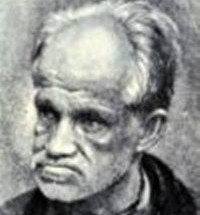
Charles Peace
Murderer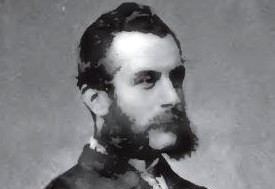 Eugéne-Marie Chantrelle
Murderer · United Kingdom · 1878
Eugéne-Marie Chantrelle was a French-born school teacher who lived in Edinburgh…
1 victim
Eugéne-Marie Chantrelle
Murderer · United Kingdom · 1878
Eugéne-Marie Chantrelle was a French-born school teacher who lived in Edinburgh…
1 victim
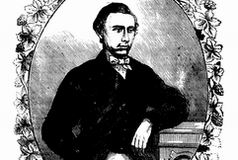 Frederick Baker
Murderer · United Kingdom · 1867
Frederick Baker was a solicitor’s clerk in Alton, Hampshire, England. On Saturd…
1 victim
Frederick Baker
Murderer · United Kingdom · 1867
Frederick Baker was a solicitor’s clerk in Alton, Hampshire, England. On Saturd…
1 victim
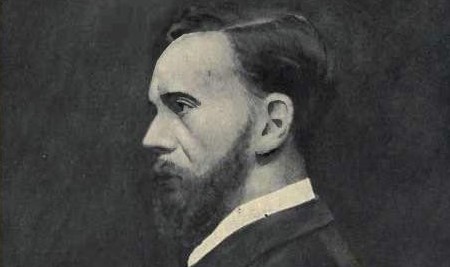 George Lamson
Murderer · United Kingdom · 1881
George Lamson was an English physician who, after the Crimean War, suffered fro…
1 victim
George Lamson
Murderer · United Kingdom · 1881
George Lamson was an English physician who, after the Crimean War, suffered fro…
1 victim
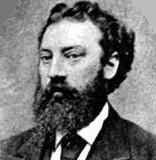 Henry Wainwright
Murderer · United Kingdom · 1874
Henry Wainwright was executed by hanging outside Newgate on 21st December 1875.…
1 victim
Henry Wainwright
Murderer · United Kingdom · 1874
Henry Wainwright was executed by hanging outside Newgate on 21st December 1875.…
1 victim
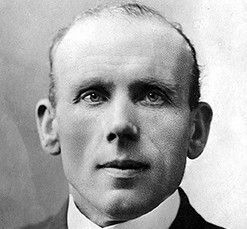 John Henry George Lee
Murderer · United Kingdom · 1884
John Henry George Lee, better known as John “Babbacombe” Lee (1864 – c. 1945),…
1 victim
John Henry George Lee
Murderer · United Kingdom · 1884
John Henry George Lee, better known as John “Babbacombe” Lee (1864 – c. 1945),…
1 victim
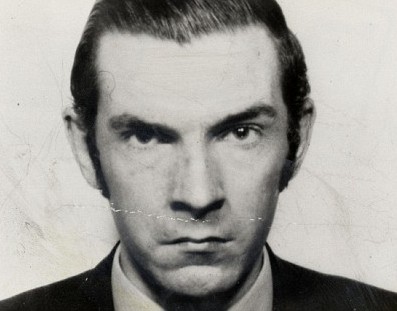 Graham Young
Homicide - Murderer · United Kingdom · 1962
Graham Young was convicted as a “Teacup Poisoner” for poisoning multiple people…
3 victims
Graham Young
Homicide - Murderer · United Kingdom · 1962
Graham Young was convicted as a “Teacup Poisoner” for poisoning multiple people…
3 victims
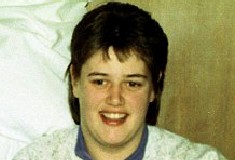 Beverley Allitt
Serial killer · United Kingdom · 1991
Beverley Allitt was a nurse who suffered from the mental illness Munchausen’s S…
4 victims
Beverley Allitt
Serial killer · United Kingdom · 1991
Beverley Allitt was a nurse who suffered from the mental illness Munchausen’s S…
4 victims
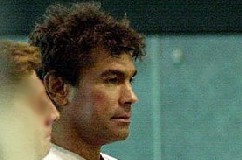 Jean Eric Gassy
Murderer · Australia · 2002
Jean Eric Gassy was a deregistered medical practitioner. He was struck off in 1…
1 victim
Jean Eric Gassy
Murderer · Australia · 2002
Jean Eric Gassy was a deregistered medical practitioner. He was struck off in 1…
1 victim
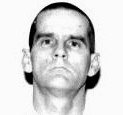 Benjamin Stone
Murderer · USA · 1995
Benjamin Stone was executed by lethal injection in Texas on September 25, 1997.…
2 victims
Benjamin Stone
Murderer · USA · 1995
Benjamin Stone was executed by lethal injection in Texas on September 25, 1997.…
2 victims
 William Gardner
Mass murderer · USA · 1992
Name: William L. Garner · Inmate number: OSP #A264-900 · DOB: September 26, 197…
5 victims
William Gardner
Mass murderer · USA · 1992
Name: William L. Garner · Inmate number: OSP #A264-900 · DOB: September 26, 197…
5 victims
- Gender
- male
- Country
- United Kingdom
- Location
- Manchester/Sheffield, England, United Kingdom
- Date of birth
- May 14, 1832
- Age at first offence
- 44
- Characteristics
- escape attempt
- Victim profile
- Police Constable Nicholas Cock / Arthur Dyson (his lover's husband)
- Method of murder
- Shooting
- Date(s) of murder
- August 1/November 29, 1876
- Years active
- 1876
- Date of arrest
- October 10, 1878
- Status
-
Executed
Executed by hanging in Leeds on February 25, 1879
Case record: Charles Peace
Status
Charles Peace was executed by hanging in Leeds on February 25, 1879.
Other details
Charles Peace (14 May 1832 – 25 February 1879) was an English burglar and murderer from Sheffield.
Background
Family and childhood
Charles Peace’s father, John Peace, worked as a collier at Burton upon Trent. After losing his leg in an accident, he joined “Wombwell's wild beast show” and gained “some reputation for his remarkable powers as a tamer of wild animals.” John Peace married at Rotherham the daughter of a surgeon in the Navy. After the death of a favourite son to whom he had imparted his skills in taming wild beasts, John Peace gave up lion-taming and settled in Sheffield as a shoemaker. On May 14, 1832, his wife gave birth in Sheffield to Charles, the youngest of a family of four.
Charles Peace met with an accident in 1846 at rolling mills where he was employed. A piece of red hot steel entered his leg just below the knee, and after eighteen months spent in the Sheffield Infirmary he remained crippled for life. About this time his father died.
Religious and personal beliefs
Peace was an avowed believer in both God and the devil. Though he said he feared neither, it did not restrain him from crime.
Criminal career
Early criminal exploits and burglary
Peace’s earliest criminal exploit was said to be stealing an old gentleman’s gold watch, after which he “soon passed to burglary.”
On October 26, 1851, the house of a lady in Sheffield was broken into. Some of the stolen property was found in Peace’s possession, and he was arrested. Owing to a character reference from his former employer, he was let off with only a month’s imprisonment.
He taught himself to play tunes on a violin with one string. At entertainments he attended, he was described as “the modern Paganini.”
1854 sentence
In 1854, the houses of a number of well-to-do residents in and about Sheffield were burglarised. Peace was arrested with a girl with whom he was keeping company and his sister, Mary Ann Neil. On October 20, 1854, Peace was sentenced at Doncaster Sessions to four years’ penal servitude. The ladies found in possession of the stolen property received sentences of six months apiece. Mrs. Neil died shortly afterwards.
Release, further burglaries, and sentences
On his release in 1858, Peace resumed his violin playing, and his main occupation was burglary. His operations extended to Manchester, where he broke into a house on the night of August 11, 1859, carrying off substantial booty. The following day the booty was found concealed in a hole in a field. When Peace and another man arrived to reclaim it, Peace was arrested, though not before nearly killing the officer trying to arrest him. Peace was sentenced to six years’ penal servitude.
He was released from prison in 1864 and returned to Sheffield. He went back to Manchester after unsuccessful efforts in Sheffield.
In 1866 he was caught in the act of burglary at a house in Lower Broughton. He admitted that at the time he was fuddled with whisky and said his capture would have been more difficult and dangerous otherwise. On December 3, 1866, at Manchester Assizes, he was sentenced to eight years’ penal servitude.
While serving this sentence, Peace emulated Jack Sheppard in a daring escape attempt from Wakefield prison. With repair work, he smuggled a small ladder into his cell. With the help of a saw made of tin, he cut a hole through the ceiling of the cell and was about to get out on to the roof when a warder came in. Peace knocked him down, ran along the wall of the prison, fell off on the inside due to looseness of the bricks, slipped into the governor's house where he changed his clothes, and waited for an opportunity to escape for an hour and a half. He was recaptured in the governor’s bedroom.
He visited the prisons at Millbank, Chatham, and Gibraltar before his final release in 1872. At Chatham he was said to have taken part in a mutiny and been flogged.
After his release from prison, Peace rejoined his family in Sheffield. He was now a husband and father.
Marriage and family life
In 1859, Peace had married a widow named Hannah Ward. His children attended Sunday School. He never went to church himself.
Career in Sheffield, Hull, and the Dysons
Affair with Mrs Katherine Dyson
In 1877, while living at Banner Cross Terrace, Sheffield, Peace began an affair with a neighbour, Mrs Katherine Dyson. She soon decided she wanted no further part of it and tried fruitlessly to be rid of him. Eventually Peace left the area. During the summer, Peace returned to Sheffield where he again chased after Mrs Dyson.
Relationship claims and public statements at execution
Peace had asserted positively a few days before his execution that Mrs Dyson had been his mistress, but she strenuously denied this. She called him a demon and described him as “beyond the power of even a Shakespeare to paint.” She said he persecuted her with his attentions and, when he found them rejected, he devoted “all his malignant energies to making the lives of her husband and herself unbearable.”
Peace told his own story that he was a slighted lover treated with contumely and ingratitude by Mrs Dyson.
The card in the garden
Sometime about the end of June, 1876, Dyson threw over into the garden of Peace’s house a card with the words: “Charles Peace is requested not to interfere with my family.”
Threats and disturbances in 1876
On July 1, Peace met Dyson in the street and tried to trip her up. That same night Peace approached Mrs Dyson while she was talking with friends, and threatened to blow out her brains and those of her husband. Dyson took out a summons against Peace.
Murder of PC Nicholas Cock (Manchester)
Background and attribution
Around this time, Peace shot dead a policeman, PC Nicholas Cock, in Manchester. The crime was attributed to a young Irishman, William Habron, who was convicted and sentenced to death. Habron’s sentence was later commuted to life imprisonment on account of his young age.
Peace was present in court during the two days of the trial involving the Habron brothers for this killing.
Trial and commutation involving William Habron
The trial commenced at the Manchester Assizes before Mr. Justice Lindley on Monday, November 27. John Habron was acquitted. The jury convicted William Habron but recommended him to mercy. The judge sentenced him to death without comment. Two days before the day of execution, Habron was granted a respite, and later his sentence commuted to one of penal servitude for life.
Peace leaving Manchester
Peace heard the innocent man condemned to death and left Manchester for Sheffield.
Murder of Arthur Dyson (Banner Cross)
Lead-up and the shooting
The Dysons left Darnall for Banner Cross, another suburb of Sheffield, and on October 29 moved into their new home. On one of Peace’s early encounters with Mrs Dyson, he told her: “You see,” he said, “I am here to annoy you, and I'll annoy you wherever you go.”
Later, when Peace and a friend passed Mr. Dyson in the street, Peace took out his revolver. Peace said: “If he offers to come near me,” said he, “I will make him stand back.”
Peace then focused on the fate of John and William Habron while they were about to stand trial for the murder of Constable Cock at Whalley Range.
On the afternoon of the next day after the trial events, Peace spent time in a public-house at Ecclesall entertaining the customers by playing tunes on a poker suspended from strong string, beating it with a short stick.
A little after eight o’clock, Peace watched the Dysons’ house from a passage-way leading up to the backs of the houses on the terrace. He saw Mrs. Dyson come out of the back door and go to an outhouse. He waited. When she opened the door to come out, Mrs. Dyson found herself confronted by Peace holding his revolver.
Peace told her: “Speak,” he said, “or I'll fire.”
Mrs. Dyson went back in terror. Dyson came quickly into the yard. Peace made for the passage. Dyson followed. Peace fired once, striking the lintel of the passage doorway. Dyson pursued without being deterred. Peace then fired a second time. Dyson fell shot through the temple. Mrs. Dyson rushed to her husband’s side, calling out: “Murder! You villain! You have shot my husband.”
Two hours later Dyson was dead.
Flight and attempts to evade detection
After firing the second shot, Peace hurried down the passage into the roadway. He hesitated, until Mrs. Dyson’s cries warned him. He crossed the road, climbed a wall, and made his way back to Sheffield. He walked to Attercliffe Railway Station, took a ticket for Beverley, but got out of the train at Normanton and went on to York. He spent the remainder of the night in the station yard. He took the first train in the morning for Beverley, and from there travelled via Cottingham to Hull.
He went straight to the eating-house kept by his wife and demanded dinner. Two detectives arrived and asked his wife if a man called Charles Peace was lodging with her. Mrs. Peace said she had not seen him for two months. The detectives proposed to search the house, and some customers told them to go round to the side door, giving Peace time to slip up to a back room, get out on an adjoining roof, and hide behind a chimney stack while an exhaustive search took place.
For about three weeks, he contrived to remain in Hull. He shaved the grey beard he was wearing at the time of Dyson’s murder, dyed his hair, put on spectacles, and used his singular power of contorting his features so that his face changed character. A price of £100 was placed on his head.
Police circulated a description of him: “Charles Peace wanted for murder on the night of the 29th inst. He is thin and slightly built, from fifty-five to sixty years of age. Five feet four inches or five feet high; grey (nearly white) hair, beard and whiskers. He lacks use of three fingers of left hand, walks with his legs rather wide apart, speaks somewhat peculiarly as though his tongue were too large for his mouth, and is a great boaster. He is a picture-frame maker. He occasionally cleans and repairs clocks and watches and sometimes deals in oleographs, engravings and pictures. He has been in penal servitude for burglary in Manchester. He has lived in Manchester, Salford, and Liverpool and Hull.”
The description was later altered and his age given as forty-six. Peace was only forty-four at that time but looked much older. He had lost one finger. He said it had been shot off by a man in a quarrel, but it was believed it was more likely he had shot it off accidentally while handling a revolver. To conceal identification, Peace made himself a false arm of gutta percha, with a hole down the middle into which he passed his arm. A steel plate at the end bore a hook enabling him to wield a fork and perform other dexterous feats.
During the closing days of 1876 and the beginning of 1877, Peace repeatedly travelled: Hull to Doncaster, Doncaster to London, then the underground railway to Paddington and a train to Bristol. He left Bristol for Bath, then with a sergeant of police travelled via Didcot to Oxford. From Oxford he went to Birmingham for four or five days, then stayed a week in Derby, and on January 9 arrived in Nottingham.
Susan Gray and betrayal
Peace lodged at the house of Mrs. Adamson, who received stolen goods. At her house, he met Susan Gray, who later became his mistress and betrayed his identity to the police. Peace declared his passion by threatening to shoot her if she did not become his.
In the June of 1877, Peace was nearly detected stealing blankets but escaped by flourishing his revolver. After that, he returned to Hull for a season, lodging with Mrs. Thompson (Susan Gray) and a sergeant of police. He had narrow escapes while using his revolver and on one occasion due to a policeman’s pusillanimity. He also returned to Nottingham, where a £50 reward was offered for his capture.
During some events, detectives came into the room where Peace and his mistress were in bed. One officer expressed surprise at seeing “Mrs. Bailey” there. Peace was asked his name; he gave it as John Ward and described himself as a hawker of spectacles. He refused to get up and dress in front of the detectives. He slipped out while the detectives waited downstairs, and sent a note to Mrs. Thompson insisting she join him. He left Nottingham, visited Hull again briefly, but decided to quit the North for good and begin life afresh in London as police visited his wife’s shop.
Career in London and inventions
Peace’s London career lasted two years. From 25 Stangate Street, Lambeth, he went out each night to burgle houses in Camberwell and other parts of South London. He described himself as a dealer in musical instruments. In Stangate Street, he claimed few instruments were present yet because he was not wholly dependent on that business, as Mrs Thompson “had money.” He moved from Lambeth to Crane Court, Greenwich, and then took adjoining houses in Billingsgate Street in the same district. One house he used with Mrs Thompson, while Mrs Peace and her son, Willie, lived in the other. Greenwich was not to Mrs Thompson’s taste. In May 1877, Peace moved the whole party to 5 East Terrace, Evelina Road, Peckham.
Peace presented himself as a gentleman of independent means with taste for scientific inventions. In association with a man named Brion, Peace patented an invention for raising sunken vessels, and it was said that the two men had obtained an interview with Samuel Plimsoll at the House of Commons. Peace was also engaged in other inventions including a smoke helmet for firemen, an improved brush for washing railway carriages, and a form of hydraulic tank.
Peace attended Sunday evening services at the parish church. During his stay in Peckham, the vicarage was broken into by a burglar and an unsuccessful attempt was made to steal the communion plate kept there.
He burgled night after night and would take a pony and trap for distant jobs. Besides the pony and trap, he carried a violin case containing tools; otherwise, tools were stuffed into purpose-made trouser pockets. The tools included a skeleton key, two pick-locks, a centre-bit, gimlet, gouge, chisel, vice jemmy and knife; a portable ladder; a revolver; and a life preserver.
His London burglary work extended to Southampton, Portsmouth and Southsea, but mainly he worked in Blackheath, Streatham, Denmark Hill, and other suburbs of South London.
Arrest at Blackheath and attempted escape
On the night of October 10, 1878, about 2am, Constable Robinson saw a light appear suddenly in a window at the back of a house in St. John’s Park, Blackheath, the residence of a Mr. Burness. Robinson stayed in the garden at the back. Another officer went to the front of the house and rang the bell, while a third waited in the road outside. Robinson saw a man come from the dining-room window opening onto the garden and make quickly down the path. The man said, “Keep back!” and warned: “or by God I'll shoot you!”
The man fired three shots from a revolver that passed close to the officer’s head. Robinson rushed him again. The man fired another shot that missed. Robinson struck him in the face. The man cried: “I'll settle you this time,” and then fired a fifth shot that went through Robinson’s arm just above the elbow.
Despite the wound, Robinson held the prisoner, succeeded in flinging him to the ground, and caught the revolver hanging around the burglar’s wrist. Robinson hit him on the head with it. The other two constables helped, and Peace was caught.
At Greenwich Police Court, Peace was remanded for a week. He refused to give his name and was not described by name; he was described as “a half-caste about sixty years of age, of repellent aspect.”
After arrest, his identity disclosure involved a letter written to his co-inventor Mr. Brion. It was dated November 2 and signed “John Ward.”
Disruption of the Peckham home
Immediately after Peace’s arrest, the home in Peckham was broken up. Mrs. Thompson and Mrs. Peace went to the house of a sister of Mrs. Thompson’s in Nottingham with large boxes. A day or two later, Mrs. Peace left Nottingham for Sheffield. She went to a house in Hazel Road occupied by her son-in-law Bolsover, a working collier. Mrs. Thompson claimed honor and profit for putting police on the right track.
Peace was involved in the identification process via letters and theft evidence, and he was treated as John Ward alias Charles Peace.
Trial and sentencing for burglary and attempted murder (Old Bailey)
On November 19, 1878, Peace was put on trial for burglary and the attempted murder of Police Constable Robinson at the Old Bailey before Mr. Justice Hawkins. His age in the calendar was sixty though Peace was forty-six. Peace protested his innocence and complained that his witnesses had not been called. Mr. Justice Hawkins told Peace he did not believe Peace’s statement that he fired the pistol merely to frighten the constable. The judge said that had Robinson guarded his head with his arm, he would have been fatally wounded, and Peace would have been condemned to death; nevertheless, Mr. Justice Hawkins sentenced him to penal servitude for life.
Second charge: murder of Arthur Dyson and escape attempt on train
On January 17, 1879, Peace was taken from Pentonville prison, where he was serving his sentence, and conveyed by an early morning train to Sheffield for a hearing. He appeared before the stipendiary magistrate at the Town Hall and was charged with the murder of Arthur Dyson. Mrs. Dyson’s cross-examination was adjourned to the next hearing, and Peace was taken back to London.
On January 22, at the second hearing in Sheffield, a crowd assembled outside the Town Hall. The stipendiary came into court and stated that Peace had attempted to escape that morning on the journey from London to Sheffield, and that in consequence of injuries the case would be adjourned for eight days. Peace had left King’s Cross by the 5.15 train due to arrive at Sheffield at 8.45. He repeatedly made excuses for leaving the carriage whenever the train stopped. The warders provided little bags for Peace to use and then throw out of the window. Just after the train passed Worksop, Peace asked for one of the bags. When the window was lowered to allow the bag to be thrown away, Peace made a flying leap through it. One warder caught him by the left foot. Peace hung from the carriage, grasped the footboard with his hands, and kept kicking the warder with his right foot. The other warder tried to stop the train by pulling the communication cord, without effect, while Peace struggled for about two miles. He succeeded in kicking off his left shoe, dropped onto the line, and the train ran on another mile until the warders and gentlemen in other carriages got it pulled up. They found Peace near Kiveton Park lying in the footway, apparently unconscious and bleeding from a severe wound in the scalp. A slow train from Sheffield picked him up. Peace asked them to cover him as he was cold. On arriving at Sheffield, he was taken to the Police Station and made as comfortable as possible in a cell, where he asked for brandy, and an officer told him they would have none of his “hanky-panky” and he had got to take it; Peace said, “All right,” and “give me a minute.”
The doctor later pronounced Peace fit for his second examination before the magistrate on January 30.
Trial at Leeds Assizes for murder of Arthur Dyson
Peace’s trial at Leeds Assizes began after committal; the proceedings lasted one day beginning February 4. The court sat in a corridor of the Town Hall and the proceedings were by candlelight. Peace complained frequently of the cold, moaned and groaned, and protested against the injustice of his treatment. The cross-examination of Mrs. Dyson in the second hearing occurred before Mr. William Clegg, the prisoner’s solicitor. The purpose was to show Mrs. Dyson had been more intimate terms with Peace than she was ready to admit and to suggest Dyson had been shot during a struggle where Peace had been the aggressor.
Cross-examination topics: visits, photographs, letters, and denial
Mrs. Dyson said she did not remember the year in which she had been married. She admitted she had been in the habit of going to Peace’s house, that she had been alone with him in public-houses and places of entertainment, and that she and Peace had been photographed together during the summer fair at Sheffield. She did not know whether she had told a public-house landlord to charge her drink to Peace.
A bundle of letters found near the scene of Dyson’s murder contained notes written in pencil on scraps of paper purporting to have been sent from Mrs. Dyson to Peace. Many asked for money to get drink, referred to opportunities for meetings in the absence of Dyson, included kind messages to Peace’s family (his wife and daughter), and urged Peace to hold his tongue and not give ground for suspicion about their relations. The bundle contained the card that Dyson had thrown into Peace’s garden requesting him not to interfere with his family. At the inquest, Mrs. Dyson denied she had ever written to Peace and said she “never did write.” Dyson himself had seen the letters and said they were forgeries written by Peace or members of his family to annoy him. During cross-examination, Mr. Clegg asked Mrs. Dyson to write out a passage from one of the letters: “You can give me something as a keepsake if you like, but I don't like to be covetous, and to take them from your wife and daughter. Love to all!” Mrs. Dyson refused to admit likeness between what she had written and the handwriting of the letter.
Another passage from a letter read: “Will see you as soon as I possibly can. I think it would be easier after you move; he won't watch so. The r--g fits the little finger. Many thanks and love to--Jennie (Peace's daughter Jane). I will tell you what I thought of when I see you about arranging matters. Excuse this scribbling.” Mrs. Dyson admitted that Peace had given her a ring and that she had worn it for a short time on her little finger.
A further letter passage read: “If you have a note for me, send now whilst he is out; but you must not venture, for he is watching, and you cannot be too careful. Hope your foot is better. I went to Sheffield yesterday, but I could not see you anywhere. Were you out? Love to Jane.” Mrs. Dyson denied knowing of an accident Peace had had to his foot at that time.
Peace was committed for trial at Leeds Assizes that began the week following. After committal, Peace was taken to Wakefield Prison and then to Armley Gaol (later HMP Leeds) to await trial. When the trial began on February 4, Peace groaned and moaned, interrupted proceedings, protested innocence, and complained his witnesses had not been called.
Main trial
The presiding judge was Mr. Justice Lopes. Mr. Campbell Foster, Q.C., led for the prosecution, and Mr. Frank Lockwood defended Peace.
Mr. Lockwood addressed the jury and protested the recklessness of the press. He cited that a leading London daily newspaper had said as early as November 1878 that “it was now established beyond doubt that the burglar captured by Police Constable Robinson was one and the same as the Banner Cross murderer.” He continued: “Never,” said Mr. Lockwood, “in the whole course of his experience--and he defied any of his learned friends to quote an experience--had there been such an attempt made on the part of those who should be most careful of all others to preserve the liberties of their fellowmen and to preserve the dignity of the tribunals of justice to determine the guilt of a man.” Peace exclaimed “Hear, hear!” as Mr. Lockwood said: “for the sake of snatching paltry pence from the public, these persons had wickedly sought to prejudice the prisoner's life.” Mr. Lockwood’s argument referenced contempt of court concerns.
The first witness called by the prosecution was Mrs. Dyson. She described how on the night of November 29, 1876, she came out of the outhouse in the yard at the back of her house and found herself confronted by Peace holding a revolver; she said Peace told her: “Speak, or I'll fire!” and described events through the shooting in which Dyson fell shot in the temple. Mrs. Dyson said that though her husband may have attempted to get hold of Peace, he did not succeed. She admitted her husband had objected to her friendship with Peace in spring 1876, but that in the following summer she and Peace had been photographed together at the Sheffield fair. She tried to shift the occasion to 1875 but Mr. Lockwood argued she did not come to Darnall where she first met Peace until the end of that year. She could not remember when she came to Darnall, whether in 1873, 1874, 1875, or 1876. She said she had accepted a ring from Peace but could not remember whether she had shown it to her husband. She said she had been perhaps twice with Peace to the Marquis of Waterford public-house and once to the Star Music Hall and could not swear whether she had charged to Peace’s account drink consumed at an inn in Darnall called the Half-way House.
Mr. Lockwood cross-examined Mrs. Dyson with reference to confrontation with “a little girl and a man” whom he suggested she had employed to carry notes to Peace. Mrs. Dyson said these were receipts for pictures he had framed for her. She said that on the day before her husband’s murder she was at the Stag Hotel at Sharrow with a little boy belonging to a neighbour. She said a man followed her in, sat beside her, and afterwards followed her out. Asked whether the man was Peace, she said “almost” and denied certainty she could remember whether she had spoken to him or not. She also denied that the man said he would come and see her the next night. Mr. Lockwood obtained an admission that she had been “slightly inebriated” at the Half-way House in Darnall, but that she had not to her knowledge been turned out.
The prosecution presented five persons who had seen Peace in the neighbourhood of Banner Cross Terrace on the night of the murder or heard screams and shots associated with it. Another witness, a labourer named Brassington, said that about eight o’clock that night a man had approached him outside the Banner Cross Hotel a few yards from Dyson’s house. Brassington was under a gas lamp on a bright moonlight night. The man asked if Brassington knew of any strange people who had come to live in the neighbourhood. Brassington said no. The man produced a bundle of letters and asked Brassington to read them, but Brassington declined because reading was not one of his accomplishments. Brassington testified the man said: “he would make it a warm 'un for those strange folks before morning--he would shoot both of them,” and went toward Dyson’s house. Brassington swore positively the stranger was Peace, and Mr. Lockwood did not shake him.
Evidence also covered threats Peace uttered against the Dysons in July 1876 and Peace’s arrest at Blackheath in October 1878. The revolver taken from Peace that night was produced, and it was shown that the rifling of the bullet extracted from Dyson’s head was the same as that of the bullet fired from the revolver at Peace’s capture.
Mr. Campbell Foster wanted to introduce the card Dyson had flung into Peace’s garden as evidence, but the judge ruled both the card and letters inadmissible as irrelevant. The judge said Mr. Lockwood had cross-examined Mrs. Dyson on these letters to test her credibility and could not contradict her by introducing them as evidence.
Mr. Lockwood told the jury the death of Dyson was an accidental result of a struggle, and repudiated that any persons confronted during cross-examination were hired for “a paltry sum” to lie. In summing up, Mr. Justice Lopes described the accidental-discharge theory as an “absolute surmise.” He asked the jury to take Peace’s revolver and try the trigger to see whether it was likely to go off accidentally. He pointed out the pistol produced might not have been the one used at Banner Cross, while noting that the bullet fired in November 1876 bore marks that would have been produced if fired from the pistol taken from Peace at Blackheath in October 1878. He said the case did not rest on Mrs. Dyson’s evidence alone and found it clearly proved that no struggle or scuffle took place before the murder.
After the jury retired at a quarter past seven, they returned with a verdict of guilty ten minutes later. Peace replied when asked if he had anything to say: “It is no use my saying anything.” The judge passed sentence of death.
Sentencing and outcome
Peace was sentenced to death for the murder of Arthur Dyson at Leeds Assizes. His conviction resulted in execution.
Appeals
No appeal outcome was stated.
Execution
Confession and effects of confession
Peace was visited by Reverend Littlewood, the vicar of Darnall, a few days before his execution. Peace pointed out that if he had intended to murder Dyson, he would have set about it in a more secret way. Peace repeated his confession of the killing of Constable Cock and stated his desire that Habron should be set free. William Habron was subsequently given a free pardon and £800 by way of compensation.
Peace had sent for the Governor of the jail and drew a plan of the place where Cock had been shot. He made a full confession of his own guilt. Habron was serving a life sentence for the murder of Constable Cock at Whalley Range and had begun the third year of his sentence.
Peace had refrained from seeing Sue Thompson on the “wishes of his family.” He did not see her and sent affectionate and forgiving messages. These were transmitted to Sue by Mr. Brion, who had applied to the Treasury for recognition of pecuniary recognition of his efforts in bringing about identification of Peace and furnishing the police with information about the convict’s disposal of stolen property.
Peace also sent for and requested the governor to show atonement by confession and by seeking Habron’s release.
Final days and visits
On February 24, Peace was visited for the last time by his wife, stepson, daughter, Mrs Bolsover, and Mrs Bolsover’s husband. He told his visitors to restrain themselves from displays of emotion and said he felt very happy and did not wish to be disturbed. He advised them to sell or exhibit for money certain works of art of his own devising, including a design in paper for a monument to be placed over his grave. The design was elaborate and was described as showing “the true feeling of an artist” by William Powell Frith. Peace asked his weeping relatives whether they had anything more they wished to ask him. Mrs Peace reminded him that he had promised to pray with them at the last. Peace prayed with them for half an hour, shook hands with each of them singly, and gave way to tears as they left.
Peace gave his wife a funeral card he had designed. The text on the card was: “In Memory of Charles Peace Who was executed in Armley Prison Tuesday February 25th, 1879 Aged 47 For that I don but never Intended.”
Execution day details
Tuesday, February 25 was fixed for Peace’s execution. On February 25, William Marwood, the public executioner and inventor of the “long drop,” arrived.
Peace ate a hearty breakfast of bacon and awaited the executioner with calm. After the cap was placed over his head, Peace asked twice, very sharply, like a man expecting to be obeyed, for a drink of water; his request was ignored. He died instantaneously and was buried in Armley Gaol.
Timeline
- 1846 — Charles Peace met with an accident at rolling mills when red hot steel entered his leg just below the knee.
- October 26, 1851 — A house was broken into in Sheffield and Peace was arrested; he was let off with only a month’s imprisonment.
- October 20, 1854 — Peace was sentenced at Doncaster Sessions to four years’ penal servitude for burglary.
- August 11, 1859 — Peace broke into a house in Manchester, carrying off substantial booty.
- 1864 — Peace was released from prison and returned to Sheffield.
- December 3, 1866 — Peace was sentenced at Manchester Assizes to eight years’ penal servitude.
- 1872 — Peace had final release from prison.
- October 10, 1878 — Peace was arrested at Blackheath after firing and wounding Constable Robinson.
- November 19, 1878 — Peace was put on trial at the Old Bailey before Mr. Justice Hawkins for burglary and the attempted murder of Police Constable Robinson.
- January 17, 1879 — Peace was conveyed from Pentonville prison to Sheffield and charged with the murder of Arthur Dyson.
- January 22, 1879 — Court heard Peace had attempted to escape on the journey from London to Sheffield; the case was adjourned for eight days.
- January 30, 1879 — A doctor pronounced Peace fit to appear for his second examination before the magistrate.
- February 4, 1879 — Peace’s murder trial at Leeds Assizes began and lasted one day; the jury returned a verdict of guilty.
- February 24, 1879 — Peace received final visits from his wife, stepson, daughter, and her husband.
- February 25, 1879 — Peace was executed by hanging in Leeds and was buried in Armley Gaol.
Quotations
“Wombwell's wild beast show”
“the modern Paganini.”
“Charles Peace is requested not to interfere with my family.”
“Speak,” he said, “or I'll fire.”
“Murder! You villain! You have shot my husband.”
“You see,” he said, “I am here to annoy you, and I'll annoy you wherever you go.”
“If he offers to come near me,” said he, “I will make him stand back.”
“All right,” said Peace, “give me a minute.”
“Mrs. Bailey”
“it was now established beyond doubt that the burglar captured by Police Constable Robinson was one and the same as the Banner Cross murderer.”
“Never,” said Mr. Lockwood, “in the whole course of his experience--and he defied any of his learned friends to quote an experience--had there been such an attempt made on the part of those who should be most careful of all others to preserve the liberties of their fellowmen and to preserve the dignity of the tribunals of justice to determine the guilt of a man.”
“for the sake of snatching paltry pence from the public, these persons had wickedly sought to prejudice the prisoner's life.”
“Hear, hear!”
“a lot of fools”
“a half-caste about sixty years of age, of repellent aspect”
“Charles Peace wanted for murder on the night of the 29th inst. He is thin and slightly built, from fifty-five to sixty years of age. Five feet four inches or five feet high; grey (nearly white) hair, beard and whiskers. He lacks use of three fingers of left hand, walks with his legs rather wide apart, speaks somewhat peculiarly as though his tongue were too large for his mouth, and is a great boaster. He is a picture-frame maker. He occasionally cleans and repairs clocks and watches and sometimes deals in oleographs, engravings and pictures. He has been in penal servitude for burglary in Manchester. He has lived in Manchester, Salford, and Liverpool and Hull.”
“It is no use my saying anything.”
“absolute surmise”
“Keep back!” “or by God I'll shoot you!”
“I'll settle you this time,”
“Lion-hearted I've lived, And when my time comes Lion-hearted I'll die.”
“Charles Peace Who was executed in Armley Prison Tuesday February 25th, 1879 Aged 47 For that I don but never Intended.”
People
- Charles Peace — defendant; burglar and murderer
- John Peace — father
- Hannah Ward — wife (widow)
- Arthur Dyson — victim (husband of Mrs Katherine Dyson)
- Katherine Dyson — victim’s widow
- PC Nicholas Cock — murdered policeman
- William Habron — convicted man whose sentence was commuted; later pardoned and compensated
- John Habron — acquitted brother
- William Habron — convicted and sentenced to death; sentence commuted to penal servitude for life; later pardoned and compensated
- Constable Robinson — attempted-murder victim in Blackheath
- Reverend Littlewood — visited Peace before execution
- Mr. Brion — co-inventor; transmitted messages and contributed to identification
- Mr. Justice Lindley — presiding judge in the Habron trial
- Mr. Justice Hawkins — presiding judge at the Old Bailey trial
- Mr. Justice Lopes — presiding judge at Leeds Assizes
- Mr. William Clegg — prisoner's solicitor; cross-examined Mrs. Dyson
- Mr. Campbell Foster, Q.C. — prosecution counsel at Leeds Assizes
- Mr. Frank Lockwood — defence counsel at Leeds Assizes
- William Marwood — executioner
- Susan Gray (Mrs. Thompson) — mistress; later betrayed Peace
- Mrs. Thompson — Susan Gray
- Mrs. Peace — Peace’s wife; visited him before execution
- Mrs Bolsover — daughter
- Bolsover — son-in-law
- Samuel Plimsoll — House of Commons interview mentioned in connection with inventions
- Samuel Plimsoll at the House of Commons — referenced in relation to an interview
- Samuel Plimsoll — referenced in connection with raising sunken vessels
- John Ward — name Peace used in letters and during capture events
- Mrs Adamson — received stolen goods and was Peace’s lodging host in Nottingham
- Mr Dyson — husband of Mrs Katherine Dyson; associated with a civil engineering background mentioned
Allowed characteristics mapping to supported descriptions
Peace was described as a burglar and master of disguise. He used tools and a violin case containing burglary implements, and he attempted escape on a train. He was also executed by hanging.
Spotted an error, or have more information about this case?