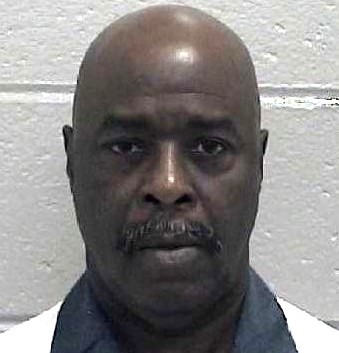
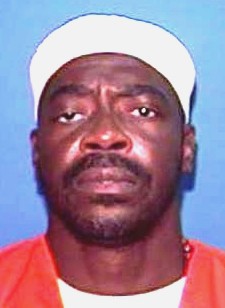
John Washington Hightower
Murderer Brian Kevin Rosenfeld
Murderer · USA · 1985
Brian Kevin Rosenfeld Brian Kevin Rosenfeld was sentenced to three concurrent l…
23 victims
Brian Kevin Rosenfeld
Murderer · USA · 1985
Brian Kevin Rosenfeld Brian Kevin Rosenfeld was sentenced to three concurrent l…
23 victims
 Yahweh ben Yahweh
Murderer · USA · 1980
Yahweh ben Yahweh was born and legally named Hulon Mitchell Jr. (October 27, 19…
23 victims
Yahweh ben Yahweh
Murderer · USA · 1980
Yahweh ben Yahweh was born and legally named Hulon Mitchell Jr. (October 27, 19…
23 victims
 Russell Ellwood
Murderer · USA · 1991
Russell Ellwood was a former taxi driver. Authorities suspected him of killing…
20 victims
Russell Ellwood
Murderer · USA · 1991
Russell Ellwood was a former taxi driver. Authorities suspected him of killing…
20 victims
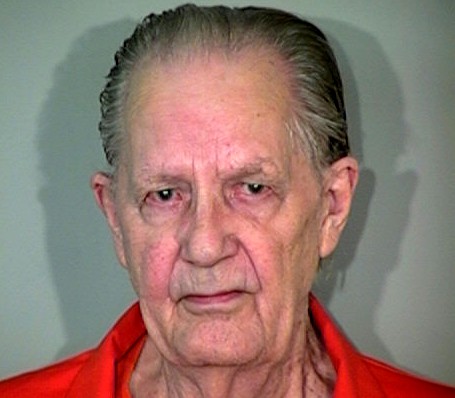 Viva Leroy Nash
Murderer · USA · 1977
Viva Leroy Nash was sentenced to death in Arizona on June 27, 1983. He died on…
2 victims
Viva Leroy Nash
Murderer · USA · 1977
Viva Leroy Nash was sentenced to death in Arizona on June 27, 1983. He died on…
2 victims
 Mac Minister
Murderer · USA · 2005
Mac Minister was an American rapper. His real name was Andre Dow. He was 37 yea…
2 victims
Mac Minister
Murderer · USA · 2005
Mac Minister was an American rapper. His real name was Andre Dow. He was 37 yea…
2 victims
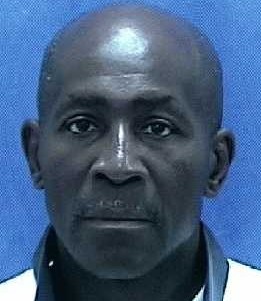 Stanley Edward Allen
Murderer · USA · 1981
Stanley Edward Allen was convicted in Elbert County for the murder, rape and ro…
1 victim
Stanley Edward Allen
Murderer · USA · 1981
Stanley Edward Allen was convicted in Elbert County for the murder, rape and ro…
1 victim
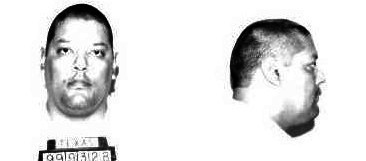 Louis Castro Perez
Murderer · USA · 1998
Louis Castro Perez was listed as a condemned killer with TDCJ Number 999328. He…
3 victims
Louis Castro Perez
Murderer · USA · 1998
Louis Castro Perez was listed as a condemned killer with TDCJ Number 999328. He…
3 victims
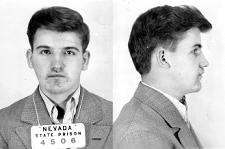 Floyd Loveless
Homicide · USA · 1942
Floyd Loveless was the person executed by asphyxiation-gas on September 29, 194…
1 victim
Floyd Loveless
Homicide · USA · 1942
Floyd Loveless was the person executed by asphyxiation-gas on September 29, 194…
1 victim
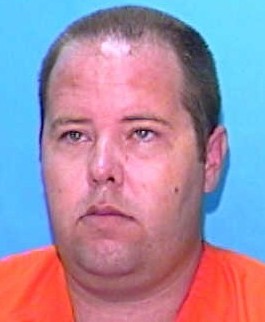 Robert Eugene Hendrix
Murderer · USA · 1990
Robert Eugene Hendrix (DC # 104721; DOB: 10/21/66) was tried in the Fifth Judic…
2 victims
Robert Eugene Hendrix
Murderer · USA · 1990
Robert Eugene Hendrix (DC # 104721; DOB: 10/21/66) was tried in the Fifth Judic…
2 victims
- Gender
- male
- Country
- USA
- Location
- Baldwin County, Georgia, USA
- Date of birth
- 1944
- Age at first offence
- 43
- Characteristics
- parricide
- Victim profile
- His wife, Dorothy Hightower, and her two daughters, Evelyn Reaves, 19, and Sandra Reaves, 22
- Method of murder
- Shooting
- Date(s) of murder
- July 12, 1987
- Years active
- 1987
- Date of arrest
- Same day
- Status
-
Executed
Executed by lethal injection in Georgia on June 26, 2007
Case record: John Washington Hightower
Status and execution details
John Washington Hightower was executed by lethal injection in Georgia on June 26, 2007.
Hightower was scheduled for execution at 7:00 p.m. on Tuesday, June 26, 2007, at the Georgia Diagnostic and Classification Prison in Jackson, Georgia. Media witnesses for the execution were Harry Webber (Associated Press), Stephanie Gibson (The Union-Recorder), Lateef Mungin (Atlanta Journal Constitution), Randall Savage (13-WMAZ), Jennifer Griffes (WSB News), and Tony McNary (WGCL-TV 46).
Hightower requested a final meal consisting of four fried pork chops, collard greens with boiled okra and “boiling meat”, fried corn, fried fatback, fried green tomatoes, cornbread, lemonade, one pint of strawberry ice cream, and three glazed donuts.
In a report that described the execution process, Hightower was pronounced dead at 7:59 p.m. The execution was delayed until about 7:40 p.m. Officials were about 10 minutes late getting Hightower into the death chamber. It took nurses about 13 minutes to find a vein in each arm to administer the lethal injection. Protocol required them to establish an entry point in both arms. Hightower was strapped on a gurney in the execution chamber, a small room with white cinderblock walls and rows of wooden benches at the prison.
Hightower was in a separate room where onlookers could see him through a large glass window. He appeared calm while lying on a gurney, with a sheet over his body up to his chest and the tube in his arm snaked through a hole in a wall where officials administered the lethal cocktail.
The lethal injection sequence described was:
- Hightower was first injected with 2 grams of sodium pentathol (a sedative).
- Then he was injected with 50 milligrams of pavulon (a chemical that paralyzes).
- Then he was given a dosage of potassium chloride (which stops the heart).
About 30 people were on hand in the execution chamber, including Hightower’s pastor, a friend, and a paralegal who acted as his witnesses. No witnesses appeared for the victims’ family.
When given the opportunity to speak his final words, Hightower made the following statement:
“I want to say that I'm sorry for the grief I brought to the Reaves family.”
He also thanked his family and friends for their support over the years, and made the following statement:
“Last but not least, I thank my mother who stood by me for so long.”
He declined an opportunity for a minister to pray for him.
Officials denied Hightower a stay of execution through the Georgia Supreme Court, described as having denied a stay of execution Tuesday afternoon.
A separate account described his final statement before being executed:
and noted he asked for their forgiveness. It also described him as saying he loved his wife then and still does in a recorded statement earlier Tuesday for prison officials.
Timeline
- June 26, 2007 — Hightower was executed by lethal injection in Georgia.
- July 12, 1987 — Hightower committed the killings in the victims’ home.
- April 28, 1988 — Trial began.
- May 4, 1988 — Trial concluded.
- July 14, 1987 — Hightower was indicted in Baldwin County.
- January 15, 1988 — Superior court granted Hightower’s motion for a change of venue.
- February 25, 1988 — Superior court quashed the indictment on the ground that African-Americans were underrepresented on the venire.
- March 18, 1988 — A new indictment was returned.
- April 15, 1988 — Hightower was arraigned.
- August 6, 1987 — Defense counsel filed a written motion for funds to hire independent psychiatrists.
- August 25, 1987 — Dr. N. Archer Moore interviewed Hightower.
- August 28, 1987 — Dr. N.
- August 31, 1987 — Dr. N.
- August 31, 1987 — Court heard arguments on the motion dated August 6, 1987 and asked about an examination at Central State Hospital.
- September 15, 1989 — An appeal was docketed.
- June 28, 1989 — Hightower’s motion for new trial was denied.
- November 15, 1989 — The case was orally argued.
- April 11, 1988 — Dr. Tanay stated he could not evaluate Hightower before April 11, 1988 (as described in a later motion and letter).
- February 8, 1988 — Defense counsel filed a motion for additional funds to hire psychiatrist (as quoted in the habeas proceedings).
- February 9, 1988 — A hearing was held on defense counsel’s motion for additional funds.
- November 25, 1987 — The court ordered the county to pay $440 to Dr. N. Archer Moore for services.
- July 17, 1987 — The court granted Alan Thrower’s motion to be relieved as counsel due to a conflict of interest (as described in the habeas proceedings).
- July 10, 1987 — The defendant was arrested and charged with three counts of murder (as described in the quoted motion dated August 6, 1987).
Background
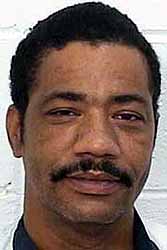
John Washington Hightower was a male, Black, born in 1944, and aged 63 at the time of execution. He was listed as height 5'09" and weight 183, with brown eyes and black hair. His most recent institution was GA. The case reference included GDC ID: 0000034179 and a prison case no. 222841.
Hightower was convicted in Morgan County and had the offence category of murder. The execution scheduled location was the Georgia Diagnostic and Classification Prison in Jackson, Georgia. The condemned murderer was described as a “triple murderer” in an execution reporting account.
Hightower was married to Dorothy Hightower.
Dorothy Hightower’s brother stopped by their home early in the morning of July 12, 1987, to pick up his daughter. Dorothy Hightower’s car was gone. The brother entered the home and found that Dorothy Hightower and her two daughters (Evelyn and Sandra Reaves) had been shot. Evelyn Reaves was still alive but died two days later. Sandra Reaves and Dorothy Hightower were dead. The brother’s daughter was unharmed.
The surviving child described was the 3-year-old girl in the house, identified in one account as his wife’s niece.
A habeas summary described that after affirmance on appeal for defendant’s state convictions for murder and imposition of the death penalty, Hightower filed a petition for writ of habeas corpus, which was denied by the U.S. district court and affirmed by the Court of Appeals before additional Supreme Court proceedings.
The offence
Hightower shot to death his wife, Dorothy Hightower, and her two daughters, 19-year-old Evelyn Reaves and 22-year-old Sandra Reaves, in their Baldwin County home.
Hightower admitted he had been having marital problems, drinking and snorting cocaine hours before he entered the home. He placed a gun under a pillow in the room he shared with his wife and waited for everyone to go to sleep.
At about 3 a.m., Hightower retrieved the gun and shot each of the three victims in the head.
A 3-year-old girl in the house, his wife’s niece, was found unharmed.
Another account stated that Hightower purchased the murder weapon the day before, hid it under his pillow until 3:00 a.m., then shot his wife. The account further described that he went to the bedroom occupied by his stepdaughter Sandra Reaves, who got out of bed but then lay back down, and he shot her in the head. It also described that Evelyn Reaves tried to leave the house, but Hightower caught her and shot her three times. It also stated that he did not harm his niece because he “didn't have any problems with the baby.”
Investigation and arrest
Evidence described by investigators included a confession and a flesh- and blood-covered murder weapon found in the car Hightower was driving when he was arrested, and Hightower’s clothes stained with blood.
Hightower was arrested about 90 minutes after the shootings while driving his wife’s car. The car contained a bloody handgun. He confessed later that morning.
In one narrative account, Hightower told police that he and his wife had been having marital problems, and he had purchased the murder weapon the day before. He hid the weapon under his pillow until 3:00 a.m., shot his wife, then proceeded to kill Sandra Reaves and Evelyn Reaves as described above.
Hightower told investigators he did not harm his niece because he “didn't have any problems with the baby.”
Trial
Venue changed from Baldwin County to Morgan County for trial. The crime was committed in Baldwin County on July 12, 1987. A change of venue was granted, and the case was moved to Morgan County for trial.
The trial began on April 28, 1988, and concluded on May 4, 1988.
Hightower was represented by two attorneys at trial. The trial court authorized payment of funds including $750 for a psychiatric evaluation and $5000 for a special investigator or other expert assistance as the defendant might choose.
The trial court denied a motion for additional funds for an additional $6000 to retain the services of an expert in family violence. However, Hightower retained a psychologist who testified at trial, and the court authorized an additional $1000 to pay for the services of this psychologist.
The trial court denied Hightower’s motion for a new trial on June 28, 1989.
A jury convicted Hightower in 1988 and sentenced him to die for murdering his wife and two stepdaughters, Evelyn Reaves and Sandra Reaves, at the family’s Baldwin County home. The jury consisted of seven women and five men, as described in an execution account.
The appellate decision summarized that the defendant was convicted by a jury in Morgan County on three counts of murder and sentenced to death on all three counts.
The direct appeal opinion described the Supreme Court of Georgia’s affirmance and included a detailed discussion of issues on appeal, including:
- adequacy of attorney fees,
- reciprocal use of aggravating circumstances,
- peremptory strikes against black prospective jurors,
- denial of sequestered voir dire,
- denial of a daily transcript,
- denial of continuance,
- excusing prospective jurors on “Witherspoon” grounds and qualification on “reverse-Witherspoon” grounds,
- denial of charges including voluntary manslaughter and diminished mental capacity defense instruction,
- rulings on mistrial after a witness referred to the homicides as murders,
- and the trial court’s instructions to the jury after one juror told the judge another juror had already made up her mind.
The direct appeal opinion also stated statutory aggravating circumstances found by the jury: (1) the murder of Dorothy Hightower was committed while the defendant was engaged in the commission of the murder of Evelyn Reaves, (2) the murder of Sandra Reaves was committed while the defendant was engaged in the commission of the murder of Dorothy Hightower, and (3) the murder of Evelyn Reaves was committed while the defendant was engaged in the murder of Sandra Reaves. It stated that each murder was supported by an independent statutory aggravating circumstance and that there was no reciprocal use of aggravating circumstances.
The Georgia Supreme Court held: “We affirm.” and stated: “This is a death penalty case. The defendant, John Hightower was convicted by a jury in Morgan County on three counts of murder and sentenced to death on all three counts. We affirm.”
The decision included specific quoted language from the trial court after supplemental instructions, reproduced verbatim:
“One of the ladies on the jury has told me that one of the other jurors has told her that no matter what anybody said, she'd already made up her mind. Did not say which way she'd made up her mind. I, I, you know, have no suggestion as to how we should proceed on that. I frankly don't know how we should proceed.”
The trial court denied the motion for a mistrial, noting that two alternates were available.
A habeas narrative included that at some stage the court provided funds and the defense later sought a specialist for family violence.
Sentencing
The jury recommended death sentences on each of the three counts of murder. The trial court entered these sentences as required by Georgia law where statutory aggravating circumstances were found for each murder.
Hightower was sentenced to death on three counts of murder.
Appeals
Direct appeal (Georgia Supreme Court)
Hightower’s direct appeal resulted in affirmance. The citation given was Hightower v. State, 386 S.E.2d 509 (Ga. 1989), and the direct appeal summary stated the Supreme Court of Georgia affirmed.
The direct appeal opinion stated that the trial court did not err and that the sentences were affirmed, including that the death sentences were not excessive or disproportionate.
The direct appeal opinion noted trial details including:
- Hightower was indicted in Baldwin County on July 14, 1987.
- A hearing on January 15, 1988 granted a change of venue and ordered transfer to Morgan County for trial.
- On February 25, 1988, the superior court quashed the indictment due to underrepresentation of African-Americans on the venire.
- A new indictment was returned on March 18, 1988, and arraignment occurred on April 15, 1988.
- On April 20, 1988, the superior court issued an order nunc pro tunc January 15, 1988 incorporating into the record the earlier case motions, orders, and rulings.
The direct appeal also referenced motions and hearings including:
- a trial beginning April 28, 1988 and concluding May 4, 1988,
- a motion for new trial denied June 28, 1989,
- an appeal docketed September 15, 1989,
- and oral argument on November 15, 1989.
It stated that “The evidence supports the verdict.”
U.S. federal habeas proceedings (Eleventh Circuit)
Hightower sought federal habeas relief. The case was described as involving:
- Hightower v. Schofield, 365 F.3d 1008 (11th Cir. 2004) (Habeas),
- and Hightower v. Terry, 459 F.3d 1067 (11th Cir. 2006) (Habeas).
In the Eleventh Circuit’s habeas decision summary for Hightower v. Schofield, the Court of Appeals held that:
- the petitioner had no due process right to psychiatric assistance,
- even if he had a right, the trial court met due process obligations,
- the state court’s determination that a claim about prosecutor participation violated due process was subject to harmless error analysis,
- any error in not providing ex parte hearings on Ake requests was harmless,
- the petitioner failed to provide evidence discrediting the prosecutor’s specific, nonracial reasons for using peremptory strikes against African-Americans,
- claims about jurors unconstitutionally biased toward a death sentence were procedurally defaulted,
- and counsel did not render ineffective assistance.
The habeas opinion described that the district court denied the petition in the Middle District of Georgia. It affirmed and discussed Ake and the trial court’s funding decisions, including extensive quoted motions and hearing statements.
The decision included a quoted written motion dated August 6, 1987, titled:
- “Motion for Funds to Hire Independent Psychiatrists” and reproduced the following text verbatim as part of the motion:
- The defendant, John Hightower, was arrested on July 10, 1987, and charged with three counts of Murder.
- The said Defendant was indicted by the Baldwin County Grand Jury on July 14, 1987, for said offenses.
- The District Attorney of Baldwin County, Georgia, Mr. Joseph Briley, has announced that he intends to seek the death penalty in the prosecution of said case.
- Counsel for Defendant feel that the defendant's mental state, together with the presence or absence of any mental disorder or disease, may be of importance in the defense of said action.
- Defense counsel were appointed by this Honorable Court to represent the Defendant, the said Defendant having been found previously indigent by this Court.
- Defendant is without sufficient funds of any kind with which to hire independent psychiatric or psychological experts, and feels that the same would be needed in order to insure him all of his due process rights under the Georgia and the United States Constitutions.
- Defendant believes that independent psychiatric and/or psychological evaluations need to be accomplished in order to assure that any and all defenses can be properly presented at trial.
Wherefore, Defendant prays that funds be provided to his counsel of record for the purpose of employing independent psychiatric and/or psychological experts in the defense of his case.
This 6th day of August, 1987. /s/ Hulane E. George, Attorney for Defendant B. Carl Buice, Attorney for Defendant
The habeas opinion also reproduced a defense motion for additional funds dated February 8, 1988. It began:
Motion for Additional Funds to Hire Psychiatrist
- On August 31, 1987, this Court granted the Defendant the sum of Seven Hundred Fifty ($750.00) [sic] to hire a psychologist and/or psychiatrist to evaluate the Defendant herein.
- Defendant's counsels retained Dr. Archer Moore, of Macon, Georgia, to evaluate the Defendant. On the advise [sic] of Dr. Moore, Defendant's counsels were advised to seek a psychologist or psychiatrist who had extensive experience in dealing with family violence to evaluate the Defendant.
- Dr. Emanuel Tanay, M.D., has been contacted by Defendant's counsel and has advised us that he would be able to provide forensic psychiatric services to Defendant. A copy of a letter from Dr. Tanay and a copy of his vitae is attached hereto as Exhibit “A” and is made a part hereof by reference.
- Defendant requires the services of Dr. Tanay, if he is to adequately present not only his defense but to assist Defense counsel in the preparation of Defendant's case in the guilt/innocence phase as well as in the sentencing phase. To deny these services is to violate Defendant's constitutional rights under the Constitutions of the United States and the State of Georgia.
WHEREFORE, Defendant herein moves that this Court order that Dr. Tanay [sic] services be ordered and that this Court sign an order providing that his services would be reimbursed up to Six Thousand ($6,000.00) Dollars.
This 8th Day of February, 1988. /s/ Hulane E. George B. Carl Buice
The habeas opinion reproduced quoted statements made by counsel during a pretrial hearing. It included the following verbatim statement attributed to Carl Buice:
“May it please the Court. Where we are at this point in this issue is at a very preliminary threshold because if we were not there we would get into a very circuitous situation. Obviously in order to determine clearly what we are going to need in the way of psychiatric testimony we need the help of a psychiatrist. It is not possible to evaluate fully the mental condition of the defendant without professional assistance to assist us in doing that and if the Court would note, the Ake decision does not just have to do with the defense of insanity, but goes on to talk about whether the mental condition of the defendant is going to be a factor at the trial of the case which has to do not only with the guilt/innocence phase or any plea of not guilty or of guilty but insane or not guilty for reasons of insanity, but also in the area of litigation and extenuation in terms of whether there are any characteristics of the defendant which would be mitigating of the circumstances in the event that he was convicted. Now, the only thing we can present to the Court at this point in this absence of having expert testimony is that which is already apparent in the record. That is, that we have here a man who is charged with three murders, the murder of his wife and two stepdaughters. This comes in a situation in a life history in which there has been no previous violence. We have a situation where a person of no demonstrated erratic behavior performs an act which is in and of itself according to the charge of the district attorney, stunningly abhorrent. The event itself, the facts themselves raise the question of the mental state of the defendant and the circumstances which would lead up to such an event, not just in terms of insanity which, of course, is a legal term and not a mental health term, but in terms of all the factors in the defendant's psyche which might relate to this event and be important in the defense of his case, not only in the defense in the guilt and innocence phase, but in any phase of the trial in extenuation and mitigation. So, what we are asking for at this point in regard to this particular thing is some preliminary funds for a psychiatric evaluation on the part of a psychiatrist who is a part of the defense team who has-to whom we have access and with whom we can consult in the building of our defense of this man so that we can know what further issue we may need to raise in terms of psychiatric evaluation, what defenses we need to file in terms of this man's condition, whether we have defenses which are defenses in the guilt/innocence phase or are just issues in the extenuation or sentencing phase. All of these are matters that we cannot determine without having the benefit of counsel from a competent psychiatrist, someone trained in the mental health field who can help us know what to look for in terms of this man's personality. This is no small issue in a case of this nature. The mental state of the defendant is going to be a key factor all the way through and if we are to provide him with an adequate defense, if we are to be able to raise the issues which need to be raised in this case or at least consider the issues which may need to be raised, we need that expert assistance ab initio from the very beginning. To make us-to require us to make a showing in terms of some professional evidence in the case where we have no authority to get a professional to develop the evidence and have no resource to a professional to determine what sort of issues may be available to us, denies us of access to that whole area of defense from the very beginning. In response to this statement, the court asked Buice how much money they needed for a psychiatric expert. He said they needed $750 “[o]n a preliminary basis, reserving the right to ask for an additional amount in terms of what we may find as we go forward.””
The habeas decision described that the prosecutor used only seven of his authorized 10 peremptory strikes and used six against black prospective jurors in the trial proceedings described in that opinion.
The Eleventh Circuit’s later habeas decision summary for Hightower v. Terry indicated that on remand from the U.S. Supreme Court, the Court of Appeals held that failure to allege ineffective assistance in the habeas petition precluded the federal habeas court from entertaining that argument.
Outcome
Hightower was executed by lethal injection on June 26, 2007.
Other details
Victims and surviving child
The victims were Dorothy Hightower, Evelyn Reaves (19), and Sandra Reaves (22). A 3-year-old girl in the house, identified as his wife’s niece, was found unharmed.
A longer narrative described a surviving child as Keisha Reaves, age 23 at the time of the narrative account, who had been left to live after the July 12, 1987 murders. It described memories from age three and that her parents had left her with her aunt while attending a high school reunion, planning to return at 8 a.m. and then returning at 2 or 3 in the morning.
That narrative included statements quoted from Keisha Reaves, including:
“You were a blessing. You were meant to live.”
It also included her quoted memory of hearing discussion about what happened and her quoted statement about recalling details:
“No. I remember this. I can see it in my head.”
It also included her quoted reflection later:
“I assume that either it wasn't my time or there is some sort of purpose.”
Clemency and last-minute appeals
A lawyer argued at a clemency hearing that Hightower deserved to live because he had remorse, tried to redeem himself, and the prosecutor acted improperly. The lawyer was Jack Martin of the clemency hearing narrative.
Martin wrote in a petition to the state Board of Pardons and Paroles and the petition included the following quoted passage:
“There is a terrible and profound irony in that Mr. Hightower is a person to whom family means so much, yet he has committed the act of destroying part of his family,” Martin wrote in the petition. “This fact is not lost on Mr. Hightower. His regret is intense.”
In the clemency narrative, Martin also alleged improper action by the prosecutor involving removal of blacks as potential jurors, and that death penalty sentences obtained by the prosecutor before resigning in 1994 had been reversed because of error. The prosecutor named in that narrative was Joe Briley. The lead investigator named was Howard Sills.
The narrative included a quote from Howard Sills, describing the execution:
“It should have been carried out a long time ago.”
It also included a statement from Martin to reporters:
“Anybody on death row knows a death sentence is a possibility,”
and:
“I’m always optimistic. I believe this is a unique case.”
It described that the request to delay based on the state’s method of execution being inhumane was denied by a Superior Court judge.
The narrative described that four witnesses testified on Hightower’s behalf, including his two sons and an ex-wife.
It also said no witnesses appeared for the victims’ family in the execution chamber.
Media meal and execution-associated figures
In the execution scheduling and reporting account, Hightower’s pastor, a friend, and a paralegal were described as witnesses. It also listed media witnesses by name and employer earlier in the execution scheduling information.
Drug and alcohol admission
Hightower admitted to drinking and snorting cocaine hours before entering the home. He was described as having “marital problems” prior to the killings.
Legal case citations referenced
- Hightower v. State, 386 S.E.2d 509 (Ga. 1989) (Direct Appeal).
- Hightower v. 2004) (Habeas).
- Hightower v. Terry, 459 F.3d 1067 (11th Cir. 2006) (Habeas).
- Additional references within the habeas decision included Ake v. Oklahoma, Batson v. Kentucky, Brady v. Maryland, Strickland v. Washington, Miranda v. Arizona, and Pope v. State, among others.
Spotted an error, or have more information about this case?