
Stanley Edward Allen
Murderer Ervil LeBaron
Murderer · USA · 1972
Ervil Morrell LeBaron (1925 to August 16, 1981) was the leader of a polygamous…
35 victims
Ervil LeBaron
Murderer · USA · 1972
Ervil Morrell LeBaron (1925 to August 16, 1981) was the leader of a polygamous…
35 victims
 Brian Kevin Rosenfeld
Murderer · USA · 1985
Brian Kevin Rosenfeld Brian Kevin Rosenfeld was sentenced to three concurrent l…
23 victims
Brian Kevin Rosenfeld
Murderer · USA · 1985
Brian Kevin Rosenfeld Brian Kevin Rosenfeld was sentenced to three concurrent l…
23 victims
 Marvin Gray
Murderer · USA · 1975
Marvin Gray was convicted killer who claimed responsibility for 23 slayings and…
23 victims
Marvin Gray
Murderer · USA · 1975
Marvin Gray was convicted killer who claimed responsibility for 23 slayings and…
23 victims
 Yahweh ben Yahweh
Murderer · USA · 1980
Yahweh ben Yahweh was born and legally named Hulon Mitchell Jr. (October 27, 19…
23 victims
Yahweh ben Yahweh
Murderer · USA · 1980
Yahweh ben Yahweh was born and legally named Hulon Mitchell Jr. (October 27, 19…
23 victims
 Russell Ellwood
Murderer · USA · 1991
Russell Ellwood was a former taxi driver. Authorities suspected him of killing…
20 victims
Russell Ellwood
Murderer · USA · 1991
Russell Ellwood was a former taxi driver. Authorities suspected him of killing…
20 victims
 Yukio Yamaji
Homicide - Murderer · Japan · 2000
Yukio Yamaji (山地 悠紀夫; Yamaji Yukio; August 21, 1983 – July 28, 2009) was a Japa…
3 victims
Yukio Yamaji
Homicide - Murderer · Japan · 2000
Yukio Yamaji (山地 悠紀夫; Yamaji Yukio; August 21, 1983 – July 28, 2009) was a Japa…
3 victims
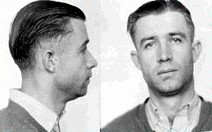 David Benjamin Knight
Murderer · USA · 1935
Howard C. Speakman and Judge Earl Anderson were involved in the case. Deputy C.…
1 victim
David Benjamin Knight
Murderer · USA · 1935
Howard C. Speakman and Judge Earl Anderson were involved in the case. Deputy C.…
1 victim
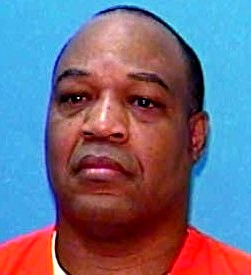 Robert Dwayne Morris
Murderer · USA · 1994
Robert Dwayne Morris was sentenced to death on April 13, 1999. His Florida Supr…
1 victim
Robert Dwayne Morris
Murderer · USA · 1994
Robert Dwayne Morris was sentenced to death on April 13, 1999. His Florida Supr…
1 victim
 Paula Sims
Murderer · USA · 1986
Paula Sims gave birth to three children, but only one survived. A son was born…
2 victims
Paula Sims
Murderer · USA · 1986
Paula Sims gave birth to three children, but only one survived. A son was born…
2 victims
- Gender
- male
- Country
- USA
- Location
- Elbert County, Georgia, USA
- Date of birth
- 1954
- Age at first offence
- 27
- Characteristics
- rape, robbery
- Victim profile
- Susie C. Rucker (female, 72)
- Method of murder
- Strangulation
- Date(s) of murder
- January 5, 1981
- Years active
- 1981
- Date of arrest
- —
- Status
-
Sentenced to death July 1981; death sentence overturned by the Georgia Supreme Court in January 1982; resentenced to death in October 1984
Case record: Stanley Edward Allen
Background
Stanley Edward Allen was convicted in Elbert County for the murder, rape and robbery of Susie C. Rucker. Allen was 42 at the time the death sentence was imposed in July 1981. His co-defendant was Woodrow Davis, 18.
Allen and Davis were indicted in Elbert County for the murder, rape and robbery of Susie C. Rucker. In separate trials, they were convicted. The state sought the death penalty in both cases, but it was imposed in Allen’s case only.
Allen had previously been sentenced to 10 years in prison for rape in 1975.
Since September 1991, Allen had been awaiting a new sentencing trial on the issue of mental retardation.
The offence
Susie C. Rucker’s body was lying on her kitchen floor when it was discovered by a neighbor at about 1:00 p.m. on January 6, 1981.
Her underclothes were pulled down to her feet and her outer clothes were pulled up to her waist. “Vegetable” debris, i.e., leaves and pine needles, were present in her clothing and hair. There was a considerable amount of blood on her upper legs and about the perineal region of her body.
One of the front windows was broken out of Mrs. Rucker’s home. Blood was observed on the floor of the bedroom and kitchen. Portions of her clothing and two “Ace” bandages were found in a wooded area to the rear of her home. Drag marks were observed between that area and the back porch.
Allen and Davis raped Mrs. Rucker, and she was strangled to death.
Allen gave a custodial statement to police which was admitted in evidence at trial. The statement was summarized as follows:
Allen stated that he and Davis were together the evening of January 5, 1981. “Davis borrowed his car at about 10 p.m. Davis returned with the car at about 10:30 p.m. and said 'Stanley, come on and go with me, we got something to do.' As they drove, Davis told him he knew an old lady who had plenty of money and he was going to get some of it. They went to the victim's home, where Davis knocked on the door and said that he was Elijah Hunter (Elijah Hunter was a neighbor of the victim's) and was out of gas. She responded that he wasn't Elijah Hunter. After she went into the bedroom and came out with a gun (either a rifle or a shotgun), Davis and the defendant ran back to the car and left. The defendant returned to his cousin's, arriving about 11 p.m., and Davis left in his car. Davis returned about 11:15, picked him up, and asked if he wanted to go back; the defendant responded that he did. The defendant knocked on the back door. When the victim, a 72-year-old woman, came to answer the door, Davis entered through a front window, grabbed the victim, and opened the back door and let the defendant in. The defendant looked around the house. He then followed Davis into the woods behind the victim's house where he found Davis 'having sex' with the victim. She was pleading with Davis, asking him not to hurt her. Davis and the defendant carried the victim back into her home and laid her on a bed. The defendant then 'had sex' with her. While this was going on, Davis was looking through the house for money, but found only jewelry. Unable to find any money, Davis threw the victim on the floor and, according to the defendant, Davis started stomping on her, asking 'Where's the money, where's the money?' The defendant testified he pulled Davis off the victim and they left the house. On the way out, the defendant picked up a butcher knife but he fell and dropped it before he got to his car. Davis took some jewelry, which he kept himself. The defendant also stated that he was 26 and weighed about 170 at the time of the crime, and Davis was 18 and weighed 120 or 130.”
After Allen and Davis left the Rucker home, Allen was seen by several witnesses with straw in his hair, blood on his clothes, and a badly swollen right hand on which he wore an Ace bandage. He explained to his girl friend that he had been in a fight.
Investigation
An autopsy was conducted by Dr. Byron Dawson to determine the cause of death.
Dr. Dawson observed that one side of her face and the back of her head were swollen and bruised. Internal examination of the head revealed a subdural hemorrhage along the base of the brain which Dr. Dawson described as a potentially fatal lesion which due to her death did not “finish developing.” On her chest was a “rather intense” contusion. Her sternum and several ribs were broken. Internal bleeding resulting from this injury had half-filled one of the pleural cavities. Dr. Dawson testified that this internal bleeding eventually would have caused her death.
Examination of the vaginal canal revealed a tear which, because of an earlier hysterectomy, opened directly into the abdominal cavity. The injury to this area produced “maybe a potentially fatal hemorrhage and certainly . . . a potentially fatal peritonitis, were it not treated appropriately at some reasonable time.”
All of these injuries, according to Dr. Dawson, occurred prior to Mrs. Rucker’s death.
Dr. Dawson said her death was caused by manual strangulation, evidenced by traumatic hemorrhage in the internal musculator of the neck and petechial hemorrhage in and about the neck and face, including the eyelids and gums.
Dr. Dawson’s testimony placed the injuries as occurring before death and linked death to manual strangulation.
Allen was arrested and gave a statement to police which was admitted in evidence at trial.
Allen’s clothes were examined by a serologist from the state crime lab. The blood on his clothes was of the same international blood group as that of the victim. Seminal fluid and spermatozoa were present in his underwear. In addition, a pubic hair discovered in his underwear was microscopically identical to that of Mrs. Rucker.
Arrest
Trial
Allen and co-defendant Woodrow Davis were indicted in Elbert County for the murder, rape and robbery of Susie C. Rucker. In separate trials, both men were convicted.
The convictions were affirmed on direct appeal:
- Davis v. State, 249 Ga. 784 (294 SE2d 504) (1982)
- Allen v. State, 248 Ga. 676 (286 SE2d 3) (1982)
The death penalty in Allen’s case was reversed for Witherspoon error. Upon retrial as to sentence, Allen was again sentenced to death.
Two trials were referenced regarding sentencing: the first death sentence and a subsequent resentencing.
Sentencing issues and enumerations of error
Allen complained of a photograph admitted in evidence which showed a table near the broken front window of the victim’s home on which were a Bible, a book written by evangelist Billy Graham, and numerous shards of broken glass, indicating that the window was broken from the outside. The court found no error and stated:
“[P]hotographs depicting the crime scene are relevant and admissible.” The court also stated that this was no less true at a re-sentencing trial.
Allen contended the trial court erred by charging: “Whatever your verdict is, it must be unanimous; that is, agreed to by all.” The court disagreed and explained that the jury was not told that a verdict was required; the jury was told only that any verdict it reached must be unanimous.
Allen contended the trial court erred by failing to instruct the jury on the law of circumstantial evidence. The court noted that Allen failed to request a charge and also stated that Allen stood convicted of murder and there was direct evidence of the only statutory aggravating circumstance contended for by the state.
The trial court did not commit reversible error by failing to instruct on expert witnesses absent a request.
Allen contended his character was impermissibly placed in issue by testimony that around 8 or 8:30 p.m. on January 5, 1981, Allen had gone alone to the home of Pierce Cobb, who lived six or seven miles from the victim. Allen asked if he could use Cobb’s phone. Cobb refused to let him in. The court held that character was not a forbidden issue in the sentencing phase and found no reversible error because Allen did not object.
The only statutory aggravating circumstance contended by the state, and found by the jury, was that:
“[t]he offense of murder was outrageously or wantonly vile, horrible and inhuman in that it involved torture to the victim or depravity of mind on the part of the defendant.” See OCGA 17-10-30 (b) (7).
Allen contended the trial court erred by failing to direct a verdict on this issue and by failing to grant his motion for new trial on the ground that the evidence was insufficient to support the jury’s finding.
The court stated that “torture occurs when a living person is subjected to the unnecessary and wanton infliction of severe physical or mental pain, agony or anguish.” It also stated that “the fact that the victim was tortured . . . will also support a finding of depravity of mind . . .”
The court summarized the evidence supporting torture and depravity of mind before death, including being hit on the head so hard she suffered a potentially fatal brain hemorrhage, being kicked in the chest hard enough to break her sternum and several ribs and to cause potentially fatal internal bleeding, and being raped so forcefully that she received potentially fatal injuries to her vaginal tract.
The court then addressed Allen’s argument that he did not torture Mrs. Rucker himself, stating it disagreed and reasoning that:
- Allen’s hand was injured, and his hair had straw in it.
- Allen’s clothes had blood and seminal fluid on them.
- Allen was the one who handled the butcher knife.
- Allen’s car was involved through the victim’s ring being found in his car.
- Allen helped carry the victim back into the house where Allen “had sex” with her.
The court stated that, based on Allen’s statement together with Dr. Dawson’s testimony and photographs, it must be inferred either that Allen “had sex” with the victim after she had been severely injured by the Davis rape, or that Allen’s own act was so savage that it caused the potentially fatal injuries to the victim’s vaginal tract. It then held that in either event Allen directly participated in the intentional infliction of serious sexual abuse and that serious sexual abuse alone was sufficient to support a finding of torture and depravity of mind.
The court concluded that the jury’s finding of the (b) (7) statutory aggravating circumstance was supported by the evidence.
Allen relied on Enmund v. Florida, 458 U. S. 782 (102 SC 3368, 73 LE2d 1140) (1982), to argue that his death sentence was excessive and disproportionate. The court quoted the Enmund holding that the Eighth Amendment forbids the imposition of the death penalty on a defendant “who aids and abets a felony in the course of which a murder is committed by others but who does not himself kill, attempt to kill, or intend that a killing take place or that lethal force will be employed.” The court found that Allen’s participation was not so limited and distinguished Allen from the Enmund factual setting.
Allen contended his death sentence was excessive and disproportionate to the life sentence given to co-defendant Davis. The court cited Hall v. State, 241 Ga. 252 (8) (244 SE2d 833) (1978), regarding proportionality review that includes special consideration of sentences received by co-defendants in the same crime. The court examined evidence presented at Davis’s trial, including that Davis gave several statements to law officers, at first claiming he had nothing to do with the crime except that he had given a ride to Allen afterwards, later admitting entering the Rucker home after Allen first broke out the front window, and denying having harmed the victim. The court also noted that Allen’s clothes had blood and seminal fluid but Davis’s clothes did not, and that Davis testified he forced Davis to join him in Allen’s plan to rob Mrs. Rucker. The court also referenced testimony that Davis had a reputation for being nonviolent and that he was a slow learner.
The court concluded that the death sentence imposed in Allen’s case was not excessive or disproportionate to Davis’s sentence and found Allen’s death sentence neither excessive nor disproportionate to sentences imposed in similar cases generally.
- The court found that the sentence of death was not imposed under the influence of passion, prejudice, or any other arbitrary factor.
Arguments for the parties
The court listed the parties’ representations:
- Lindsay A. Tise, Jr., District Attorney; Francis J. George, Assistant District Attorney; Michael J. Bowers, Attorney General; Paula K. Smith, Staff Assistant Attorney General, for appellee.
- Andrew J. Hill, Jr., for appellant.
Sentencing
Allen had been sentenced to death in Elbert County in July 1981.
Allen’s death sentence was reversed by the Georgia Supreme Court in January 1982 due to Witherspoon error.
Allen was resentenced to death in October 1984.
A note in the appendix stated that the verdict of death was returned August 12, 1982. The motion for new trial was filed August 23, 1982, an amendment thereto was filed December 3, 1952, the motion as amended was heard February 8, 1983, and it was denied January 26, 1984.
Appeals
The court identified this case as the second appearance of the death penalty case.
- Davis v. State, 249 Ga. 784 (294 SE2d 504) (1982)
- Allen v. State, 248 Ga. 676 (286 SE2d 3) (1982)
Allen’s death sentence was reversed for Witherspoon error. Witherspoon v. Illinois, 391 U. S. 510 (88 SC 1770, 20 LE2d 776) (1968).
After retrial as to sentence, Allen again received a death sentence, which was then appealed.
The opinion referenced review pursuant to the Unified Appeal Procedure and OCGA 17-10-35.
The court also addressed Allen’s Enmund argument and proportionality to co-defendant Davis.
The decision was “DECIDED OCTOBER 11, 1984.”
Outcome
Allen’s death sentence was subject to reversal and resentencing:
- Death sentence imposed July 1981.
- Death sentence overturned by the Georgia Supreme Court in January 1982.
- Resentenced to death in October 1984.
The court upheld the sentence being considered in the appeal described in the opinion, including its evaluation of statutory aggravating circumstance, proportionality, and arbitrariness.
Other details
The court discussed that Mrs. Rucker was an elderly woman and referenced her age as 72 in the summary of Allen’s statement.
The court discussed that Allen had a badly swollen right hand and wore an Ace bandage. It also referenced that portions of Mrs. Rucker’s clothing and two “Ace” bandages were found in a wooded area to the rear of her home.


Spotted an error, or have more information about this case?