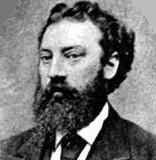
Henry Wainwright
Murderer Charles Peace
Murderer · United Kingdom · 1876
Charles Peace was executed by hanging in Leeds on February 25, 1879. Charles Pe…
2 victims
Charles Peace
Murderer · United Kingdom · 1876
Charles Peace was executed by hanging in Leeds on February 25, 1879. Charles Pe…
2 victims
 Edward Pritchard
Murderer · United Kingdom · 1865
Edward Pritchard was a Scottish doctor who was convicted of poisoning his wife…
2 victims
Edward Pritchard
Murderer · United Kingdom · 1865
Edward Pritchard was a Scottish doctor who was convicted of poisoning his wife…
2 victims
 Eugéne-Marie Chantrelle
Murderer · United Kingdom · 1878
Eugéne-Marie Chantrelle was a French-born school teacher who lived in Edinburgh…
1 victim
Eugéne-Marie Chantrelle
Murderer · United Kingdom · 1878
Eugéne-Marie Chantrelle was a French-born school teacher who lived in Edinburgh…
1 victim
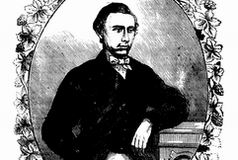 Frederick Baker
Murderer · United Kingdom · 1867
Frederick Baker was a solicitor’s clerk in Alton, Hampshire, England. On Saturd…
1 victim
Frederick Baker
Murderer · United Kingdom · 1867
Frederick Baker was a solicitor’s clerk in Alton, Hampshire, England. On Saturd…
1 victim
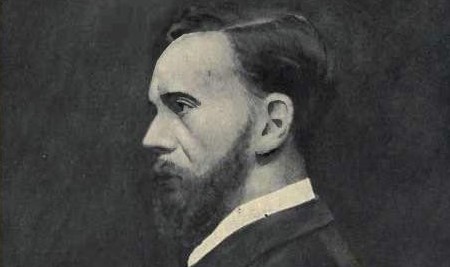 George Lamson
Murderer · United Kingdom · 1881
George Lamson was an English physician who, after the Crimean War, suffered fro…
1 victim
George Lamson
Murderer · United Kingdom · 1881
George Lamson was an English physician who, after the Crimean War, suffered fro…
1 victim
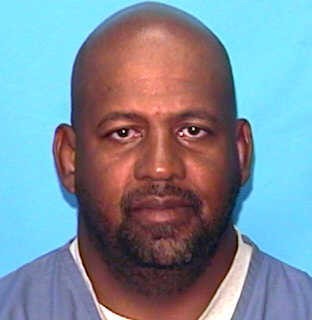 Michael Tyrone Crump
Murderer · USA · 1985
Defendant (Appellant): Michael Tyrone Crump · Plaintiff/Respondent (Appellee):…
2 victims
Michael Tyrone Crump
Murderer · USA · 1985
Defendant (Appellant): Michael Tyrone Crump · Plaintiff/Respondent (Appellee):…
2 victims
 Willie Earl Pondexter
Murderer · USA · 1993
Willie Earl Pondexter was convicted of capital murder for the robbery and slayi…
1 victim
Willie Earl Pondexter
Murderer · USA · 1993
Willie Earl Pondexter was convicted of capital murder for the robbery and slayi…
1 victim
 Peter Zimmer
Homicide · USA · 1983
Peter Zimmer pleaded no contest to the killings in 1983 and was found delinquen…
3 victims
Peter Zimmer
Homicide · USA · 1983
Peter Zimmer pleaded no contest to the killings in 1983 and was found delinquen…
3 victims
 Richard Jameswhite
Serial killer · USA · 1992
Richard Jameswhite was a 19-year-old man wanted in Brooklyn for killings and al…
15 victims
Richard Jameswhite
Serial killer · USA · 1992
Richard Jameswhite was a 19-year-old man wanted in Brooklyn for killings and al…
15 victims
 Charles Mark Cohen
Murderer · USA · 1988
Charles Mark Cohen was 41 when the Delaware Board of Pardons refused to recomme…
3 victims
Charles Mark Cohen
Murderer · USA · 1988
Charles Mark Cohen was 41 when the Delaware Board of Pardons refused to recomme…
3 victims
 Francis Percy Toplis
Murderer · United Kingdom · 1920
Francis Percy Toplis (August 22, 1896 – June 6, 1920) was a British criminal an…
1 victim
Francis Percy Toplis
Murderer · United Kingdom · 1920
Francis Percy Toplis (August 22, 1896 – June 6, 1920) was a British criminal an…
1 victim
- Gender
- male
- Country
- United Kingdom
- Location
- London, United Kingdom
- Date of birth
- 1839
- Age at first offence
- 35
- Characteristics
- dismemberment
- Victim profile
- Harriet Louisa Lane, 23 (his mistress)
- Method of murder
- Shooting
- Date(s) of murder
- September 11, 1874
- Years active
- 1874
- Date of arrest
- September 11, 1875
- Status
-
Executed
Executed by hanging outside Newgate on 21st December 1875
Case record: Henry Wainwright
Status
Henry Wainwright was executed by hanging outside Newgate on 21st December 1875.
Background
Henry Wainwright met 20-year-old milliner’s apprentice Harriet Louisa Lane in 1871. Wainwright installed Harriet as his mistress in a house in Mile End. Wainwright was a brush-manufacturer with a shop and a wife at 215 Whitechapel Road.
Over the next couple of years Harriet, who called herself Mrs Percy King, had two children by Wainwright.
Wainwright found that the cost of running two homes was getting too much for his limited income and moved Harriet and the children to cheaper accommodation in Sidney Square. Even this could not prevent him becoming bankrupt.
Harriet arranged for friends to look after the children and the last that was seen of her was when she left Sidney Square with her night clothes wrapped in a parcel. When the friends became worried about Harriet’s disappearance, Wainwright told them she had gone to Brighton. This was followed by a letter that explained she was going to live on the continent with a man named Edward Frieake.
Because of his financial position Wainwright was forced to move from his shop and enlisted the help of a former employee named Stokes to help him move two parcels. Stokes noticed the weight of the parcels and the disagreeable smell and, while Wainwright went to fetch a taxi, he looked inside one of the bundles. It contained a decomposing arm and head. Stokes helped Wainwright load the parcels into the cab and then decided to follow on foot.
The offence
Wainwright had killed Harriet at his shop and buried her under the floor.
A year later, and aided by his brother Thomas alias Frieake, they disinterred the body and cut it into manageable pieces.
Investigation
Stokes summoned a policeman and they apprehended Wainwright taking the parcels into his brother’s house.
A search of the warehouse at 215 Whitechapel Road revealed the shallow grave and patches of what appeared to be old blood. Stokes suggested that the body was the missing Harriet Lane and that she had been constantly importuning Henry for money before she disappeared.
Although the features were mainly unrecognizable, a surgeon was able to find a distinctive scar, enabling Mrs. Wilmore and Harriet’s family to identify the body as the missing woman.
Jewelry discovered in the warehouse grave was thought to have belonged to Harriet.
A post mortem revealed the victim had been shot in the head with a small caliber firearm, and the throat cut afterwards. Henry was known to possess a “six-shooter” of a type consistent with the murder weapon.
Arrest and police court proceedings
Initial discovery and detention
The mutilated body of a human being, stated to be that of an adult female, was discovered on Saturday night on the Southwark side of London-bridge in a cab which had driven there from the East of London. The surrounding circumstances were such as to lead to the certainty that a brutal murder had been committed. The vehicle contained apparently only a man and woman, and police on stopping it found a human body in a very decomposed state and mutilated in a shocking manner, being sawn asunder in such a way that parts of it might be disposed of separately.
Southwark police were informed by a young man that there was something very suspicious in a four-wheeled cab. The Press was informed that they were instructed by their superiors “to give no information whatever,” and they strictly obeyed the injunction.
The man has given his name to the police as Henry Wainwright, 26, residing at School House-lane, Chingford, Essex. He was charged along with the young woman Alice Day, aged 20 years, a dress-maker, living at No. 5 Queen’s-court, Commercial-road East, with having in their possession the mutilated body of an adult female, at present unknown, supposed to have been murdered.
The mutilated remains were removed by the police and handed over to the coroner’s officer, Mr. Drewitt, and they were lying in St. Saviour’s Mortuary.
At the Southwark Police-court, Henry Wainwright, 36, and Alice Day, aged 20, were described as being charged before Mr. Bensons with having in their possession the mutilated body of a woman, at present unknown, supposed to have been murdered. Mr. Superintendent Garforth, of the M division, and Mr. William Moore, of the Associate Institute for Improving and Enforcing the Laws for the Protection of Women, watched the case.
Wainwright said he had instructed Mr. Gildey to appear for him. Mr. Edlin, solicitor, said that Mr. Gildey had sent for him to take up the case, which he had refused to do.
Alfred Phillip Stokes testified that he knew the prisoner Wainwright, who was a brush manufacturer. Stokes said that about nine months before he ceased to work with Wainwright and that they later worked at Mr. Martin’s, 78, New-road, Whitechapel.
Stokes testified that on Saturday afternoon last, a half-past 4, Wainwright said: “I want you to come round with me to the old premises and carry a parcel for me.” Stokes replied: “Yes, Sir.” Stokes described going with Wainwright to premises where Wainwright opened the door with a key and went into the workshop. Stokes said Wainwright told him: “go upstairs, you will find a parcel there.” Stokes said he looked and seeing no parcel came down again and said: “I can’t find it.” Wainwright replied: “Never mind; they are under the straw, where I put them a fortnight ago.” Stokes described seeing two parcels wrapped in black American cloth, very heavy, with a rope around them. Stokes said he told Wainwright: “They are too heavy to carry.” Wainwright said: “Oh, well,” carry them out of the court for me, and I will take one myself.” Before Stokes took them up, Stokes said Wainwright said: “I have a chopper, shovel, and hammer, and I want you to take them home to your house on Monday and bring them back after dinner with you and sell them to Mr. Martin. Be sure and say they are yours, and I’ll give you half they fetch.”
Stokes testified that Wainwright said: “For God’s sake don’t drop them, or you may break them.” Stokes said that when Wainwright was gone, he opened one parcel and saw a human head. Stokes said: “My hair stood upright; my hat fell off.” He testified that the hair of the deceased was brown and matted with lime. Stokes said he took it for a man’s hair as it was short and that he could not see the features, but he saw a hand and an arm. Stokes said the remains were decomposed and emitted a frightful smell.
Stokes testified that when Wainwright returned, Stokes did not say what he had seen and that Wainwright brought a four-wheel cab and told him: “Help me with the parcels.” Stokes testified that Wainwright told the cabman to go to Commercial-road and that Wainwright got out and met Day at Greenfield-street. Stokes testified he told constables: “For God’s sake, stop the cab, there’s something wrong.” Stokes testified the constables laughed and said: “I was mad.”
Stokes said he saw Wainwright walk toward a shop called the Hen and Chickens carrying the lighter parcel. Stokes said he told the constable to stop him and police constable 48 M stopped him. Stokes testified that Wainwright went into the house and that was the last Stokes saw him.
Stokes further testified that he proceeded to the Stones-end police station.
Police testimony and evidence
Police-constable Henry Turner testified that on Saturday afternoon last at half-past 5 he was on duty in High-street, Borough, and Stokes came to him exhausted and said: “Policeman, for God’s sake stop that cab.” Turner said he saw Wainwright get out with a parcel in his hand and take a key out and unlock a padlock and go into the Hen and Chickens.
Turner described finding a parcel on the front seat in the cab with Day. Turner testified he said to Day: “What are you waiting here for?” and that Day made no answer, after which Turner said: “What have you got in this parcel?” Turner testified Day replied: “The idea of your interfering with me! I am waiting for my husband.” Turner testified he later saw Wainwright take a key out, unlock the padlock, and walk to the Hen and Chickens.
Turner testified he questioned Wainwright about possession and Wainwright said: “I have and you haven’t.” Turner testified he asked to see what was in the parcel and Wainwright seemed reluctant to go in with him. Turner testified that the other constable pushed Wainwright inside the door.
Turner testified about another parcel and that Wainwright offered bribes. Turner testified Wainwright said, after the parcels were found and taken up: “Don’t touch it; let me go; I will give you £200 and produce the money in 20 minutes.” Turner testified the stench from the parcels was very bad and that pulling off the cloth revealed the head with a little hair on.
At the station the prisoners’ parcels were untied and contained the body of a woman. Turner testified that the sex was indicated by the length of the hair and that it was much decomposed, with features undiscernible. He testified that the hair was clotted with lime and blood. Turner said the remains were taken to St. Saviour’s deadhouse.
Frederick George Larkin testified he was a surgeon and that the two parcels jointly contained the remains of a human being—a woman. He testified the body was much decomposed and he was sure some preparation of lime had been used to prevent identification. He testified the body had been chopped up by someone who evidently had no knowledge of anatomy and that he could not say at that time that death was caused by violence. Larkin testified there was blood on the hair that would not have been produced by the chopping up, and a cut across the throat besides that which severed the head from the body.
Defence statements and prisoner comments
Inspector Fox testified that on Saturday he received the prisoners at Stone’s-end station and told the charge, and that Wainwright said: “I am quite prepared to say how I got the parcels, and how they came into my possession when I see my employer, Mr. Martin.”
In his statement, Inspector Fox recounted Wainwright’s description of how he said he obtained the parcels: Wainwright described “Yesterday week” and a gentleman in a publichouse offering money for “two parcels over to the Borough,” telling him: “Take them over and ask no questions, and here’s a couple of sovereigns.” Inspector Fox testified Wainwright said he asked to make it £5 and that the gentleman agreed to give him £3, gave him the key, and told him to take them to the Hen and Chickens, an empty house in the Borough.
Inspector Fox testified Wainwright said he brought the parcels out, put them on the pavement, and brought them over, without having seen Stokes then.
The prisoner Day said she met the gentleman Wainwright in the Commercial-road, that she consented to go with him to the Borough, and that she “know[s] nothing whatever of the parcels containing the body; they were in the cab when I went into it.”
As prisoners were leaving the dock, Day clutched Wainwright and exclaimed: “For God’s sake, tell them what I know of the matter; I know nothing!”
Wainwright replied: “I met her on Saturday. She knows nothing about it.” Day said: “I am innocent.”
Mr. Benson said it was probable Day might not and that he could not discharge Day.
Investigation of the warehouse at 215 Whitechapel Road
During the investigation, Inspector Fox testified he accompanied Stokes to 215 Whitechapel-road and opened the back door with a key taken from the prisoner. Fox testified he entered an empty shop or warehouse and saw a chopper wrapped in paper, a spade, a hammer, and an open knife. Fox testified he examined the axe and found fleshy matter and lime and dirt upon it. He testified that loose flooring boards and cut joists were found and that under them was a newly-formed open grave 5ft. long and 2 in. wide, with mould mixed with lime. He testified he dug out the earth and found hair and brain and a piece of rope looped to be tied round a neck. Fox testified a straw bed and pillow were found. He testified cinder ashes and rubbish were cleared away and many patches of what appeared to be blood were found.
Wainwright asked no questions, but Day said “as far as she was concerned” what had been stated was true.
Trial
The pair were tried at the Old Bailey in November 1875. Thomas Wainwright was sentenced to seven years imprisonment and Henry was sentenced to death.
Sentencing and condemned prisoner statements
On Henry Wainwright’s sentencing on 2 December 1875, Mr. Avory addressed him stating: “You have been indicted for the crime of wilful murder, and to that indictment you have pleaded not guilty and have thrown yourself upon your country. That country has found you guilty. Have you anything to say why the Court should not proceed to pronounce sentence of death upon you under that conviction?”
Henry Wainwright then said:
I should like to make one or two observations, and they shall be very short indeed.
I have first to express my deep obligation for the untiring energy and ability of my counsel during this protracted trial. I thank him and all who have assisted him deeply. My thanks are due to the very many friends who have with such promptitude and alacrity come forward to give me their valuable and substantial assistance. I have not been able to reply to all the persons -
The LORD CHIEF JUSTICE. - I cannot allow you to make a speech.
The only question put to you is whether you have anything to say why sentence should not be passed upon you.
The Prisoner. - Then I will simply say that, standing as I now do upon the brink of eternity, and in the presence of that God before whom I shall shortly appear, I swear that I am not the murderer of the remains found in my possession. I swear that I have never in my life fired a pistol. I swear also that I have not buried these remains, and that I did not exhume or mutilate them has been proved before you by witnesses. I have been guilty of great immorality. I have been guilty of many indiscretions, but as for the crime of which I have been brought in guilty I leave this dock with a calm and quiet conscience. My Lord, I thank you for the patience with which you have listened to me.
The LORD CHIEF JUSTICE then said:
Prisoner at the bar, you have been found guilty, in my opinion, upon the clearest and most convincing evidence of the murder of Harriet Louisa Lane, which has been laid to you charge. No one, I think, who has heard this trial can entertain the slightest shadow of a doubt of your guilt; and I can only deplore that, standing as you surely are upon the brink of eternity, you should have called God to witness the rash assertion which has just issued from your lips. There can be no doubt that you took the life of this poor woman, who had been on the closest and most intimate terms of familiarity and affection with you, and who was the mother of your two children. You inveigled her into that lone warehouse. The revolver was not there before, but must have been taken there for the purpose, with which she was slain. The grave was dug there for her remains, which were those you were removing when you were arrested. About that no one can entertain the shadow of a doubt. It was a barbarous, cruel, inhuman and cowardly act. I do not wish to say anything to aggravate the position in which you stand, nor to dwell upon the enormity of your guilt, further than that by so doing I may rouse you to a sense of the position in which you stand, in which all hope of earthly mercy is cut off. The only hope and consolation you can have is in the future, where truth cannot be mistaken, where no assertion of yours will stand you in any stead; and where if you seek for mercy it must be through sincere repentance for the crime which you have undoubtedly committed. I have to warn you against any delusive hope of mercy here as long as the law exists which says that he who takes the life of a fellow creature with malice aforethought shall answer for it with his own. This is a case to which it would be impossible that mercy could be extended; therefore, prepare for the doom which awaits you. I have now only to pass upon you the dread sentence of the law, which is that you be taken from hence to the place whence you came, thence to a legal place of execution to be there hanged by the neck till you shall be dead, and that your body be buried within the precincts of the gaol in which you shall be last confined after your conviction, and may the Lord have mercy upon your soul.
Outcome
Henry Wainwright was found guilty of wilful murder and hanged on 21 December 1875 at Newgate Gaol.
Thomas Wainwright received seven years penal servitude as an accessory after the fact.
Aftermath
After Henry Wainwright was executed, a black flag was hoisted from the roof of the prison to indicate the sentence had been carried into effect.
The governor later read a written statement that Wainwright had placed in his hands at 11 o’clock on the previous evening. In it, the governor read that Wainwright appealed “to the loving kindness of a merciful God that his transgressions might be blotted out, for the sake of that blessed Saviour whom he had so long neglected.” He acknowledged the justice of his punishment and said he deserved it, though he did not absolutely confess that he had committed the murder. He expressed sincere thanks to the governor and officers for their attention and to his many friends for assistance to his family. He commended his family to the hands of that Almighty Father who was the protector of the widow and the fatherless.
Other details
Stokes described Wainwright telling him:
- “For God’s sake don’t drop them, or you may break them.”
- “Mind these while I fetch a cab.”
- “I wish I could get rid of her; she is a nuisance.”
The police court material included mention of a “six-shooter,” a chopper, shovel, and hammer, and that a surgeon believed the body had been prepared using lime and then chopped without anatomical knowledge.
The body was buried within the precincts of the gaol in accordance with usage, and a coroner’s inquest was held later in the day.
The condemned man was described as being executed within the precincts of the gaol of Newgate for the murder of Harriet Lane. The gallows had been erected within the gaol yard and described as roofed over and lighted with lamps, with a deep pit and chain and noose suspended.
Spotted an error, or have more information about this case?