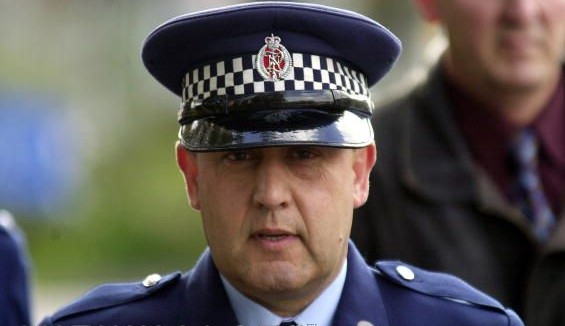
William Keith Abbott
Homicide Daniel Luff
Homicide · New Zealand · 2002
Daniel Luff was 17 years old and had dated Stephanie Cocker for several months.…
1 victim
Daniel Luff
Homicide · New Zealand · 2002
Daniel Luff was 17 years old and had dated Stephanie Cocker for several months.…
1 victim
 David James Gates
Homicide · New Zealand · 1999
David James Gates was charged in connection with the murder of Gavin Edward Das…
1 victim
David James Gates
Homicide · New Zealand · 1999
David James Gates was charged in connection with the murder of Gavin Edward Das…
1 victim
 Akshay Chand
Homicide · New Zealand · 2011
Akshay Anand Chand murdered Christie Alexis Lesley Marceau on 7 November 2011,…
1 victim
Akshay Chand
Homicide · New Zealand · 2011
Akshay Anand Chand murdered Christie Alexis Lesley Marceau on 7 November 2011,…
1 victim
 Jordan Nelson
Homicide · New Zealand · 2012
Jordan Nelson was a 13-year-old. He was New Zealand's youngest convicted murder…
1 victim
Jordan Nelson
Homicide · New Zealand · 2012
Jordan Nelson was a 13-year-old. He was New Zealand's youngest convicted murder…
1 victim
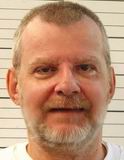 Stephen Michael West
Murderer · USA · 1986
Stephen Michael West was sentenced to death in 1987. A jury in Union County fou…
2 victims
Stephen Michael West
Murderer · USA · 1986
Stephen Michael West was sentenced to death in 1987. A jury in Union County fou…
2 victims
 Gerald Gallego
Serial killer · USA · 1978
Gerald Armond Gallego (July 17, 1946 – July 18, 2002) was an American serial ki…
10 victims
Gerald Gallego
Serial killer · USA · 1978
Gerald Armond Gallego (July 17, 1946 – July 18, 2002) was an American serial ki…
10 victims
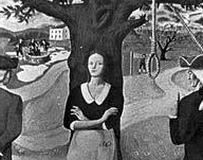 Bathsheba Spooner
Murderer · USA · 1778
Bathsheba Ruggles Spooner (February 15, 1746 – July 2, 1778) was executed by ha…
1 victim
Bathsheba Spooner
Murderer · USA · 1778
Bathsheba Ruggles Spooner (February 15, 1746 – July 2, 1778) was executed by ha…
1 victim
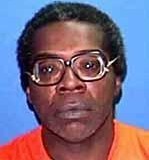 Frank Lee Smith
Murderer · USA · 1960
Frank Lee Smith died in prison on January 30, 2000. He was exonerated on Decemb…
3 victims
Frank Lee Smith
Murderer · USA · 1960
Frank Lee Smith died in prison on January 30, 2000. He was exonerated on Decemb…
3 victims
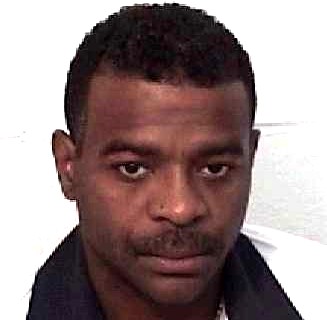 Frederick Whatley
Murderer · USA · 1995
Frederick Whatley (Frederick Ramone Whatley) was sentenced to death on January…
1 victim
Frederick Whatley
Murderer · USA · 1995
Frederick Whatley (Frederick Ramone Whatley) was sentenced to death on January…
1 victim
- Gender
- male
- Country
- New Zealand
- Location
- Waitara, Taranaki, New Zealand
- Date of birth
- ???
- Characteristics
- —
- Victim profile
- Steven Wallace, a 23-year-old Maori
- Method of murder
- Shooting
- Date(s) of murder
- April 30, 2000
- Years active
- 2000
- Date of arrest
- —
- Status
-
Acquitted / overturned
Acquitted on self defence December 4, 2002
Case identity
*Name: William Keith Abbott
Background
William Keith Abbott is described as a New Zealand police constable, identified elsewhere in the record as a Senior Constable.
The matter is connected to the Steven Wallace Shooting in Waitara.
A police investigation was launched after the incident. Abbott’s actions were presented to an independent review. The review found that Constable had acted lawfully, and Abbott moved his family soon after the incident.
The record also states that the wife of Keith Abbott was harassed and abused by members of Wallace's family. After one occasion in August 2001 when Mrs Abbott was followed home, there was a ruling that the Wallace's were prohibited to associate with the Abbott family for a 12 month period.
The Wallace Family brought a private prosecution against the constable in September 2001.
The offence
The record describes an early morning incident on April 30, 2000 at about 4am in the town of Waitara, described as a confrontation that involved police and Steven Wallace.
The record states that Steven Wallace was confronted by Senior Constable Keith Abbott, who drew his gun. Wallace was described as advancing armed with a baseball bat and a golf club. A warning was given and a warning shot failed to stop the advancing Wallace. The record states that Abbott fired 4 shots, after which Wallace fell and later died in hospital.
The record also describes Wallace’s earlier actions that night in Waitara, including breaking and smashing windows and damaging vehicles.
The record states that broken glass and battered cars were around the constable and the others. It describes 140 smashed windows, and states that 3 cars were damaged. It also describes a taxi with passengers, a private car with 6 youths, and a third car described as a police patrol car.
The record includes additional claims and allegations about what was intended and the existence of alternative options for police conduct, including discussion of armed offenders squad procedures and alternative measures.
Timeline
- April 30, 2000 — Steven Wallace was shot in the early hours of the morning in Waitara; the record says Abbott shot Wallace four times after warning and a warning shot.
- January 1971 — The record refers to a police killing in Taumarunui in January 1971 involving a person alleged not to have been armed when police allegedly thought he was armed.
- August 2001 — Mrs Abbott was followed home; the record states a ruling prohibited the Wallace’s from associating with the Abbott family for a 12 month period.
- September 2001 — The Wallace Family brought a private prosecution against the constable.
- February 2002 — The record states that justices of the peace found Abbott acted in self-defence and the case was dismissed.
- June 02 — The record states that a Chief Justice overturned the decision and the case went to the High Court.
- January 2002 — The deposition hearing is described as being presided over by two local Justices of the Peace.
- 28 November 2002 — Scoop.co.nz report describes Constable Keith Abbott turning away from the jury and wiped away tears while giving evidence in his defence on charges of murder in the High Court in Wellington.
- 29 November 2002 — Scoop.co.nz report describes the jury’s task in the trial and “almost-eye-witness Todd Wilson” and “sixty four seconds.”
- December 4, 2002 — The record states an acquittal in the Wellington High Court after a jury deliberated for less than three hours.
- 2003 (New Year) — The record states Abbott is about to return to full duties in the New Year of 2003.
People mentioned
Accused / police officer
- William Keith Abbott — described as a New Zealand police constable and identified in the record as a Senior Constable; named as the person acquitted.
- Keith Abbott — used throughout the record as the accused officer.
Victim
- Steven Wallace — victim; described as a 23-year-old Maori in one part of the record. The record also includes the name Steven James Wallace.
Family
- Jim Wallace — father of Steven Wallace; described as the person who brought the private prosecution.
- Steven Wallace’s mother — described as present outside court, described as “clearly distraught” at the verdict.
- Mrs Abbott — wife of Keith Abbott; described as harassed and abused by members of Wallace's family.
Investigation and review
The record describes:
- An internal investigation carried out by the Police Complaints Authority that initially exonerated Constable Keith Abbott.
- An independent review that found that Constable had acted lawfully.
- After deposition, the record states that Justices of the Peace declared police had acted in self-defence and dismissed the case.
- On appeal, a Chief Justice decided that the JPs had overstepped their authority and ruled that a prima facie case existed for a jury trial.
- The High Court proceeding and the jury acquittal.
Arrest
The record states that “Collecting his pistol from the police station, Senior Constable Keith Abbott arrived at the scene of destruction,” but does not describe an arrest.
Trial
The record describes:
- A trial of Senior Constable Keith Abbott for murder of Steven Wallace in the High Court in Wellington.
- Abbott pleaded not guilty and claimed he acted in self-defence.
- Witnesses, including Todd Wilson and others, testified about events in the period described as “sixty four seconds.”
- Defence counsel is identified as Susan Hughes.
- Prosecutor counsel is identified as John Rowan QC, prosecuting Abbott on behalf of Wallace’s family.
- A judge intervention is described, with “Judge Chambers” intervening to clarify questions about how long it was “quite a long time.”
The record also includes quoted remarks said in court and quotes attributed to participants:
“Not a day goes by without me thinking of that night,” Constable Abbott replied, clearly distressed.
“What would you do differently?”
“I have considered all the ifs. And I still believe I took the only option available to me.”
In the Scoop.co.nz report, Abbott is quoted on key points during evidence, including:
“Since you shot Steven Wallace have you thought about it?”
“I have considered all the ifs.
In the same report, there are also verbatim defence and prosecution exchange statements:
“But there was time to think of them?” Rowan prodded again and again.
“But I didn’t”, replied Abbott.
In cross-examination, the record includes Abbott’s exchange about retreat and alternatives:
Rowan: “Initially you could have tactically withdrawn?” Abbott: “There was no need to.”
The record includes Abbott’s account of what Wallace said, verbatim as presented:
“You fucking asshole. If I get you I am going to fucking kill you.”
The record includes the record’s attribution to prosecution allegations about timing and shots, and Abbott’s responses:
Rowan: “Do you accept the evidence of pathologist Dr Thompson that there was a space between the shots?” Abbott: “I can only recall four shots. The warning shot and the three shots.”
The record also includes a police-related quotation attributed to John Rowan QC about an assessment after shots:
“If he [Abbott] had stopped and assessed after the first or second shot, Steven Wallace would still be alive today,” said Rowan.
Sentencing
The record does not describe sentencing. It describes acquittal.
Appeals
The record states:
- By February 2002, justices of the peace found Abbott acted in self-defence and the case was dismissed.
- In an appeal in June 02, a Chief Justice overturned the decision and the case went to the High Court.
Outcome
The record states that:
- The acquittal occurred on 04 December 2002 in the Wellington High Court after a jury deliberated for less than three hours.
- The record characterises the outcome as an acquittal on self defence.
Aftermath
The record describes:
- As soon as the verdict was announced, the Police Commissioner, with support of the Police Association and opposition politicians, called for changes to the law to exempt police from private prosecutions and to provide for automatic suppression of the names of police officers involved in shootings.
- Abbott moved his family soon after the incident.
- There is mention that approximately 31 months after the shooting Abbott was about to return to full duties in the New Year of 2003.
- Demonstrations took place in Waitara, New Plymouth and Wellington.
- The record mentions Willie Jackson, described as a former MP and reporter for a Maori radio network, blaming racism and calling for more Maori “decision-makers.”
- The record mentions Frank Haden in the Sunday Star Times, stating Wallace was a “rubbish person” with a “worthless life” and deserved no sympathy, and the record also characterises that view as saying the police had every right to act as judge, jury and executioner.
Other details
Weapons and conduct details described in the record
The record includes detailed discussion of police firearms and alternative procedures in the trial reporting:
- Abbott is described as carrying and using a “glock pistol” in the record.
- Abbott is described as having a PR 24 baton and pepper spray, and having the baton and pepper spray in specific placements described in the record.
- The record includes statements that Abbott did not know the dog handler was on his way, and that Abbott said pepper spray range was 1 to 3.5 meters as described in the report.
- Abbott is described as stating that “things were moving quite fast,” and discusses options including waiting for a dog handler, using pepper spray, tactical retreat, using fellow officer Jason Dombroski, “shoot to wound,” and “shoot to stop.”
Names and other people in the record
- Jason Dombroski — described as a constable in the record; referenced as having pistols and as being a fellow officer mentioned in multiple parts of the trial account.
- Todd Wilson — described as “almost-eye-witness” in the Scoop.co.nz report.
- David Toa — mentioned as the person Abbott thought Wallace was, in Abbott’s account described in the record.
- Todd Wilson is described as meeting Wallace earlier in the evening at “The Mill night-club” in New Plymouth, and later seeing him in locations including “McLean St” and around the intersection referenced.
- Susan Hughes — described as defence counsel.
- John Rowan QC — described as lawyer for the Wallace family and prosecution counsel in the deposition stage and later proceedings as stated.
- Bryan Rowe — described as a former Police Superintendent giving evidence yesterday in the Scoop.co.nz report.
- Sian Elias — described as Chief Justice who ruled that a prima facie case existed for a jury trial.
- Dr Thompson — referred to in the record as a pathologist: “pathologist Dr Thompson.”
- Judge Chambers — referred to as intervening to clarify during questioning in the record.
- Alastair Thompson — author of Scoop.co.nz report dated Friday, 29 November 2002.
- DERMOT GREGORY NOTTINGHAM — author of a report section included in the scrape.
- Jim Wallace — referenced again here as father of Steven Wallace.
Places and addresses mentioned
The record mentions:
- Waitara (town; rural township)
- New Plymouth
- McLean Street
- Mclean Street (spelling variant)
- Main street of Waitara
- Grey Street intersection
- Domett Street
- The Mill night-club in New Plymouth
- Peter Buddens chemist
- Thelma's Lotto and bookshop
- Binn Inn carpark area
- Domett Street
- Wellington High Court
- Waitara Police Station
- Taranaki (described as the region)
- Taumarunui (referred to in the comparison case)
Vehicle and scene details mentioned
The record mentions:
- Holden Kingswood as Todd Wilson’s car.
- A taxi with passengers.
- A private car with 6 youths.
- A police patrol car.
Health and injuries described in the record
The record states:
- Abbott fired shots and Wallace fell at 5-6m from the constable, as stated in the case narrative portion.
- The record includes a claim that the third shot lodged in the liver, described as “the fatal shot,” and that a fourth entered Wallace’s back as he turned and fell to the ground.
Call to emergency number
The record states that Wallace’s mother was said to have called 111 and then hung up before the call was answered.
Disposition hearing details
The record states:
- A deposition hearing occurred in January 2002.
- The deposition hearing was presided over by two local Justices of the Peace—one a businessman, the other a farmer.
Named sources and reports embedded in the record
The record includes embedded reports and attributions:
- “By John Braddock - Wsws.org 28 January 2003”
- “Alastair Thompson - Scoop.co.nz Friday, 29 November 2002”
- “Alastair Thompson - Scoop.co.nz Thursday, 28 November 2002”
- “AdvantageAdvocacy.co.nz”
- Additional report text that includes “The report was commissioned independently of the Wallace family at the complete expense of Advantage Advocacy.”
- “One Law For All - The Steven Wallace Killing AdvantageAdvocacy.co.nz” and “Scoop” republishing statement included in the scraped text.
Quotes attributed to non-case participants (as included)
The record includes the following verbatim quoted remarks attributed to named persons:
- Frank Haden, via the Sunday Star Times: “Wallace was a ‘rubbish person’ with a ‘worthless life’ who deserved no sympathy.”
- A witness’s quoted remark in the reports section: “fuck off” (Wallace told them “fuck off” as quoted in the Scoop.co.nz report).
- The record includes trial testimony quotes such as: “stop, armed police!” and “put it down you little cunt”? (the record shows an exchange about whether Abbott used the word “cunt,” with Rowan asking: “You said to this person, “put it down you little cunt”? Abbott: “Definitely not.”)
Non-factual editorial claims contained in the record
The scraped text includes advocacy-style assertions and comparisons (e.g., references to other cases, claims about procedure breaches, and claims about how police investigations were conducted). These statements are part of the source text and are preserved in the narrative as quoted material and assertions as they appear above, without adding or confirming additional facts beyond the record’s own content.

Spotted an error, or have more information about this case?