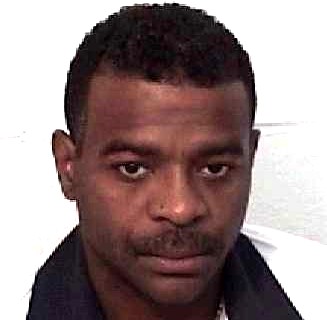
Frederick Whatley
Murderer Brian Kevin Rosenfeld
Murderer · USA · 1985
Brian Kevin Rosenfeld Brian Kevin Rosenfeld was sentenced to three concurrent l…
23 victims
Brian Kevin Rosenfeld
Murderer · USA · 1985
Brian Kevin Rosenfeld Brian Kevin Rosenfeld was sentenced to three concurrent l…
23 victims
 Russell Ellwood
Murderer · USA · 1991
Russell Ellwood was a former taxi driver. Authorities suspected him of killing…
20 victims
Russell Ellwood
Murderer · USA · 1991
Russell Ellwood was a former taxi driver. Authorities suspected him of killing…
20 victims
 Robert Martines Perez
Murderer · USA · 1994
Name: Robert Martines Perez · Other name used in proceedings: Robert Martinez P…
15 victims
Robert Martines Perez
Murderer · USA · 1994
Name: Robert Martines Perez · Other name used in proceedings: Robert Martinez P…
15 victims
 Billy Frank Vickers
Murderer · USA · 1993
Billy Frank Vickers Vickers was executed by lethal injection in Texas on Januar…
14 victims
Billy Frank Vickers
Murderer · USA · 1993
Billy Frank Vickers Vickers was executed by lethal injection in Texas on Januar…
14 victims
 Jose Ignacio Monterrubio
Homicide · USA · 1993
Jose Ignacio Monterrubio was 17 years old when he and his older cousin Sixto Mo…
1 victim
Jose Ignacio Monterrubio
Homicide · USA · 1993
Jose Ignacio Monterrubio was 17 years old when he and his older cousin Sixto Mo…
1 victim
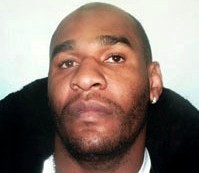 Gary Lloyd Nelson
Murderer · United Kingdom · 1993
Name: Gary Lloyd Nelson · Birth year: 1969 · Nationality: British · Residence/l…
2 victims
Gary Lloyd Nelson
Murderer · United Kingdom · 1993
Name: Gary Lloyd Nelson · Birth year: 1969 · Nationality: British · Residence/l…
2 victims
 Barbara Opel
Murderer · USA · 2001
Barbara Opel was convicted of murdering a 64-year-old man with terminal cancer…
1 victim
Barbara Opel
Murderer · USA · 2001
Barbara Opel was convicted of murdering a 64-year-old man with terminal cancer…
1 victim
 Christine Paolilla
Homicide · USA · 2003
Christine Marie Paolilla was an American woman born on Long Island, New York on…
4 victims
Christine Paolilla
Homicide · USA · 2003
Christine Marie Paolilla was an American woman born on Long Island, New York on…
4 victims
 Jaturun Siripongs
Murderer · USA · 1981
Jaturun Siripongs was a native of Thailand and was known as “Jay” to friends an…
2 victims
Jaturun Siripongs
Murderer · USA · 1981
Jaturun Siripongs was a native of Thailand and was known as “Jay” to friends an…
2 victims
- Gender
- male
- Country
- USA
- Location
- Spalding County, Georgia, USA
- Date of birth
- 1968
- Age at first offence
- 27
- Characteristics
- armed robbery, escape
- Victim profile
- Ed Allen (Roy's Bait Shop owner)
- Method of murder
- Shooting
- Date(s) of murder
- January 26, 1995
- Years active
- 1995
- Date of arrest
- Same day
- Status
-
Sentenced to death
Sentenced to death on January 22, 1997
Case details
Frederick Whatley (Frederick Ramone Whatley) was sentenced to death on January 22, 1997. He appealed as WHATLEY v. THE STATE. S98P1308. (270 Ga. 296) (509 SE2d 45) (1998). The decision was DECIDED DECEMBER 4, 1998.
Timeline
- January 26, 1995 — Whatley entered Roy's Bait Shop in Griffin at about 8:45 p.m., brandished a .32 caliber silver revolver, forced employee Tommy Bunn to lie face-down, and committed a robbery.
- June 4, 1996 — The grand jury indicted Whatley for malice murder, felony murder, aggravated assault (two counts), armed robbery, motor vehicle hijacking, possession of a firearm during the commission of a crime, and possession of a firearm by a convicted felon.
- July 3, 1996 — The state filed a notice of intent to seek the death penalty.
- January 6-16, 1997 — Whatley's trial took place.
- January 16, 1997 — The jury recommended death sentences for the murder and armed robbery.
- February 3, 1997 — Whatley filed a motion for new trial.
- April 23, 1998 — The motion for new trial was amended; the trial court denied it on April 23, 1998.
- May 11, 1998 — The case was docketed.
- May 12, 1998 — Whatley filed his notice of appeal.
- July 20, 1998 — Oral argument took place.
- December 4, 1998 — The case was decided.
- January 22, 1997 — Sentenced to death.
People
- Frederick Ramone Whatley — defendant.
- Mark Fugate — victim of the overall context described in the case summary as a key witness against his own father.
- Wallace Marvin Fugate III — Mark Fugate’s father; killed his mother and was “now on death row in Georgia.”
- Tommy Bunn — employee forced to lie face-down during the Roy's Bait Shop robbery.
- Ed Allen — employee/owner at Roy's Bait Shop who was shot and died.
- Ray Coursey — person getting out of his car near the store’s doorway; forced back into the driver's seat and held at gunpoint.
- Franklin White — person whose .32 caliber silver revolver was missing and who suspected that his cousin Whatley had taken it.
- Lorraine Goodman — Whatley’s cousin who attempted to testify in the sentencing phase; her testimony was limited by a hearsay ruling.
- Jackson v. Virginia — cited authority.
- OCGA 17-10-30; OCGA 17-10-35 — cited Georgia statute provisions.
- William T. McBroom III — District Attorney.
- Daniel A. Hiatt — Assistant District Attorney.
- Richard A. Vandiver — Assistant District Attorney.
- Thurbert E. Baker — Attorney General.
- Christopher L. Phillips — Assistant Attorney General.
- Johnny B. Mostiler — for appellant.
Background
In the evidence presented at trial, the state introduced evidence in the penalty phase that Whatley was an escapee from a Washington D.C. halfway house where he had been serving time for robbery.
The offence
Charges and convictions
A jury convicted Frederick Ramone Whatley of:
- malice murder,
- aggravated assault (two counts),
- armed robbery,
- motor vehicle hijacking, and
- possession of a firearm during the commission of a crime.
The jury acquitted him of felony murder.
Conduct during the crimes
Whatley entered Roy's Bait Shop in Griffin at about 8:45 p.m. on January 26, 1995. He brandished a .32 caliber silver revolver and forced employee Tommy Bunn to lie face-down on the floor behind the counter. Whatley pressed the gun against Bunn’s head and instructed the owner, Ed Allen, to hand over the money in the cash register. Allen put money in a paper sack and placed the sack on the counter. Whatley moved to the front of the counter, retrieved the paper sack, and fired two shots.
- One shot struck Allen in the chest and pierced his left lung. Expert testimony established that this shot was fired from a distance of 18 inches.
- The second shot was fired at Bunn’s head while Bunn was still lying prone behind the counter, but the bullet deflected off the counter top and missed.
Whatley exited the store. Outside, Whatley encountered Ray Coursey, who was getting out of his car near the store’s doorway. Whatley held his gun to Coursey’s head, forced him back into the driver’s seat of the car, and told him: "take me . . . where I want to go." Whatley got in the back seat.
Although mortally wounded, Allen obtained a hidden .44 caliber handgun, rushed to the front of the store, and fired several shots at Whatley, who returned fire. After the exchange of gunfire, Allen collapsed and died from internal bleeding caused by the previously-inflicted gunshot wound.
Whatley exited Coursey’s car, dropped the paper sack after it tore open, and fled on foot. Coursey observed that Whatley was limping. Coursey and Bunn told arriving officers that the assailant used a silver revolver.
Weapons and evidence recovered
Officers had taken a report the previous day from Franklin White, who said that his silver revolver was missing and suspected that his cousin, Whatley, had taken it. Officers went to the house where Whatley was staying with a relative and found him during a consent search. Whatley had a bullet wound in his leg that was still bleeding.
Franklin White’s .32 caliber silver revolver, determined by a firearms expert to be the murder weapon, was found under Whatley’s mattress. The police also found a bloody pair of thermal underwear with a bullet hole in the leg, a bloody towel, and bloody boxer shorts in a trash can behind the house. Fibers on a .44 caliber bullet removed from Coursey’s car were consistent with fibers from the thermal underwear, and DNA taken from blood on the fibers matched Whatley. A palm print on the paper sack dropped next to Coursey’s car also matched Whatley.
Investigation
A report was taken the previous day from Franklin White about a missing silver revolver that he suspected Whatley had taken. Officers then went to the house where Whatley was staying with a relative and found him during a consent search, discovering the described physical evidence.
Trial
Court and parties
- The case involved Murder in Spalding Superior Court.
- It was before Judge Miller.
- Sears, Justice delivered the opinion.
- THOMPSON, Justice concurred specially.
Guilt phase issues raised on appeal
Whatley claimed the trial court erred by failing to excuse for cause three prospective jurors due to bias:
- He did not move to strike two prospective jurors for cause, and the trial court did not err by not excusing them sua sponte.
- The third prospective juror admitted having “a little” racial prejudice and stated the prejudice would not prevent him from giving Whatley a fair trial; the juror also said he could put aside Whatley’s race in making decisions. The court found the responses showed he could decide the case based on evidence regardless of admitted prejudice.
Whatley also claimed three prospective jurors should have been excused for cause because they favored a death sentence:
- For two of the prospective jurors, Whatley did not object and the trial court did not err by failing to excuse them sua sponte.
- The third prospective juror said her brother had been killed in a convenience store by a robber and believed the death penalty should be given for a “wilful killing.” She also said the murderer of her brother received a life sentence, which she viewed as fair because the murder occurred during a robbery and therefore had not been “wilful.” She stated she would listen to evidence and consider mitigation evidence. The trial court concluded her views would not substantially impair her duties.
Another prospective juror stated she would vote with the other jurors if her views were in the minority. Whatley argued the juror was too willing to surrender beliefs to the majority. The trial court elicited that the juror would not surrender if she believed Whatley was not guilty, and she would not surrender to a death-sentence majority if she believed life without parole was appropriate. The court found the juror was qualified.
Whatley complained that the state improperly asked prospective jurors on voir dire whether Whatley’s relatively young age (28) would prevent them from returning a death sentence. Whatley did not object, so the argument was waived on appeal.
Whatley argued scientific evidence was inherently unreliable. The record showed the state’s experts were properly qualified and Whatley did not object to witness qualification. The trial court took judicial notice of established procedures recognized in substantial number of courts. The hair comparison, fiber comparison, fingerprint comparison, and ballistics evidence were described as not novel and widely accepted in Georgia courts. Issues about reliability and improper testing procedure were waived because Whatley did not object at trial. The trial court did not make the DNA findings required by Caldwell v. State, but Whatley did not object to admission of DNA evidence, so he could not raise that error on appeal.
Whatley complained a photograph of the murder weapon was erroneously admitted. The murder weapon itself was admitted without objection, and cumulative evidence was held not to constitute reversible error.
The trial court allowed a photograph of the victim in life through testimony of Tommy Bunn; general rule allowed such photographs.
Whatley claimed errors in the trial court’s charge in the guilt-innocence phase:
- The court charged innocence “until proven guilty.” The appellate court found “until” was correct rather than “unless.”
- The court instructed on how to settle conflicts in evidence and witnesses, including an instruction that if jurors can settle without believing any witness made a false statement or committed perjury, then it becomes their duty to believe witnesses they think best entitled to belief. Whatley argued this required presuming state witnesses were telling the truth; the appellate court found use of such a presumption-of-truthfulness charge was not unconstitutional and not reversible error.
- The charge on reasonable doubt was held proper.
- The circumstantial evidence instruction was described as the exact charge requested by Whatley; any incorrectness would have been invited error, not a basis for reversal.
- Whatley did not request several charges he claimed should have been given; absent a request, failure to give them was held not error, including that failure to charge on defendant’s failure to testify without request is not error.
Sentencing phase issues raised on appeal
Whatley complained that the trial court erred by allowing the state to introduce evidence of two incidents as non-statutory aggravating circumstances without pretrial notice:
- First incident: Whatley asking police to return money stolen during the armed robbery.
- Second incident: Whatley telling a jailer that he hoped the transfer process from jail to prison did not take long because he was worried about missing the Super Bowl. The appellate court held all aspects of crime, character, and attitude, including lack of remorse, are admissible in sentencing. It also held the argument was waived because Whatley did not object or raise lack of notice at trial. The court further held the trial court was not required to instruct the jury on a burden of proof for non-statutory aggravating circumstances.
Whatley complained the trial court sustained a state hearsay objection in the sentencing phase to testimony of his cousin Lorraine Goodman. Goodman began to testify about Whatley’s relationship with his mother while he lived in Washington D.C. The appellate court found no error because the hearsay rule is not suspended in the sentencing phase and Whatley made no proffer to show mitigation testimony outweighed harm. The court also found the ruling not harmful because Whatley testified extensively about his relationship with his mother.
Whatley complained the jury was permitted to see him in shackles:
- The record showed Whatley wore leg shackles during trial but they were not visible to the jury when he was seated at the defense table.
- The trial court ensured the jury was not present when he was moved into or out of the courtroom.
- In the penalty phase, he was called to testify and he took the stand with the jury present; the prosecutor voiced concern about jurors seeing him walk to the stand wearing leg shackles, defense counsel responded: "[w]ell, he's convicted now," and the trial court permitted him to testify with jury present. The appellate court held this contention was without merit because the issue was not preserved.
Whatley argued the state’s closing argument in the penalty phase was improper. He did not object to any portion, so relief required a showing that improper argument had changed the sentencing verdict.
The appellate court addressed multiple sub-issues:
- Whatley claimed statements about commission of the crimes unsupported by the facts. The court held these were proper inferences.
- Whatley argued the prosecutor compared him to other murderers without evidence—specifically Richard Speck. The appellate court found no evidentiary basis for the analogy, including no evidence about whether Whatley enjoyed prison, or about the obscure fact that Speck enjoyed prison. The court held the injection of extraneous, prejudicial information was improper but found it was not so prejudicial as to overcome procedural default.
- The appellate court held it was a reasonable inference that Whatley could harm or kill a prison guard during an escape attempt based on the malice murder committed while escapee from a detention facility.
- Whatley could not show sufficient prejudice to overcome procedural default for other improper arguments asserted.
After closing arguments in the penalty phase but before the trial court’s charge, the jury foreman asked: "Could [life without parole] get commuted at a later date, parole, discharge due to crowded conditions, etcetera?" The trial court conferred with counsel. Defense counsel told the trial court that the court’s charge answers the question. The trial court agreed and instructed the jury: "I cannot specifically answer that question because I don't know and nobody else knows what is going to occur in the future. Let me invite your attention to my charge of law." Whatley did not object; the appellate court found no error, including that a party cannot ignore an error at trial, take a favorable verdict, and later complain, or complain about an injustice invited.
Regarding statutory aggravating circumstances:
- One aggravating circumstance found by the jury was invalid. The jury found: the offense of armed robbery was committed while the defendant was engaged in the commission of another capital felony, to-wit: murder, under OCGA 17-10-30 (b) (2).
- Because a death sentence cannot be imposed for armed robbery, this statutory aggravating circumstance had to be vacated.
- Reversal of the death sentence was not required because the death sentence was based on other valid statutory aggravating circumstances.
The appellate court further held:
- The death sentence was not imposed under the influence of passion, prejudice, or other arbitrary factor (OCGA 17-10-35 (c) (1)).
- The death sentence was not excessive or disproportionate compared to similar cases (OCGA 17-10-35 (c) (3)).
Sentencing
Statutory aggravating circumstances found
The jury recommended death sentences for the murder and armed robbery after finding these statutory aggravating circumstances:
- the offense of murder was committed while the defendant was engaged in the commission of an armed robbery (OCGA 17-10-30 (b) (2));
- the offense of armed robbery was committed while the defendant was engaged in the commission of a murder (OCGA 17-10-30 (b) (2));
- the offense of murder was committed by a person who had escaped from a place of lawful confinement (OCGA 17-10-30 (b) (9)).
Trial court sentencing and related terms
- The trial court sentenced Whatley to death for malice murder.
- After recognizing that a death sentence could not be imposed for armed robbery (Jarrell v. State; death sentence for armed robbery is excessive and disproportionate), the trial court imposed life imprisonment for armed robbery.
- Whatley received terms of years for the other convictions.
More detailed terms were described as:
- death for murder,
- life imprisonment for armed robbery,
- twenty years for each aggravated assault,
- twenty years for motor vehicle hijacking,
- five years for possession of a firearm during the commission of a crime, with sentences to be served consecutively.
Appeals
Whatley filed a motion for new trial on February 3, 1997 and it was amended on April 23, 1998; the trial court denied it on April 23, 1998. Whatley filed his notice of appeal on May 12, 1998.
The appellate court affirmed.
Outcome
The jury convicted Whatley of malice murder, aggravated assault (two counts), armed robbery, motor vehicle hijacking, and possession of a firearm during the commission of a crime; it acquitted him of felony murder. The trial court sentenced Whatley to death for malice murder and imposed life imprisonment for armed robbery, with additional consecutive terms for the other convictions. The appellate court affirmed.
Other details
Escape status used in penalty phase
The penalty phase included evidence that Whatley was an escapee from a Washington D.C.
Appellate argument about closing arguments and waiver
In the special concurrence, THOMPSON, Justice stated that Whatley waived guilt-innocence phase closing argument issues because he failed to object to any portion of the state’s closing argument in the guilt-innocence phase. Thompson described a “reasonable probability” standard applying to the effect that uncontested improper argument may have had on the death sentence, and concluded that applying that standard to the effect on the death sentence would find no error sufficient to overcome procedural default. Justice Hunstein and Justice Carley joined in the special concurrence.
Notes included with the decision
The crimes were committed on January 26, 1995. On June 4, 1996, the grand jury indicted Whatley for malice murder, felony murder, aggravated assault (two counts), armed robbery, motor vehicle hijacking, possession of a firearm during the commission of a crime, and possession of a firearm by a convicted felon. The state filed a notice of intent to seek the death penalty on July 3, 1996. The state nolle prossed the charge of possession of a firearm by a convicted felon. Whatley’s trial took place from January 6-16, 1997, and the jury acquitted him of felony murder and convicted him of all remaining counts. On January 16, 1997, the jury recommended death sentences for the murder and armed robbery, and the trial court sentenced Whatley to death for murder, life imprisonment for armed robbery, twenty years for each aggravated assault, twenty years for motor vehicle hijacking, and five years for possession of a firearm during the commission of a crime, all sentences to be served consecutively. Whatley filed a motion for new trial on February 3, 1997, amended on April 23, 1998, which the trial court denied on April 23, 1998. The case was docketed on May 11, 1998, and Whatley filed his notice of appeal the following day. Oral argument took place on July 20, 1998.
Spotted an error, or have more information about this case?