
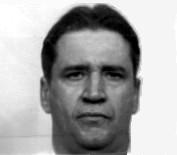
David Kevin Hocker
Murderer Russell Ellwood
Murderer · USA · 1991
Russell Ellwood was a former taxi driver. Authorities suspected him of killing…
20 victims
Russell Ellwood
Murderer · USA · 1991
Russell Ellwood was a former taxi driver. Authorities suspected him of killing…
20 victims
 Robert Martines Perez
Murderer · USA · 1994
Name: Robert Martines Perez · Other name used in proceedings: Robert Martinez P…
15 victims
Robert Martines Perez
Murderer · USA · 1994
Name: Robert Martines Perez · Other name used in proceedings: Robert Martinez P…
15 victims
 Billy Frank Vickers
Murderer · USA · 1993
Billy Frank Vickers Vickers was executed by lethal injection in Texas on Januar…
14 victims
Billy Frank Vickers
Murderer · USA · 1993
Billy Frank Vickers Vickers was executed by lethal injection in Texas on Januar…
14 victims
 Christian Brando
Homicide · USA · 1990
Christian Brando pled guilty to manslaughter. Christian Brando (May 11, 1958 –…
1 victim
Christian Brando
Homicide · USA · 1990
Christian Brando pled guilty to manslaughter. Christian Brando (May 11, 1958 –…
1 victim
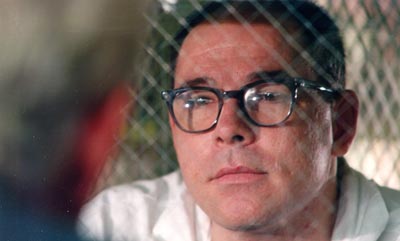 Clifford Boggess
Murderer · USA · 1986
Clifford Boggess was convicted of murdering Moses Frank Collier, an 86-year-old…
2 victims
Clifford Boggess
Murderer · USA · 1986
Clifford Boggess was convicted of murdering Moses Frank Collier, an 86-year-old…
2 victims
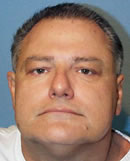 Jack Harrison Trawick
Serial killer · USA · 1972
Jack Harrison Trawick (male; W; gender M) Trawick was executed by lethal inject…
14 victims
Jack Harrison Trawick
Serial killer · USA · 1972
Jack Harrison Trawick (male; W; gender M) Trawick was executed by lethal inject…
14 victims
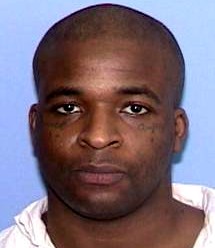 Demetrius Wayne Smith
Murderer · USA · 2005
Demetrius Wayne Smith (also listed as Demetrius Dewayne Smith) was sentenced to…
2 victims
Demetrius Wayne Smith
Murderer · USA · 2005
Demetrius Wayne Smith (also listed as Demetrius Dewayne Smith) was sentenced to…
2 victims
 Jieming Liu
Murderer · USA · 2012
Jieming Liu was a 79-year-old man from Shrewsbury. His wife, Yuee Zhou, was 73…
1 victim
Jieming Liu
Murderer · USA · 2012
Jieming Liu was a 79-year-old man from Shrewsbury. His wife, Yuee Zhou, was 73…
1 victim
- Gender
- male
- Country
- USA
- Location
- Houston County, Alabama, USA
- Date of birth
- May 20, 1971
- Age at first offence
- 27
- Characteristics
- drugs
- Victim profile
- Jerry Wayne Robinson, 47 ( his boss )
- Method of murder
- St abbing with knife
- Date(s) of murder
- March 21, 1998
- Years active
- 1998
- Date of arrest
- Same day (surrenders)
- Status
-
Executed
Executed by lethal injection in Alabama on September 30, 2004
Case record: David Kevin Hocker
Timeline
- March 21, 1998 — David Kevin Hocker stabbed and beat his boss, Jerry Wayne Robinson, to death during a trip that Hocker induced by ruse; Hocker used Robinson’s green truck, ATM card and cash, withdrew cash to purchase crack cocaine, and left the truck and ran through the woods.
- March 23, 1998 — Detective Lark Huber interviewed Hocker at the Mobile Metro Jail at approximately 2:45 p.m.; Sergeant Donald Valenza went to the Mobile Metro Jail to pick up Hocker.
- April 2002 — The Alabama Court of Criminal Appeals rejected Hocker’s appeal.
- September 30, 2004 — Hocker was executed by lethal injection in Alabama.
Background
David Kevin Hocker lived in a motel and did not have a car. Hocker asked his boss, Jerry Wayne Robinson, to drive him to run an errand.
Hocker’s victim, Jerry Wayne Robinson, owned a small business in Houston County, Alabama. Hocker worked for Mr. Robinson and had worked for Robinson’s structural steel detailing company.
Hocker was 33 years old at the time of the 1998 murder and robbery and at the time of execution.
Hocker’s mother was Patricia Yeomans. Hocker’s stepfather was George Larry Yeomans. Hocker’s sister was Kim Osborn, described as a speech pathologist.
The offence
On March 21, 1998, Hocker and Jerry Wayne Robinson were together and were seen by Robinson’s wife at West Building Supply in Dothan, Alabama; this was described as the last time Robinson’s wife saw her husband alive.
Hocker stabbed and beat Robinson to death with a knife. Hocker dumped Robinson’s body in Henry County, Alabama, in a wooded area in Headland as later located by investigators after Hocker’s arrest and statements.
A sentencing summary prepared by the trial court described the following sequence:
- Hocker and Robinson went to West Building Supply to purchase materials to build a fence.
- Hocker later dumped the building materials in a ditch.
- Hocker intended to kill Jerry Robinson at his office but a co-owner was present.
- By ruse, Hocker talked Jerry Robinson into going with him to Henry County to pick up a microwave oven.
- While in the truck, Hocker stabbed Jerry Robinson in the chest, drove to a remote area and dragged Jerry Robinson from the vehicle.
- Hocker then beat and stomped Jerry Robinson, causing “over thirty contusions, scrapes and cuts.”
- The Adam’s apple was broken, and there was a fracture of the thyroid cartilage.
- According to forensic pathologist Dr. Parades, Jerry Robinson remained alive during the beating and was able to feel pain, but the stab wound to the chest was described as the lethal wound.
Hocker stole Jerry Robinson’s green truck, ATM card and cash. The summary stated that after several withdrawals through the victim’s ATM card, Hocker purchased $400.00 in crack cocaine and drove to Mobile, Alabama. While on crack, Hocker believed the police were chasing him, abandoned the truck, and ran through the woods causing numerous scratches to his face.
Hocker later rented a motel room in Mobile and called 911 to turn himself in. He then gave statements to the Mobile County Sheriff’s Department and Sergeant Valenza confessing to the crime.
In statements made during the criminal proceedings, Hocker claimed that Robinson made sexual advances toward him, which caused Hocker to stab the victim. Three witnesses testified that Jerry Robinson was not homosexual, and that he was a married man with two children.
Investigation
Sergeant Donald Valenza of the Houston County Sheriff’s Department received a call from the Mobile County Sheriff’s Department informing him that Mobile had Hocker in custody. Valenza went to Mobile and took a statement from Hocker in which Hocker admitted killing Jerry Robinson by stating that he had broken a knife off in his chest.
Valenza transported Hocker back to Houston County and made arrangements with the Headland Police Department to locate the body. Hocker took the officers to the body, which was located in Henry County, Alabama.
Detective Lark Huber of the Mobile County Sheriff’s Department and an Alabama Bureau of Investigation agent interviewed Hocker at the Mobile Metro Jail at approximately 2:45 p.m. on March 23, 1998. During the suppression hearing:
- Huber testified that she advised Hocker of his rights and that Hocker waived those rights and answered questions about the offense.
- Huber stated that Hocker did not appear to be under the influence of alcohol or drugs when she interviewed him and did not appear to be hallucinating; she also stated he was not hyperactive at that time.
- Huber testified that Hocker had stated that he had used crack cocaine after he had killed the victim, but had stated that he had not obtained the crack cocaine in Mobile County.
- Huber testified that Hocker stated that approximately 24 hours before the interview he had been hallucinating and running through the woods in Mobile County.
During the suppression hearing, Valenza testified that while he was at the jail in Mobile he advised Hocker of his rights; Hocker waived his rights and agreed to talk to him. Valenza and Hocker talked about the case as Valenza drove back to the Dothan area.
Valenza testified that when making his statement, Hocker mentioned that he had taken some crack during the time that he had the victim’s truck.
Valenza testified that, based on his experience working narcotics cases for seven or eight years, Hocker did not appear to be under the influence of crack cocaine at the time he made his statement. Valenza stated that:
- his speech was not slurred,
- his motor movement was not impeded,
- he was not violent, and
- he did not appear to be hallucinating. Valenza also stated that Hocker appeared aware of his surroundings and who Valenza was, spoke coherently and intelligently, and did not give any indication that he did not understand his rights or what he was saying.
The defense did not present evidence during the suppression hearing and argued that the trial court should suppress the statements based on a significant amount of drug usage.
Arrest
Hocker was observed driving Robinson’s truck and was consequently arrested two days after the murder. After the arrest, Hocker led investigators to Robinson’s body in a wooded area in Headland.
Hocker called 911 to turn himself in after renting a motel room in Mobile.
Trial
Hocker was convicted of capital murder for the killing of Jerry Wayne Robinson. The murder was made capital because Hocker committed it during the course of a first-degree robbery, under § 13A-5-40(a)(2), Ala. Code 1975.
After a sentencing hearing, the jury recommended by a vote of 10-2 that Hocker be sentenced to death. The trial court accepted the jury’s recommendation and sentenced Hocker to death.
The appellant filed a motion for a new trial, which the trial court denied after conducting a hearing.
During the trial, Hocker admitted killing Robinson. He told the judge: “I’m guilty”.
Sentencing
Hocker was sentenced to death by the trial court. The Court of Criminal Appeals affirmed the conviction and sentence of death.
The appeal record included discussion of pretrial media coverage, venue prejudice, prosecutor’s striking reasons described as race neutral, admission of collateral bad act evidence, and whether prior intoxication rendered statements to police inadmissible.
In the suppression issues described in the appeal:
- Huber testified to advising rights, waiver, and her observations of Hocker’s condition at the interview.
- Huber testified to Hocker’s admissions and descriptions of hallucinations and movements in the woods after the killing.
- Valenza testified similarly about rights waiver and observations of Hocker’s condition during the drive back.
The appeal included quoted statements attributed to Hocker. Huber testified that after Hocker admitted killing the victim, Hocker stated:
“Then I did about four hundred dollars worth of crack cocaine and drove and drove.... I was hallucinating because of all of the crack. I pulled off the Interstate and found a dirt road and left the truck at the end. I then ran through the woods all night. I thought that the police were after me.”
Huber also testified that Hocker stated he had spent the night at a motel in Mobile.
Valenza testified that Hocker made the following statement:
“I was hallucinating. I smoked three hundred dollars worth of crack cocaine within five hours. I thought the law was behind me and I freaked out, jumped out of the truck and ran through the briars. That is why I am scratched up.”
The appeal quoted legal standards regarding intoxication and admissibility and held that the drug use was a circumstance for the jury to consider rather than a factor affecting admissibility of the statement. The Court of Criminal Appeals concluded that the trial court properly denied the motion to suppress the statements.
The Court of Criminal Appeals found that the sentence was neither disproportionate nor excessive and affirmed the conviction and sentence of death.
Appeals
Hocker filed one appeal in his case, which the Alabama Court of Criminal Appeals rejected in April 2002.
Citations included:
- Hocker v. State, 840 So.2d 197 (Ala. Crim. App. 2002) (Direct Appeal)
- The case was described as: Defendant was convicted in the Henry Circuit Court, No. CC-99-124, Larry K. Anderson, J., of capital murder and sentenced to death; the appellate court affirmed.
The Court of Criminal Appeals decision concluded:
- “AFFIRMED.”
Hocker waived further appeals.
Outcome
Hocker was executed by lethal injection in Alabama on September 30, 2004.
In execution-day events:
- Hocker said a final prayer and was put to death for the 1998 stabbing death of his boss.
- Hocker refused to file appeals of his conviction, saying he was guilty and wanted to die for his crime.
When Holman prison warden Grantt Culliver asked if he had any final words, Hocker said:
“I swear by you, Lord Jesus Christ my savior that my time should be no longer. The mystery of life shall be finished. Amen.”
Hocker was strapped to a hospital gurney, then said a few quiet words to officers standing beside him in the execution chamber at Holman Prison and stared at the ceiling as he was injected with a combination of drugs that ended his life. Hocker’s mother Patricia Yeomans watched from the witness room, about 15 feet away, and sobbed quietly.
Hocker refused to eat anything during the day Thursday. He had requested a last meal of frankfurters, french fries, American cheese, mustard and chocolate cake with chocolate icing, but he refused to eat when the meal was presented at about 2:30 Thursday afternoon.
Hocker left his mother and stepfather assorted food items and a check for 87 cents, described as the amount of money he had left in an account prisoners use to buy snacks and other items. Hocker gave a radio and headset and food items to death row inmate Rayford Hagood.
No members of Robinson’s family attended the execution. Hocker’s stepfather, George Larry Yeomans, sat beside Patricia Yeomans and put his arm on her shoulder and comforted her during the execution.
Hocker spent two and a half hours Thursday visiting with his mother and stepfather.
A statement from Patricia Yeomans released after the execution said:
“Once Kevin started reading the Bible his anger just disappeared. He became positive about his life.”
Patricia Yeomans had made arrangements for a Daphne funeral home to pick up Hocker’s body after forensic examinations were completed.
Other details
Hocker’s conviction and death sentence were described as involving a robbery during the course of the capital murder: the murder was made capital because Hocker committed it during the course of a first-degree robbery.
Hocker had been working for Robinson’s structural steel detailing company.
A sentencing summary described that during the period when Hocker was on crack, he believed police were chasing him and abandoned the truck and ran through the woods causing numerous scratches to his face.
During proceedings described, the appeal addressed Hocker’s claim that he had hallucinated and had taken crack close to the time of his statements; officers testified he did not appear to be hallucinating at the interview and that his speech was not slurred and his motor movement was not impeded.
The appeal noted that the Legislature had defined “intoxication” to include “a disturbance of mental or physical capacities resulting from the introduction of any substance into the body.” The appeal also quoted the principle:
“Intoxication, short of mania or such impairment of the will and mind as to make an individual unconscious of the meaning of his words, will not render a statement or confession inadmissible.”
The appeal also stated that the voluntariness of an alleged confession was a question of law addressed to the trial court and cited cases about when intoxication could render a confession inadmissible.
The execution reporting described that Hocker was the second death row inmate executed in Alabama this year, and the 30th since the U.S. Supreme Court reinstated the death penalty in 1977. It also described Hocker as the sixth Alabama inmate executed since the state switched its primary method of execution from the electric chair to lethal injection in 2002.
The reporting also stated Hocker had received outside medical treatments twice in 2003; a corrections spokesman said the reason was not disclosed due to privacy laws.
The reporting also described statements from Hocker’s relatives about his mental health and drug abuse, including:
- Patricia Yeomans stating Hocker had peace on death row after a troubled life of mental problems and drug abuse.
- Patricia Yeomans stating Hocker’s father committed suicide when Hocker was 8 years old.
- Kim Osborn telling The News that Hocker adopted a form of Christianity that led him to believe he would be a leader in the afterlife and that this belief led Hocker to castrate himself in his death-row cell to control sexual urges.

Spotted an error, or have more information about this case?