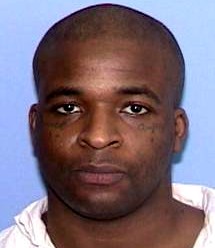
Demetrius Wayne Smith
Murderer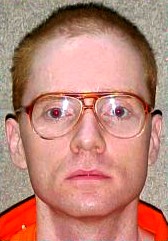 Robert Glen Jones
Murderer · USA · 1996
Defendant: Robert Glenn Jones (ADC#070566) · Co-defendant: Scott Nordstrom (ADC…
7 victims
Robert Glen Jones
Murderer · USA · 1996
Defendant: Robert Glenn Jones (ADC#070566) · Co-defendant: Scott Nordstrom (ADC…
7 victims
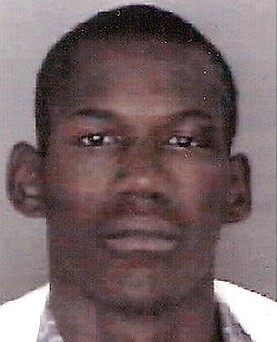 Joshua Wayne Andrews
Murderer · USA · 2000
Joshua Wayne Andrews was a serial killer accused of killing several people in V…
5 victims
Joshua Wayne Andrews
Murderer · USA · 2000
Joshua Wayne Andrews was a serial killer accused of killing several people in V…
5 victims
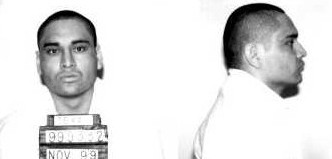 Juan Carlos Alvarez
Murderer · USA · 1998
Juan Carlos Alvarez, born on March 9, 1977, in San Luis, Mexico, was a Hispanic…
5 victims
Juan Carlos Alvarez
Murderer · USA · 1998
Juan Carlos Alvarez, born on March 9, 1977, in San Luis, Mexico, was a Hispanic…
5 victims
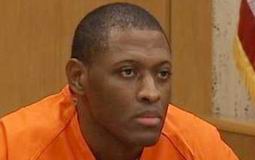 Leon Davis Jr.
Murderer · USA · 2007
Leon Davis Jr. was sentenced to death on April 29, 2011, for the execution-styl…
5 victims
Leon Davis Jr.
Murderer · USA · 2007
Leon Davis Jr. was sentenced to death on April 29, 2011, for the execution-styl…
5 victims
 Banita Jacks
Murderer · USA · 2007
Banita Jacks was a Washington, DC resident convicted of murdering her four daug…
4 victims
Banita Jacks
Murderer · USA · 2007
Banita Jacks was a Washington, DC resident convicted of murdering her four daug…
4 victims
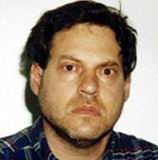 Robert Yale Shulman
Serial killer · USA · 1991
Robert Yale Shulman (March 28, 1954 – April 13, 2006) was an American serial ki…
5 victims
Robert Yale Shulman
Serial killer · USA · 1991
Robert Yale Shulman (March 28, 1954 – April 13, 2006) was an American serial ki…
5 victims
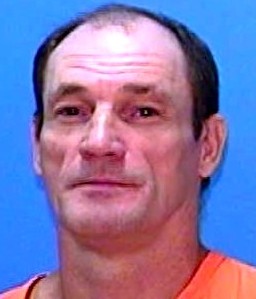 Charles Globe
Murderer · USA · 2000
Charles Globe was an inmate in Columbia Correctional Institution in July of 200…
1 victim
Charles Globe
Murderer · USA · 2000
Charles Globe was an inmate in Columbia Correctional Institution in July of 200…
1 victim
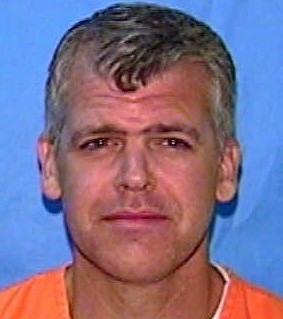 Jeffrey Hutchinson
Mass murderer · USA · 1998
Jeffrey Hutchinson was born on 11/06/62. On May 24, 1999, Hutchinson was diagno…
4 victims
Jeffrey Hutchinson
Mass murderer · USA · 1998
Jeffrey Hutchinson was born on 11/06/62. On May 24, 1999, Hutchinson was diagno…
4 victims
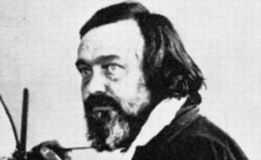 Richard Dadd
Homicide · United Kingdom · 1843
Richard Dadd was found unfit to plead and was sent to Bethleham Hospital at Sou…
1 victim
Richard Dadd
Homicide · United Kingdom · 1843
Richard Dadd was found unfit to plead and was sent to Bethleham Hospital at Sou…
1 victim
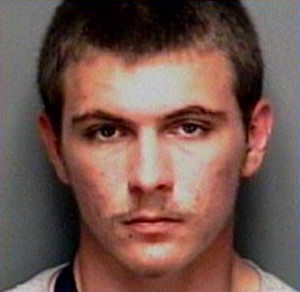 Blake Stryker
Homicide · USA · 2006
Blake Stryker was a 17-year-old high school student at Boca Ciega High School w…
1 victim
Blake Stryker
Homicide · USA · 2006
Blake Stryker was a 17-year-old high school student at Boca Ciega High School w…
1 victim
- Gender
- male
- Country
- USA
- Location
- Harris County, Texas, USA
- Date of birth
- May 13, 1977
- Age at first offence
- 28
- Characteristics
- mentally ill, rape?, dismemberment, drug addict
- Victim profile
- Tammie White and her daughter Kristina, 11
- Method of murder
- Shooting
- Date(s) of murder
- March 24, 2005
- Years active
- 2005
- Date of arrest
- Same day
- Status
-
Sentenced to death
Sentenced to death on July 5, 2006
Case information
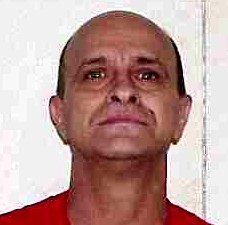
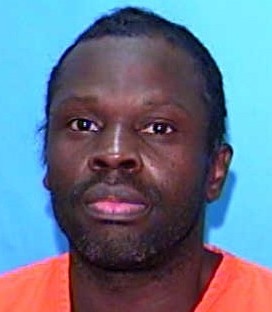
Demetrius Wayne Smith (also listed as Demetrius Dewayne Smith) was sentenced to death on July 5, 2006.
Background
Smith had a prior prison record: TDCJ #715810 on a five year sentence for possession of a controlled substance from Harris County. Smith had education level “08”.
The offence
On March 24, 2005, in Harris County, Smith entered the home of a Black female and shot her three times at close range, resulting in her death.
The victim’s daughter, an eleven-year-old Black female, ran from the residence. Smith followed her and fatally shot her.
Smith’s conduct resulted in two deaths during the same criminal transaction, and he was convicted in June 2006 of capital murder under Tex. Penal Code §19.03(a). Specifically, the conviction relied on murdering more than one person during the same criminal transaction under Tex. Penal Code §19.03(a)(7)(A).
Smith had been dating Tammie White, a mother of three who was separated from her husband. Appellant and White broke up in late January or early February of 2005.
At approximately 3:15 p.m. on March 24, 2005, Smith called White on her cell phone as she, her mother, and her sister were going to the hospital to visit a relative. Smith told White:
“You think I'm playing with you, bitch? You're going to die today.”
White held the phone so her mother and sister could hear the threats. White hung up and Smith immediately called back, but White would not speak to him. White was not concerned about the calls.
A neighbor reported that earlier on the same day, she witnessed Smith climbing over White's patio fence. White was not home, and Smith appeared to be locked out. Then around 3:00 p.m., she saw Smith again, sitting on White’s porch, but White’s car was gone at the time.
Later that same day, White was home with her eleven-year-old daughter, Kristina. Kristina was playing with neighborhood friends on the front porch, while White was in the back bedroom talking on the phone with her sister, Katherine.
At approximately 6:00 p.m., Smith came up to the door. Kristina tried to stop him from entering her home, but Smith pushed her out of the way and went inside. Smith went to the back bedroom. Over the phone, Katherine twice heard White say:
“[Appellant], don't play with me.”
Katherine then heard gunshots and the phone went dead.
Smith shot White in the chest, neck, and head at close range. Kristina followed Smith inside and got a knife from the kitchen. Immediately following the gunshots, Kristina came back out and told the other children that Smith had shot her mom and to run. Kristina ran around a car, dropped the knife, and got down in a ball, covering her head with her hands to protect herself.
Within a minute, Smith came out of the house and approached Kristina. He then shot her twice, once through the top of the head, before running off. As he was leaving, witnesses heard Smith say that now he was going to get Tamara, referring to Kristina's fourteen-year-old sister who was not home at the time.
Tamara had been taken into protective custody following the threat to her life and remained unharmed. Smith was apprehended shortly thereafter.
The jury’s answers to the special issues set forth in Texas Code of Criminal Procedure article 37.071 §§2(b) and 2(e) resulted in a death sentence imposed by the trial judge (art. 37.071 §2(g)).
Investigation and arrest
Smith was apprehended shortly after the shootings.
Trial
Charge and plea
Smith was arraigned. After reading the indictment, the trial court asked:
“All right. [Appellant], to the offense of capital murder, how do you plead, guilty or not guilty?”
Smith pleaded “not guilty.”
Indictment and amendment dispute
On March 25, 2005, Smith was charged by complaint with capital murder alleging that Smith unlawfully, during the same criminal transaction, intentionally and knowingly caused the death of KRISTINA HARRIS by shooting her with a deadly weapon, namely a firearm, and intentionally and knowingly caused the death of TAMMIE HARRIS by shooting her with a deadly weapon, namely a firearm.
On May 23, 2005, Smith was indicted by the grand jury. The title area listed the felony charge as “CAPITAL MURDER”. The body alleged that Smith knowingly caused the death of KRISTINA HARRIS and TAMMIE HARRIS by shooting each with a deadly weapon, namely a firearm, in a single paragraph.
On August 16, 2005, the State served its “Notice of Intent to Seek the Death Penalty.”
On May 4, 2006, Smith filed a Motion to Set Aside the Indictment because the Texas death penalty scheme is unconstitutional; he also filed a motion to declare the Texas death penalty scheme unconstitutional and to preclude imposition of the death penalty. These motions were denied during the initial pre-trial hearing on May 4, 2006.
On May 5, 2006, the trial court heard the State’s request to amend the indictment to insert the phrase “during the same criminal transaction.” Smith objected, arguing the indictment could not be amended under Article 28.10 because the amended indictment would charge an offense not charged in the original indictment, transforming the charged offense from two separate counts of murder to one count of capital murder. The trial court overruled the objection but allowed leave to file a motion to quash.
The amended indictment read: The duly organized Grand Jury of Harris County, Texas, presents in the District Court of Harris County, Texas, [Appellant], hereafter styled the Defendant, heretofore on or about March 24, 2005, did then and there unlawfully, during the same criminal transaction , intentionally and knowingly cause the death of KRISTINA HARRIS by SHOOTING KRISTINA HARRIS WITH A DEADLY WEAPON, NAMELY A FIREARM, and intentionally and knowingly cause the death of TAMMIE HARRIS by SHOOTING TAMMIE HARRIS WITH A DEADLY WEAPON, NAMELY A FIREARM.
Smith’s written motion argued that the indictment alleged two separate murders which would not support a death sentence; and that although the offenses were improperly joined, it was a valid indictment presenting two non-capital offenses. The motion also argued that an amendment to indict Smith for capital murder violated his substantial rights to a grand jury and due process. The trial court denied the motion.
Jury selection issues (challenges for cause)
Smith appealed challenges to the prosecution’s challenges for cause to ten venire members.
The appellate court described the applicable standard under Witherspoon v. Illinois and Adams v. Texas, including that a veniremember who could set aside beliefs against capital punishment and honestly answer special issues could not be challenged for cause, while a veniremember could be challenged if beliefs would prevent or substantially impair performance as a juror in accordance with instructions and oath.
Juan Corral (Point of error four) Corral stated on his written juror questionnaire that he had “mixed feelings” about the death penalty and his answers were conflicting. During voir dire, the trial court asked:
“[COURT]: Bottom line is this: Anything religiously or morally that would prevent you from answering these questions in such a way that you would know that I would impose the death penalty as punishment in a capital murder case?”
Corral responded:
“[Juror]: Religiously, I guess, I am against it.”
The trial court asked:
“[COURT]: Is there something about your religious belief that you could not participate as a juror in a case like this knowing the way you answered those questions could require me to impose death upon [appellant]?”
Corral responded:
“[Juror]: Yeah, I guess, yes.”
After the State’s voir dire, Corral said he could not participate, and he stated:
“[Juror]: No.”
When the State asked about conscientious scruples in regards to infliction of punishment of death:
“[Juror]: Yes.”
The trial court then granted the State’s challenge for cause. Defense counsel did not attempt to rehabilitate Corral.
James Pettitt, Jr. (Point of error five) Pettitt was 65 and a retiree and veteran of the Vietnam War. He stated that he believed in the death penalty as valid punishment for capital murder, but later equivocated. The State asked:
“[State]: And I want to ask you whether you personally can sit on this jury knowing that if you find him guilty and I prove to you beyond a reasonable doubt he committed the crime, and if you have evidence such that convinces you beyond a reasonable doubt that the answer to Issue No. 1 is yes, and you believe that the answer to Issue No. 2 should be no, then he's sentenced to die by lethal injection. Can you participate in this process?”
Pettitt responded:
“[Juror]: It's very difficult. * * *”
Pettitt ultimately said:
“[Juror]: I don't think so.”
Under further questioning, he stated:
When the trial court asked whether Pettitt would violate his conscience if serving on the jury would result in sentencing Smith to death:
“[COURT]: Okay. You said "I think," would it?”
Pettitt answered:
“[Juror]: Yes. * * * I guess it's because I've been through this Vietnam thing and whatever else.”
Defense counsel asked whether Pettitt could answer issues honestly based on evidence:
“[Defense]: But you could answer those issues?”
“[Juror]: Sir?”
“[Defense]: You could honestly answer those issues based upon the evidence?”
“[Juror]: I'm sure I could, yes.”
Pettitt further stated he did not want to participate in this type of trial. The appellate court concluded the trial court did not abuse its discretion.
Beverly Calhoun (Point of error six) Calhoun said her religious beliefs would prevent her from sentencing someone to death and she would not be able to give a death sentence. The appellate court held the trial court did not abuse its discretion.
Juanita Prieto (Point of error seven) Prieto stated she did not feel she could judge a death-penalty case and that she should not have the death penalty “on her hands.” She told the trial court:
“I don't think I'm comfortable making the decision or answering [in a way] that will basically have you sentence him to death.”
She also said she could not sleep at night knowing her answers caused a death sentence to be imposed, violating her conscience. When asked if she had moral, religious, or conscientious objections, she answered “Yes.” The trial court granted the State’s challenge for cause.
Craig Fronckiewicz (Point of error eight) Fronckiewicz consistently stated he would seek mitigating factors to ensure a life sentence and would always find sufficient mitigating circumstance based on his understanding of appellant’s young age. The trial court questioned him, asking whether he would always say any mitigating circumstance would be sufficient. In response, Fronckiewicz said:
“[Juror]: I would say that's a fair way of saying it. I think to be - almost anything that would allow me to say yes to the second question.”
The appellate court held the challenge for cause was within the trial court’s discretion.
Hubertus Thomeer (Point of error nine) Thomeer stated that due to religion he would be unable to answer special issues so the death penalty would be imposed. The trial court asked:
“[COURT]: Because of your religious and moral beliefs, would you answer these questions in such a way that [appellant] got life instead of death?”
Thomeer responded:
The appellate court held no abuse of discretion.
Donna Frac (Point of error ten) Frac stated in her juror questionnaire:
“I don't feel that I can be truly honest with my feeling regarding capital murder.”
During individual voir dire, she agreed it would violate her conscience, morals, or religion to participate in the death-penalty process. She said she did not “feel comfortable in making the decision in a death decision of someone” and she did not think she could “ultimately make that decision.” The trial court asked:
“[COURT]: Hypothetically, if you were to sit on this jury, do you think that you would be inclined to answer these questions in such a way that the Defendant got life instead of death?”
Frac answered:
“[Juror]: Yes, yes.”
Timothy Towsen (Point of error eleven) Towsen stated it would violate his conscience to sit on the jury in a death-penalty case. When asked to answer the special issues knowing Smith could receive the death penalty, Towsen responded:
“[Juror]: I can't.”
Matthew Stringer (Point of error twelve) Stringer stated in his juror questionnaire:
“If this is a murder trial, I couldn't [be a juror] [be]cause the talk of death in any way make[s] me uncomfortable.”
During individual voir dire, he stated he was morally and conscientiously opposed to the death penalty even in an appropriate capital-murder case. The trial court granted the State’s challenge for cause.
Patricia Cruz (Point of error thirteen) Cruz stated in her written questionnaire:
“We do not have the right to terminate God's life expectancy of that person,”
and that she was opposed to capital punishment under any circumstances.
When she entered for individual voir dire, she said:
“I plead the Fifth Amendment.”
She indicated she was against the death penalty for religious and conscientious reasons and had objections to imposition of the death penalty in an appropriate capital-murder case. The trial court granted the State’s challenge.
Lesser-included offense charge request (Points of error fourteen and fifteen)
Smith argued he was entitled to a jury instruction on the lesser-included offense of murder. He argued the jury could have found the two deaths did not occur in the “same transaction,” claiming the evidence showed White’s murder was his objective and that the child’s death was a separate transaction. He argued the jury could have believed he killed Kristina only because she threatened him with a knife, so the two murders were not the product of the same transaction.
The appellate court found there was no evidence Kristina threatened Smith with the knife or that he was aware she had the knife. The court also concluded that even if White had been the original objective, there was no evidence he did not kill Kristina during “a continuous and uninterrupted chain of conduct occurring over a very short period of time . . . in a rapid sequence of unbroken events.” The trial judge did not err in refusing the instruction.
Definition of “same criminal transaction” (Points of error sixteen and seventeen)
Smith argued the trial court erred in failing to define “same criminal transaction” in the jury charge, asserting it was vague and inconsistently applied. The appellate court held that the term was not statutorily defined and jurors were presumed to use their common understanding; it also held any error would not have contributed beyond a reasonable doubt.
Admission of penitentiary packets; Confrontation Clause issues (Points of error eighteen and nineteen)
Smith argued State’s Exhibits 73 and 74 violated the Sixth Amendment right to confront and cross-examine witnesses. The appellate court agreed that admission of certain portions violated the Sixth Amendment but held Smith was not harmed.
State’s Exhibits 73 and 74 were penitentiary packets containing “TDCJ-ID disciplinary report and hearing records” regarding Smith’s conduct within the prison population during previous incarcerations. The trial court admitted them under the business records exception to the hearsay rule (Tex. R. Evid. 803(6)). Offense descriptions were read aloud to the jury at the punishment phase.
The appellate court explained that jail records containing specific incident reports written by corrections officers were testimonial and inadmissible when officers did not testify. The court held only portions containing testimonial statements were inadmissible. It found most parts contained bare-bones recitations of infractions or trivial non-violent violations including:
- failure to show up for work assignments,
- failure to show up for medical appointments,
- being in a place he was not supposed to be at that time,
- and unauthorized exchange of commodities such as soup, cookies and candy.
The appellate court held two particular documents went beyond sterile descriptions and violated Smith’s rights. Those documents included descriptions of offenses copied from corrections officers’ reports, describing specific disciplinary offenses. The disciplinary offenses included fighting with another inmate in the showers and exposing himself and masturbating in front of a jailer. The individuals who supposedly observed these offenses did not testify at trial. The appellate court said the reports contained testimonial statements inadmissible under the Confrontation Clause because the State did not show declarants were unavailable and Smith had no opportunity for cross-examination. The trial court erred in admitting those portions, but Smith was not harmed beyond a reasonable doubt.
Sentencing
The jury convicted Smith of capital murder in June 2006. Based upon the jury’s answers to the special issues under Tex. Code of Criminal Procedure article 37.071 §§2(b) and 2(e), the trial judge sentenced him to death under art. 37.071 §2(g).
The court’s judgment and sentence were affirmed on direct appeal.
Appeals
The Court of Criminal Appeals of Texas reviewed twenty-six points of error and found them without merit. The court affirmed the trial court’s judgment and sentence of death.
The appellate court addressed:
- denial of Smith’s motion to quash and amendment of the indictment language “during the same criminal transaction” (Points one through three),
- challenges for cause under Witherspoon and Adams involving multiple veniremembers (Points four through thirteen),
- denial of a jury charge on lesser-included offense murder (Points fourteen and fifteen),
- failure to define “same criminal transaction” (Points sixteen and seventeen),
- Confrontation Clause objections to State’s Exhibits 73 and 74 (Points eighteen and nineteen),
- challenges to lethal-injection protocol being not ripe and not preserved (Point twenty),
- constitutional arguments about burden of proof on mitigation and instructions (Points twenty-one and twenty-two),
- constitutional challenges to article 37.071 under Eighth and Fourteenth Amendments (Points twenty-three through twenty-six),
- and arguments regarding single holdout juror and the “10-12 rule” (Point twenty-six), including referencing Mills v. Maryland and prior decisions.
The Court of Criminal Appeals’ opinion was delivered by Meyers, J., on May 6, 2009 (published).
Keasler, J., filed a concurring opinion, and Price, Womack, and Johnson, JJ., concurred.
Outcome
The Court of Criminal Appeals of Texas affirmed the trial court’s judgment and sentence of death.
Other details
Smith’s TDCJ number was 999512. His date of birth was 05/13/1977. His age at receipt was 29. His age at the offense was 27.
The record listed the county as Harris County and the state as Texas. The victim counts were two deaths: White and her eleven-year-old daughter Kristina. Two Black females were listed as victims.
The case number was No. AP-75,749 in the Court of Criminal Appeals of Texas.
The trial court’s judgment and sentence were affirmed.
Spotted an error, or have more information about this case?