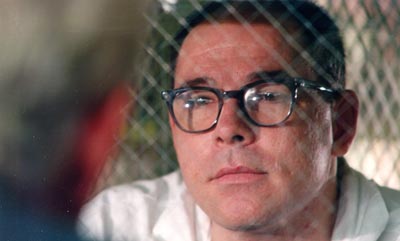
Clifford Boggess
Murderer Brian Kevin Rosenfeld
Murderer · USA · 1985
Brian Kevin Rosenfeld Brian Kevin Rosenfeld was sentenced to three concurrent l…
23 victims
Brian Kevin Rosenfeld
Murderer · USA · 1985
Brian Kevin Rosenfeld Brian Kevin Rosenfeld was sentenced to three concurrent l…
23 victims
 Yahweh ben Yahweh
Murderer · USA · 1980
Yahweh ben Yahweh was born and legally named Hulon Mitchell Jr. (October 27, 19…
23 victims
Yahweh ben Yahweh
Murderer · USA · 1980
Yahweh ben Yahweh was born and legally named Hulon Mitchell Jr. (October 27, 19…
23 victims
 Russell Ellwood
Murderer · USA · 1991
Russell Ellwood was a former taxi driver. Authorities suspected him of killing…
20 victims
Russell Ellwood
Murderer · USA · 1991
Russell Ellwood was a former taxi driver. Authorities suspected him of killing…
20 victims
 Cynthia Sommer
Justice miscarriage · USA · 2002
Cynthia Sommer was convicted of first-degree murder with the “special circumsta…
0 victims
Cynthia Sommer
Justice miscarriage · USA · 2002
Cynthia Sommer was convicted of first-degree murder with the “special circumsta…
0 victims
 Edward Lee Harper
Murderer · USA · 1982
Edward Lee Harper Jr. was executed by lethal injection in Kentucky on May 25, 1…
2 victims
Edward Lee Harper
Murderer · USA · 1982
Edward Lee Harper Jr. was executed by lethal injection in Kentucky on May 25, 1…
2 victims
 John Salvi
Murderer · USA · 1994
John C. Salvi III (March 2, 1972 – November 29, 1996) was identified as an anti…
2 victims
John Salvi
Murderer · USA · 1994
John C. Salvi III (March 2, 1972 – November 29, 1996) was identified as an anti…
2 victims
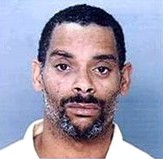 Juan Covington
Serial killer · USA · 1998
Juan Covington was an American serial killer in Philadelphia, Pennsylvania. Cov…
3 victims
Juan Covington
Serial killer · USA · 1998
Juan Covington was an American serial killer in Philadelphia, Pennsylvania. Cov…
3 victims
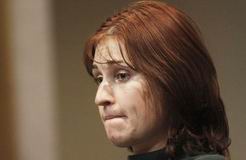 Holly Grigsby
Murderer · USA · 2011
Holly Grigsby was sentenced to life in prison without parole on July 15, 2014.…
4 victims
Holly Grigsby
Murderer · USA · 2011
Holly Grigsby was sentenced to life in prison without parole on July 15, 2014.…
4 victims
- Gender
- male
- Country
- USA
- Location
- Montague County, Texas, USA
- Date of birth
- J une 11, 1965
- Age at first offence
- 21
- Characteristics
- robbery, alcohol, drug addict, history of mental illness, abuse
- Victim profile
- Moses Frank Collier (male, 86) / Ray Hazelwood (male)
- Method of murder
- St abbing with knife / Shooting
- Date(s) of murder
- July 23, 1986 / August 1986
- Years active
- 1986
- Date of arrest
- —
- Status
-
Executed
Executed by lethal injection in Texas on June 11, 1998
Case details
Clifford Boggess was convicted of murdering Moses Frank Collier, an 86-year-old white male grocery and produce store owner in Saint Jo, and was sentenced to death.
Boggess was also serving a life sentence at the time of the current offence, following his prior murder conviction from Grayson County.
Boggess executed on June 11, 1998 in Texas.
Timeline
- 07/23/1986 — Boggess beat and stabbed Moses Frank Collier to death during a grocery store robbery in Saint Jo, netting him $700.
- 06/11/1998 — Boggess was executed by lethal injection in Texas.
- 06/11/1998 — Boggess turned 33 on the day of his execution.
Background
Clifford Boggess was born on 06/11/1965. He received in TDCJ on 10/23/1987 and was 22 at the time of receipt. He had education level 12.
He was white, male, with red hair. He was 6 ft 2 in tall and weighed 232. His eye color was brown.
Boggess was from Brunswick, Georgia, where he worked as a carpenter's helper and as a bookkeeper.
He had a prior prison record: #441810 on a life sentence for Murder from Grayson County. The current offence was committed prior to Boggess being received by the TDCJ-ID for the murder conviction from Grayson County.
He described himself as a “blackout alcoholic” by age 21 after turning to drugs and alcohol. He said he went “hog wild” after completing high school, lasted a year in the Army, and was booted out. He also said his discovery of Catholicism helped him go ahead with the execution.
The offence
Boggess murdered the 86-year-old white male owner of a grocery and produce store in Saint Jo.
The victim was beaten and stabbed to death. Boggess left the scene with approximately $700. A customer found Collier’s body later that day in a back room of his store.
Collier’s throat had been cut and there were numerous wounds on his face, including the imprint of a tennis shoe. Police said 1 of Collier’s pants pockets was turned inside out and covered with blood. Investigators found $950 in cash in Collier’s back pocket that Boggess had overlooked.
A month after the Collier killing, Boggess used a shotgun to kill another man, Ray Hazelwood of Whitesboro, in a $400 robbery. He received a life prison term after pleading guilty to that slaying.
Boggess was sentenced to death for the July 23, 1986 beating and stabbing death of 86-year-old Moses Frank Collier during a grocery store robbery in Saint Jo that netted him $700.
Investigation
His throat had been cut and there were numerous wounds on his face, including the imprint of a tennis shoe.
Trial
Boggess was sentenced to death for the July 23, 1986 murder of Moses Frank Collier, 86, who owned Collier Grocery and Produce Store in Saint Jo.
He asked that no additional appeals be filed on his behalf and asked that he receive lethal injection on his 33rd birthday.
Sentencing
Boggess was sentenced to death for the July 23, 1986 beating and stabbing death of Moses Frank Collier during a grocery store robbery in Saint Jo that netted him $700.
Appeals
Boggess asked that no additional appeals be filed to stop the lethal injection. The execution date was set on his birthday after the court in Montague County agreed.
The final account included that his last appeal was denied by the Supreme Court.
Outcome
Boggess was executed by lethal injection in Texas on June 11, 1998.
His execution time included the following last statement and last words:
“I’d like to say that for the murders of Ray Hazelwood and Frank Collier, I’m sorry for that pain it has caused you. To my friends, I’d like to say that I love you and I’m glad you’ve been a part of my life. Thank you. I’ll miss you. Remember that today I’ll be with Jesus in paradise. I’ll see you again. Lord Jesus Christ, son of Almighty God, [have] mercy on me as a sinner, forgive me of my sins. I would like to offer up my death for the conversion of sinners on Death Row. Lord Jesus, into your hands I command my spirit.”
Clifford Boggess smiled, greeted witnesses with a cheerful “Hi!” and apologized for the murders before he was given a lethal dose of drugs.
“I'm sorry for the pain I've caused you,” were his last words to 2 relatives of a victim.
Then the born-again Christian began praying,
“for the conversion of sinners on death row.”
The account also included:
“It doesn’t make it feel any better, his apology,” said Lisa Jones, whose grandfather, Joe Hazelwood, was killed.
Boggess planned something elaborate, including remarks against the Death Penalty, and he planned to sing a song, lying on the execution gurney: “Because Christ Lived.” The Chaplain persuaded him to keep it simple.
He arranged by mail to have a small-town Texas mortuary pick it up and cremate it, then the ashes were mailed to England so that a pen pal there would take them on to St. Remy France to scatter them at the monastery where Vincent Van Gogh had been committed for several years. Boggess paid for all this in advance with proceeds from the sale of his paintings.
Aftermath
Jack Collier, the only surviving close relative of Boggess’s first victim Frank Collier, seemed to get a little satisfaction, though he thought lethal injection “too easy.”
Lisa Hazelwood said she was relieved that Boggess was dead, but was frustrated at what seemed to be Boggess going merrily to his death.
Boggess’s adoptive mother suffered great agony throughout Boggess’s eleven years awaiting execution, with the agony relieved by his phone call to her an hour before it happened.
Boggess’s adoptive grandmother in Saint Jo told a narrator afterward that she thought he was “better off now than the living death he had on Death Row.”
Other details
Execution-day statements and conduct
Boggess was delighted to be facing the executioner’s needle.
“Everyone looks at me like I'm crazy,” said Boggess, condemned for fatally stabbing and beating the 86-year-old owner of a grocery store in Montague County during a robbery.
“But my relationship with God has become more real.”
Boggess said:
“A certain part of me now thinks its better that I die,"
and:
“Not that I think the death penalty is good. But if I can die for earthly sins, maybe it's better for eternal judgment.”
He asked that his execution date be set on his birthday and said:
“I like the idea of leaving this world on the day I came in,”
and:
“There's a nice symmetry to that. It's also the date of my birth into a new life in heaven.”
Boggess was described as being in good spirits at the execution, with a Chaplain saying they sang and joked together in the hours leading up to it.
Statements made to courts and about appeals
Boggess asked for no additional appeals and said his religious beliefs and acknowledgment that he would get no relief in the courts convinced him to go ahead with the execution.
He said:
“I know how the courts work, I know how the system works,”
“It would be foolish to kid myself and hang on to false hope right up to the last moment when I could be using this valuable time to better prepare myself to leave this earth and meet my God. And that's what I've been doing. Essentially, I went out and committed these horrible crimes in a country that has a death penalty, in a state that zealously pursues the death penalty, and I am now receiving the legal consequences of my own actions. Nobody made me do it. I voluntarily did the things I did. So no one is responsible but me. No one twisted my arm. No one held a gun to my head.”
He asked for lethal injection on his 33rd birthday and said:
“The same age as Christ when He died,”
and:
“I’d like to offer up my death for the conversion of sinners on Death Row,”
as part of his last statement.
Prior conduct and personal background as described in the account
Boggess had said he went “hog wild” after completing high school and lasted a year in the Army before he was booted out.
He said he turned to drugs and alcohol and crowds “that gave me easy access to them” and by age 21 became self-described blackout alcoholic, working odd jobs long enough to earn money to get high.
He said:
“I made a conscious decision to cease to care,”
and:
“I was fully conscious of the killings. I'm not going to use drugs or alcohol as an excuse. I was not out of my mind. I knew what I was doing.”
He also said he got about $700 in the Collier slaying.
Donations and organ transplant offer described in the account
For several years on Death Row, Boggess used the income from the sale of his paintings to sponsor a foreign orphan.
He offered to drop his court appeals and volunteer for immediate execution if his organs could be used as transplants, and pointing out that might save more lives than he took. The account included an inserted question: “Are you listening, God?”
Letter to Lisa Hazelwood and remarks attributed in the account
The account said that after one of the victim’s relatives decided to write to Boggess, Boggess spent six weeks composing a letter of “reconciliation” to answer her. It described the letter as full of apologies and expressions of remorse, and it was described as reading more like a sermon or a lecture than an apology.
People mentioned in connection with the case
- Clifford Boggess — offender; executed by lethal injection on June 11, 1998
- Moses Frank Collier — victim; 86-year-old white male grocery and produce store owner in Saint Jo; throat cut; beaten and stabbed; body found later that day in a back room of his store
- Frank Collier — referenced as part of the murders for which Boggess expressed apology in his last statement
- Ray Hazelwood — victim in the separate slaying involving a shotgun and a $400 robbery; Hazelwood of Whitesboro
- Joe Hazelwood — referenced as Lisa Jones’s grandfather who was killed
- Lisa Jones — relative mentioned; whose grandfather Joe Hazelwood was killed
- Lisa Hazelwood — relative mentioned
- Jack Collier — close relative of Boggess’s first victim, Frank Collier
- Alan Austin — mentioned in a narrative about making a film on capital punishment; “Alan Austin’s notebook on ‘The Execution’” was referenced
- Vincent Van Gogh — referenced in connection with where Boggess arranged to have his ashes scattered
- Conny Krispin — described as Boggess’s “pen-pal” from Germany who corresponded with him for eight years and visited him several times
- Carl — described as Boggess’s adoptive uncle, who had served time in California’s Folsom Prison for bank robbery and shooting a policeman
- Phil Ryan — described as one of the two Texas Rangers who worked on Boggess’s case
Spotted an error, or have more information about this case?