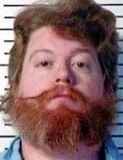
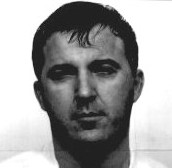
Kenneth Eugene Hogan
Murderer Brian Kevin Rosenfeld
Murderer · USA · 1985
Brian Kevin Rosenfeld Brian Kevin Rosenfeld was sentenced to three concurrent l…
23 victims
Brian Kevin Rosenfeld
Murderer · USA · 1985
Brian Kevin Rosenfeld Brian Kevin Rosenfeld was sentenced to three concurrent l…
23 victims
 Yahweh ben Yahweh
Murderer · USA · 1980
Yahweh ben Yahweh was born and legally named Hulon Mitchell Jr. (October 27, 19…
23 victims
Yahweh ben Yahweh
Murderer · USA · 1980
Yahweh ben Yahweh was born and legally named Hulon Mitchell Jr. (October 27, 19…
23 victims
 Russell Ellwood
Murderer · USA · 1991
Russell Ellwood was a former taxi driver. Authorities suspected him of killing…
20 victims
Russell Ellwood
Murderer · USA · 1991
Russell Ellwood was a former taxi driver. Authorities suspected him of killing…
20 victims
 Robert Martines Perez
Murderer · USA · 1994
Name: Robert Martines Perez · Other name used in proceedings: Robert Martinez P…
15 victims
Robert Martines Perez
Murderer · USA · 1994
Name: Robert Martines Perez · Other name used in proceedings: Robert Martinez P…
15 victims
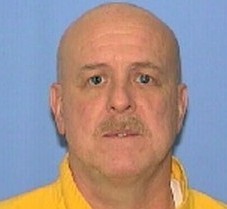 Mark Alan Smith
Serial killer · USA · 1966
Mark Alan Smith was involved in multiple killings and was sentenced to a total…
12 victims
Mark Alan Smith
Serial killer · USA · 1966
Mark Alan Smith was involved in multiple killings and was sentenced to a total…
12 victims
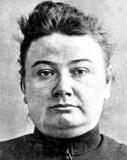 Jeanne Weber
Serial killer · France · 1905
Jeanne Weber (born 7 October 1874) was a French child-care provider and serial…
10 victims
Jeanne Weber
Serial killer · France · 1905
Jeanne Weber (born 7 October 1874) was a French child-care provider and serial…
10 victims
 Alvin Goodwin
Murderer · USA · 1986
Defendant: Alvin Goodwin Alvin Urial Goodwin III Status: Executed by lethal inj…
1 victim
Alvin Goodwin
Murderer · USA · 1986
Defendant: Alvin Goodwin Alvin Urial Goodwin III Status: Executed by lethal inj…
1 victim
 Antoinette Frank
Murderer · USA · 1995
Defendant: Antoinette Frank (born April 30, 1971) Role: New Orleans police offi…
3 victims
Antoinette Frank
Murderer · USA · 1995
Defendant: Antoinette Frank (born April 30, 1971) Role: New Orleans police offi…
3 victims
 Billy Wayne Waldrop
Murderer · USA · 1982
Name: Billy Wayne Waldrop · Case: United States Court of Appeals for the Eleven…
1 victim
Billy Wayne Waldrop
Murderer · USA · 1982
Name: Billy Wayne Waldrop · Case: United States Court of Appeals for the Eleven…
1 victim
- Gender
- male
- Country
- USA
- Location
- Oklahoma City, Oklahoma County, Oklahoma, USA
- Date of birth
- May 22, 1961
- Age at first offence
- 27
- Characteristics
- argument
- Victim profile
- Lisa Rene Stanley, 21
- Method of murder
- Stabbing with knife (25 times)
- Date(s) of murder
- January 28, 1988
- Years active
- 1988
- Date of arrest
- February 3, 1988
- Status
-
Sentenced to death
Executed by lethal injection on January 23, 2014; sentenced to death on November 9, 1988; conviction overturned in 1999 by a federal court; re-tried in 2003 and again convicted and sentenced to death
Case identifiers
- Name: Kenneth Eugene Hogan
- Caption (federal appeal): Kenneth Hogan v. Anita Trammel, Interim Warden
- Federal appellate court: United States Court of Appeals for the Tenth Circuit
- Criminal case (Oklahoma retrial): State of Oklahoma v. Kenneth E. Hogan, Case Number: CF-1988-646
- Oklahoma District Court: District Court, Oklahoma County, Oklahoma, Judge: Tammy Bass-Jones
- Oklahoma Court of Criminal Appeals case number: D-2003-610
- Direct appeal / affirmance (Oklahoma): Hogan v. State, 877 P.2d 1157 (Okla. Crim. App. 1994) (“Hogan I”); reh’g denied, 877 P.2d at 1167; cert. denied, 513 U.S. 1174 (1995)
- Post-conviction review (Oklahoma): Hogan II, No. PC-95-1337 (Okla. Crim. App. Dec. 19, 1996)
- Federal habeas corpus proceeding (Tenth Circuit): 197 F.3d 1297 (10th Cir. 1999)
- Federal appeal number: No. 98-6299
- Federal habeas corpus relief: reversed and remanded to grant the writ conditioned upon retrial
Timeline
- January 28, 1988 — Lisa Stanley was stabbed “some twenty-five times” at her Oklahoma City apartment; George Stanley returned home at approximately 8:15 p.m. and discovered her body.
- June 30, 1997 — Hogan filed a federal petition for habeas corpus in federal district court.
- December 8, 1999 — The United States Court of Appeals for the Tenth Circuit reversed and remanded for the writ to issue due to a Beck v. Alabama violation related to failure to instruct on first-degree manslaughter.
- May 15, 2006 — The Oklahoma Court of Criminal Appeals affirmed Hogan’s conviction and death sentence (case D-2003-610).
- June 28, 2006 — The Oklahoma Court of Criminal Appeals entered an order granting rehearing but denying recall of the mandate.
- December 10, 2013 — The Oklahoma Court of Criminal Appeals scheduled a January 23 execution date for Hogan.
- January 23, 2014 — Hogan was executed by lethal injection at the Oklahoma State Penitentiary in McAlester; pronounced dead at 6:13 p.m.
People
- Kenneth Eugene Hogan — defendant; convicted and sentenced to death for stabbing death of Lisa Stanley.
- Lisa Stanley (also referenced as Lisa Renee Stanley / Lisa Renee Stanley) — victim; stabbed more than twenty-five times; husband was George Stanley; mother and mother-in-law gave victim impact statements.
- George Stanley — Lisa Stanley’s husband; returned home and discovered her body.
- Becky Glenn — close friend and next-door neighbor of Lisa Stanley; testified about Hogan and Stanley’s relationship.
- Detective Bob Horn — Oklahoma State Bureau of Investigation agent who worked the crime scene; described Stanley’s killing as “cruel and heinous” and wrote to the parole board stating “Justice demands that the execution of Kenneth Hogan be carried out.”
- Tammy Bass-Jones — judge at Hogan’s 2003 retrial.
- Scott Pruitt — Oklahoma Attorney General; issued a statement on execution day.
- Randy Bauman — Hogan’s attorney; declined to comment.
- Norma Tressler — Lisa Stanley’s mother; wrote statements included in the execution-day reports.
- Frieda Stanley — Lisa Stanley’s mother-in-law; wrote statements included in the execution-day reports.
- Tiffany Harrington (also referenced as Tiffany Hogan Harrington / Hogan’s wife) — Hogan’s wife; testified to conversations with Hogan about police statements and an alibi.
- Kevin Freeman — a State rebuttal witness referenced in appellate issues about rebuttal testimony and “opening the door.”
- Michael Lee Wilson — referenced as having been put to death earlier in Oklahoma.
- Anita Trammel — Interim Warden named in the federal appeal caption.
The offence
Victim and circumstances
Hogan killed Lisa Stanley by stabbing her in her Oklahoma City apartment. At the scene, police found evidence of a struggle and no sign of forced entry. Investigators found a large butcher knife and red stains that appeared to be blood in the bathroom sink.
Wounds and injuries
- Lisa Stanley’s body was found with stabbing wounds “some twenty-five times” and she suffered wounds to the throat, head, neck, chest, back, and left side of her neck (with the carotid arteries severed in the appellate findings).
- The throat had been cut through the larynx.
- Expert bloodstain pattern analysis showed:
- the stabbing began in the kitchen,
- the victim remained in an upright position during a portion of the attack,
- the deepest wounds were inflicted in the living room where the body was found.
- Prosecutors said Hogan stabbed the woman “more than 25 times in the back, neck and chest” and prosecutors also stated he knocked over several objects in her Oklahoma City apartment to make it appear as though she had been robbed.
Scene description and evidence collected
- The furniture had been turned over or knocked around.
- Wedding pictures were thrown on the floor.
- A purse was turned over on a dinette table.
- A bathroom door had been kicked in.
- Detectives found a large butcher knife and red stains in the sink.
- Evidence was collected including:
- the knife,
- various hair and fiber samples,
- blood samples from around the house,
- the victim’s clothing,
- the carpet from the apartment.
- A police blood splatter expert testified that the blood in the bathroom appeared to have been diluted and the pattern increased in volume as the trail led to the living room. The bloodstain expert concluded the victim remained in an upright position during a portion of the stabbing; the evidence indicated the initial stabbing occurred in the kitchen and the final blows came in the living room area.
Relationship and background facts at trial
Hogan and Lisa Stanley had known each other well for several years. The record included testimony that she had taken care of his children and that he had helped her with schoolwork. Even after her marriage to George Stanley, Hogan visited her often in her apartment.
There was speculation at trial that their relationship was romantic, but no evidence of intimacy was found. Hogan said he had thought of Lisa Stanley as a sister.
Marijuana use and onset of conflict (January 28, 1988)
- George Stanley testified that on the morning of January 28 the couple smoked a pipe-full of marijuana before he left for work before noon.
- George Stanley testified he returned home that evening to find the apartment in shambles and his wife’s body on the floor in the living room.
- The defense and federal appellate description included that Hogan and Stanley began arguing after smoking marijuana together, and that Stanley tried to stab him.
Hogan’s statements about what happened (confession)
Hogan admitted stabbing Lisa Stanley but said he did so in self-defense after Stanley lunged at him with a knife.
Hogan’s detailed February 3, 1988 confession included the following events:
- Hogan lied to his wife about going to work, but went to Lisa’s apartment to assist her with a book report for school.
- Hogan and the victim smoked marijuana together (“some stuff,” got high, and “smoked some more”).
- Lisa Stanley requested that Hogan steal a Pioneer stereo; Hogan refused and the two started arguing.
- Hogan stated the trouble escalated when he prepared to leave. Lisa told him neighbors could hear through the walls and threatened to scream that he was raping her. She locked herself in the bathroom.
- Hogan kicked down the bathroom door, threatened to tell Lisa’s husband and her mother about “secrets” about certain incidents in her past.
- Hogan stated Lisa “got a wild look in her eye” and went to the kitchen.
- Hogan stated she came back with a knife and “pushed” the knife at him; Hogan grabbed the blade and cut his hand.
- Hogan stated the deceased ran towards the kitchen indicating she was going to get another knife.
- Hogan told the detective he was afraid Stanley would falsely accuse him of rape to explain his injuries.
- Hogan then chased the victim, stabbing her numerous times, resulting in her ultimate death.
- Hogan stated he disarranged the room to create the effect of a fight between Stanley and an unknown intruder.
- Hogan cleaned his wounds, left the apartment, and drove to a hospital emergency room for treatment of cuts.
Hogan’s confession contained the following verbatim excerpts:
- “I killed her.”
- “How did you kill her?”
- “With the knife she cut me with and it wasn't ․ it was like I wasn't even there ․ just somebody else ․ it wasn't even me ․”
- “It was stabbing her and I couldn't stop him.”
- “that's right ․ I just went over to be friends, I didn't come over there to do any harm and now I've got to pay ․ it's not fair.”
Hogan also stated:
- “just somebody else . . . it wasn't even me . . .”
- “I didn't even realize that I'd killed her until the next day, all I knew was my hand hurt and she was dead,”
- “I didn't mean to hurt her,”
- “I mean I didn't do it on purpose, I can't even sleep at night without waking up,”
- “I was putting my coat on . . . and she just pushed [the knife] right at me . . . I didn't know what to say, do, or think, I just grabbed the knife . . . and it hurt, it hurt, cause when I grabbed it, she pulled it back and she 'swung' at me again and got there, that's when I just sw [sic]. . . just bent it down and it just come right out of her hand and she just ran back toward the kitchen like she was gonna get another one and I, and I just knew that she was gonna tell the Police that I'd tried to rape her, that's why she cut me and I knew they'd believe her over me cause I, cause I have burglary charges against me . . . .”
Investigation
Crime scene investigation
The police investigation revealed evidence of a struggle. Furniture was turned over or knocked around, wedding pictures were thrown on the floor, a purse was turned over on a dinette table, and a bathroom door was kicked in. In the bathroom, detectives found a large butcher knife and red stains in the sink that appeared to be blood.
Evidence handling and forensic analysis
- Investigators obtained evidence including the knife, hair and fiber samples, blood samples around the house, the victim’s clothing, and the carpet from the apartment.
- The record stated that tests on clothing indicated:
- a blood splatter pattern on the flannel shirt front,
- a defused blood transfer pattern on the knee of some sweat pants.
- Bloodstain pattern analysis concluded that the victim remained upright during a portion of the stabbing and that stabbing began in the kitchen with final blows in the living room area.
- A police blood splatter expert testified that:
- there were large amounts of blood at the end of the kitchen counter, in front of the sofa, and on the carpet under the victim,
- smaller amounts in the dining area,
- bathroom blood appeared diluted with increasing volume along the trail to the living room.
- The emergency room admission included evidence Hogan gave conflicting stories about how he was wounded and that he did not appear to be suffering from emotional disturbance or to be under influence of drugs.
Marijuana and alleged PCP claim
The Tenth Circuit noted that Hogan alleged the marijuana he and Stanley smoked had been dipped in PCP, but a test of Stanley’s bloodstream revealed no evidence of PCP. The record contained no evidence to support Hogan’s allegation.
Arrest
- Hogan confessed to the crime six days later (the confession was described as occurring after the initial discovery of the body).
- On February 3, 1988, police interviewed Hogan and a tape recording of the interrogation was played to jurors.
Trial
Charges and verdict
At retrial, Hogan was convicted of First Degree Murder and the jury fixed punishment at death. The jury found the murder was “especially heinous, atrocious, or cruel.”
The trial court sentenced Hogan to death accordingly.
At the time of his original conviction (before reversal), Hogan was convicted and sentenced to death for first-degree murder based on the jury’s finding of the “especially heinous, atrocious, or cruel” aggravating circumstance.
Jury issues and appellate review (Oklahoma Court of Criminal Appeals)
The Oklahoma Court of Criminal Appeals addressed multiple propositions in Hogan’s appeal following retrial, including:
- voir dire rulings and removal of thirteen prospective jurors for cause who would not impose the death penalty under any circumstances,
- refusal to excuse five jurors for cause where peremptory challenges were used and some were waived,
- first-stage sufficiency and Beck/heat-of-passion instruction related claims (Propositions II and I discussed in the appellate opinion),
- admission of photographs at both stages and the decision-making about probative value versus prejudice,
- admission of privileged marital communication and waiver analysis,
- refusal to give an exculpatory statement instruction,
- death penalty procedural notice and Bill of Particulars issues,
- double jeopardy arguments regarding retrial and aggravators,
- second-stage evidentiary challenges including “in-life” photographs and victim impact evidence,
- challenges to the constitutionality of the aggravator and death penalty statute,
- prosecutorial misconduct claims and cumulative error,
- mandatory sentence review affirming the sentence.
Confession presentation to the jury
- Within a week, Hogan confessed during an interview with Oklahoma City Police Department Detective Bob Horn; the state introduced a tape recording of that confession and played it for the jury.
- Later, the defense introduced a transcription of the same recording.
Evidence of the killing used at trial
The appellate record included:
- George Stanley’s testimony about smoking marijuana, leaving for work, and discovering the body later that evening,
- evidence of the number and locations of stab wounds,
- bloodstain pattern analysis,
- Hogan’s confession and subsequent actions (arranging the scene, cleaning wounds, leaving the apartment, driving to emergency room),
- statements to his wife asking her to lie about his whereabouts and injury source; she did testify to those conversations.
Witness described killing as “cruel and heinous”
Oklahoma State Bureau of Investigation agent Bob Horn described Stanley’s killing as “cruel and heinous.” Horn stated that the large volume of blood found in different rooms throughout her apartment “showed that she must have been suffering a long time before she died.”
Horn wrote in a December letter to the parole board:
- “Justice demands that the execution of Kenneth Hogan be carried out.”
Sentencing
Aggravating circumstance and death sentence
- The jury fixed Hogan’s punishment at death and the trial court sentenced Hogan accordingly.
- The jury finding at retrial was that the murder was especially heinous, atrocious, or cruel.
Court review and affirmance
The Oklahoma Court of Criminal Appeals conducted mandatory sentence review and affirmed the death sentence, stating it was not imposed under the influence of passion, prejudice, or any other arbitrary factor, and that the evidence supported the jury’s finding of the statutory aggravating circumstance.
Appeals
U.S. Court of Appeals for the Tenth Circuit (1999)
Hogan appealed the denial of habeas corpus relief. The United States Court of Appeals for the Tenth Circuit reversed the district court and remanded with instructions to grant the writ based on:
- denial of constitutional rights under Beck v. Alabama (447 U.S. 625 (1980)),
- failure to instruct the jury on the lesser included offense of first-degree manslaughter.
The Tenth Circuit described Hogan’s confession and stated that by denying the jury the option to convict him on a lesser, non-capital offense supported by evidence, Oklahoma may have encouraged an impermissible choice between capital murder and acquittal.
It ordered retrial:
- “Hogan must, therefore, be retried.”
The Tenth Circuit declined to consider other trial-related issues that could not recur.
U.S. Supreme Court denial of certiorari
The record stated:
- the United States Supreme Court denied Hogan’s petition for certiorari (Hogan v. Oklahoma, 513 U.S. 1174 (1995)) in connection with the original direct appeal sequence.
Oklahoma retrial and subsequent affirmance (2003-2006)
- Hogan was retried March 24 through April 4, 2003 before Judge Tammy Bass-Jones.
- A different jury convicted Hogan again of First Degree Murder and fixed punishment at death after finding the murder especially heinous, atrocious, or cruel.
- Hogan appealed; the Oklahoma Court of Criminal Appeals affirmed the conviction and death sentence on May 15, 2006 (Hogan v. State, 2006 OK CR 19, 139 P.3d 907).
Petition for rehearing and recall of mandate (Oklahoma Court of Criminal Appeals)
- On June 5, 2006, Hogan filed a petition for rehearing and motion to recall the mandate.
- The petition sought reconsideration of the decision affirming conviction and sentence.
- The Oklahoma Court of Criminal Appeals granted rehearing but denied recall of the mandate.
- The order included that Hogan could not show prejudice from counsel’s failure to object to instructions and could not prevail under Strickland because no error was found.
Outcome
Hogan’s initial conviction and death sentence were overturned in 1999 by a federal court. He was retried in 2003 and was again convicted and sentenced to death. Hogan was executed by lethal injection on January 23, 2014, at the Oklahoma State Penitentiary in McAlester.
Aftermath
- The state Pardon and Parole Board denied clemency by a 4-1 vote.
- Scott Pruitt issued a statement on execution day.
- Hogan’s execution was described as the second execution in Oklahoma that year.
- The record included statements from Lisa Stanley’s mother, Norma Tressler, including:
- “You destroyed me and my family,”
- “I want peace and justice to be served for my daughter. I want for this nightmare to finally end. And on Jan. 23, 2014, I pray for closure. It is well past due.”
- Lisa Stanley’s mother-in-law, Frieda Stanley, wrote about details including:
- “Lisa's little dog barking in the background, interviews at the police station and later picking out clothing for Lisa to wear at her funeral that would cover her wounds,”
- “Lisa's death and how she died is always with us and has shaped and formed us as individuals and a family.”
Other details
Argument and relationship notes
At the time of trial, the defense team said Hogan and Stanley began arguing after smoking marijuana together, and Stanley tried to stab him. Hogan took the knife from her, and Stanley attempted to attack him with another knife.
Barricades and threats described in trial testimony
Hogan’s statements and the trial facts included threats to tell Stanley’s husband and mother about an abortion and prior incidents in her past, and threats involving attempted rape accusations.
Additional procedural materials included in the appellate record
- The record contained discussions of:
- prosecutorial closing argument issues and quoted prosecutor comments about “justice” and the death penalty,
- admission of photographs and evidence of conscious physical suffering,
- debate over double jeopardy and retrial of aggravators,
- challenges to the “in-life” photograph procedure under the Ex Post Facto Clause and due process,
- issues about victim impact evidence, including described objections and the court’s ruling that victim impact evidence was admissible under Oklahoma law.
- The appellate record included lengthy discussion of Beck, including quotations and explanation of why Beck requires an instruction where evidence would allow a rational jury to convict on a lesser included non-capital offense and acquit on the greater capital offense.
Prosecutor closing argument quotation
The record included verbatim portions of the prosecutor’s closing argument:
- “What is justice? Because that's the ultimate issue. What verdict can you walk back into this courtroom and bring to us and say out loud that will represent to the parties involved in this lawsuit justice? Because that's the issue that you now have before you. Justice. That we talked about all through voir dire. We talked about it-and I know I discussed it with each and every one of you individually, the issue of justice, and the fact that you take an oath to bring justice to this courtroom. That's what you promised me that you would do. And I would submit to you that based on the law that you have and the facts that you've heard that there is no verdict that represents justice for this (indicating), no verdict that you could bring into this courtroom that represents justice other than the penalty of death. And I ask that you go upstairs and that you do your duty as jurors and that you return to this courtroom with a verdict of death for Mr. Hogan.”

Spotted an error, or have more information about this case?