
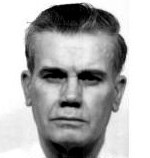
Gerald James Holland
Murderer Brian Kevin Rosenfeld
Murderer · USA · 1985
Brian Kevin Rosenfeld Brian Kevin Rosenfeld was sentenced to three concurrent l…
23 victims
Brian Kevin Rosenfeld
Murderer · USA · 1985
Brian Kevin Rosenfeld Brian Kevin Rosenfeld was sentenced to three concurrent l…
23 victims
 Yahweh ben Yahweh
Murderer · USA · 1980
Yahweh ben Yahweh was born and legally named Hulon Mitchell Jr. (October 27, 19…
23 victims
Yahweh ben Yahweh
Murderer · USA · 1980
Yahweh ben Yahweh was born and legally named Hulon Mitchell Jr. (October 27, 19…
23 victims
 Russell Ellwood
Murderer · USA · 1991
Russell Ellwood was a former taxi driver. Authorities suspected him of killing…
20 victims
Russell Ellwood
Murderer · USA · 1991
Russell Ellwood was a former taxi driver. Authorities suspected him of killing…
20 victims
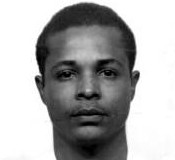 James Ronald Meanes
Murderer · USA · 1981
James Ronald Meanes (African-American) was executed for his involvement in a mi…
1 victim
James Ronald Meanes
Murderer · USA · 1981
James Ronald Meanes (African-American) was executed for his involvement in a mi…
1 victim
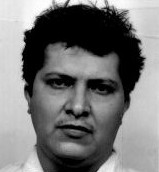 Angel Rivera
Murderer · USA · 1984
Angel Rivera was sentenced to death on December 1, 1986.
2 victims
Angel Rivera
Murderer · USA · 1984
Angel Rivera was sentenced to death on December 1, 1986.
2 victims
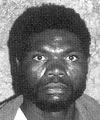 Sipho Thwala
Serial killer · South Africa · 1996
Sipho Mandla Agmatir Thwala (born 1968) was a South African rapist and serial k…
16 victims
Sipho Thwala
Serial killer · South Africa · 1996
Sipho Mandla Agmatir Thwala (born 1968) was a South African rapist and serial k…
16 victims
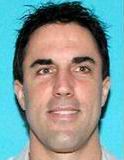 Darren Mack
Murderer · USA · 2006
Darren Mack (born January 31, 1961) became the subject of an international manh…
1 victim
Darren Mack
Murderer · USA · 2006
Darren Mack (born January 31, 1961) became the subject of an international manh…
1 victim
 David Anderson
Homicide · USA · 1997
David Anderson was convicted by a jury of four counts of aggravated first-degre…
4 victims
David Anderson
Homicide · USA · 1997
David Anderson was convicted by a jury of four counts of aggravated first-degre…
4 victims
- Gender
- male
- Country
- USA
- Location
- Harrison County, Mississippi, USA
- Date of birth
- August 14, 1937
- Age at first offence
- 49
- Characteristics
- rape
- Victim profile
- Krystal Dee King (female, 15)
- Method of murder
- Asphyxiation from a ligature placed around her neck
- Date(s) of murder
- September 12, 1986
- Years active
- 1986
- Date of arrest
- —
- Status
-
Executed
Executed by lethal injection in Mississippi on May 20, 2010
Parties
- Defendant: Gerald James Holland
- Victim: Krystal Dee King (15)
- Victim’s sister: Marcie Walker (11 at the time of Krystal’s killing)
- Victim’s twin sister: Malissa King Adams
- Victim’s mother: Kathy King (Perkinston)
- Victim’s sister’s relative (planned witness): Timothy Adams (Wiggins)
- Holland’s attorney: Steven Orlansky (Jackson)
- Mississippi Corrections Commissioner: Chris Epps
- Governor: Haley Barbour
- Chaplain (only person Holland wanted at execution): James Whisnant
- Execution witnesses mentioned: Tara Booth (Department of Corrections spokeswoman)
- Accomplice/witness for prosecution: Jerry Douglas
- Other persons named in the case narrative:
- Wayne Payne (detective)
- Glen Terrell (detective)
- Kosta N. Vlahos (judge)
- Vincent Sherry (judge)
- Paul McGarry (New Orleans pathologist; testified at trial)
- Dr. Dennis Canfield (serology expert proposed by Holland)
- Larry Turner (expert; tested preserved rape kit samples)
- Dr. Leroy Riddick (forensic pathologist; offered to rebut Dr. McGarry)
- Dr. Marc Zimmerman (forensic psychologist)
- Earl Stegall (Holland’s attorney at suppression proceedings)
- Lisa Dodson (Holland’s attorney at suppression proceedings)
- Cono Caranna (district attorney)
- Margaret Alfonso (assistant district attorney)
- Robert Burriss (Biloxi Police Officer mentioned as witness during trial issues)
Timeline
- September 11, 1986 — Krystal King (15) went to a rooming house/home connected to Gerald James Holland and Holland; the narrative includes that Holland owned a house where Krystal and a friend went on the night before Krystal’s 15th birthday.
- September 12, 1986 — Krystal Dee King was killed in Harrison County; Gerald James Holland was arrested.
- September 15, 1986 — King’s body was found in a shallow grave in northern Harrison County near Saucier; Holland was arrested.
- November 17, 1986 — A grand jury in Harrison County indicted Gerald James Holland for killing Krystal with malice aforethought while engaged in the commission of the crime of felony of rape.
- November 30, 1987 — Judge Kosta N. Vlahos held trial at the Adams County Circuit Court; the trial concluded about twelve days later.
- December 10, 1987 — An 11-woman, one-man jury in Natchez convicted Holland of capital murder; venue was changed due to pretrial publicity.
- December 11, 1987 — The jury sentenced Holland to death.
- September 1991 — The Mississippi Supreme Court upheld Holland’s conviction but threw out the death sentence, ordering a new sentencing hearing.
- April 1993 — A jury resentenced Holland to death.
- October 1998 — The U.S. Supreme Court refused to hear Holland’s appeal.
- March 2005 — The U.S. Supreme Court again refused to hear Holland’s appeal.
- July 15, 2008 — U.S. District Judge W. Allen Pepper dismissed the lawsuit by Holland and others on the lethal injections question.
- September 2009 — The 5th U.S. Circuit Court of Appeals rejected Holland’s argument that rights were violated during resentencing.
- April 19, 2010 — The U.S. Supreme Court declined to hear an appeal from Holland.
- May 6 — The Mississippi Supreme Court set Holland’s execution for May 20.
- May 13 — The Mississippi Supreme Court agreed to allow a psychiatric evaluation of Holland.
- May 20, 2010 — Holland was executed by lethal injection; he was pronounced dead at 6:14 p.m. after clemency was denied by Gov. Haley Barbour and a U.S. Supreme Court stay was denied.
- May 21, 2010 — Reporting stated that the execution occurred and that it was the state’s second execution in as many days.
- May 21, 2004 — The habeas record summary references Holland v. Anderson, 583 F.3d 267 (5th Cir. 2009) and related procedural history; the post-conviction relief denial was affirmed.
Background
Gerald James Holland was convicted of capital murder of 15-year-old Krystal Dee King committed during the underlying felony of rape. Holland raped and killed King in 1986. The narrative described that the cause of death was asphyxiation from a ligature placed around King’s neck and clothing stuffed down her throat; the body was also described as mutilated to conceal the cause of death.
Holland had prior convictions mentioned in the record narrative, including convictions for burglary, larceny (auto theft), and rape of a child. The record narrative stated he received a four-year term in a Texas prison for the rape, served only one year, and was paroled in 1976. Holland moved to Gulfport in 1981.
During his nearly 23 years in the custody of the Mississippi Department of Corrections, Holland had at least nine infractions. The reasons he was cited included possession of unauthorized items on several occasions, refusing to remove towels from cell bars and window, intentionally flooding cell commode, and refusing a staff order to get a haircut.
The offence
Krystal King was described as being beaten, raped, stabbed, and strangled to death. Her body was described as being found in a shallow grave in northern Harrison County near Saucier.
Abuse and sexual assault findings
- The record narrative stated an autopsy showed King was raped and that she was raped at least twice.
- A pathologist (Paul McGarry) testified at trial regarding the injuries, describing forceful penetration of the vagina and rectum and listing a sequence of injuries including genital injuries, a stab wound of the chest that went through the heart and through the aorta, a ligature around the neck, and clothing stuffed down the throat.
- Holland denied raping the teenager, but tests revealed she was raped.
Manner of killing and concealment
The narrative stated that the autopsy described strangling with a piece of her shirt and stuffing clothing down her throat. The narrative also stated that Holland and Jerry Douglas disposed of the body and that Douglas reported the slaying and testified against Holland at trial.
The narrative further stated Holland’s initial claim described the death as an accident during an attempt to take a knife from King during a scuffle. The narrative stated the autopsy contradicted this.
Investigation and evidence
Discovery of the body
King’s nude body was described as being recovered beneath about 1 1/2 feet of sand. On top of the body, items described included a bed sheet, plastic garbage bags, chunks of cement, and a cement bag.
The narrative stated a bed sheet and other items were on top of the body, and that King was a runaway at the time. King went to the rooming house where Holland lived to meet someone who apparently was not home, according to authorities.
Confession and Miranda-related dispute
Detectives Payne and Terrell acquired arrest and search warrants after Douglas contacted the police and provided homicide detectives with Douglas’s story. A Gulfport Police Department S.W.A.T. Unit executed the warrants and entered Holland’s home, arrested him, and read him Miranda rights. Detectives read Holland his rights three more times at the police station. The narrative stated Holland decided to waive his rights and confess.
The record included quoted statements attributed to Holland during the confession and to Douglas during the night’s events. The case also included an appellate analysis of whether Holland’s question—“Don't you think I need a lawyer?”—constituted an unambiguous invocation requiring cessation of interrogation, and whether the detectives clarified the ambiguity within constitutional parameters.
Arrest
The narrative stated that Gerald James Holland was arrested in connection with the killing of Krystal Dee King. The timeline included arrest after King’s body was found on September 15, 1986.
Trial
Venue and court
The trial was held at the Adams County Circuit Court. Venue was changed because of pretrial publicity.
Judge Kosta N. Vlahos presided over the trial beginning November 30, 1987.
Charges
The record narrative stated the grand jury indicted Holland for capital murder and the underlying felony of rape.
Verdict and sentence
An 11-woman, one-man jury convicted Holland of capital murder and sentenced him to death.
The direct appeal record included legal issues addressed on the admission of Holland’s confession, evidence admissibility questions, discovery compliance, delay in providing rape kit samples, and manslaughter instruction issues.
Sentencing
First death sentence and reversal of death penalty
After the guilty verdict, the sentencing deliberation occurred prematurely before instructions and mitigating/aggravating evidence were presented. On direct appeal, the Mississippi Supreme Court found Holland’s Sixth Amendment right to a fair and impartial jury had been violated and vacated the death sentence, remanding for resentencing.
Resentencing and death sentence
On resentencing, a jury imposed the death penalty after finding:
- the aggravator that the capital offense was committed while Holland was engaged in the act of commission of the crime of rape,
- the aggravator that the capital offense was committed for the purpose of avoiding or preventing a lawful arrest,
- the aggravator that the capital offense was especially heinous, atrocious, or cruel.
The resentencing proceedings also included findings related to Enmund factors. The jury found that Holland actually killed Krystal King, intended to kill, and contemplated that lethal force would be employed.
The death sentence was affirmed by the Mississippi Supreme Court in Holland v. State, 705 So.2d 307.
Execution scheduling and clemency
Gov. Haley Barbour denied Holland’s request for clemency. The U.S. Supreme Court also rejected a request for a stay. The Mississippi Supreme Court set the execution for May 20, 2010.
Appeals
Direct appeal history (state and federal)
- The Supreme Court affirmed Holland’s conviction but vacated the death sentence and remanded for a new sentencing hearing.
- Following resentencing, the death penalty was affirmed by the Mississippi Supreme Court.
- The timeline stated:
- October 1998 — U.S. Supreme Court refused to hear an appeal.
- March 2005 — U.S. Supreme Court again refused to hear an appeal.
- July 15, 2008 — lethal injection lawsuit dismissed by U.S. District Judge W. Allen Pepper.
- September 2009 — 5th U.S. Circuit Court of Appeals rejected an argument about rights violations during resentencing.
- April 19, 2010 — U.S.
Post-conviction and habeas
- Post-conviction relief was denied by the Mississippi Supreme Court and affirmed through federal habeas review proceedings.
- Habeas corpus relief was denied by the U.S. District Court; the Fifth Circuit affirmed the denial of habeas relief.
Outcome
Gerald James Holland was executed by lethal injection in Mississippi on May 20, 2010 and was pronounced dead at 6:14 p.m. after clemency was denied and a U.S. Supreme Court stay was rejected.
Aftermath
Apology and final statement
Holland apologized to the family of his victims in his final statement before being executed. Holland said:
“I want you to know I am sorry,”
He blamed his actions on alcohol, despair, and his temper. The statement also included:
“It was because of alcohol, despair and temper,”
The record narrative reported that Holland apologized to Krystal King’s sister, Marcie Walker, and that Walker (11 at the time of Krystal’s killing) later spoke to the media.
Walker said:
“We had 11 years with our sister,”
and “I'm not having nightmares anymore.”
The victim’s twin sister, Malissa King Adams, also spoke to the media.
The victim’s mother, Kathy King, sent a handwritten letter. The letter stated:
“24 years ago, my daughter Krystal was stabbed, beaten, raped and finally suffocated to death by Mr. Holland. She was just a child. Tonight, Mr. Holland finally received what he should have gotten 20 years ago.”
The narrative also stated that Kathy King said she did not want to see the execution because it could not bring her child back, although it ended the family’s lengthy nightmare.
Commissioner, attorney, and execution-day events
Mississippi Corrections Commissioner Chris Epps stated that Holland accepted his fate. At 6:14 p.m., Holland was pronounced dead.
Holland’s attorney Steven Orlansky visited at 3 p.m. and received the news that pleas for clemency were denied by the governor and U.S. Supreme Court. Orlansky was described as making no telephone calls.
Epps stated that Holland was talkative all day and that he ate most of his last meal.
Epps said:
“I got the news, but it wasn't good news.”
Epps also stated:
“He had not talked about any hope this week,”
and “I think he kind of figured this was the end.”
Epps was quoted describing Holland’s remorse as follows:
“He admitted killing Krystal, but he didn't give a reason why,”
and “But Epps said he did not get the sense Holland was remorseful.”
Diet and requested sedative
For his last meal, Holland requested and consumed items listed in the record narrative:
- a 14 ounce T-bone steak,
- baked potato,
- brussel sprouts,
- salad,
- apple pie,
- a liter of Pepsi.
Another description stated he requested:
- a medium-rare steak cooked with onion and garlic,
- a baked potato with cream cheese, bacon bits and chives,
- salad with bleu cheese dressing,
- Brussels sprouts with jalapeno cheese sauce,
- apple pie and a 1-liter Pepsi.
Holland requested a sedative before the execution and was to be given Valium.
Burial and body donation
Holland donated his body to the state and was to be buried on prison grounds. Epps stated it would cost about $300 to embalm and bury Holland. The narrative stated Holland requested his body be released to MDOC and that he would be buried in a casket constructed by inmates.
Visitation and witnesses
The narrative stated that Orlansky was Holland’s only visitor on the final day. It also stated that Holland wanted no family members or attorneys to witness the execution.
The only person Holland wanted with him at the execution was Chaplain James Whisnant. The narrative stated family members of Holland were on his visitation list earlier in the week but none was present on his final day.
The narrative also stated that victim’s sister Marcie Walker and brother-in-law Timothy Adams planned to witness Holland’s execution, and that Walker and Adams spoke to the media after the execution.
Additional context mentioned in reporting
A subsequent reporting passage referenced another inmate executed the same week. It also included discussion of the death penalty process, Mississippi execution history, and procedural delay issues. It did not change the specific outcome for Gerald James Holland.
Spotted an error, or have more information about this case?