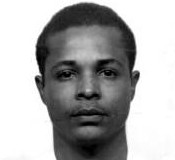
James Ronald Meanes
Murderer Ervil LeBaron
Murderer · USA · 1972
Ervil Morrell LeBaron (1925 to August 16, 1981) was the leader of a polygamous…
35 victims
Ervil LeBaron
Murderer · USA · 1972
Ervil Morrell LeBaron (1925 to August 16, 1981) was the leader of a polygamous…
35 victims
 Brian Kevin Rosenfeld
Murderer · USA · 1985
Brian Kevin Rosenfeld Brian Kevin Rosenfeld was sentenced to three concurrent l…
23 victims
Brian Kevin Rosenfeld
Murderer · USA · 1985
Brian Kevin Rosenfeld Brian Kevin Rosenfeld was sentenced to three concurrent l…
23 victims
 Marvin Gray
Murderer · USA · 1975
Marvin Gray was convicted killer who claimed responsibility for 23 slayings and…
23 victims
Marvin Gray
Murderer · USA · 1975
Marvin Gray was convicted killer who claimed responsibility for 23 slayings and…
23 victims
 Yahweh ben Yahweh
Murderer · USA · 1980
Yahweh ben Yahweh was born and legally named Hulon Mitchell Jr. (October 27, 19…
23 victims
Yahweh ben Yahweh
Murderer · USA · 1980
Yahweh ben Yahweh was born and legally named Hulon Mitchell Jr. (October 27, 19…
23 victims
 Russell Ellwood
Murderer · USA · 1991
Russell Ellwood was a former taxi driver. Authorities suspected him of killing…
20 victims
Russell Ellwood
Murderer · USA · 1991
Russell Ellwood was a former taxi driver. Authorities suspected him of killing…
20 victims
 Moses Sithole
Serial killer · South Africa · 1994
Moses Sithole (November 17, 1964) was a serial rapist and serial killer in Sout…
38 victims
Moses Sithole
Serial killer · South Africa · 1994
Moses Sithole (November 17, 1964) was a serial rapist and serial killer in Sout…
38 victims
 Stuart Hazell
Murderer · United Kingdom · 2012
Stuart Hazell was the partner of Christine Sharp. · Stuart Hazell was the forme…
1 victim
Stuart Hazell
Murderer · United Kingdom · 2012
Stuart Hazell was the partner of Christine Sharp. · Stuart Hazell was the forme…
1 victim
 Richard Scott Baumhammers
Spree killer · USA · 2000
Richard Scott Baumhammers (born May 17, 1965) was an American immigration attor…
5 victims
Richard Scott Baumhammers
Spree killer · USA · 2000
Richard Scott Baumhammers (born May 17, 1965) was an American immigration attor…
5 victims
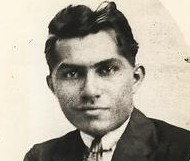 Buck Ruxton
Murderer · United Kingdom · 1935
Buck Ruxton (21 March 1899, Bombay – 12 May 1936, Manchester) was also known as…
2 victims
Buck Ruxton
Murderer · United Kingdom · 1935
Buck Ruxton (21 March 1899, Bombay – 12 May 1936, Manchester) was also known as…
2 victims
 Vincent Allen Johnson
Murderer · USA · 1991
Vincent Allen Johnson was executed by lethal injection in Oklahoma on May 29, 2…
1 victim
Vincent Allen Johnson
Murderer · USA · 1991
Vincent Allen Johnson was executed by lethal injection in Oklahoma on May 29, 2…
1 victim
- Gender
- male
- Country
- USA
- Location
- Harris County, Texas, USA
- Date of birth
- J une 8, 1956
- Age at first offence
- 25
- Characteristics
- armed robbery, murder-suicide
- Victim profile
- Oliver Flores, 29 (security guard)
- Method of murder
- Shooting
- Date(s) of murder
- April 21, 1981
- Years active
- 1981
- Date of arrest
- Same day
- Status
-
Executed
Executed by lethal injection in Texas on December 15, 1998
Offender
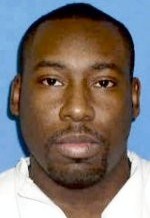
James Ronald Meanes (African-American) was executed for his involvement in a million-dollar armored car heist.
The offence
On April 21, 1981, around noon, an armored van driven by Olivero Flores and accompanied by Dorothy Wright pulled into the Sage grocery store parking lot on the Gulf Freeway in Houston, Texas to pick up a deposit. As Flores exited the van and walked around to the front of the store, Meanes and his co-defendant Carlos Santana exited a car parked near the front of the store and opened the trunk.
Wright, still in the back of the van, heard a “black voice” tell Flores to halt in a loud, demanding tone. Flores, carrying money bags in his left hand and having a weapon on his right hip, turned to face the men but made no move toward his weapon. As Flores turned, two or three shots rang out, and Flores fell to the ground, “flopping like a chicken.”
Although no one saw who shot Flores, it was determined that Flores was killed by a bullet from either a rifle or a pistol. One of the men armed with a pistol then approached Flores, bent over him, and began firing shots at the van about three seconds after the original shots. The same voice Wright heard tell Flores to halt then screamed, “bitch, open the door” at Wright, who was still in the back of the armored van.
After more shots were fired at the van, the men broke the glass on the driver's side of the van, and Meanes entered the van. Meanes climbed over the driver's seat to the passenger’s side, looked through the wire screen to the back of the truck where Wright was lying on the floor, poked a pistol through the screen, and said, with the same voice she had heard before, “Get up bitch, right now or you're dead.” Wright then opened the back of the van and walked toward the store with her hands raised. The two men left in the van, with the man with the pistol as the passenger. Meanes and Santana were captured soon thereafter in a cane patch a few blocks from the scene of the robbery.
Meanes and Santana stole 12 money sacks containing $1.1 million. Prosecutors were never able to determine which man’s bullet killed Flores. The factual narrative also stated that on the spring day in 1981, Meanes and Santana emptied their shotguns and pistols, firing into the armored van Flores was driving as he made a scheduled stop at a Houston department store, and fled into a nearby wooded area, where they were caught about an hour later.
Competing descriptions of the killing
Dorothy Wright testified that after the fatal shooting, witnesses saw Meanes and his accomplice, Carlos Santana, advance on the van while firing their weapons. Wright said the men shattered the passenger’s window, “They kept on shooting at it, kept on, kept on . . . The guy started beating on the door,” and once they gained entry, Wright said she heard a voice say, “Get up bitch right now or you're dead.” Wright exited the van and the two men drove away.
No one saw who fired the shot that killed Flores. Wright recalled that Flores did not even reach for his gun after he was shot and testified that “Flores looked at them . . . and fell.”
David Hester testified that the man with the pistol fired the fatal bullet, but he was unable to distinguish between Meanes and his partner.
Meanes asserted that after Flores was shot, Santana traded him the pistol for the shotgun because Meanes could not properly fire the weapon. Houston detective Hipolito Galano testified in Santana’s trial that when the two men were arrested, Santana admitted to switching guns with Meanes. This evidence was not used in Meanes’s trial.
At the time of his conviction, Meanes said financial problems led him to commit the robbery and stated, “I was threatened by eviction notices . . . the electricity and the lights cut off.”
Investigation and capture
Mean es and Santana were captured soon thereafter in a cane patch a few blocks from the scene of the robbery. Upon questioning, Meanes revealed the location of the weapons used in the robbery.
Trial
On July 22, 1981, Meanes was convicted of capital murder after a jury trial.
On July 23, 1981, after a separate punishment hearing, the jury answered affirmatively the two special issues presented to it pursuant to the version of article 37.071 of the Texas Code of Criminal Procedure then in effect. In accordance with state law, the trial court then sentenced Meanes to death.
At the time of his conviction, Meanes also said he was a married man and the father of two children. Defense attorney Stanley Schneider described Meanes as “a man transformed by his 17 years behind bars” and argued, “He's not the person that went out and committed an armored car robbery,” adding, “He's not that same person.”
During the punishment-phase account, Meanes testified that he agreed to participate in the robbery only after his co-defendant promised him that no one would be harmed. He testified that his co-defendant shot at the victim with the pistol three times, fired six more shots into the armored van from the same position, and then traded weapons with Meanes, who was unable to pump the shotgun, and fired the shotgun at the van nine more times. Meanes also claimed that he fired only two pistol shots during the entire robbery and that those shots were at the driver's side window of the armored car in an attempt to gain entry. Meanes additionally argued that he never pointed the gun at Wright or told her “Get up bitch, right now or you're dead.” He further testified that Santana was the only one who approached the victim’s body and that Santana did so only at the end of the robbery when Santana was wielding the shotgun.
In contrast to Meanes’s testimony, multiple eyewitnesses testified at trial that Meanes was holding the pistol, and no one identified him as holding the shotgun at any time. The accounts contradicted Meanes’s version in other respects, including testimony that Wright heard two shots as the victim was shot and that a man with a pistol knelt by the victim and fired more shots at the van. Wet blood of the victim’s type was found on the ammunition clip inside the pistol, indicating that it was the person with the pistol who had approached the victim. Two witnesses testified that they saw both men shooting toward the passenger side of the van at the same time at the beginning of the robbery before the men even moved away from their car. One witness identified the man shooting the pistol from the trunk of the car as Meanes. Another witness testified that he first heard three pistol shots, followed by two shotgun blasts two to three seconds later.
Assistant District Attorneys Rusty Hardin and Nick Vincent argued that Meanes should be found guilty even if he didn't fire the fatal shot because he did nothing to help Flores.
Appeals
Direct appeal
On September 14, 1983, the Texas Court of Criminal Appeals affirmed both Meanes’s conviction and sentence. Meanes v. State, 668 S.W.2d 366 (Tex.Crim.App.1983).
On April 16, 1984, the United States Supreme Court denied certiorari. Meanes v. Texas, 466 U.S. 945, 104 S.Ct. 1930, 80 L.Ed.2d 476 (1984).
State habeas
On August 15, 1984, Meanes filed his first application for a state writ of habeas corpus. On November 18, 1985, after an evidentiary hearing, the trial court entered findings of fact and conclusions of law recommending that relief be denied. On May 7, 1986, the Texas Court of Criminal Appeals accepted the trial court's recommendation and denied the application.
Federal habeas and procedural history
On August 4, 1986, Meanes filed his first petition for a federal writ of habeas corpus. On October 18, 1988, the petition was dismissed by the district court for failure to exhaust state court remedies. The district court found that the state judge who had signed the state habeas findings, the Honorable Sam Robertson, acted without jurisdiction under state law because he was at that time a justice on the Fourteenth Court of Appeals and therefore ineligible under state law to hear Meanes's habeas petition. The district court also found that Justice Robertson was a potential witness in the state habeas corpus hearing and that Meanes was deprived of his right to cross-examine him at that hearing. The district court further found that Justice Robertson engaged in improper ex parte communications with the State regarding Meanes’s habeas petition.
Neither the State nor Meanes was given notice of the district court’s October 26, 1988 order, and the error was not discovered until early 1995. By that time, Justice Robertson had retired from the court of appeals and was sitting as a visiting state district judge. Over Meanes’s objection, Justice Robertson was again assigned to preside over Meanes’s state habeas petition. After two evidentiary hearings, the trial court entered findings of fact and conclusions of law recommending that habeas relief be denied. On August 24, 1995, the Texas Court of Criminal Appeals accepted the district court's recommendation and denied the application.
On August 25, 1995, Meanes filed a second petition for federal habeas relief. On May 1, 1997, the district court entered judgment granting habeas relief in part. The district court found that Meanes was denied effective assistance of counsel at the punishment stage and found that Meanes’s Eighth and Fourteenth Amendment rights were violated when the trial court incorrectly instructed the venire that the law of parties applied not only to the guilt phase but also to the punishment stage. The district court cited Enmund v. Florida, 458 U.S. 782, 102 S.Ct. 3368, 73 L.Ed.2d 1140 (1982).
On July 7, 1997, the district court denied the Director’s motion for reconsideration and denied Meanes’s motion to alter or amend. On July 15, 1997, the Director filed a timely notice of appeal. Meanes did not appeal any of the district court's findings against him.
Fifth Circuit decision
The case presented was James Ronald Meanes, Petitioner-Appellee, v. Gary L. Johnson, Director, Texas Department of Criminal Justice, Institutional Division, Respondent-Appellant (Federal Circuits, 5th Cir.). The appeal date was May 22, 1998. The panel included KING, SMITH and BENAVIDES, Circuit Judges, with BENAVIDES, Circuit Judge writing.
The appellate court reversed and rendered. It found that Meanes’s Enmund claims were procedurally barred and that the district court erred in concluding that Meanes received ineffective assistance of counsel.
The appellate court concluded that the state habeas court expressly found Meanes’s Enmund claim was procedurally barred, quoting: “The applicant is procedurally barred from advancing his habeas claim that the State and the trial court improperly instructed some veniremembers during voir dire that the law of the parties was applicable to the first special issue because he did not make a timely objection.”
The appellate court also quoted a direct appeal statement: “No objection was made to the allegedly improper remarks, and nothing was preserved for review.”
The appellate court reasoned that at the time of Meanes’s trial, Texas law permitted the law of parties to apply to the punishment phase of capital cases, and it discussed Wilder v. State, 583 S.W.2d 349, 356-57 (Tex.Crim.App.1979), vacated and remanded on other grounds, 453 U.S. 902, 101 S.Ct. 3133, 69 L.Ed.2d 987 (1981). The appellate court also noted that the Court of Criminal Appeals did not reverse this position until three years after Meanes’s trial and that Enmund was not decided until over a year after Meanes’s trial.
The appellate court discussed Meanes’s argument that he received ineffective assistance of counsel for counsel’s failure to object during voir dire and found the district court’s conclusion erroneous as a matter of law.
The appellate court further stated it found Meanes failed to establish that a miscarriage of justice would occur, including an assessment that Meanes had not met the burden of “ 'by clear and convincing evidence that but for' the asserted 'constitutional error, no reasonable juror would have found the petitioner eligible for the death penalty under the applicable state law.' ”
The conclusion stated that the judgment was “REVERSED and judgment is RENDERED denying Meanes habeas corpus relief.” It also stated: “REVERSED; RENDERED.”
Petition for rehearing
On petition for rehearing, May 22, 1998, the court addressed appellee’s argument that it erred in rendering judgment rather than remanding to the district court for further proceedings. The matter was before the court on appellee's motion for rehearing filed April 28, 1998.
The court noted that appellee argued that the court should have remanded because the district court’s memorandum opinion and order failed to address Issue Number 10: “Whether Tex.Code Crim.Proc.Ann. Art. 37.071 is unconstitutional as applied in this case because its language indicated that the law of the parties applies equally to the guilt and punishment stages of the trial.”
The court concluded that the as-applied challenge depended on a finding that the trial court’s questioning during voir dire was unconstitutional, and that those challenges were procedurally barred. The court held that judgment was appropriately rendered and stated: “PETITION FOR REHEARING DENIED.”
Sentencing and execution
Meanes was sentenced to death after the jury answered affirmatively the two special issues presented.
He was executed by lethal injection in Texas on December 15, 1998. He was pronounced dead at 6:36 p.m., 8 minutes after an executioner began the flow of lethal drugs.
Last statement
Meanes made the following brief final statement: “As the ocean always returns to itself, love always returns to itself. So does consciousness, always returns to itself. And I do so with love on my lips. May God bless all mankind.”
Details of execution
A medical technician had difficulty finding veins in Meanes’s arms, the usual entry point for the injection, so needles were inserted in the left side of his neck and in his right hand.
Authorities assumed the difficulty was caused by Meanes’s past use of illicit drugs. As the drugs took effect, Meanes pursed his lips and sputtered 3 times before he stopped moving.
The victim’s 3 grown children—Teresa, Scarlet, and Oliver Flores—witnessed the execution of their father’s killer along with their aunt and uncle, Maria and Patrick Salinas.
Teresa Flores, 26, said: “At least I don't have any more monsters in my closet,” and also said, “You know, I have a face with my monster now and realize it's not a monster, it's an actual person. It makes it easier to deal with the pain.”
Meanes declined to file last-minute appeals, saying he didn't want to postpone his inevitable fate.
Other details
Co-defendant
Carlos Santana was sentenced to death for the April 12, 1981 shooting of Purolator Armored Inc. guard Oliver Flores, 29. Santana was executed in 1993.
Names, ages, and victims
Oliver Flores was described as a guard and as age 29. His three grown children were Teresa, Scarlet, and Oliver Flores. Maria and Patrick Salinas were identified as the aunt and uncle of the children.
Dorothy Wright witnessed the execution and was also described as being in the back of the van at the time of the offense. Hipolito Galano testified in Santana’s trial.
Other judicial reference and case identifiers
The appellate decision discussed procedural standards including “cause,” “prejudice,” and miscarriage of justice. The appellate decision referenced Enmund v. Florida, Wilder v. State, and other authorities, including:
- Coleman v. Thompson
- Harris v. Reed
- Amos v. Scott
- Murray v. Carrier
- Engle v. Isaac
- Sawyer v. Whitley
- Hogue v. Johnson
- Strickland v. Washington
- Strickland-related standards for ineffective assistance.
Additional quoted material
Testimony also included the description by Dorothy Wright that Flores “flopping like a chicken” and that “Get up bitch right now or you're dead,” and described questioning during the robbery including “Flores looked at them . . . and fell,” and the voice to Wright during the attack: “bitch, open the door.”
Spotted an error, or have more information about this case?