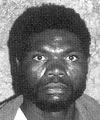
Sipho Thwala
Serial killer Louis Van Schoor
Serial killer · South Africa · 1986
Louis van Schoor was a security guard and an ex-policeman who was convicted and…
39 victims
Louis Van Schoor
Serial killer · South Africa · 1986
Louis van Schoor was a security guard and an ex-policeman who was convicted and…
39 victims
 Moses Sithole
Serial killer · South Africa · 1994
Moses Sithole (November 17, 1964) was a serial rapist and serial killer in Sout…
38 victims
Moses Sithole
Serial killer · South Africa · 1994
Moses Sithole (November 17, 1964) was a serial rapist and serial killer in Sout…
38 victims
 Norman Afzal Simons
Serial killer · South Africa · 1986
Norman Afzal Simons was a former teacher. He later converted to Islam in 1993,…
22 victims
Norman Afzal Simons
Serial killer · South Africa · 1986
Norman Afzal Simons was a former teacher. He later converted to Islam in 1993,…
22 victims
 Velaphi Ndlangamandla
Serial killer · South Africa · 1998
Velaphi Ndlangamandla, known as the “saloon killer”, was convicted in connectio…
19 victims
Velaphi Ndlangamandla
Serial killer · South Africa · 1998
Velaphi Ndlangamandla, known as the “saloon killer”, was convicted in connectio…
19 victims
 Jimmy Maketta
Serial killer · South Africa · 2005
Jimmy Maketta was born in 1964 or 1965. He was a South African rapist and seria…
16 victims
Jimmy Maketta
Serial killer · South Africa · 2005
Jimmy Maketta was born in 1964 or 1965. He was a South African rapist and seria…
16 victims
 Farda Gadirov
Murderer · Azerbaijan · 2009
Farda Gadirov (also given as Farda Asad oglu Gadirov; Azeri: Fərda Qədirov; Geo…
12 victims
Farda Gadirov
Murderer · Azerbaijan · 2009
Farda Gadirov (also given as Farda Asad oglu Gadirov; Azeri: Fərda Qədirov; Geo…
12 victims
 Mary Jane Fonder
Murderer · USA · 2008
Mary Jane Fonder (born July 5, 1942) was an American criminal who murdered Rhon…
1 victim
Mary Jane Fonder
Murderer · USA · 2008
Mary Jane Fonder (born July 5, 1942) was an American criminal who murdered Rhon…
1 victim
 Jeffery Lee Griffin
Homicide · USA · 1978
Jeffery Lee Griffin was executed by lethal injection in Texas on November 19, 1…
3 victims
Jeffery Lee Griffin
Homicide · USA · 1978
Jeffery Lee Griffin was executed by lethal injection in Texas on November 19, 1…
3 victims
 Raymond Solano
Murderer · USA · 2001
Raymond Solano was sentenced to death on May 30, 2003 for the murder of Armondo…
1 victim
Raymond Solano
Murderer · USA · 2001
Raymond Solano was sentenced to death on May 30, 2003 for the murder of Armondo…
1 victim
 Robert Carl Foley
Serial killer · USA · 1977
Robert Carl Foley (DOB 9-13-56) was sentenced to death on September 23, 1993 in…
7 victims
Robert Carl Foley
Serial killer · USA · 1977
Robert Carl Foley (DOB 9-13-56) was sentenced to death on September 23, 1993 in…
7 victims
 Yoselyn Ortega
Murderer · USA · 2012
Yoselyn Ortega was a nanny who was charged in New York City with killing two yo…
2 victims
Yoselyn Ortega
Murderer · USA · 2012
Yoselyn Ortega was a nanny who was charged in New York City with killing two yo…
2 victims
- Gender
- male
- Country
- South Africa
- Location
- Phoenix, KwaZulu-Natal province, South Africa
- Date of birth
- 1968
- Age at first offence
- 28
- Characteristics
- rape, serial rapist, torture, domestic violence
- Victim profile
- Women aged between 20 and 30 years
- Method of murder
- Strangulation with their underwear
- Date(s) of murder
- 1996 - 1997
- Years active
- 1996–1997
- Date of arrest
- August 14, 1997
- Status
-
Imprisoned
Sentenced to 506 years in prison on March 29, 1999
Case record: Sipho Thwala
Background
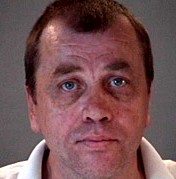
Sipho Mandla Agmatir Thwala (born 1968) was a South African rapist and serial killer convicted in 1999 for the murders of 16 women and 10 rapes. He was known by the moniker "The Phoenix Strangler" and was also referred to as Sipho Agmatir Thwala.
Thwala was born and raised in KwaMashu. He began an alleged year-long rape and murder spree in 1996 in KwaZulu-Natal province, and his modus operandi involved luring women to the sugarcane fields of Mount Edgecombe near Phoenix with the promise of employment as domestic servants in hotels.
Thwala spoke English, Afrikaans and Zulu. He grew up as a labourer in the cane fields where he sold cane to local residents. His mother, Khathazile Ntanzi, described him as an intelligent man who could read and write even though he never received schooling beyond Grade 1. His sister, Zibekile, described him as a normal child, a gentleman and helpful around the house, and said he bought groceries when he had money.
"He was a normal child, a gentleman and helpful around the house. He also bought us groceries when he had money. We are relieved he has been sent to jail. Who knows? He may have turned against us one day," said his sister, Zibekile.
"He never changed his behaviour. He would even occasionally condemn the killings and said he hoped the killer would be caught soon," said his mother.
A police profile described Thwala as "intelligent and charming to women, but extremely dangerous".
"intelligent and charming to women, but extremely dangerous"
Police forensic psychologist Micky Pistorius provided additional characterisation, including an explanation of why serial killers become serial killers.
"The main reason a person becomes a serial killer lies within the individual himself," Dr Pistorius said shortly before Thwala's arrest.
"He generally has a fixation during his early childhood years. The worrying thing is that he will kill until he gets caught," she said.
Thwala appeared normal around his family and was described as above average intelligence.
The offence
Thwala lured victims to the sugarcane fields of Mount Edgecombe, near Phoenix. After the victims were deep within the cane fields, Thwala attacked them by binding them with their own underwear, raping and strangling them, and then bludgeoning them.
He then buried victims in shallow graves. After the attacks, he set fire to the cane fields in hopes of destroying any physical evidence of his attack.
In some accounts, the killings were described as involving 19 victims; the convictions were for 16 murders and 10 rapes.
Investigation
Thwala was arrested in 1997 after South African police matched DNA found on the victims to DNA taken from Thwala in 1994 when he was arrested and acquitted of a rape.
Days after DNA samples taken from Thwala matched those taken from several crime scenes, he was arrested for the serial killings. Thwala had been released on the rape and murder charges in 1994 and later was acquitted of those charges.
A police profile used by investigators included a forensic psychologist, Micky Pistorius, who described Thwala as "intelligent and charming to women, but extremely dangerous". Thwala also was fitted the profile compiled by the police forensic psychologist.
Nine of the serial killer's victims had yet to be identified.
Arrest
Thwala was arrested for the serial killings at his Besters squatter camp home in a pre-dawn swoop by police in August 1997.
Trial
The trial of South Africa's alleged can field serial killer began in the Durban High Court. The trial was expected to run for more than a month and more than 100 witnesses were expected to testify.
The court considered that Thwala was facing 16 counts of murder, 17 counts of rape and one count of attempted murder after being found mentally fit to stand.
One key witness, Thandi Conelia Majola, 30, disappeared. She was being sought by Superintendent Philip Veldhuizen, of the Durban police's murder and robbery unit, after moving house without leaving a forwarding address.
Majola was described as a dressmaker from the informal Bhambai settlement outside KwaMashu. She allegedly came face to face with the killer and was allegedly attacked on March 15, 1996, while walking on the North Coast Road. She was allegedly promised employment and asked to accompany him. She allegedly forced her into the field near a sugar cane plantation and tried to throttle her, and she managed to escape after "reasoning" with him, according to investigators.
He managed to escape after "reasoning" with him, according to investigators.
The prosecution information described a pattern where the killer lured women into accompanying him by offering them employment. The court also was described as hearing evidence that attacks were brutal and involved victims' underwear.
The case was described as involving the Durban High Court and a Dunbar judge / sentencing in relation to the outcome on March 31, 1999 and the sentence date referenced as March 29, 1999 in the status field.
Sentencing
On March 31, 1999, a Dunbar judge sentenced Thwala to 506 years in prison after he was found guilty of 16 slayings and other charges. In handing down the sentence, Judge Vivienne Niles-Duner said it was evident Thwala had shown no remorse for his actions.
Judge Niles-Duner said photographs of victims and evidence led during the trial showed that the attacks were brutal and the lengthy sentence would prevent parole.
Judge Niles-Duner said photographs of victims and evidence led during the trial showed that the attacks were brutal and the lengthy sentence will prevent parole.
He was found guilty of one charge of attempted murder, seven of indecent assault and three of rape. In one description of the charges and verdicts, Thwala was found guilty on 27 charges of murder, attempted murder, indecent assault and rape, including findings of 16 murder charges, one of attempted murder, seven of indecent assault and three of rape.
Thwala, 31, showed no remorse for his crimes.
Appeals
No appeals were described in the provided material.
Aftermath
Shortly before Thwala's sentencing, a rumour spread around Inanda that Thwala had been seen at his family's home. An angry mob converged on the house and set it alight after locking his mother, Khathazile 65, and his sister Zibekile 41, inside as they prepared to go to church. A neighbour came to their rescue by dragging them from the blazing dwelling.
Fearing for their lives, the family fled to the police station with Zibekile's six-month-old son, Mthandeni, and her daughters Fikile, 2, Ntombizakhona, 7, and Phumelele, 8.
At the time of the reign of terror, neither Thwala's mother nor his sister suspected that he was the killer.
Both Thwala's mother and sister said that they believed he "got what was coming to him" when Judge Vivienne Niles-Duner imposed the 506-year sentence.
Both Thwala's mother and sister said that they believed he "got what was coming to him" when Judge Vivienne Niles-Duner imposed the 506-year sentence on him.
Timeline
- 1994 — Thwala was arrested for rape and was later acquitted.
- 1996 — Thwala began an alleged year-long rape and murder spree in KwaZulu-Natal province, including an alleged attack on March 15, 1996 involving Thandi Conelia Majola.
- 1997 — DNA samples matched those taken from crime scenes, and Thwala was arrested in August 1997 at his Besters squatter camp home.
- March 15, 1996 — Thandi Conelia Majola, 30, was allegedly attacked while walking on the North Coast Road.
- August 1997 — Thwala was arrested in a pre-dawn swoop at his Besters squatter camp home.
- March 31, 1999 — Thwala was found guilty and sentenced to 506 years in prison.
- April 10, 1999 — Six relatives were living in fear at a police station after members of their community burnt down their house and threatened to kill them, and they had been holed up for the last two weeks.
Other details
Thwala’s convicted offences were described as including murders of 16 women and rapes involving 10 rapes. He was also described as suspected of raping and strangling 19 victims with their underwear before burying them in shallow graves.
Thwala's arrest and sentencing narrative included that he set fire to cane fields to destroy evidence.
At trial, it was described that the killer was facing counts of murder and rape and had been found mentally fit to stand.
Thwala's house was burned down by an angry mob who had received a false tip-off that he was there.
After sentencing, six relatives of Thwala were described as living in fear at a police station in KwaMashu police station in Durban, after members of their community burned down their house and threatened to kill them. The mother, sister, three nieces and nephew of Sipho Agmatir Thwala were said to have been holed up for the last two weeks.
Spotted an error, or have more information about this case?