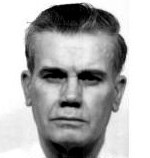
David Lee Holland
Murderer Brian Kevin Rosenfeld
Murderer · USA · 1985
Brian Kevin Rosenfeld Brian Kevin Rosenfeld was sentenced to three concurrent l…
23 victims
Brian Kevin Rosenfeld
Murderer · USA · 1985
Brian Kevin Rosenfeld Brian Kevin Rosenfeld was sentenced to three concurrent l…
23 victims
 Marvin Gray
Murderer · USA · 1975
Marvin Gray was convicted killer who claimed responsibility for 23 slayings and…
23 victims
Marvin Gray
Murderer · USA · 1975
Marvin Gray was convicted killer who claimed responsibility for 23 slayings and…
23 victims
 Yahweh ben Yahweh
Murderer · USA · 1980
Yahweh ben Yahweh was born and legally named Hulon Mitchell Jr. (October 27, 19…
23 victims
Yahweh ben Yahweh
Murderer · USA · 1980
Yahweh ben Yahweh was born and legally named Hulon Mitchell Jr. (October 27, 19…
23 victims
 Russell Ellwood
Murderer · USA · 1991
Russell Ellwood was a former taxi driver. Authorities suspected him of killing…
20 victims
Russell Ellwood
Murderer · USA · 1991
Russell Ellwood was a former taxi driver. Authorities suspected him of killing…
20 victims
 Steven Laffin
Murderer · Canada · 2010
Steven Laffin was sentenced to life in prison with no chance of parole for 13 y…
1 victim
Steven Laffin
Murderer · Canada · 2010
Steven Laffin was sentenced to life in prison with no chance of parole for 13 y…
1 victim
 Jesse Jacobs
Murderer · USA · 1986
Jesse Jacobs (#872) was the offender. He was executed in Texas on January 4, 19…
1 victim
Jesse Jacobs
Murderer · USA · 1986
Jesse Jacobs (#872) was the offender. He was executed in Texas on January 4, 19…
1 victim
 Tracy Lane Beatty
Murderer · USA · 2003
Tracy Lane Beatty was a White male born on 01/23/1961. He was 43 when he was re…
1 victim
Tracy Lane Beatty
Murderer · USA · 2003
Tracy Lane Beatty was a White male born on 01/23/1961. He was 43 when he was re…
1 victim
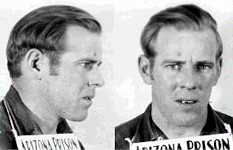 Harold Thomas Lantz
Murderer · USA · 1950
Harold Thomas Lantz was executed by asphyxiation-gas in Arizona on July 18, 195…
1 victim
Harold Thomas Lantz
Murderer · USA · 1950
Harold Thomas Lantz was executed by asphyxiation-gas in Arizona on July 18, 195…
1 victim
- Gender
- male
- Country
- USA
- Location
- Jefferson County, Texas, USA
- Date of birth
- J uly 7, 1935
- Age at first offence
- 50
- Characteristics
- bank r obbery
- Victim profile
- Helen Barnard, 29 (office manager) and Dianna Jackson, 23 (teller)
- Method of murder
- Shooting ( .45-caliber pistol)
- Date(s) of murder
- July 16, 1985
- Years active
- 1985
- Date of arrest
- —
- Status
-
Executed
Executed by lethal injection in Texas on August 12, 1993
Background
David Lee Holland was convicted for the capital murder of Helen Barnard while in the course of committing and attempting to commit bank robbery.
Holland was a security officer for eight years at a bank branch. Holland was sentenced to be executed for the July 1985 robbery and murder of the manager of a savings and loan office in Port Arthur.
The offence
Holland was convicted of killing Helen Barnard, 29, the office manager, during the robbery of a savings and loan branch.
During the robbery, Ms. Barnard and a teller, Dianna Jackson, 23, were herded into the bank's vault and shot with a .45-caliber pistol.
About $8,000 was taken in the robbery.
Holland was identified by a videotape of the robbery.
Holland was charged with the Jackson killing but was never tried.
The offence occurred in the course of Holland's robbery of a savings and loan branch.
Investigation
Trial
After jury selection, Holland pleaded guilty to the charge of capital murder.
A unitary trial was conducted on February 26, 1986, following Holland's indictment for the capital murder of Helen Barnard while in the course of committing and attempting to commit robbery.
The jury then returned affirmative answers to two Texas special issue questions it was required to answer pursuant to former Tex.Code Crim.Proc. Art. 37.071(b)(1), (2). The Court of Criminal Appeals affirmed. Holland v. State, 761 S.W.2d 307 (Tex.Crim.App.1988), cert. denied, 489 U.S. 1091, 109 S.Ct. 1560, 103 L.Ed.2d 863 (1989).
The Court of Criminal Appeals issued an opinion denying all relief on October 16, 1991. Ex parte Holland, No. 70,970 (Tex.Crim.App. Oct. 16, 1991).
Sentencing
Following indictment, a unitary trial was conducted on February 26, 1986.
At sentencing, the jury answered affirmatively the two Texas special issue questions required under former Tex.Code Crim.Proc. Art. 37.071(b)(1), (2).
The second special issue, answered affirmatively by the jury, was whether there is "a probability that the defendant would commit criminal acts of violence that would constitute a continuing threat to society."
The defense presented mitigating evidence including an exemplary work record, the lack of any violent criminal past, a candid confession by Holland immediately after his arrest, Holland's full cooperation in the state's investigation of the crime, Holland's unconditional guilty plea, and a troubled family history.
Holland's attorney argued that his peaceful and hard-working past showed that he would likely be that way in the future, and asserted that Holland had shown remorse and accepted responsibility, indicating that he was capable of rehabilitation.
The state trial court made detailed findings regarding the voluntariness and admissibility of the confession.
The court concluded that prior to making the confession, Holland was warned of his rights as required by Miranda and that he "did then knowingly waive his right to an attorney and did then freely and voluntarily without being induced by any compulsion, threats, promises, or persuasion, made an oral confession...."
Appeals
State habeas corpus
Holland filed a timely state petition for writ of habeas corpus on July 26, 1989. On October 16, 1991, the Texas Court of Criminal Appeals issued an opinion denying all relief. Ex parte Holland, No. 70,970 (Tex.Crim.App. Oct. 16, 1991).
Federal habeas corpus and stay litigation
David Lee Holland, Petitioner-Appellant, v. James A. Collins, Director, Texas Department of Criminal Justice, Institutional Division, Respondent-Appellee. No. 91-5093. United States Court of Appeals, Fifth Circuit.
The Fifth Circuit considered an application for a certificate of probable cause and stay of execution in Holland's first federal habeas petition.
On December 17, 1991, the district court denied Holland's petition for writ of habeas corpus, a certificate of probable cause to appeal, a stay of execution, and an evidentiary hearing. It granted the state's motion for summary judgment and Holland's request to proceed in forma pauperis.
At this eleventh hour, Holland requested a certificate of probable cause and a stay of execution in the court of appeals.
The panel majority granted Holland's motion for stay of execution "pending the court's en banc decision in Graham v. Collins...."
A dissenting opinion was filed by Circuit Judge JERRY E. SMITH.
Dissenting opinion by JERRY E. SMITH (panel)
JERRY E. SMITH, Circuit Judge, dissented.
I respectfully dissent from the decision of my able and conscientious colleagues to grant a stay of execution in this matter.
The dissent stated that a stay of execution may be granted only if the following questions can be answered in the affirmative:
(1) whether the movant has made a showing of likelihood of success on the merits,
(2) whether the movant has made a showing of irreparable injury if the stay is not granted,
(3) whether the granting of the stay would substantially harm the other parties, and
(4) whether the granting of the stay would serve the public interest.
The dissent discussed that Holland was scheduled to be executed after midnight on December 18, 1991. It also described Holland's filing of a petition for writ of habeas corpus and motion for stay of execution in federal district court on December 11, 1991, and the district court's denial on December 17, 1991.
The dissent described Holland's claims as falling short of constituting a substantial case on the merits.
The dissent discussed Holland's confession and the timing and volume of his habeas filings.
The dissent quoted multiple statements contained in the petition.
The dissent quoted the following statement from the petition:
Mr. Holland's post-conviction proceedings have been characterized by a complete lack of careful consideration or review.... Since that time, the treatment of Mr. Holland's issues has been swift and wholly inadequate.... The very first moment that the district court could have considered the arguments of both parties was approximately 4:00 p.m. on Sunday, December 15, 1991, when the respondent filed its answer.... Instead, in less than 24 hours, the district court took the pleadings filed and dismissed the petition. The district court has held Mr. Holland's petition, without providing for an evidentiary hearing or argument and without acting on his Motion for Stay of Execution, until today, December 17, 1991, at 11:00 a.m., only 13 hours before Mr. Holland's scheduled execution. Counsel for Mr. Holland has therefore been required to file these Appellate pleadings without time to adequately read, digest, or respond to the District Court's Order. Likewise, this Court is now faced with a death penalty case with a voluminous record only a few hours before the Respondent/Appellee puts Mr. Holland to death. This Court should not rush Mr. Holland to his death without considered and adequate review of his claims, for the first time, because of the arbitrary limit set by his execution date. Nor should this Court rush him to his death because of the District Court's eleventh hour actions. ... [Barefoot v. Estelle, 463 U.S. 880, 103 S.Ct. 3383, 77 L.Ed.2d 1090 (1983),] implicates the right to appellate review, and imposes an obligation on the federal courts to "give careful attention" in the first instance to all non-frivolous constitutional claims.... Mr. Holland has made such a showing, and Barefoot thus demands that this Court grant a stay of execution in order to allow itself a sufficient opportunity to consider and determine the constitutionality of Mr. Holland's sentence before permitting the respondent to put him to death.
The dissent concluded:
Under the facts of this case, however, I must conclude that the prerequisites for granting a stay have not been established and that the petitioner's issues are wholly without merit. Under these circumstances, I respectfully dissent.
Later Fifth Circuit decision (vacating stay and denying CPC)
On May 22, 1992, the Fifth Circuit issued a decision in the matter titled:
David Lee HOLLAND, Petitioner-Appellant, v. James A. COLLINS, Director, Texas Department of Criminal Justice, Institutional Division, Respondent-Appellee. No. 91-5093. United States Court of Appeals, Fifth Circuit.
The court stated that, in light of Graham, it denied Holland a certificate of probable cause to appeal and vacated the stay of execution. It stated that Graham had been issued in Graham v. Collins, 950 F.2d 1009 (5th Cir.1992) (en banc).
The court denied Holland's application for CPC and vacated the stay of execution.
The court stated:
Accordingly, his application for CPC must be, and is hereby, DENIED. The stay of execution previously entered by this court is hereby VACATED.
Outcome
David Lee Holland was executed by lethal injection in Texas on August 12, 1993.
Holland was pronounced dead at 12:16 A.M., central daylight time, about four minutes after officials began injecting the lethal chemicals into his arms.
Officials said Holland's appeal to the state's highest criminal court was denied on Tuesday.
Holland was the 10th person to be executed in Texas that year.
He was the second man to be put to death there in the last seven days, and was the 64th person to be executed since the state resumed the death penalty in 1982.
Holland did not have a last statement, a prison spokesman, Charles Brown, said.
Aftermath
The execution took place after the denial of the relevant appeal and after the federal habeas stay litigation, which resulted in the denial of a certificate of probable cause and the vacating of the stay.
Other details
Confession and Miranda-related findings
The state trial court found that Holland's confession was freely and voluntarily made without any compulsion or persuasion and that it was admissible.
The record described that:
- Holland was administered Miranda warnings when he was first brought to the police station, even though he was not then under arrest.
- After police decided to arrest him at 12:20 a.m., he was given Miranda warnings again and stated that he no longer wished to speak with the police.
- About three hours later, he was taken before a magistrate and was again warned of his rights; he made no statement and did not request an attorney.
- Detective Chesson, who had known Holland for some time because of prior investigations of Holland unrelated to the instant offense, went to execute a search warrant at Holland's house.
- At about 4:00 o'clock, Chesson received a telephone call from another officer stating that Holland wished to speak to Chesson.
- Chesson returned to the police station and sat down with Holland.
The conversation included the following quoted statements:
- Chesson testified: "He said that he had some things that he wanted to tell her and then he, in his words, would tell me what I wanted to know, or I will tell you what you want to know."
- Chesson testified regarding Holland: "I told him that if he were meeting with an attorney, I would not be able to do so, I would have to leave them alone...."
- Chesson testified: "I asked Mr. Holland if he wanted to talk to me."
- Holland acknowledged: "What do you want to know?"
The court found:
- the interview constituted the confession and was "initiated entirely by Defendant."
- Holland received three separate Miranda warnings and never invoked his right to counsel.
- the oral confession was given "freely and voluntarily."
- the confession was not coerced or enticed and was given "pursuant to his knowing and intelligent waiver of all rights guaranteed by Miranda."
The record stated that Holland's "right to cut off questioning" was "scrupulously honored."
Indictment date and victim details mentioned in federal appeal
Holland was convicted for the capital murder, on July 16, 1985, of two bank employees in the course of committing and attempting to commit bank robbery.
The victims were Helen Barnard, 29, and Dianna Jackson, 23.
Texas special issue text (quoted)
The court included the following in a footnote:
Art. 37.071(b) reads in relevant part as follows: On conclusion of the presentation of the evidence, the court shall submit the following issues to the jury: (1) whether the conduct of the defendant that caused the death of the deceased was committed deliberately and with the reasonable expectation that the death of the deceased or another would result; [and] (2) whether there is a probability that the defendant would commit criminal acts of violence that would constitute a continuing threat to society....

Spotted an error, or have more information about this case?