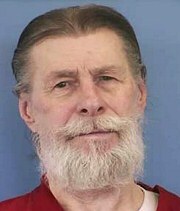
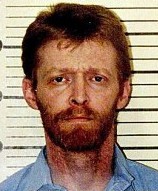
James William Holmes
Murderer Ervil LeBaron
Murderer · USA · 1972
Ervil Morrell LeBaron (1925 to August 16, 1981) was the leader of a polygamous…
35 victims
Ervil LeBaron
Murderer · USA · 1972
Ervil Morrell LeBaron (1925 to August 16, 1981) was the leader of a polygamous…
35 victims
 Brian Kevin Rosenfeld
Murderer · USA · 1985
Brian Kevin Rosenfeld Brian Kevin Rosenfeld was sentenced to three concurrent l…
23 victims
Brian Kevin Rosenfeld
Murderer · USA · 1985
Brian Kevin Rosenfeld Brian Kevin Rosenfeld was sentenced to three concurrent l…
23 victims
 Marvin Gray
Murderer · USA · 1975
Marvin Gray was convicted killer who claimed responsibility for 23 slayings and…
23 victims
Marvin Gray
Murderer · USA · 1975
Marvin Gray was convicted killer who claimed responsibility for 23 slayings and…
23 victims
 Yahweh ben Yahweh
Murderer · USA · 1980
Yahweh ben Yahweh was born and legally named Hulon Mitchell Jr. (October 27, 19…
23 victims
Yahweh ben Yahweh
Murderer · USA · 1980
Yahweh ben Yahweh was born and legally named Hulon Mitchell Jr. (October 27, 19…
23 victims
 Russell Ellwood
Murderer · USA · 1991
Russell Ellwood was a former taxi driver. Authorities suspected him of killing…
20 victims
Russell Ellwood
Murderer · USA · 1991
Russell Ellwood was a former taxi driver. Authorities suspected him of killing…
20 victims
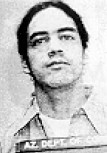 Darrick Gerlaugh
Murderer · USA · 1980
Darrick Gerlaugh was the defendant. · Scott Schwartz was the victim. · Joseph E…
1 victim
Darrick Gerlaugh
Murderer · USA · 1980
Darrick Gerlaugh was the defendant. · Scott Schwartz was the victim. · Joseph E…
1 victim
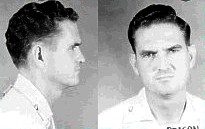 Lester Edward Bartholomew
Murderer · USA · 1955
Lester Edward Bartholomew was charged in Arizona with murder in the Superior Co…
3 victims
Lester Edward Bartholomew
Murderer · USA · 1955
Lester Edward Bartholomew was charged in Arizona with murder in the Superior Co…
3 victims
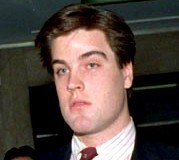 Robert Chambers
Murderer · USA · 1986
Robert Emmet Chambers, Jr. (born 25 September 1966) was an American murderer, n…
1 victim
Robert Chambers
Murderer · USA · 1986
Robert Emmet Chambers, Jr. (born 25 September 1966) was an American murderer, n…
1 victim
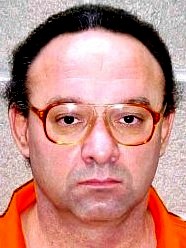 Joseph Wood
Murderer · USA · 1989
Joseph Wood was an Arizona state prisoner who was sentenced to death on July 2,…
2 victims
Joseph Wood
Murderer · USA · 1989
Joseph Wood was an Arizona state prisoner who was sentenced to death on July 2,…
2 victims
- Gender
- male
- Country
- USA
- Location
- Benton County, Arkansas, USA
- Date of birth
- 1957
- Age at first offence
- 24
- Characteristics
- robbery
- Victim profile
- Donald Lehman (contractor)
- Method of murder
- Shooting
- Date(s) of murder
- March 25, 1981
- Years active
- 1981
- Date of arrest
- 2 days after
- Status
-
Executed
Executed by lethal injection in Arkansas on August 3, 1994
Case record
Background
James William Holmes was executed by the state of Arkansas on August 3, 1994. He was executed for the March 25, 1981 murder of Don Lehman.
Darryl Richley and Hoyt Clines were also executed on the same day for the murder of Lehman.
The offence
Lehman, his wife, Virginia, and their daughter, Vicki, were at their home when four men wearing ski masks rang the doorbell and forced their way inside. Lehman was shot three times and severely beaten with a motorcycle drive chain in front of his family.
More than $1,000 and several guns were stolen, according to court documents.
A couple of days after the murder, Holmes, Richley, Clines and Ray Orndorff were arrested.
Lehman was beaten with a motorcycle chain and shot in the chest and head during a robbery. He ran upstairs after he was shot, but the men chased him down and held him on a bed while he was shot again as his wife lay on the bedroom floor.
Four men wearing ski masks burst into his home when he answered the doorbell. The men then dragged his daughter, Vicki Lehman, through the house in a search for money and guns.
Police solved the case quickly partly because Clines pulled his mask off during the robbery, and Vicki Lehman saw his face clearly.
There was discussion of murder and how it occurred. It was never definitively established who pulled the trigger. Arkansas law called for all four to be tried for first-degree murder.
Prosecutors said that before the robbery, the men had discussed the need to commit a murder if they met resistance. Defense lawyers failed to win separate trials for them.
The death sentence for the fourth man, Michael Orndorff, was struck down in 1990.
Investigation
Vicki and Virginia Lehman gave statements to authorities. The prosecutors hired a hypnotist to help them remember the events more clearly.
The prosecutors failed to tell defense lawyers that the Lehmans had been hypnotized.
Arrest
Trial
In October 1981 petitioners were found guilty of the murder of Don Lehman in Rogers, Arkansas and were sentenced to death.
The convictions were affirmed on direct appeal, Clines v. State, 280 Ark. 77, 656 S.W.2d 684 (1983), cert. denied, 465 U.S. 1051, 104 S.Ct. 1328, 79 L.Ed.2d 723 (1984), and post-conviction relief was denied, Clines v. State, 282 Ark. 541, 669 S.W.2d 883 (1984).
A principal issue for habeas corpus relief concerned the state trial court’s admission into evidence of the testimony of Vickie Lehman, the victim’s daughter and a key prosecution witness.
Unbeknownst to petitioners or to their trial counsel, Vickie and her mother Virginia Lehman had been placed under hypnosis by one Gene Peters roughly one month after the murder at the behest of the prosecutor.
As the District Court found:
During the sessions Peters would try to get his subjects to revisualize and relive the events of January 8 [1981] and, following each session, he and the Lehmans would report to the prosecutor’s office. Peters took notes of each session but no electronic recording devices were used. His notes were never turned over to the prosecutor and have since been destroyed. Neither Peters [n]or the prosecutor have any record of the questions asked and the responses given. Orndorff v. Lockhart, 707 F.Supp. 1062, 1066 (E.D.Ark.1988).
Petitioners’ attorneys did not learn that Vickie Lehman had been hypnotized prior to trial until after they had filed the direct appeal in the Arkansas Supreme Court.
Sentencing
In October 1981 Holmes and the other petitioners were sentenced to death.
A District Court remedy commuted their death sentences to life imprisonment without the possibility of parole as an alternative to retrying petitioners.
The appeal court addressed whether the prosecutor’s failure to apprise opposing counsel that Vickie Lehman had undergone hypnosis violated the Confrontation Clause of the Sixth Amendment and the Due Process Clause of the Fourteenth Amendment, and whether the error was harmless.
The District Court reasoned the error was “inherently prejudicial,” and the appeals court held that resolution of the harmless error inquiry was unsound in that respect.
It was determined that the harmful error, if any, went only to the imposition of the death penalty and not the jury verdict finding petitioners guilty as charged.
Appeals
United States Court of Appeals, Eighth Circuit (habeas corpus appeal)
Michael Ray Orndorff, James William Holmes, Hoyt Franklin Clines, and Darryl V. Richley appealed, and A. L. Lockhart cross-appealed from the judgment of the District Court granting petitioners partial habeas corpus relief.
The court’s procedural posture included:
- “We affirm in part, vacate in part, and remand for further proceedings.”
The key issue concerned the admission into evidence of Vickie Lehman’s testimony after hypnosis.
The court stated:
Assuming that the prosecutor’s nondisclosure of Vickie Lehman’s hypnosis ran afoul of the Confrontation Clause, that error is not harmful simply because the jury might have found her testimony less credible had defense counsel been able to probe the issue of her hypnosis on cross-examination.
The court held that the harmful error inquiry must begin with a comparison of Vicki Lehman’s pre-hypnosis statements with her trial testimony in light of Delaware v. Van Arsdall.
It quoted the Supreme Court’s “correct inquiry” in Van Arsdall:
The correct inquiry is whether, assuming that the damaging potential of the cross-examination were fully realized, a reviewing court might nonetheless say that the error was harmless beyond a reasonable doubt. Whether such an error is harmless in a particular case depends upon a host of factors ... includ[ing] the importance of the witness' testimony in the prosecution's case, whether the testimony was cumulative, the presence or absence of evidence corroborating or contradicting the testimony of the witness on material points, the extent of cross-examination otherwise permitted, and, of course, the overall strength of the prosecution's case.
475 U.S. at 684, 106 S.Ct. at 1438 (citations omitted).
The appeals court:
- Vacated the judgment of the District Court in part and remanded for further proceedings.
- Determined beyond a reasonable doubt that the harmful error, if any, affected only the penalty phase of the trial and not the jury verdict finding petitioners guilty.
Lockhart argued that the District Court erred in ordering habeas relief unless the state either retried petitioners or commuted their death sentences to life without parole; the appeals court agreed and held the remedy should be commensurate with the harm.
The court stated that if on remand it was found that the use of Vicki Lehman’s testimony was not harmless error insofar as its effect upon the jury’s recommendation that petitioners receive the death penalty, the District Court’s order should give the state the option of:
- “conducting a new sentencing proceeding or reducing the sentences to life without parole.”
The court found additional claims of error without merit and affirmed in part, vacated in part, and remanded.
The case was docketed as:
- 906 F.2d 1230
- Michael Ray ORNDORFF, Appellant, v. A.L. LOCKHART, Director, Arkansas Dept. of Correction, Appellee.
- James William HOLMES, Appellant, v. A.L. of Correction, Appellee.
- Hoyt Franklin CLINES, Appellant, v. A.L. of Correction, Appellee.
- Darryl V. RICHLEY, Appellant, v. A.L. of Correction, Appellee.
- Michael Ray ORNDORFF, Appellee, v. A.L. LOCKHART, Director
Spotted an error, or have more information about this case?