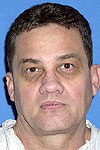
George Anderson Hopper
Murderer Brian Kevin Rosenfeld
Murderer · USA · 1985
Brian Kevin Rosenfeld Brian Kevin Rosenfeld was sentenced to three concurrent l…
23 victims
Brian Kevin Rosenfeld
Murderer · USA · 1985
Brian Kevin Rosenfeld Brian Kevin Rosenfeld was sentenced to three concurrent l…
23 victims
 Marvin Gray
Murderer · USA · 1975
Marvin Gray was convicted killer who claimed responsibility for 23 slayings and…
23 victims
Marvin Gray
Murderer · USA · 1975
Marvin Gray was convicted killer who claimed responsibility for 23 slayings and…
23 victims
 Yahweh ben Yahweh
Murderer · USA · 1980
Yahweh ben Yahweh was born and legally named Hulon Mitchell Jr. (October 27, 19…
23 victims
Yahweh ben Yahweh
Murderer · USA · 1980
Yahweh ben Yahweh was born and legally named Hulon Mitchell Jr. (October 27, 19…
23 victims
 Russell Ellwood
Murderer · USA · 1991
Russell Ellwood was a former taxi driver. Authorities suspected him of killing…
20 victims
Russell Ellwood
Murderer · USA · 1991
Russell Ellwood was a former taxi driver. Authorities suspected him of killing…
20 victims
 Eladio Martinez-Chavez
Murderer · USA · 1984
Everette Amiotte drove Martinez Chavez and Reynaldo Rondon to a place near Alar…
1 victim
Eladio Martinez-Chavez
Murderer · USA · 1984
Everette Amiotte drove Martinez Chavez and Reynaldo Rondon to a place near Alar…
1 victim
 Shayd Robinson
Murderer · New Zealand · 2012
Shayd Robinson was convicted of murder for stabbing Aaron Hadfield during an al…
1 victim
Shayd Robinson
Murderer · New Zealand · 2012
Shayd Robinson was convicted of murder for stabbing Aaron Hadfield during an al…
1 victim
 Dean Mellberg
Mass murderer · USA · 1994
Dean Mellberg killed four people and wounded at least 21 by opening fire for le…
4 victims
Dean Mellberg
Mass murderer · USA · 1994
Dean Mellberg killed four people and wounded at least 21 by opening fire for le…
4 victims
 Kristi Koslow
Homicide · USA · 1992
Kristi Koslow was the 17-year-old daughter of Jack Koslow and stepdaughter of C…
1 victim
Kristi Koslow
Homicide · USA · 1992
Kristi Koslow was the 17-year-old daughter of Jack Koslow and stepdaughter of C…
1 victim
 Robert Jeffrey Trease
Murderer · USA · 1985
Robert Jeffrey Trease was sentenced to death on January 22, 1997. · 08/24/95 —…
1 victim
Robert Jeffrey Trease
Murderer · USA · 1985
Robert Jeffrey Trease was sentenced to death on January 22, 1997. · 08/24/95 —…
1 victim
- Gender
- male
- Country
- USA
- Location
- Dallas County, Texas, USA
- Date of birth
- October 6, 1955
- Age at first offence
- 28
- Characteristics
- murder for hire, rape
- Victim profile
- Rozanne Gailiunas (female, 33)
- Method of murder
- Shooting
- Date(s) of murder
- October 4, 1983
- Years active
- 1983
- Date of arrest
- December 20, 1988
- Status
-
Executed
Executed by lethal injection in Texas on March 8, 2005
Case information
George Anderson Hopper was convicted of capital murder for the October 1983 strangulation and shooting of Rozanne Gailiunas in her Richardson, Texas home. He was sentenced to death and was executed by lethal injection in Texas on March 8, 2005.
Timeline
- October 4, 1983 — Hopper attacked 33-year-old Rozanne Gailiunas in the bedroom of her Richardson, Texas home; her four-year-old son was sleeping in another room.
- Early 1988 — The investigation centered on Joy Davis Aylor, whose husband had been having a relationship with Gailiunas at the time of her murder.
- Summer 1988 — Police began looking for Hopper to discuss Rozanne’s murder.
- September 1988 — Joy Aylor was arrested and released on $140,000 bail the night before her 1990 murder trial was to begin.
- December 20, 1988 — Hopper was arrested on connection with Gailiunas’ murder.
- December 21, 1988 — Hopper was arraigned and advised of Miranda rights; counsel was not appointed and he did not request that one be appointed.
- December 22, 1988 — Hopper contacted Detective McGowan offering to cooperate and told him he had received money to kill Gailiunas and had passed $1000 to a drug dealer named “Chip,” providing a description and information about “Chip’s” usual haunts.
- December 27, 1989 — Jan Hemphill was appointed to represent Hopper.
- February 21, 1989 — Hopper contacted Detective McGowan again and informed the detective of his intent to cooperate, stating he had spoken with Hemphill and Hemphill had given him permission to contact police.
- February 22, 1989 — Hopper met Detective McGowan, was read Miranda rights, waived those rights, and completed a six-page written statement detailing and supplementing the story he had previously given to McGowan about “Chip.”
- February 27, 1989 — Hopper was given a polygraph examination; after being told it indicated falsity and receiving a fresh Miranda recitation, he was questioned again and admitted killing Rozanne Gailiunas; he gave audio and videotaped confessions. Portions of the pre-examination interview were admitted into evidence.
- February 27, 1990 — Hopper’s procedural history includes a July 22, 2004 denial of federal habeas relief; however, no February 27, 1990 event is explicitly supported for Hopper in the provided record.
- February 14, 1991 — A Dallas County grand jury indicted Hopper for capital murder for killing Rozanne Gailiunas.
- March 2, 1992 — A Dallas jury found Hopper guilty of capital murder.
- March 16, 1992 — The punishment phase concluded with a death sentence.
- November 5, 1997 — The Texas Court of Criminal Appeals affirmed Hopper’s conviction and sentence.
- March 1, 2000 — The Texas Court of Criminal Appeals denied Hopper’s state application for writ of habeas corpus.
- October 31, 2002 — A U.S. district court denied a federal petition for writ of habeas corpus.
- July 22, 2004 — The 5th U.S. Circuit Court of Appeals denied relief.
- September 27, 2004 — Rehearing was denied.
- December 1, 2004 — A Dallas county district court set the execution for March 8, 2005.
- December 10, 2004 — Hopper filed a petition for writ of certiorari in the U.S. Supreme Court; the petition was pending.
- March 8, 2005 — Hopper was executed by lethal injection in Texas; he was pronounced dead at 6:22 p.m.
The offence
On October 4, 1983, Hopper attacked 33-year-old Rozanne Gailiunas in the bedroom of her Richardson, Texas home. Her four-year-old son was sleeping in another room. Hopper tied Gailiunas to her bed, strangled her, and shot her twice in the head. Her son found his mother with tissue stuffed in her mouth and making a gurgling sound. Gailiunas lived for two days before she was taken off life-support and died.
At the time of the killing, Gailiunas’ husband had been having an affair with her; the investigation later centered on Joy Davis Aylor as the organizer of a murder-for-hire scheme. Police said Aylor had paid $5,000 for “taking care of” Rozanne, and that Hopper received $1,500 of the original payment as the next person in the chain.
Police said Hopper planned the attack by surveying Gailiunas’s Richardson home twice and posed as a flower delivery man, coercing his way into the home. When the victim freed one of her hands and began struggling, Hopper shot her through a pillow with a .25-caliber pistol.
In later confessions, Hopper said he forced Gailiunas to remove her clothing, tied her to a bed, attempted to rape her, and then began to strangle her with pantyhose; when she struggled, he shot her in the head twice through a pillow. A factually detailed confession was admitted into evidence at trial, along with the gun used to shoot Rozanne.
Investigation
The murder went unsolved for nearly five years. Police later learned that Joy Davis Aylor had arranged Rozanne Gailiunas’ murder. Through the confessions of several middlemen, it was learned that each skimmed portions of the payment, and that Aylor had paid $5,000 for “taking care of” Rozanne. The investigation led to Hopper, who had been given $1,500 as the next person in the chain of the murder-for-hire scheme.
Police began looking for Hopper in the summer of 1988. At that time, police did not know whether Hopper was Rozanne’s killer; all police knew was that Hopper was the most recent person to receive the money. Hopper attempted to elude police for about five months before his arrest.
Arrest and custodial statements
Hopper was arrested on December 20, 1988 in the Dallas area. He was arraigned the following day and was advised of Miranda rights, but counsel was not appointed and he did not request counsel at that arraignment.
On December 22, 1988, despite his lack of counsel, Hopper contacted Detective McGowan offering to cooperate. Hopper admitted receiving money to kill Rozanne and that he passed $1000 of that money to a drug dealer named “Chip.” He also gave information about “Chip’s” description and usual haunts.
On February 21, 1989, Hopper contacted Detective McGowan again and informed the detective of his intent to cooperate, stating that Hemphill had given him permission to contact police. Detective McGowan called prosecutors who verified Hemphill’s permission. Prosecutors also secured Hemphill’s consent for a polygraph examination and a blanket consent to talk to Hopper in the future without needing to contact her first.
On February 22, 1989, after being read his Miranda rights and waiving them, Hopper completed a six-page written statement detailing and supplementing the “Chip” story. He was told the statement would be verified by a polygraph examination scheduled soon.
On February 27, 1989, after Miranda rights were again read and the polygraph was administered, Hopper was told it indicated falsity and received a fresh Miranda recitation. McGowan then questioned Hopper starting at the beginning of the story. After a brief pause, Hopper admitted that he killed Rozanne Gailiunas and provided an audio and videotaped confession that was factually detailed.
Trial
Hopper vigorously challenged the admissibility of his confession at trial and argued a causation theory.
Hopper’s confession and the gun used to shoot Rozanne were admitted into evidence. Testimony regarding an independent confession Hopper made to a jailhouse informant was admitted, and so was an admission of guilt in a letter Hopper wrote to a close friend. The jailhouse informant’s testimony closely tracked Hopper’s police confession. The letter admission of guilt was not detailed, but Hopper wrote: "I am the one who killed this person."
A jury convicted Hopper of capital murder in March 1992. The punishment phase concluded with a death sentence on March 16, 1992.
Hopper’s counsel admitted that Hopper was at the scene when Rozanne was shot and implicitly admitted Hopper shot her. Hopper argued that a toxicology test showed a significant amount of Thorazine in Rozanne’s blood when she died and that Thorazine exacerbated brain swelling from the bullet wound, making the brain swelling fatal. The prosecution presented expert testimony contradicting Hopper’s causation theory, including that one of the bullets lodged in Rozanne’s jawbone without penetrating her skull.
Sentencing
Hopper was sentenced to death after the punishment phase concluded on March 16, 1992.
Appeals
- October 31, 2002 — A U.S.
- July 22, 2004 — The 5th U.S.
Hopper v. Dretke (5th U.S. Circuit Court of Appeals) addressed a certificate of appealability and the merits of habeas claims including ineffective assistance of counsel and Miranda issues, and it denied relief as to those claims while denying certificate of appealability as to other claims.
Hopper v. Cockrell denied federal habeas relief, including consideration of post-indictment polygraph examination and custodial interview issues, and also considered the lead investigator’s book deal.
Outcome
Hopper was executed by lethal injection in Texas on March 8, 2005. He was pronounced dead at 6:22 p.m..
Final meal and final statement
Hopper’s final meal consisted of: Six eggs over easy, 10 biscuits, 12 pieces of bacon, a bowl of grits, white gravy, strawberry preserves, french fries, fried chicken and chocolate meringue pie.
Hopper’s final words were:
"I have made a lot of mistakes in my life. The things I did changed so many lives. I can't take it back. It was an atrocity. I am sorry. I beg your forgiveness. I know I am not worthy of it.''
He then turned his head toward four members of his victim's family, including the son who discovered his mother's body, and said he was sorry. Hopper turned toward a second window where his parents were among those watching; he told them he loved them and thanked them "for everything.'' He said a brief prayer, which his mother repeated with him.
Other details
George Anderson Hopper was described as 49 years old and as a white male. The capital murder involved the victim Rozanne Gailiunas, and her son was 4-year-old Peter Gailiunas Jr. at the time he found her.
Hopper’s criminal history included:
- 1976 — Hopper (age 20) was charged with indecent exposure for exposing himself to an apartment manager in Houston, Texas.
- 1984 — Hopper was arrested in connection with a pick-pocketing incident at Richardson Square Mall.
- 1982-1986 — Hopper sold marijuana on consignment from a drug dealer/friend.
Joy Davis Aylor’s associated case outcomes in the provided record included:
- Joy Aylor was convicted of capital murder and sentenced to life in prison.
- Police said Aylor fled to Canada with her attorney on the eve of her 1990 murder trial, then fled to Mexico and Europe, lived under the alias Elizabeth Sharp, was arrested in March 1991, and was returned to Texas in December 1993 after the State pledged that she would not face the death penalty.
- Aylor was convicted and sentenced to life in prison.
- Garland and Kreafle were each sentenced to 30 years’ imprisonment in connection with the scheme, and additional details in the provided record also stated sentences of life for Garland and Kreafle, but the provided material did not fully reconcile those separate sentencing statements.
Other named figures included:
- Detective Morris McGowan.
- Defense counsel Jan Hemphill.
- Prosecutor Dan Hagood.
- Petition-related advocate Roy Greenwood.
- Additional legal proceedings included references to proceedings in state and federal courts and to the U.S. Supreme Court petition.
- Carlton Stowers appeared in connection with the investigator’s book deal, and the investigator’s book was titled "Open Secrets".
Spotted an error, or have more information about this case?