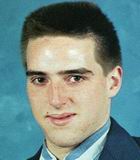
Dean Mellberg
Mass murderer Gameel Al-Batouti
Mass murderer · USA · 1999
Gameel Al-Batouti (also rendered “Gamil ElBatouty” or “El Batouty” in U.S. offi…
216 victims
Gameel Al-Batouti
Mass murderer · USA · 1999
Gameel Al-Batouti (also rendered “Gamil ElBatouty” or “El Batouty” in U.S. offi…
216 victims
 Timothy McVeigh
Mass murderer · USA · 1995
Timothy James McVeigh (April 23, 1968 – June 11, 2001) was a United States Army…
168 victims
Timothy McVeigh
Mass murderer · USA · 1995
Timothy James McVeigh (April 23, 1968 – June 11, 2001) was a United States Army…
168 victims
 Julio Gonzalez
Mass murderer · USA · 1990
Julio Gonzalez was sentenced to 174 twenty-five-year sentences (a total of 4,35…
87 victims
Julio Gonzalez
Mass murderer · USA · 1990
Julio Gonzalez was sentenced to 174 twenty-five-year sentences (a total of 4,35…
87 victims
 David Burke
Mass murderer · USA · 1987
David Augustus Burke (May 18, 1952–December 7, 1987) was an employee of USAir,…
43 victims
David Burke
Mass murderer · USA · 1987
David Augustus Burke (May 18, 1952–December 7, 1987) was an employee of USAir,…
43 victims
 George Jo Hennard
Mass murderer · USA · 1991
George Jo Hennard carried out a mass killing at a Luby’s Cafeteria in Killeen,…
23 victims
George Jo Hennard
Mass murderer · USA · 1991
George Jo Hennard carried out a mass killing at a Luby’s Cafeteria in Killeen,…
23 victims
 James Huberty
Mass murderer · USA · 1984
James Oliver Huberty was a 41-year-old unemployed security guard. He was born i…
21 victims
James Huberty
Mass murderer · USA · 1984
James Oliver Huberty was a 41-year-old unemployed security guard. He was born i…
21 victims
 Lynda Block
Murderer · USA · 1993
Lynda Block was convicted for the murder of Opelika Police Sgt. Roger Lamar Mot…
1 victim
Lynda Block
Murderer · USA · 1993
Lynda Block was convicted for the murder of Opelika Police Sgt. Roger Lamar Mot…
1 victim
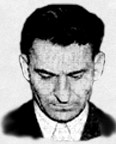 Walter Dworecki
Murderer · USA · 1939
Walter (“Iron Mike”) Dworecki lived in Camden, N.J. He led the First Polish Bap…
1 victim
Walter Dworecki
Murderer · USA · 1939
Walter (“Iron Mike”) Dworecki lived in Camden, N.J. He led the First Polish Bap…
1 victim
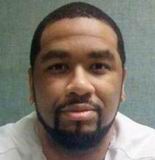 Johnnie Baston
Murderer · USA · 1994
Johnnie R. Baston was the defendant. He was born February 8, 1974. He was 20 ye…
1 victim
Johnnie Baston
Murderer · USA · 1994
Johnnie R. Baston was the defendant. He was born February 8, 1974. He was 20 ye…
1 victim
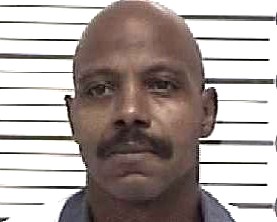 Wilbur Dobbs
Murderer · USA · 1973
December 14, 1973 — Wilbur Wiley Dobbs, with Walter Lee Harris and Charles Burk…
1 victim
Wilbur Dobbs
Murderer · USA · 1973
December 14, 1973 — Wilbur Wiley Dobbs, with Walter Lee Harris and Charles Burk…
1 victim
 Martha Grinder
Murderer · USA · 1864
Martha Grinder was convicted of murder in the first degree for poisoning Mary C…
2 victims
Martha Grinder
Murderer · USA · 1864
Martha Grinder was convicted of murder in the first degree for poisoning Mary C…
2 victims
- Gender
- male
- Country
- USA
- Location
- Spokane County, Washington, USA
- Date of birth
- 1974
- Age at first offence
- 20
- Characteristics
- revenge, shooting rampage
- Victim profile
- Thomas E. Brigham, 31 / Alan W. London, 40 / Anita L. Lindner, 39 / Christin F. McCarron, 8
- Method of murder
- Shooting (Chinese-made MAK-90 assault rifle)
- Date(s) of murder
- June 20, 1994
- Years active
- 1994
- Date of arrest
- —
- Status
-
Died in custody
Shot and killed by military police officer the same day
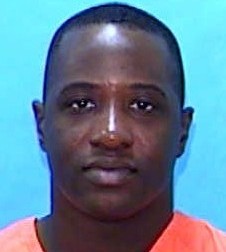
Case record: Dean Mellberg
Overview
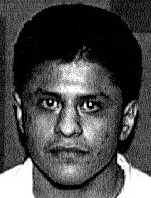
Dean Mellberg killed four people and wounded at least 21 by opening fire for less than 10 minutes at Fairchild Air Force Base Hospital. The rampage ended when a military police officer shot and killed Mellberg the same day.
Timeline
- June 20, 1994 — Mellberg entered the Fairchild Air Force Base hospital annex with a Chinese MAK-90 assault rifle and shot and killed Major Thomas E. Brigham (psychiatrist) and Captain Alan W. London (psychologist), then opened fire at the hospital. Senior Airman Andrew P. Brown shot and killed Mellberg in the parking lot.
- June 21, 1994 — The attack was described as having occurred when Mellberg killed four people and wounded at least 21, with the rampage ending after Mellberg was shot dead by a military police officer.
- June 24, 1994 — Chaplains Thomas Unrath and Glen Shaw held a memorial service at the base chapel for those killed in the assault.
- June 30, 1994 — Senior Airman Andy Brown was awarded the Airman's Medal for heroism.
- October 4, 1994 — The Spokane County District Attorney’s office announced that Brown used “lawful and necessary force” and shot in self defense.
- April 26, 1995 — The Air Force presented Brown with the Colonel Billy Jack Carter Award.
Background
Mellberg was a Michigan native and was identified as Dean A. Mellberg. He was a 20-year-old former airman from Lansing, Mich. He had been stationed at Fairchild Air Force Base from April 1993 until September 1993.
He had been ousted from the Air Force one month before for mental problems stemming from chronic masturbation. The psychologist who recommended his discharge was killed in the attack.
Military officials described a disturbed history during Mellberg’s 22 months in the Air Force and ordered an immediate investigation into his military service history. The Office of Special Investigations found that Mellberg had a history of mental problems during his 22 months in the Air Force.
Mellberg’s mother, Lois Mellberg of Lansing, said in an interview with The Seattle Times that the trouble had begun with harassment inflicted on her son by other airmen at the base, including planting rumors that he was a homosexual.
The offence
Mellberg arrived dressed in black armed with a Chinese-made MAK-90 assault rifle. He entered the hospital annex and shot and killed Major Thomas E. Brigham, the base psychiatrist, and Captain Alan W. London, the chief of psychological services.
Mellberg then marched down the corridors of the annex, opening doors and spraying them with rounds as patients and medical personnel ran for their lives. He then entered the main hospital and shot up the cafeteria. An 8-year-old girl, Christine McCaren, was shot inside the cafeteria.
Mellberg then left the building and entered the parking lot, where he killed Anita Linder, the 62-year-old wife of a retired serviceman. He then spotted a fleeing man and was chasing him around a parked car.
The rampage included indiscriminate gunfire that caused multiple deaths and injuries, including children.
Investigation
The Spokane County Sheriff’s Department conducted a routine investigation into the police-involved shooting death of Dean Mellberg to determine if there was any wrongdoing on the part of Senior Airman Brown.
On October 4, 1994, the Spokane County District Attorney’s office announced that Brown not only used “lawful and necessary force” to stop Mellberg’s deadly rampage at the Fairchild hospital complex, but also had shot him in self defense.
The investigation revealed that on Wednesday, June 15, 1994, Mellberg checked into Arnold’s Motel at N 6217 Division Street in Spokane. He took a taxicab to the home of Michael Carroll, a federally licensed firearms dealer, and purchased a new MAK-90 assault rifle. Mellberg said he was planning to use the weapon for target practice or hunting. It was not discovered where he obtained the 75-round drum magazine.
On Friday, June 17, Mellberg visited a Spokane sporting-goods store and learned how to use the weapon.
Investigators said that at 2:00 p.m. on Monday, June 20, Mellberg checked out of Arnold’s Motel and left in an Inland Cab Company taxi for Fairchild AFB.
Investigators said Mellberg arrived at the psychological services unit just as Tiffany Williams, age 23, was finishing her therapy session with Captain Alan London. The office door burst open and Mellberg shot London in the chest. When he aimed the rifle at Williams, they locked eyes, then Mellberg turned and left the office. Williams called emergency 911 and reported the shooting.
The investigation described that less than 10 minutes later, 26 people had been shot and Mellberg was dead.
Arrest and killing of the perpetrator
Senior Airman Andrew P. Brown, age 25, of the 92nd Air Force Security Police Squadron, was patrolling base housing areas on a bicycle when he received an emergency call on his two-way radio. He pedaled a quarter-mile to the scene and spotted Mellberg shooting at panic-stricken people in the parking lot.
Brown ordered Mellberg to drop his weapon. When Mellberg turned and shot at him, Brown crouched and returned fire with his 9mm Beretta M9 semiautomatic pistol. Brown fired four rounds, with one hit Mellberg in the shoulder and one struck him between the eyes, ending the rampage.
Trial
No trial proceedings were described.
Sentencing
No sentencing was described.
Outcome
Mellberg was shot and killed by a military police officer the same day.
The final tally was five people killed, including Mellberg, and 22 people wounded. A following day, Michelle Sigmon, age 25, who was five months pregnant, miscarried after the trauma of being wounded.
Deceased victims and perpetrator
The dead were:
- Thomas E. Brigham, 31 (1962–1994), Major, USAF, psychiatrist
- Anita L. Lindner, 39 (1954–1994), dependent spouse
- Alan W. London, 40 (1954–1994), Captain, USAF, psychologist
- Christin F. McCaren, 8 (1986–1994), hospital visitor
- Dean A. Mellberg, 20 (1974–1994), perpetrator
- “Baby” Sigmon (d. 1994), victim Michelle Sigmon’s unborn child
Wounded
The wounded were:
- Delwyn Baker, 42, Lieutenant Colonel, USAF
- Pauline Brown, 61, dependent spouse
- Patrick Deaton, 35, Technical Sergeant USAF
- Ruth Gerken, 71, dependent spouse
- Mark Hess, 35, USAF retired
- Omer Karns, 69, Disabled American Veterans volunteer driver
- Deena Kelly, 37, dependent spouse
- Orsen Lee, 64, US Army retired
- Dennis Moe, 41, Master Sergeant, USAF
- Kelly Moe, 15, dependent daughter
- Marlene Moe, 40, dependent spouse
- Melissa Moe, 15, dependent daughter
- Lorraine Murray, 62, dependent spouse
- Joseph Noon, 30, Staff Sergeant, USAF
- Hazel Roberts, 64, USAF retired
- Laura Rogers, 25, USAF active
- Michelle Sigmon, 25, dependent spouse
- Samuel Spencer, 13, dependent son
- John Urick, 69, U.S. Navy, retired
- Eva Walsh, 57, dependent spouse
- Anthony Zucchetto, 4, dependent son
- Janessa Zucchetto, 5, dependent daughter
Aftermath
At 10:00 a.m. on Thursday, June 24, 1994, Chaplains Thomas Unrath and Glen Shaw held a memorial service at the base chapel for those killed in the assault. More than 500 mourners showed up for the service, filling the chapel to capacity. Overflow was directed to a meeting room where the service could be seen on closed-circuit television and onto nearby bleachers where the sermon was broadcast over loudspeakers. Individual funeral services were held at various churches in the area later in the day.
Mellberg’s body was cremated and returned to his parents in Lansing, Michigan.
Honoring Andy Brown: Senior Airman Andy Brown was awarded the Airman’s Medal for heroism by General John Michael Loh, commander of the Air Combat Command, at the direction of President Bill Clinton (b. 1946). Brown also received an award from the International Police Mountain Bike Association and a certificate of appreciation from citizens of Spokane. On April 26, 1995, the Air Force presented him with the Colonel Billy Jack Carter Award, given annually to the person who makes the most significant contribution in protecting Air Force people and resources.
Colonel William Brooks, Fairchild’s commander, said:
“It was a hell of a shot,”
and also said:
“At that distance, you're not aiming at a spot, you're aiming at an area”
The Spokane County undersheriff John Goldman said:
“He knew where he was going,”
and:
“He went directly to that office.”
Other details
Weapon
The weapon was a MAK-90 manufactured in China by Norinco (North Industries Corporation). It was described as a modified “sporting” version of the Russian AK-47 semi-automatic assault rifle. The model designation MAK-90 stood for Modified AK-1990.
Avtomat Kalashnikov or AK assault weapons with pistol grips, folding stocks, threaded muzzles, and bayonet lugs were prohibited from importation to the U.S. in 1989 under the Roberti-Roos Assault Weapons Control Act. The first AK-type rifles imported in 1990 after the ban had been modified by replacing the pistol grip and stock with a one-piece wooden thumbhole stock and removing the muzzle threads and bayonet lugs.
The MAK-90 came with three detachable magazines holding five rounds of 7.62mm-caliber ammunition. The rifle’s receiver accepted a 30-round magazine called a “banana clip” or a detachable drum magazine holding 75 rounds.
Travel and purchases prior to the attack
Mellberg arrived at the Fairchild Air Force Base hospital from downtown Spokane in a taxicab at 2:45 p.m. Monday, June 20, 1994, collecting a fare of $36. The cabdriver dropped off Mellberg at the Fairchild hospital.
Mellberg carried a large duffel bag containing a MAK-90 assault rifle with a 75-round drum magazine. He had carried the duffel bag with him from his motel room in Spokane. He entered the hospital annex restroom inside the annex building, removed the rifle from the duffel bag, and walked to an office shared by the psychiatrist and psychologist.
Marlene Anderson, the motel manager, described him as “so unremarkable, she couldn't even tell police what he looked like or what he was wearing when he left the motel” (The Seattle Times). Anderson remembered Mellberg was carrying a large duffel bag and a long, white, Styrofoam box wrapped with strapping tape.
Investigators said Mellberg bought the MAK-90, a modified version of the popular AK-47 assault rifle, for about $400 from Michael Carroll, a 32-year-old federally licensed gun dealer who sold weapons out of his home across the street from a Spokane high school.
It was also described that Mellberg’s purchase of the 70-round cylinder clip that fed the weapon was apparently entirely legal, and that the clip was bought from another licensed gun dealer whose identity was not disclosed.
Past military service and discharge history
Military officials said they were still drawing together Mellberg's service records and could not yet speak in detail about the psychiatric problems that brought about his discharge last month.
In June 1992, Mellberg was sent to Lackland AFB in Texas for basic training. During basic training he was unable to get along with other recruits, and an Air Force psychiatrist recommended he be discharged for a “personality disorder.” Instead, Mellberg was graduated and sent to Lowry AFB in Colorado where he was trained in aircraft maintenance.
Mellberg was stationed at Fairchild AFB from April through September 1993. During that time, a dormitory roommate wrote to his commanding officer complaining about Mellberg’s behavior, leading to another referral for psychological counseling.
Captain London and Major Brigham both considered Mellberg dangerous and recommended his discharge. Mellberg was sent to Wilford Hall Medical Center, Lackland AFB, San Antonio, Texas, for further psychological evaluation and treatment. After four months of psychoanalysis, doctors determined he had serious mental problems, was unfit for military service, and recommended he be discharged.
Mistakes were described in official documents in his personnel file indicating that his parents contacted U.S. Representative David Lee Camp (R-Michigan) asking him to intervene as the Air Force considered his discharge.
On January 4, 1995, a three-member Medical Evaluation Board decided Mellberg suffered from a mild form of autism, rather than paranoia, and recommended he be returned to duty. On February 16, 1995, Mellberg was assigned to Mountain Home AFB in Idaho, but the chief of the base’s maintenance squadron had heard about Mellberg’s troubles at Fairchild and did not want him. The next day his orders were changed and he was sent to Cannon AFB near Clovis, New Mexico.
He lasted five weeks and then the base commander ordered him to undergo another psychiatric evaluation. On May 5, Captain Lisa Snow, chief of psychological services at Cannon AFB, determined that Mellberg was deranged and recommended his discharge.
On May 23, the Air Force gave him an honorable, administrative discharge but with no disability benefits. He was escorted from the base by Air Force Security Police and left at a Motel 6 in Clovis. During the next four weeks, Mellberg traveled to Texas, Alaska, and then back to Spokane to seek his revenge on the Fairchild AFB hospital and the people he believed had caused his problems.
The Air Force Inspector General’s investigation determined that the discharge report filled out by Captain John Campbell, a psychiatrist at the Wilford Hall Medical Center, was misinterpreted by the Medical Evaluation Board because the instructions on the form were unclear. Campbell recommended Mellberg “be returned to duty for appropriate administrative disposition,” meaning long-term hospitalization or discharge. Instead, he was kept in uniform and reassigned. The Air Force decided to change the form by adding check-boxes for different options such as “Discharge” or “Return to duty” to prevent future miscommunications.
Psychiatrist Park Dietz, described as an expert on workplace violence and mass murder, said Mellberg exhibited “classic signs of a person who would be capable of avenging perceived wrongs with murderous force.” Dietz listed the signs as:
“threats, anger, paranoia, blaming others for his problems and making repeated demands for outside investigations into his case ... . One of the most common precipitants of (murders in the workplace) is a poorly handled, conventional termination,”
and Dietz said:
“exhibited classic signs of a person who would be capable of avenging perceived wrongs with murderous force.”
Chapel and burial
A memorial service was held at the base chapel on June 24, 1994, and overflow arrangements were made for viewing and listening via closed-circuit television, bleachers, and loudspeakers.
Specific ages and roles in the attack
Tiffany Williams was age 23 and was a former Air Force C-141 Starlifter loadmaster when she finished her therapy session with Captain Alan London and called 911 after Mellberg shot London.
Senior Airman Andrew P. Brown was age 25 when he shot and killed Mellberg. He was on a bicycle when he received the emergency call.
Michelle Sigmon was age 25 and was five months pregnant when she miscarried after the trauma of being wounded.
Spotted an error, or have more information about this case?