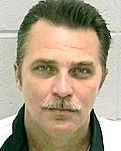
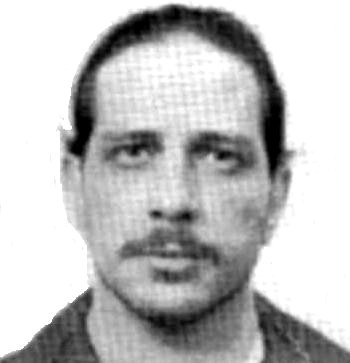
Tracy Lee Housel
Murderer Brian Kevin Rosenfeld
Murderer · USA · 1985
Brian Kevin Rosenfeld Brian Kevin Rosenfeld was sentenced to three concurrent l…
23 victims
Brian Kevin Rosenfeld
Murderer · USA · 1985
Brian Kevin Rosenfeld Brian Kevin Rosenfeld was sentenced to three concurrent l…
23 victims
 Marvin Gray
Murderer · USA · 1975
Marvin Gray was convicted killer who claimed responsibility for 23 slayings and…
23 victims
Marvin Gray
Murderer · USA · 1975
Marvin Gray was convicted killer who claimed responsibility for 23 slayings and…
23 victims
 Yahweh ben Yahweh
Murderer · USA · 1980
Yahweh ben Yahweh was born and legally named Hulon Mitchell Jr. (October 27, 19…
23 victims
Yahweh ben Yahweh
Murderer · USA · 1980
Yahweh ben Yahweh was born and legally named Hulon Mitchell Jr. (October 27, 19…
23 victims
 Russell Ellwood
Murderer · USA · 1991
Russell Ellwood was a former taxi driver. Authorities suspected him of killing…
20 victims
Russell Ellwood
Murderer · USA · 1991
Russell Ellwood was a former taxi driver. Authorities suspected him of killing…
20 victims
 Brenda Andrew
Murderer · USA · 2001
Brenda Evers Andrew was a white female who appeared as 5 ft. 3 in. tall and 110…
1 victim
Brenda Andrew
Murderer · USA · 2001
Brenda Evers Andrew was a white female who appeared as 5 ft. 3 in. tall and 110…
1 victim
 Edward T. James
Murderer · USA · 1993
Edward T. James, also known as Edward James, Edward T. James, or Edward Matlack…
2 victims
Edward T. James
Murderer · USA · 1993
Edward T. James, also known as Edward James, Edward T. James, or Edward Matlack…
2 victims
 Mark Essex
Spree killer · USA · 1973
Mark James Robert Essex was a Navy veteran who engaged in a shooting and arson…
9 victims
Mark Essex
Spree killer · USA · 1973
Mark James Robert Essex was a Navy veteran who engaged in a shooting and arson…
9 victims
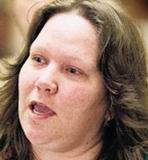 Barbara Opel
Murderer · USA · 2001
Barbara Opel was convicted of murdering a 64-year-old man with terminal cancer…
1 victim
Barbara Opel
Murderer · USA · 2001
Barbara Opel was convicted of murdering a 64-year-old man with terminal cancer…
1 victim
 Billy Ray Fox
Murderer · USA · 1985
Billy Ray Fox was convicted in Oklahoma County District Court of three counts o…
3 victims
Billy Ray Fox
Murderer · USA · 1985
Billy Ray Fox was convicted in Oklahoma County District Court of three counts o…
3 victims
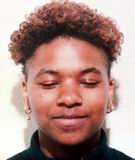 Sharon Carr
Homicide · United Kingdom · 1992
Sharon Louis Carr was born 21 December 1979. She was twelve years old when she…
1 victim
Sharon Carr
Homicide · United Kingdom · 1992
Sharon Louis Carr was born 21 December 1979. She was twelve years old when she…
1 victim
- Gender
- male
- Country
- USA
- Location
- Texas/Georgia, USA
- Date of birth
- May 7, 1958
- Age at first offence
- 27
- Characteristics
- rape, robbery
- Victim profile
- A man named Troy / Jeanne Drew (female, 46)
- Method of murder
- Beating with a hammer / Strangulation
- Date(s) of murder
- February/April 1985
- Years active
- 1985
- Date of arrest
- June 4, 1985
- Status
-
Executed
Executed by lethal injection in Georgia on March 12, 2002
Case record: Tracy Lee Housel
Status
Tracy Lee Housel was executed by lethal injection in Georgia on March 12, 2002.
Parties
- Tracy Lee Housel — defendant
- Jean Drew (also referred to as Jeanne Drew and Carolyn Jean Dellinger Drew) — victim in the Gwinnett County murder case; a female hitchhiker whom Housel met at a truck stop in 1985
- Jeanne Drew — victim referenced in the death sentence case and final statement/records
- Lula Mae Pellerin — mother (visitor on the execution day schedule)
- Randall Housel — 20-year-old son (visitor on the execution day schedule)
- Friend Gary Proctor — visitor who met Housel in 1999 while doing investigative work for Housel’s lawyers
- Scott Stallings — Georgia Department of Corrections spokesman
- Danny Porter — Gwinnett County District Attorney
- John Latty — lead investigator (Gwinnett County police)
- Walter Ray — chairman of Georgia Board of Pardons and Paroles (referenced in connection with correspondence)
- Roy Barnes — Georgia Governor (referenced in connection with clemency efforts)
- Eugene Walker — board member (referenced in a quoted statement)
- Clive Stafford-Smith — one of Housel’s attorneys
- Walter M. Britt — former lawyer of Housel (described as Housel’s trial lawyer in the appeal narrative)
- Walt Britt — defense attorney (repeated spelling variants)
- Beth Wells — attorney (mentioned in defense discussions and appeal context)
- Robert McGlasson — appellate attorney (mentioned in appeals context and quoted)
- Mary Elizabeth Wells — appellate attorney (mentioned in appeals context)
- Dr. Buris Boshell — endocrinology expert who testified in federal district court appeal context
- Sister Helen Prejean — death-penalty opponent and author referenced in connection with clemency speaking
- Vera Baird — member of Parliament / Queens Council referenced in clemency efforts
- Jack Straw — British Foreign Minister / Foreign Secretary referenced in clemency efforts
- Tony Blair — British Prime Minister referenced in clemency efforts
- Alexander Williams — referenced as another case whose execution was called off
- Nicholas Lee Ingram — referenced as a British/dual-citizenship case involving execution in Georgia
- Walter Schwimmer — referenced in a quoted statement (Council of Europe general secretary)
Allowed legal citations and identification
- Housel v. State , 355 S.E.2d 651 (Ga. 1987) (Direct Appeal)
Timeline
- March 12, 2002 — Tracy Lee Housel was executed by lethal injection in Georgia; he was pronounced dead at 7:28 p.m.
- March 11, 2002 — media accounts described the execution as scheduled for 7 p.m. the following day; European appeals to stop the execution were unsuccessful
- February 27, 2002 — the state was expected to begin preparing to put to death another convicted killer; a death warrant was expected in Housel’s case during the week of March 12
- March 10, 1985 — a motion for new trial was filed
- July 22 — an amendment to a motion for new trial was filed
- August 1 and September 26, 1986 — a motion was heard; denied on September 26, 1986
- November 25, 1986 — the case was docketed
- February 9, 1987 — the case was orally argued
- April 7, 1985 — Housel met Jeanne/Jean Drew at a Lawrenceville truck stop during early morning hours; the murder occurred
- April 6, 1985 — Jean Drew was last seen at a truck stop diner; witnesses remembered her sitting with a young truck driver
- February 20, 1985 — Troy’s body was found in the sleeper of his cab seven miles from Beaumont, Texas
- March 29, 1985 — Housel was back in Council Bluffs, Iowa and met Gary at a truck stop
- March 30 and April 1 — credit card receipts found in Housel’s belongings showed he used Gary’s credit cards in Iowa, Illinois and Pennsylvania
- April 2, 1985 — Renee met Housel at the apartment of a friend of hers in Phillipsburg, New Jersey
- October 1984 — Housel left his wife in California; his marriage unraveled
- January 28, 1986 — jury selection began
- February 7, 1986 — the jury reached its verdict
- June 4, 1985 — Housel was indicted in Gwinnett County
- 1985 — Housel pleaded guilty to murdering Drew in 1986 context and received death sentence for Drew’s murder
- 1999 — Friend Gary Proctor met Housel while doing investigative work for Housel’s lawyers
- January 27 (year not specified in the record text) — a judge signed Housel’s death warrant; Latty and Housel spoke
Background
Tracy Lee Housel was executed in Georgia in 2002 after receiving a death sentence for killing Jean Drew.
Housel lived in the United States and held dual U.S. and British citizenship. He was born in the British territory of Bermuda (described as a British colony at the time of reporting). The execution drew extensive media interest in the United Kingdom and Europe, and pleas for clemency by representatives included the European Union, British Prime Minister Tony Blair, and Vera Baird. Diplomatic efforts were described as ongoing prior to the execution, but Georgia’s Board of Pardons and Paroles rejected arguments for commutation.
The offence
Primary conviction in this case: murder of Jean/Jeanne Drew
Housel met Jean Drew during early morning hours of April 7, 1985 at a Lawrenceville truck stop.
Housel said they had sex and then went for a ride in her car, a silver-gray Mustang. They parked in an open area behind some woods just off Beaver Ruin road in Gwinnett County. Housel stated they were having sex again in the back seat when he got the urge to spit; his spit hit her window. She began yelling; Housel lost his temper and began striking her with his fists. They got out of the car. Housel said her nose was bleeding and she spit blood on him. He then struck her more severely, got on his knees and strangled her, and picked up a stick and beat her face to a “bloody pulp.”
Housel left Drew lying there and drove her car to Daytona Beach, Florida, where he stayed several days using her credit cards prior to being arrested. Drew’s body was found later that morning. Her body was described as nude from the waist down; her head was described as “extensively traumatized and disfigured.” There were “several lesions about the neck area,” and “blood smeared on both hands.”
A pathologist testified that the victim was still alive at the time of strangulation and described injuries consistent with prolonged strangulation and struggle:
“The [strangulation] force was fairly long in duration given the amount of . . . contusion in the area of the neck . . .; the [hyoid] bone . . . was broken . . . and there was digging of fingernails not just into the skin and left in place, but actually tearing through the skin which is another indication of a fair degree of struggle on the part of the decedent.”
Several of the victim’s teeth had been knocked out. Her mouth was cut. Her skull was crushed in three places. The pathologist testified that because of the extensive trauma to the head, it was impossible to determine how many times the victim had been struck. Cause of death was described as “a combination of multiple head trauma and asphyxiation by strangulation.”
Additional admitted/introduced conduct (early 1985, across multiple states)
Evidence at sentencing was presented that, during a two-month period in early 1985, Housel killed a man in Texas, stabbed a man in Iowa, sodomized a woman in New Jersey, and finally killed the woman in Gwinnett County, Georgia for whose murder he received a death sentence.
Surviving Iowa and New Jersey victims testified, and law enforcement officers from Texas, Florida and Georgia testified.
Texas incident (as admitted in sentencing evidence and confessions)
Housel admitted striking and killing a man named Troy in Spring, Texas after an encounter involving Troy’s cocaine. Housel stated Troy grabbed him by the throat; Housel picked up a hammer and hit Troy on the head eight or nine times. Housel took Troy’s cocaine and other items including a CB radio, stereo, and Troy’s identification, placed them into his bag, and drove the truck to Beaumont, Texas, where he left it. Housel stated Troy was still breathing when he left Spring, but that Troy died somewhere between Spring and Beaumont.
Troy’s body was found in the sleeper of his cab seven miles from Beaumont, Texas, on February 20, 1985. Troy was nude from the waist down and had been anally sodomized.
Iowa incident (as admitted in sentencing evidence and confessions)
On March 29, 1985, Housel was in Council Bluffs, Iowa, met Gary at a truck stop, and asked for a ride to Des Moines where he might find a job. Gary told him he would take him as far as Atlantic, about halfway. They entered Gary’s car and drove. Gary testified that when they reached the Atlantic exit, Housel pulled out a knife and told him to drive on. A couple of exits later, Housel told Gary to pull off the interstate and park, demanded Gary’s wallet, and stabbed him as he reached for it.
Housel stated Gary made a gesture which he interpreted as a homosexual advance, and he “freaked”; he pulled out his knife and began stabbing him. Gary denied making any sexual advances. Gary got out of the car; Housel pushed him down a ravine. When Gary climbed out, Housel stabbed him several more times and threw him back in. Gary had thrown away his keys, but Housel found a spare key in the console and drove the car to New Jersey.
Credit card receipts found in Housel’s belongings after he was arrested showed he used Gary’s credit cards in Iowa, Illinois and Pennsylvania on March 30 and April 1.
New Jersey incident (as admitted in sentencing evidence and confessions)
On April 2, 1985, Renee met Housel at the apartment of a friend of hers in Phillipsburg, New Jersey. Housel introduced himself as “Troy.” About 11:30 p.m., Renee announced she was going home. “Troy” offered to escort her to her car. Once there, Housel entered her car, began to strangle her, and then forced her to orally sodomize him. Housel told her she was too nice to kill, took all her money, and left.
Renee testified she had marks on her neck from being strangled that did not finally disappear until late that summer.
Gwinnett County offence: role of credit cards and travel
After meeting and attacking Jean Drew on April 7, 1985, Housel drove her car to Daytona Beach, Florida and used her credit cards for several days prior to being arrested. Jean Drew’s body was found later that morning.
Claims and disputes at sentencing/appeal (recorded in narrative)
Housel’s pre-trial statements concerning these crimes were admitted in evidence at sentencing, following his plea of guilty to the murder.
The prosecution’s sentencing evidence included conduct for which Housel was not prosecuted in the same case; surviving Iowa and New Jersey victims testified, and law enforcement officers testified.
Housel’s lawyers and supporters argued Housel was not fully responsible for Drew’s murder because of claims of brain injuries and hypoglycemia affecting his responsibility. The record includes opposing statements from prosecutors describing the hypoglycemia argument as not excusing conduct.
Investigation and arrest
Housel left his wife in California in October 1984, and later began living with a woman in Council Bluffs, Iowa.
In February 1985, Housel was at a truck stop in Spring, Texas “laid over trying to get a load.” He met a man named Troy who had cocaine and was trying to sell it. Housel described the group as dressed like “a rowdy little bike club” and raising “Hell and discontent.”
In Gwinnett County, after Drew’s body was found, investigators spread the description of the suspect to police departments across the nation. Six days later, Daytona Beach police spotted a man fitting the description driving a 1981 silver Mustang. Interviewing him led to police obtaining a taped confession to the murder of Jean Drew.
During the broader narration, it was also stated that Housel was caught in Daytona Beach driving Drew’s car and using her credit cards. Authorities also linked him to a Social Security card belonging to a truck driver found dead in Texas.
Trial
Indictment and plea
Tracy Lee Housel was indicted in Gwinnett County on charges of murder, rape, motor vehicle theft and three counts of financial-transaction-card theft.
After a jury was selected, Housel pled guilty to murder and motor vehicle theft. The state did not pursue the remaining charges, but continued to seek the death penalty on the murder count.
Jury selection and sentence trial
- Jury selection began on January 28, 1986
- The jury reached its verdict on February 7, 1986
- A jury trial occurred on the question of sentence
- The motion for new trial was filed March 10, 1985, amended July 22, heard August 1 and September 26, 1986, and denied on September 26, 1986
Evidence presented at sentencing
Evidence was presented at the sentencing trial that, during a two-month period in early 1985, Housel:
- killed a man in Texas,
- stabbed a man in Iowa,
- sodomized a woman in New Jersey,
- and killed the woman in Gwinnett County, Georgia (the murder for which he received a death sentence).
Housel’s pre-trial statements about these crimes were admitted in evidence. Surviving Iowa and New Jersey victims testified, as did law enforcement officers from Texas, Florida and Georgia.
Sentencing
A jury sentenced Housel to death for the murder of Jean Drew.
Appeals
Housel appealed the death sentence after his murder conviction and death sentence.
The narrative reports included:
- Georgia Supreme Court upheld the murder conviction and death sentence twice,
- a federal district court in Atlanta and a federal appeals court in Atlanta upheld the conviction and sentence,
- and the U.S. Supreme Court declined to review the case, including most recently described as happening in February (year not specified within the narrative excerpt).
The record also described arguments raised by Housel’s attorneys:
- ineffective assistance of counsel,
- constitutional issues during the penalty phase,
- and the introduction of evidence of other alleged offences not charged in the case.
Verbatim quoted statements in the appeals narrative included an attorney’s admission and critique of counsel advice:
“I have to live with the fact that I helped to put my client on death row. If I had known then what I know now, I would never have advised Mr. Housel to plead guilty.”
Also included in the appeals narrative were quotations attributed to the British counsel and other figures, including:
“Housel’s case amounts to a human rights abuse of serious proportions. He did not get a fair trial.”
Outcome
Housel received a death sentence for the murder of Jean Drew. After his appeals were unsuccessful, he was executed by lethal injection.
Aftermath
Execution details and statements
On March 12, 2002, Housel became the sixth person Georgia put to death by lethal injection. He was pronounced dead at 7:28 p.m., 11 minutes after the execution began.
Before the execution, Housel had a last meal of steak, baked potato, corn, ice cream and a chocolate milkshake. Another version of the final meal included salad as well as “a milkshake” and ice cream.
Housel’s final words and statements included:
Housel smiled and winked at the warden and recited verses from the Old and New Testaments read by the chaplain, the 23rd Psalm and 2nd Corinthians, Chapter 5, Verse 17 — “The old is gone and the new has come.”
He also apologized to the family of Jean Drew.
In another quoted final statement before he was put to death:
“Take care of yourselves. May God be with you all.”
A Georgia Department of Corrections spokesman stated that Housel requested that two Bible verses, Psalm 23 and Second Corinthians, Chapter 5, be read.
Execution day schedule and procedure (as described in the narrative)
A detailed execution schedule was described, including that Housel would be transferred to a holding cell shortly before the execution and given his last meal and allowed to record a last statement.
The narrative described the sequence of lethal injection drugs as:
- sodium pentothal (sedative),
- pavulon (paralyses the lungs),
- and potassium chloride (stops the heart).
The narrative described remote administration of injections by two prison staff workers alternately, monitoring by an EKG machine, and that after an indication on the EKG the doctor would confirm death.
Housel’s body was then taken by the Georgia Bureau of Investigation for an autopsy in Atlanta and returned to Housel’s family on Wednesday.
Visitors mentioned on execution-day schedule
The schedule narrative included visits by:
- his mother, Lula Mae Pellerin,
- his 20-year-old son, Randall Housel,
- his ex-wife,
- and Friend Gary Proctor.
Media and clemency context included in narrative
The narrative reported that diplomatic protests occurred, including EU and British officials, but the Board of Pardons and Paroles refused to stop the execution. A quoted statement attributed to a board member was included:
“You know, you have strong sentiments against the death penalty. You've got to know we have strong sentiments for it and it's part of our law.”
Victim names and numbers referenced in the narrative
During the period of jail interviews, John Latty asked Housel how many murders he had committed. The narrative included the question and answer verbatim:
“How many murders have you committed?”
“Just give me a number,” Latty insisted.
“Seventeen,” Housel said.
The narrative stated that there were seventeen victims, and that fourteen had not been identified.
Final reported execution location references
Execution occurred in Georgia at a state prison described as the Georgia Diagnostics and Classification Prison in Jackson (as included in the narrative context).
Other details
Life events and relationships referenced
Housel left his wife in California in October 1984; his marriage unraveled because he was “being on the road” all the time.
After that, a month later, Housel began living with a woman in Council Bluffs, Iowa.
In the early 1980s, Housel moved to Iowa and formed a relationship with a widow, Robin Banks.
Statements attributed to Housel about his conduct and the Texas encounter
Housel described the group and circumstances at the Spring, Texas truck stop as:
“We were all in our leathers, dressed more or less like a rowdy little bike club, just raising Hell and discontent.”
Housel also said about the plan to rob Troy:
“a couple of guys [were] planning on robbing [Troy] of all of his cocaine,”
and that after he told them not to, they:
“left him alone.”
Housel described climbing into Troy’s cab:
“just [to] fix my nose again and go on about my business.”
Housel described his reaction to the alleged homosexual advance by Gary:
“freaked;” he pulled out his knife and began stabbing him.
Physical evidence and observations referenced
- There was “blood all over the inside of the car when it was recovered” in the Drew murder case.
- Drew’s injuries described included strangulation marks, facial beating, lesions about the neck area, blood smeared on both hands, broken hyoid bone, fingernails digging tearing through skin, knocked-out teeth, mouth cut, and skull crushed in three places.
- The pathologist testified strangulation force was fairly long in duration due to neck contusion, and that it was impossible to determine how many times she was struck due to head trauma.
Additional contextual characterisation in narrative (not charged in this case)
The narrative included statements that Georgia prosecutors described Housel as a serial killer and that Housel had confessions to other crimes.
It also described claims by supporters and attorneys that Housel had brain damage or hypoglycemia and could not be held fully responsible.
Chronology of indictment and jury selection (as set out in direct appeal narrative)
- April 7, 1985 — crime occurred
- June 4, 1985 — defendant was indicted in Gwinnett County
- February 7, 1986 — jury reached its verdict
- March 10, 1985 — motion for new trial filed
- July 22 — amendment filed
- August 1 and September 26, 1986 — motion heard; denied on September 26, 1986
- November 25, 1986 — case docketed in the court
- February 9, 1987 — orally argued
Spotted an error, or have more information about this case?