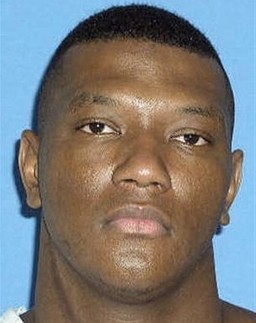
Ronald Ray Howard
Murderer Brian Kevin Rosenfeld
Murderer · USA · 1985
Brian Kevin Rosenfeld Brian Kevin Rosenfeld was sentenced to three concurrent l…
23 victims
Brian Kevin Rosenfeld
Murderer · USA · 1985
Brian Kevin Rosenfeld Brian Kevin Rosenfeld was sentenced to three concurrent l…
23 victims
 Russell Ellwood
Murderer · USA · 1991
Russell Ellwood was a former taxi driver. Authorities suspected him of killing…
20 victims
Russell Ellwood
Murderer · USA · 1991
Russell Ellwood was a former taxi driver. Authorities suspected him of killing…
20 victims
 Robert Martines Perez
Murderer · USA · 1994
Name: Robert Martines Perez · Other name used in proceedings: Robert Martinez P…
15 victims
Robert Martines Perez
Murderer · USA · 1994
Name: Robert Martines Perez · Other name used in proceedings: Robert Martinez P…
15 victims
 Billy Frank Vickers
Murderer · USA · 1993
Billy Frank Vickers Vickers was executed by lethal injection in Texas on Januar…
14 victims
Billy Frank Vickers
Murderer · USA · 1993
Billy Frank Vickers Vickers was executed by lethal injection in Texas on Januar…
14 victims
 Bobby Lee Ramdass
Murderer · USA · 1992
Bobby Lee Ramdass was executed by lethal injection in Virginia on December 6, 2…
2 victims
Bobby Lee Ramdass
Murderer · USA · 1992
Bobby Lee Ramdass was executed by lethal injection in Virginia on December 6, 2…
2 victims
 Milos Milosevic
Murderer · USA · 1966
Milos Milosevic (Serbian: Miloš Milošević) (July 1, 1941 – January 30, 1966) wa…
1 victim
Milos Milosevic
Murderer · USA · 1966
Milos Milosevic (Serbian: Miloš Milošević) (July 1, 1941 – January 30, 1966) wa…
1 victim
 Jennifer Womac
Murderer · USA · 2009
Jennifer Lee Womac was 38 and was charged in a patricide murder case in Meigs C…
1 victim
Jennifer Womac
Murderer · USA · 2009
Jennifer Lee Womac was 38 and was charged in a patricide murder case in Meigs C…
1 victim
 Cody Legebokoff
Serial killer · Canada · 2009
Cody Legebokoff (born c. 1990) was tried in the Supreme Court of British Columb…
4 victims
Cody Legebokoff
Serial killer · Canada · 2009
Cody Legebokoff (born c. 1990) was tried in the Supreme Court of British Columb…
4 victims
 Brigitte Harris
Murderer · USA · 2007
Brigitte Harris was convicted for the suffocation and castration murder of her…
1 victim
Brigitte Harris
Murderer · USA · 2007
Brigitte Harris was convicted for the suffocation and castration murder of her…
1 victim
- Gender
- male
- Country
- USA
- Location
- Jackson County, Texas, USA
- Date of birth
- J uly 22, 1973
- Age at first offence
- 19
- Characteristics
- rape?, rapist, drug dealer, mentally ill
- Victim profile
- Bill Davidson, 43 ( Texas Department of Public Safety Trooper )
- Method of murder
- Shooting ( 9 mm pistol)
- Date(s) of murder
- April 11, 1992
- Years active
- 1992
- Date of arrest
- Same day
- Status
-
Executed
Executed by lethal injection on October 6, 2005 in Texas
Case record: Ronald Ray Howard
Background
Ronald Ray Howard faced execution in Texas for the murder of Department of Public Safety Trooper Bill Davidson. Ronald Ray Howard was described as 18 years old at the time of the crime and as a black man. He was driving a stolen car when Davidson stopped him on April 11, 1992.
A Travis County jury convicted Ronald Ray Howard of capital murder on a change of venue from Jackson County. At the punishment phase, the jury found Howard to be a “future danger” under Article 37.071 and declined to find mitigating circumstances sufficient to militate against application of the death penalty under Article 37.071 § 2(e). The trial court sentenced Howard to death.
A state application for habeas relief was later filed, and the United States Court of Appeals for the Fifth Circuit addressed a request for a certificate of appealability.
Ronald Ray Howard was received at TDCJ on August 25, 1993. His sentence was reversed in 1996 but he was re-sentenced to death in 1999. He was executed on October 6, 2005.
A letter attributed to Ronald R. Howard Sr. stated: “My name is Ronald R. Howard Sr., and I am 27 years of age.” The letter also stated: “I have been here for the last seven years. But I have been jailed for the last eight and a half years.” It stated he was “from the city of Houston” and that he had lived there “for all of the 18 years of freedom that I enjoyed.” It stated he “stand[s] at about 6'2, and weigh[s] 210 pounds,” and that he had “black hair and brown eyes.” The letter stated: “I’m also the father of three” and named his youngest little girl as “JaBoria.” It stated: “I enjoy reading, listening to music, playing sports such as football and basketball,” and that he “enjoy[s] spending time with friends.” It also stated: “I like animals of the wild, large cats, snakes, and wild birds or exotic birds.” It stated: “Though I have never been camping or had a chance to take a hike through a forest, I think that I would enjoy that as well.”
A “Ron’s Original Pen Pal Request” letter included:
“First off, I am hoping that this letter may find you at your very best.
That your health is good, and that you have a smile shining bright....
And as for myself I well I am doing fine.
And speaking of myself, Please allow me to introduce myself...
My name is Ronald Ray Howard Sr., and I am a 26 year old African American, who has somehow found himself trapped within prison wall's....
In fact I am on death row, and have been for a little over six years now.
I am writing this letter in hope's of finding a friend or two. A pen friend. Some one who I can trade thought's with. Some one just to be a friend.
And as I understand it, you and/or your organization help's people like me with finding some one to write.
So I would like to ask that you assist me in my search for a pen pal.”
The offence
Department of Public Safety Trooper Bill Davidson pulled Ronald Ray Howard over in the course of a routine traffic stop on April 11, 1992, in Jackson County. Davidson noticed that the right headlight of the vehicle was broken.
Ronald Ray Howard was driving a stolen car and “apparently decided to shoot Trooper Davidson rather than submit to the stop.” When Davidson approached the driver-side window, Howard shot Davidson in the neck, killing him.
Ronald Ray Howard confessed to the killing on three distinct occasions:
- Howard gave a voluntary, tape-recorded confession shortly after his arrest.
- Howard later gave a second written confession to police.
- Howard confessed to a grand jury; the recording of the grand jury proceeding was played to the jury.
During the guilt/innocence phase, the facts “were virtually uncontested.” Howard’s confessions conceded shooting the peace officer with conscious knowledge of the victim’s status as such.
Ronald Ray Howard was described as having been on probation for burglary at the time of the April 1992 shooting. He acknowledged stealing “a lot of cars” but said it was “the normal activity for kids in his part of Houston.”
Investigation and arrest
Trooper Bill Davidson began his career with the Texas Department of Public Safety on June 26, 1973. He was stationed at Edna, Texas.
Law enforcement officers arrested Ronald Ray Howard on the night of the shooting. Another account stated Howard was captured within hours after a police chase that ended in nearby Victoria when he wrecked the stolen SUV he was driving and crashed it into a house, then tried to run away on foot.
Trial
Jury, venue, and conviction
The victim was Trooper Bill Davidson.
During trial, Howard’s confessions and evidence were presented, including multiple confessions by Howard and numerous eye witnesses. At the time of his arrest, Howard possessed ammunition matching the firearm used to kill Trooper Davidson.
Punishment phase
Direct appeal and rehearing issues
In Howard v. State, 941 S.W.2d 102 (Tex.Crim.App.1996), the Texas Court of Criminal Appeals overturned Howard’s death sentence, finding that the trial court erroneously dismissed a prospective juror over her ability to answer Texas’s special issues.
The Fifth Circuit habeas overview stated that, on direct review, “the Texas Court of Criminal Appeals overturned the sentence” and that “Howard v. State, 941 S.W.2d 102 (Tex.Crim.App.1996).” It also stated that after a second punishment phase, a new jury again answered Texas’s special issues in a manner requiring a death sentence, and the Court of Criminal Appeals affirmed the judgment on direct appeal. It stated that the United States Supreme Court denied Howard’s petition for certiorari. It also stated: “Howard v. Texas, 535 U.S. 1065, 122 S.Ct. 1935, 152 L.Ed.2d 840 (2002).”
On rehearing in the Texas Court of Criminal Appeals decision:
- The court granted rehearing to re-examine points of error concerning State’s challenges for cause against veniremen Durling and Ochoa.
- The court reaffirmed that the trial court did not err in granting the State’s challenge for cause against venireman Ochoa.
- The court concluded that the State failed to sustain its burden to establish venireman Durling was challengeable for cause.
- The court held that the trial court erred to grant the State’s challenge against her.
- The court vacated the judgment of the trial court and remanded for a new punishment proceeding. The opinion included:
“We will vacate the judgment of the trial court and remand the cause for a new punishment proceeding.”
It cited: “Article 44.29(c), V.A.C.C.P.; Ransom v. State, 920 S.W.2d 288 (Tex.Cr.App. 1996) (Opinion on State's motion for rehearing).”
The Texas Court of Criminal Appeals decision on original disposition stated that the conviction was affirmed and that jurors and trial phase issues included:
- A vacillating veniremember was properly dismissed.
- Howard’s voir dire examination was not impermissibly restricted by rephrasing requirement.
- Veniremembers who expressed unequivocal opposition to imposing the death penalty were properly dismissed without affording Howard opportunity to examine them.
- Presence of 20 uniformed state troopers and police officers at the penalty phase did not violate the right to fair trial.
- Three jury deadlock notes during the penalty phase did not warrant mistrial.
- A supplemental charge encouraging dialectic on punishment determination was not coercive. On rehearing, it stated:
- Trial court abused its discretion in granting State’s causal challenge against veniremember who stated that she would require proof of prior murder to find future dangerousness for sentencing purposes.
Judicial opinions listed in the decision included:
- Overstreet, J., dissented on original disposition.
- Maloney, J., dissented on original disposition and filed opinion in which Clinton and Baird, JJ., joined.
- Baird, J., filed concurring statement joining only in judgment of court on rehearing.
- McCormick, P.J., and Maloney, J., dissented in part on rehearing with separate opinions.
- White, Mansfield, and Keller, JJ., dissented on rehearing.
Rap music and defence arguments
Howard’s trial included arguments that he blamed rap music and, specifically, music by Tupac Shakur, for goading him into violence.
A trial attorney named Allen Tanner recalled:
“He grew up in the ghetto and disliked police and these were his heroes, these rappers ... telling him if you're pulled over, just blast away,“
and:
“It affected him. That was a totally valid serious defense.“
An account stated Howard told a grand jury he was listening to “Soulja’s Story” by Tupac Shakur before he shot Davidson, and that the song makes references to a young black male being pulled over by police, remembering Rodney King, then opening fire on an officer.
A Reuters account quoted Howard:
“I’m not a psychologist,”
and further:
“So I don’t know. I never said: Yes it did or no it didn’t. I don’t know. But my lawyers thought it could have caused it. And they were trying to justify, put reason, for what I did.”
Another account stated Howard was listening to “Soulja’s Story” and described the content as: “Remember Rodney King and I blast his punk ass.” It also stated Howard placed responsibility in Shakur for “pulling the trigger.”
Sentencing
The jury answered the special issues in a manner requiring the imposition of the death penalty at the punishment phase. The trial court sentenced Ronald Ray Howard to death. After reversal of the first death sentence, a second punishment phase resulted in another death sentence in 1999.
The Texas Board of Pardons and Paroles “unanimously refused Howard's request that his death sentence be commuted to life.”
Appeals and habeas corpus
Texas Court of Criminal Appeals
The Texas Court of Criminal Appeals overturned Howard’s death sentence in 1996, finding that a potential juror was improperly eliminated from the jury pool and/or was erroneously dismissed over her ability to answer Texas’s special issues.
On rehearing, the Texas Court of Criminal Appeals held that the trial court erred by granting the State’s causal challenge against venireman Durling, vacated the judgment, and remanded for a new punishment proceeding.
United States Supreme Court
The United States Supreme Court denied Howard’s petition for certiorari after the second direct appeal, stated as:
“Howard v. Texas, 535 U.S. 1065, 122 S.Ct. 1935, 152 L.Ed.2d 840 (2002).”
Federal habeas and certificate of appealability
Howard v. Dretke, 125 Fed. Appx. 560 (5th Cir. 2005) addressed a habeas challenge and a certificate of appealability.
The Fifth Circuit habeas background included:
- The United States District Court for the Southern District of Texas denied relief.
- Howard applied for a certificate of appealability.
- The Court of Appeals held the state appellate court was not unreasonable in concluding the attorney did not provide ineffective assistance of counsel.
- Application denied.
The Fifth Circuit stated:
“Because Howard cannot make a substantial showing of the denial of a constitutional right, we DENY his application for a COA.”
It described a state application for habeas relief that was denied and explained that while the second direct appeal was pending, Howard filed a state application for habeas relief; the state habeas court recommended denial; the Court of Criminal Appeals denied the application.
It stated that on May 5, 2003, Howard filed a federal habeas petition in the Southern District of Texas and that the district court rejected his claims on March 19, 2004, denied his habeas petition, and denied a COA. It described Howard’s COA argument as focusing on whether trial counsel provided ineffective assistance during the second punishment phase by not objecting when the prosecution repeatedly informed potential jurors that Howard had been sentenced to death at the original punishment phase.
Outcome
Ronald Ray Howard was executed on October 6, 2005 in Texas by lethal injection.
At the execution, a final statement was attributed to Howard:
“I hope this helps a little. I don't know how, but I hope it helps.”
The execution narrative stated that Howard thanked his supporters, including one brother, for love and support. It stated that before losing consciousness, he mouthed:
“I'm going home. I'm good. Be strong. I'll be alright.“
Another account stated he expressed love and gratitude:
“I love you all very much. Thank you very much,”
and later:
“I'm going home.”
The Reuters account stated Howard did not request a last meal.
Another account stated Howard was pronounced dead at 6:24 p.m., 12 minutes after the lethal injection was given.
A statement attributed to Linda Davidson, the widow of Trooper Bill Davidson, included:
“It helps knowing the son of a bitch got what he deserved,”
and:
“Today justice has been served. It's real frustrating the wheels of justice turn very slowly.“
Another statement attributed to Linda Davidson included:
“not what kind of person Howard could have become.”
Aftermath
A dissenting opinion in the Texas Court of Criminal Appeals held that two state-stricken jurors were not challengeable for cause and that, had those jurors remained, the trial would have ended differently.
A message described that Howard had expressed deep regret. It stated that he had joined in the struggle to help other at-risk youth and that he had spent time on death row becoming “a more educated Christian man.” It also stated he lacked legal representation at the time of the narrative and that wardens and prison guards had come to him for advice or aid.
The narrative also stated:
“As I've made plenty of changes over the years with my life and way of thinking, the only purpose to be served by my execution now would be that of revenge.”
Another website message attributed to Howard stated:
“After having resided in a small cage on Texas' death row for more than 13 years, Ron was murdered by the State of Texas on the 6th of October, 2005.”
It also stated:
“We will continue to keep this spirit alive.”
It stated that the goal of the site was “to serve as a warning to those would-be murderers, drug dealers, or criminals,” and that deterrence was the aim:
“And if it does in fact serve as a deterrent, if one person does not die because of my writing, then the death of Mr. Davidson would not have been in vain.”
The narrative also included language:
“I have never asked anyone for sympathy, for I realize no matter what, I was wrong for my actions many years ago.”
A Reuters account added details that Howard was the 14th person put to death in Texas that year and that the state had resumed the death penalty in 1982 after a U.S. Supreme Court decision lifted a national ban on capital punishment. It stated “Nine more executions are scheduled in Texas this year.” It also stated he was the 350th person executed in Texas since 1982 and that “He was condemned for the shooting death of Texas Department of Public Safety Trooper Bill Davidson on April 11, 1992.”
Spotted an error, or have more information about this case?