Ronnie Howard
Murderer Brian Kevin Rosenfeld
Murderer · USA · 1985
Brian Kevin Rosenfeld Brian Kevin Rosenfeld was sentenced to three concurrent l…
23 victims
Brian Kevin Rosenfeld
Murderer · USA · 1985
Brian Kevin Rosenfeld Brian Kevin Rosenfeld was sentenced to three concurrent l…
23 victims
 Marvin Gray
Murderer · USA · 1975
Marvin Gray was convicted killer who claimed responsibility for 23 slayings and…
23 victims
Marvin Gray
Murderer · USA · 1975
Marvin Gray was convicted killer who claimed responsibility for 23 slayings and…
23 victims
 Yahweh ben Yahweh
Murderer · USA · 1980
Yahweh ben Yahweh was born and legally named Hulon Mitchell Jr. (October 27, 19…
23 victims
Yahweh ben Yahweh
Murderer · USA · 1980
Yahweh ben Yahweh was born and legally named Hulon Mitchell Jr. (October 27, 19…
23 victims
 Russell Ellwood
Murderer · USA · 1991
Russell Ellwood was a former taxi driver. Authorities suspected him of killing…
20 victims
Russell Ellwood
Murderer · USA · 1991
Russell Ellwood was a former taxi driver. Authorities suspected him of killing…
20 victims
 Jason Todd Ready
Mass murderer · USA · 2012
Jason Todd “J.T.” Ready (February 17, 1973 – May 2, 2012) was an American Marin…
4 victims
Jason Todd Ready
Mass murderer · USA · 2012
Jason Todd “J.T.” Ready (February 17, 1973 – May 2, 2012) was an American Marin…
4 victims
 Abul Djabar
Serial killer · Afghanistan · 1960
Abul Djabar died on October 21, 1970. He was an Afghan serial killer who had ki…
65 victims
Abul Djabar
Serial killer · Afghanistan · 1960
Abul Djabar died on October 21, 1970. He was an Afghan serial killer who had ki…
65 victims
 Adolph Gil Hernandez
Murderer · USA · 1988
Adolph Gil Hernandez was executed by lethal injection in Texas on February 8, 2…
1 victim
Adolph Gil Hernandez
Murderer · USA · 1988
Adolph Gil Hernandez was executed by lethal injection in Texas on February 8, 2…
1 victim
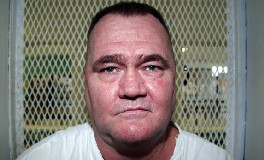 Cleve Foster
Murderer · USA · 2001
Cleve Foster was sentenced to death on March 1, 2004. He was executed by lethal…
2 victims
Cleve Foster
Murderer · USA · 2001
Cleve Foster was sentenced to death on March 1, 2004. He was executed by lethal…
2 victims
 Norman Kidman
Murderer · Canada · 2002
Jeffrey Baldwin was a Canadian child. He was born in Doctor's Hospital in Toron…
1 victim
Norman Kidman
Murderer · Canada · 2002
Jeffrey Baldwin was a Canadian child. He was born in Doctor's Hospital in Toron…
1 victim
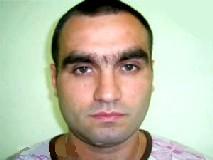 Vladimir Mirgorod
Serial killer · Russia · 2002
Vladimir Mirgorod was sentenced to life in prison for killing at least sixteen…
16 victims
Vladimir Mirgorod
Serial killer · Russia · 2002
Vladimir Mirgorod was sentenced to life in prison for killing at least sixteen…
16 victims
- Gender
- male
- Country
- USA
- Location
- South Carolina, USA
- Date of birth
- 1958
- Age at first offence
- 27
- Characteristics
- armed robbery, robbery, rape, drugs, drug addict, kidnapping, convicted rapist
- Victim profile
- Mary Duncan / Chinh Thi Nguyen Le (female, 34)
- Method of murder
- Suffocating with plastic bags over their heads
- Date(s) of murder
- 1985
- Years active
- 1985
- Date of arrest
- September 12, 1985
- Status
-
Executed
Executed by lethal injection in South Carolina on January 8, 1999
Case overview
Ronnie Howard was convicted of capital murder and other offences in South Carolina in connection with the disappearance and killing of Chinh Thi Nguyen Le, a 34-year-old Vietnamese refugee and mother of 3.
People
- Ronnie Howard — convicted defendant; later executed
- Chinh Thi Nguyen Le — victim; 34-year-old Vietnamese refugee and mother of 3
- Dana Weldon — Howard’s co-defendant; remained on death row
- Haywood Polk — Howard’s federal probation officer
- Brendan Battle — FBI Special Agent
- William Hitchins — Lieutenant, Greenville County Sheriff’s Department
- Rickey Weldon — referenced in confessions
- Gary Cash — Attorney appointed on North Carolina robbery charges
- Lee Warren — Asheville Detective
- Charles M. Condon — Attorney General of the State of South Carolina
- Michael W. Moore — Director of South Carolina Department of Corrections
- Charles E. Simons, Jr. — Senior District Judge
Timeline
- August 29, 1985 — Chinh Le disappeared on her way home from work in Greenville, South Carolina.
- September 12, 1985 — Howard was arrested in Asheville, North Carolina on unrelated robbery charges and detained in the Buncombe County Jail.
- September 18, 1985 — Attorney Gary Cash was appointed to represent Howard on the North Carolina robbery charges.
- October 2 — Howard met with South Carolina authorities; after an unsuccessful attempt to obtain immunity, Howard invoked his right to counsel and refused to talk.
- October 3 — Howard met with his federal probation officer, Haywood Polk, while Howard remained in custody; Howard orally confessed to numerous armed robberies and two South Carolina murders, including the murder of Le.
- October 7 — Howard met with FBI Special Agent Brendan Battle, signed a Miranda waiver, and orally confessed, including Le’s murder.
- October 8 — Lieutenant Hitchins later met with Howard; Howard signed a waiver of rights form and again orally confessed to Le’s murder.
- October 16 — Lieutenant Hitchins contacted Howard and the two met; after orally waiving rights under Miranda, Howard again orally confessed to Le’s murder.
- June 5, 1986 — A jury found both defendants guilty of murder, kidnapping, armed robbery, and conspiracy.
- 1988 — The South Carolina Supreme Court upheld Howard’s conviction and his death sentence (State v. Howard, 369 S.E.2d 132).
- September 3, 1991 — The state PCR court denied Howard relief.
- September 17, 1993 — Howard filed a federal habeas action in the United States District Court for the District of South Carolina.
- June 16, 1995 — The district court adopted the magistrate judge’s findings and granted the State’s motion for summary judgment.
- April 8, 1997 — The en banc court heard oral argument.
- December 9, 1997 — The United States Court of Appeals for the Fourth Circuit decided Howard’s appeal and affirmed the district court’s denial of habeas relief.
- January 8, 1999 — Howard was executed by lethal injection in South Carolina.
The offence
Chinh Le disappeared on the evening of August 29, 1985, on her way home from work in Greenville, South Carolina.
Howard and Dana Weldon put a plastic bag over Le’s head while they were stealing her car. Howard intentionally bumped Le’s car at a stop sign, and held her at gunpoint after she got out of the car. Howard later put the bag over Le’s head while Weldon punched her in the stomach until she suffocated, according to trial records.
Howard and Weldon beat Le and eventually murdered her by placing a piece of plastic over her head until she suffocated to death. After disposing of her body, they removed her clothing and washed her body, first with soda and then in a mud puddle, to remove fingerprints. They then dumped Le’s body into a clump of kudzu vines and abandoned her automobile in Columbia, South Carolina.
Le’s naked body was found several weeks later under kudzu vines in rural Greenville County, too decomposed to determine what killed her. Her car was found 100 miles away in Columbia.
Investigation
After Le’s disappearance in Greenville, South Carolina, Howard was arrested nearly three months later in Asheville, North Carolina. Howard and Weldon were arrested after robbing a Pizza Hut.
Arrest and custody
Howard was arrested on unrelated robbery charges in Asheville, North Carolina on September 12, 1985, and was detained in the Buncombe County Jail.
Confessions
Howard orally confessed to his involvement in numerous armed robberies and in two murders, including Le’s murder, during his October 3, 1985 meeting with his federal probation officer Haywood Polk.
Howard asked to speak to the FBI about his crimes in the hopes of negotiating a plea to lessen his punishment. As a result, Howard met with Agent Brendan Battle on October 7 and October 8, after signing a waiver of rights form, and orally confessed, including Le’s murder.
Lieutenant William Hitchins contacted Howard and they met on October 16, when Howard orally waived his rights under Miranda v. Arizona and again orally confessed to Le’s murder.
In each confession, Howard revealed that he and Rickey Weldon formulated a plan to steal the automobile of a lone female driver. On August 29, the two men spotted Le and followed her down a dirt road where they “bumped” the rear of her vehicle. When Le exited her automobile to inspect the damage, Howard forced her back into her automobile at gunpoint. Howard drove away in Le’s vehicle, and Weldon followed in the other car. Howard later stopped in an isolated area where the two men beat Le and murdered her by placing plastic over her head until she suffocated to death. They then drove around until they dumped her body into a clump of kudzu vines.
Before disposing of her body, Howard and Weldon removed all her clothing and washed her body with soda and then in a mud puddle, and abandoned her automobile in Columbia, South Carolina. Howard later retained possession of some of Le’s personal belongings and traveled to Charlotte, North Carolina, where he disposed of the items in various garbage dumpsters.
Howard later confessed to the killing and admitted to another similar murder.
Agent Battle notes and trial testimony (verbatim)
Agent Battle took handwritten notes of Howard’s October 8, 1985 confession and later memorialized them in a typed report:
HOWARD noticed that there was "a lot of plastic in the car, like a seat cover or whatever."
HOWARD "had the bright idea of using that to put her out - not kill her, just put her out."
HOWARD placed the plastic over the female's head.
RICK [Weldon] hit her several times in the stomach.
When HOWARD "took the bag off, she was still, like maybe she was `playing possum'."
HOWARD thought that he felt a pulse.
RICK then "reapplied pressure."
HOWARD "thought she was knocked out" but added, "I don't think I really cared, to be honest."
He did not realize that she was dead until he was driving around looking for a place to leave her.
At that time he touched her body, which felt cold, and realized that she was dead.
HOWARD insisted "I'm being honest - I don't know if he killed her or I killed her." (J.A. at 559.)
Over Howard’s objection, the trial court instructed Agent Battle not to testify as to portions of the confession inculpating Weldon, unless corroborated by Weldon’s own statement.
Agent Battle testified (as permitted by the redactions):
Q. What did Mr. Howard do next? A. Well, he said he noticed that there was a lot of plastic in the car, like seatcovers or something like that, and that he had the idea of using those plastic--that plastic material to--to put her out. He said not to kill her, just to put her out. Q. What did Mr. Howard do at that point? A. Well, he placed the plastic over the woman's head. Q. According to Howard what did Rick do at that time? A. He told me that Rick hit the woman in the stomach several times. Q. Did Mr. Howard eventually take the plastic off the victim's head? A. Yes. He said he took the bag off her head or the plastic off her head and that the woman was still. He thought then that she was, and he used the words, I have them in quote [sic], "playing possum." He thought at that time that he had felt a pulse, that she was still alive. He said he thought that she was knocked out, but he said, "I don't think I really cared to be honest." (J.A. at 626-27.)
Lieutenant Hitchins notes and trial testimony (verbatim)
Lieutenant Hitchins drafted a typed report of Howard’s October 16, 1985 confession based on his handwritten notes:
[Howard] grabbed the girl and pushed her into her car and got in behind the wheel, and Rickey was driving their car.
He stated that he drove to a place that had no houses around, and parked on the side of the road where he put a plastic bag over her head, and was going to make her pass out.
He stated that he was holding the bag until she quit fighting and was going to turn [her] loose but Rickey grabbed the bag and held it.
He stated that he got in the back seat and he grabbed and pulled her over the seat into the back while Rickey was helping him get her over the seat.
They started to drive and that is when he noticed she was not breathing, and they stopped. (J.A. at 553.)
At trial, following redaction instructions, Lieutenant Hitchins testified:
Q. What did they do when they got to the area where there were no houses around? Did they stop or keep going or -- A. They stopped the vehicles, and at that point in time Mr. Howard placed the plastic bag over the victim's head. Q. Did he ever release the plastic bag from over the victim's head? A. Yes, sir. He said that he held the bag over her head until she quit fighting, and then he released the bag. Q. What did they do or what did Mr. Howard say he did with the victim after he--after she quit fighting and he took the plastic bag off her head? A. Said that he got into the back seat of the victim's vehi- cle, started pulling the victim into the back seat, and at that time Mr. Weldon helped him put the victim in the back seat of her vehicle. (J.A. at 573.)
Trial
Howard and Weldon were tried jointly for Le’s murder.
The State introduced Howard’s confessions into evidence through testimony from Agent Brendan Battle and Lieutenant Hitchins, both of whom took handwritten notes. Polk did not testify. In compliance with Bruton v. United States, the trial court directed Agent Battle and Lieutenant Hitchins not to reveal portions of Howard’s confessions inculpating Weldon during direct or cross examination.
On June 5, 1986, a jury found both defendants guilty of murder, kidnapping, armed robbery, and conspiracy. Howard and Weldon were each sentenced to death for the murder, plus twenty-five years for armed robbery and five years for conspiracy.
On direct appeal, the South Carolina Supreme Court upheld Howard’s conviction and death sentence (State v. Howard, 369 S.E.2d 132). The United States Supreme Court denied Howard’s petition for certiorari and later denied his petition for rehearing.
Howard also challenged the process of jury selection and other trial rulings on direct appeal. The direct appeal challenged, among other matters, refusals regarding Batson-related motions, severance, admission of confessions under confrontation principles, sufficiency of proof aside from confession, confessions obtained in violation of rights, and refusal to provide two attorneys under S.C. Code Ann. § 16-3-26(b) (Supp. 1986).
Sentencing
The sentencing record included issues about redactions of confessions and the jury’s consideration of mitigating evidence.
The trial court charged the jury:
When one does an act in the presence of and with the assistance of another, the act is considered to have been done by both, and where two or more acting with a common design or intent are present at the commission of the crime, it matters not by whose immediate agency the crime is committed, all are guilty.
The hand of one is the hand of all. (J.A. at 656.)
The jury sentenced Howard to death on Le’s murder. Howard’s sentencing included armed robbery and conspiracy terms.
Post-conviction and federal habeas proceedings
After post-conviction relief in state court, the state PCR court denied Howard relief on September 3, 1991. The South Carolina Supreme Court affirmed that denial, and the United States Supreme Court denied certiorari again in 1993.
On September 17, 1993, Howard filed a federal habeas action. The district court adopted the magistrate judge’s recommendation and granted summary judgment on June 16, 1995.
The United States Court of Appeals for the Fourth Circuit considered constitutional challenges including:
- whether peremptory strikes violated Batson v. Kentucky
- whether redacted confessions were admissible without violating Fifth Amendment rights
- whether excluded portions of confessions should have been admitted in whole, and whether mitigating evidence was improperly excluded in sentencing
- whether the trial court failed to reinstruct the jury regarding involuntary manslaughter when it repeated murder instructions
- whether counsel was ineffective for failing to investigate and present mitigating evidence
- whether the prosecutor improperly commented on Howard’s failure to testify during sentencing closing arguments
- whether there was improper ex parte contact between the prosecutor’s office and the jury
Court of Appeals disposition
The Fourth Circuit affirmed the district court’s denial of habeas relief. The majority held:
- no Batson violation occurred
- Howard’s oral confessions to FBI Special Agent Brendan Battle and Lieutenant Hitchins were not “tainted fruits” of an improper custodial interrogation by Howard’s probation officer, Haywood Polk
- the redactions of Howard’s confessions were not violative of his Fifth and Eighth Amendment rights
- other assignments of error had no merit
Dissent (verbatim excerpts and remarks)
Judge Michael dissented, criticizing the majority’s handling of Edwards v. Arizona and mitigating evidence.
Judge Michael wrote that under Edwards, “a suspect in custody only has to ask for a lawyer once,” and stated that:
“Thus, unless Howard himself initiated further discussions with the authorities, the confessions he made in response to questioning by his probation officer, the FBI, and the deputy are all inadmissible. That is the clear command of Edwards.”
Judge Michael further stated in relation to mitigating evidence:
“Because of the redactions, the jury never heard the climax of Howard’s chilling story, when he described how Weldon reapplied pressure to make sure the victim died.”
In dissent, Judge Michael quoted voir dire responses from a juror and included the following exchanges: Q. And what did you feel about Pierce's sentence? A. “Well, I understand he was the only one that they decided killed her, and the other two also participated in the crime, but I understood the reason that he was sentenced to death was because he took the initiative to kill.” Q. All right. And what was your feeling about Pierce's sentence? A. “Well, like I said, I was not in the courtroom. I didn't hear all the -- I read the paper, I kept up with it through friends, and I'm sure that the -- I mean I trusted the jury's decision. Q. Did you have any question that they all should have gotten the death penalty or none should have gotten the death penalty? A. I wasn't surprised that the other two didn't get the death penalty. I can understand how they decided that. Q. Why weren't you surprised? A. “Because Pierce was the one who killed her.” (J.A. 368-69.)
Other convictions and related admissions
Authorities said Howard and Weldon had been driving around looking for a car to steal, and after the murder they were connected to additional robberies.
Howard was on parole for bank robbery when Le was murdered.
Howard confessed to being involved in 72 armed robberies, mostly of Pizza Hut and Taco Bell restaurants.
Howard also confessed to being involved in the murder of Mary Duncan in Oconee County, South Carolina, and during Duncan’s trial Howard’s confession to Agent Battle was admitted over objections. The South Carolina Supreme Court affirmed Howard’s conviction and life sentence, concluding that Polk’s questioning did not constitute a “custodial interrogation” triggering Miranda safeguards.
Howard, who received a life sentence for the other killing, was sentenced in September 1986 to die for Le’s murder. Weldon, who was also sentenced to die for Le’s killing, remained on death row.
Execution and final statement
Howard, 40, was executed by lethal injection in South Carolina on January 8, 1999.
He said, “I'm on my way,” before being put to death.
A statement attributed to authorities and court proceedings included that Howard argued he was condemned by a jury skewed by racial discrimination.
Aftermath and status
Howard’s execution by lethal injection occurred after his federal habeas proceedings were affirmed by the United States Court of Appeals for the Fourth Circuit, following the United States District Court’s denial of habeas relief.
Spotted an error, or have more information about this case?