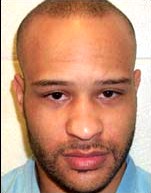
Bobby Lee Ramdass
Murderer Brian Kevin Rosenfeld
Murderer · USA · 1985
Brian Kevin Rosenfeld Brian Kevin Rosenfeld was sentenced to three concurrent l…
23 victims
Brian Kevin Rosenfeld
Murderer · USA · 1985
Brian Kevin Rosenfeld Brian Kevin Rosenfeld was sentenced to three concurrent l…
23 victims
 Russell Ellwood
Murderer · USA · 1991
Russell Ellwood was a former taxi driver. Authorities suspected him of killing…
20 victims
Russell Ellwood
Murderer · USA · 1991
Russell Ellwood was a former taxi driver. Authorities suspected him of killing…
20 victims
 Robert Martines Perez
Murderer · USA · 1994
Name: Robert Martines Perez · Other name used in proceedings: Robert Martinez P…
15 victims
Robert Martines Perez
Murderer · USA · 1994
Name: Robert Martines Perez · Other name used in proceedings: Robert Martinez P…
15 victims
 Billy Frank Vickers
Murderer · USA · 1993
Billy Frank Vickers Vickers was executed by lethal injection in Texas on Januar…
14 victims
Billy Frank Vickers
Murderer · USA · 1993
Billy Frank Vickers Vickers was executed by lethal injection in Texas on Januar…
14 victims
 Carlton Dotson
Murderer · USA · 2003
Summer of 2003 — Carlton Dotson and Patrick Dennehy indicated they were concern…
1 victim
Carlton Dotson
Murderer · USA · 2003
Summer of 2003 — Carlton Dotson and Patrick Dennehy indicated they were concern…
1 victim
 Hiroaki Hidaka
Serial killer · Japan · 1996
Hiroaki Hidaka (日高 広明; Hidaka Hiroaki; April 1962 – December 25, 2006) was a Ja…
4 victims
Hiroaki Hidaka
Serial killer · Japan · 1996
Hiroaki Hidaka (日高 広明; Hidaka Hiroaki; April 1962 – December 25, 2006) was a Ja…
4 victims
 Robert Jackson
Murderer · USA · 1992
Robert W. Jackson, III — defendant; male; white · Elizabeth Girardi — victim ·…
1 victim
Robert Jackson
Murderer · USA · 1992
Robert W. Jackson, III — defendant; male; white · Elizabeth Girardi — victim ·…
1 victim
 Kia Levoy Johnson
Murderer · USA · 1993
Kia Levoy Johnson was convicted of capital murder of William Matthew Rains in t…
1 victim
Kia Levoy Johnson
Murderer · USA · 1993
Kia Levoy Johnson was convicted of capital murder of William Matthew Rains in t…
1 victim
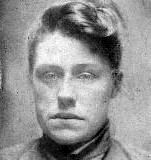 Frances Knorr
Murderer · Australia · 1891
Frances Lydia Alice Knorr (also known as Minnie Thwaites) was born in 1868 in L…
2 victims
Frances Knorr
Murderer · Australia · 1891
Frances Lydia Alice Knorr (also known as Minnie Thwaites) was born in 1868 in L…
2 victims
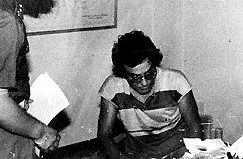 Giancarlo Giudice
—
Defendant: Giancarlo Giudice · Victim profile: Prostitutas italianas (incluyend…
Giancarlo Giudice
—
Defendant: Giancarlo Giudice · Victim profile: Prostitutas italianas (incluyend…
- Gender
- male
- Country
- USA
- Location
- Alexandria/Fairfax County, Virginia, USA
- Date of birth
- 1963
- Age at first offence
- 29
- Characteristics
- robbery, rape, convicted rapist, drug addict, abuse
- Victim profile
- Darrell Ferguson, 19 ( drug dealer) / Mohammad Z. Kayani ( convenience store clerk )
- Method of murder
- Shooting ( .38-caliber snub-nose pistol)
- Date(s) of murder
- July 15 / September 2, 1992
- Years active
- 1992
- Date of arrest
- September 11, 1992
- Status
-
Executed
Executed by lethal injection in Virginia on December 6, 2000
Case details
Bobby Lee Ramdass was executed by lethal injection in Virginia on December 6, 2000.
Timeline
- September 2, 1992 — Mohammed Kayani worked as a convenience store clerk. Bobby Lee Ramdass and his accomplices entered the store, forced the customers to the floor at gunpoint, ordered Kayani to open the store’s safe, and shot Kayani at close range after the initial attempt to open the safe.
- July 15, 1992 — Ramdass gunned down 19-year-old Darrell Ferguson in an alley.
- August 25, 1992 — Bobby Lee Ramdass and three accomplices committed an armed robbery of a Pizza Hut restaurant, abducting one of the victims.
- August 30, 1992 — Bobby Lee Ramdass and two accomplices robbed a taxicab driver, Emanuel Selassie, shot him in the head, and left him for dead; through major surgery and after weeks of unconsciousness, Selassie survived.
- September 11, 1992 — Ramdass was arrested, nine days after the Kayani shooting.
- December 15, 1992 — A jury returned a guilty verdict based on the Pizza Hut robbery.
- January 7, 1993 — A jury rendered a guilty verdict for the Domino’s robbery.
- January 22, 1993 — The trial court entered a judgment of conviction on the Pizza Hut verdict.
- January 30, 1993 — The sentencing phase of the Kayani murder trial was completed, with the jury recommending that Ramdass be sentenced to death.
- February 18, 1993 — The trial court entered judgment on the Domino’s verdict.
- 1993 — Ramdass was given a death sentence for the robbery/murder of a convenience store clerk, Mohammad Kayani, for the September 2, 1992 killing.
- June 12, 2000 — The U.S. Supreme Court denied Ramdass’ appeal relating to jury instruction on parole ineligibility.
- June 1990 — Ramdass was sentenced to death for the robbery and murder of 7-Eleven store clerk Kayani.
- Nov. 23, 1999 — The Supreme Court issued a stay to hear Ramdass’ appeal.
- May 4, 1999 — The case in the U.S. Court of Appeals for the Fourth Circuit was argued.
- August 3, 1999 — The U.S. Court of Appeals for the Fourth Circuit decided the case.
- 1994 — Simmons v. South Carolina was decided.
- April 6, 1993 — The judgment for the Kayani murder was entered.
- December 6, 2000 — Ramdass was executed by lethal injection.
The offence
Robbery and murder of convenience store clerk Mohammad Kayani
Sometime after midnight on September 2, 1992, Mohammed Kayani was working as a convenience store clerk. Bobby Lee Ramdass and his accomplices entered the store and forced the customers to the floor at gunpoint. While Ramdass ordered Kayani to open the store’s safe, accomplices took the customers’ wallets, money from the cash registers, cigarettes, Kool Aid, and lottery tickets.
When Kayani fumbled in an initial attempt to open the safe, Ramdass squatted next to him and yelled at him to open the safe. Close range, Ramdass held the gun to Kayani’s head and pulled the trigger. The gun did not fire at first; but Ramdass tried again and shot Kayani just above his left ear, killing him. Ramdass stood over the body and laughed. He later inquired of an accomplice why the customers were not killed as well.
At his trial, Ramdass said:
“I told the dude to open the safe,”
“He didn’t say nothing. He was just pushing buttons and looking at me. ... I told him to stop looking at me. He was scared. I felt he was scared by the way he was looking at me.”
He also said: “or I’ll blow your f------ head off.”
A witness testified at trial that Ramdass looked at Kayani lying on the floor after he had been shot and remarked:
“That’s for taking too long.”
Ramdass was convicted of capital murder and illegal use of a firearm in the commission of the murder, and he was sentenced to death.
Kayani was described as 34 years old and a recent immigrant from Pakistan who lived in Springfield and was working two jobs to save the money to bring his wife and two children to this country.
Ramdass was described as having killed Kayani because the clerk was unable to open the timed safe at a Springfield convenience store.
Attempted shooting of customers during the robbery
After shooting Kayani, Ramdass attempted to shoot the customers who were lying on the floor during the robbery, but his gun would not fire.
In a statement denying clemency, Gov. Jim Gilmore said:
“Before he fled the convenience store, Ramdass attempted to shoot the customers who were lying on the floor, but his gun would not fire.”
Related crimes described during proceedings
Shooting and robbery of cab driver Emanuel Selassie
On the afternoon of August 30, 1992, Ramdass and two accomplices robbed a taxicab driver, Emanuel Selassie, shot him in the head, and left him for dead. Selassie survived through major surgery and after weeks of unconsciousness.
Robbery and murder described in Virginia’s “future dangerousness” evidence
The prosecution presented evidence of Ramdass’ history of theft-related crimes beginning at age 14 and his pattern of recidivism during periods of escape or probation, including a series of at least six armed robberies within three months of release on mandatory parole after serving four years of a seven-year sentence for robbery. The prosecution detailed that:
- The first two robberies occurred on August 25, 1992, when Ramdass robbed a Pizza Hut in Fairfax County, abducting a woman and hitting a man.
- Four days later, Ramdass robbed a clerk at an apartment-hotel in Alexandria and struck him in the head with a gun.
- On August 30, 1992, he shot and robbed a cab driver.
- Later that evening, he robbed a clerk at a Domino’s Pizza in Arlington.
- He killed Mohammed Kayani on September 2, 1992, during the sixth robbery in this eight-day spree.
Robbery of Pizza Hut restaurant
On December 15, 1992, a jury returned a guilty verdict based on the Pizza Hut robbery. On January 22, 1993, the trial court entered a judgment of conviction on the Pizza Hut verdict.
Robbery of Domino’s Pizza restaurant
On January 7, 1993, a jury rendered a guilty verdict for the Domino’s robbery. On February 18, 1993, the trial court entered judgment on the Domino’s verdict.
The U.S. Supreme Court described the timing relevant to parole eligibility under Virginia’s three-strikes law: a final judgment of conviction had been entered for the Pizza Hut crime; a jury had found Ramdass guilty of the Domino’s crime, but the trial court had not entered a final judgment of conviction; and charges in the Alexandria murder had not yet been filed.
Ramdass’ parole eligibility arguments turned on whether the Domino’s jury verdict counted as a “conviction” for purposes of the three-strikes law at the time the Kayani sentencing jury deliberated.
Investigation and forensic evidence
A firearm identification forensic scientist testified that the gun Ramdass used had cartridges smaller than the 38 caliber cartridges specified for the gun. Mason testified that when the gun’s muzzle was pointed down, the 9 millimeter cartridges slid too far forward to be struck by the firing pin; when the muzzle was pointed up, the cartridge slid back closer to the firing pin, and the gun could be fired.
The gun’s firing difficulty was also reflected in the case narrative describing that after Kayani was shot the gun would not fire when Ramdass attempted to shoot customers.
Trial
Convictions at the Kayani capital trial
A Fairfax County jury found Ramdass guilty of capital murder in the commission of armed robbery and illegal use of a firearm.
The Commonwealth sought the death penalty based on the “future dangerousness” predicate for imposition of the death penalty.
During sentencing deliberations, the jury asked:
“If the Defendant is given life, is there a possibility of parole at some time before his natural death?”
Defense counsel argued that:
“Ramdass will never be out of jail. Your sentence today will insure that if he lives to be a hundred and twenty two, he will spend the rest of his life in prison.”
Over defense counsel’s objection, the trial judge told the jurors:
“You should impose such punishment as [you] feel is just under the evidence and within the instructions of the Court.”
and: “You are not to concern yourselves with what may happen afterwards.”
The jury returned a verdict recommending death on the capital murder count, based upon Ramdass’ “future dangerousness,” and recommending four years imprisonment on the firearm count.
Penalty phase mental health issues and expert assistance
Ramdass argued that trial counsel were constitutionally ineffective for failing to investigate and object regarding the appointment of Dr. Stanton Samenow as his mental health expert, described as “notoriously pro-prosecution,” and for failing to seek alternative mental health testimony.
Ramdass claimed denial of the reasonable assistance of a mental health expert at trial, under:
- Ake v. Oklahoma, and
- Virginia Code § 19.2-264.3:1, entitling indigent capital defendants to the assistance of a mental health expert.
The federal appellate discussion included that Dr. Samenow’s examination and evaluation were challenged.
Sentencing
Death sentence and subsequent parole-ineligibility arguments
The Virginia Governor’s clemency decision was described as based on evidence that after shooting Kayani Ramdass attempted to shoot customers but his gun would not fire.
The U.S. Supreme Court proceeding addressed Simmons v. South Carolina and whether Ramdass was parole ineligible under Virginia’s three-strikes law at the time the jury considered his sentence, and whether the jury should have been instructed on parole ineligibility.
The U.S. Supreme Court stated that it rejected relief and concluded that Simmons was inapplicable because Ramdass was not parole ineligible when the jury considered his case, nor would he have been parole ineligible by reason of a conviction in the case then under consideration by the jury.
At the Kayani sentencing, counsel argued that:
At another point counsel argued:
“I ask you to give him life. Life, he will never see the light of day … .”
The trial court refused the requested instruction about parole ineligibility based on then-settled Virginia law and informed the jury that:
“are not to concern [them]selves with what may happen afterwards.”
The trial judge later sentenced Ramdass to death.
Appeals
U.S. Court of Appeals for the Fourth Circuit
The U.S. Court of Appeals for the Fourth Circuit had case numbers No. 98-30 and No. 98-32, in appeals involving Bobby Lee Ramdass and Ronald J. Angelone, Director, Virginia Department of Corrections.
The court:
- Affirmed in part and reversed in part by published opinion.
- Reversed the district court’s order insofar as it concluded that Simmons required the writ to issue.
- Affirmed the remaining portion of the district court’s order.
U.S. Supreme Court
The U.S. Supreme Court reviewed a decision denying relief in federal habeas corpus and affirmed the denial of relief.
The U.S. Supreme Court stated:
- Simmons is inapplicable to petitioner because he was not parole ineligible when the jury considered his case, nor would he have been parole ineligible by reason of a conviction in the case then under consideration.
- The petitioner was not entitled to the relief he sought.
The U.S. Supreme Court also discussed the sequence of events under Virginia law and explained how parole ineligibility depended on the “authoritative determination” by the Virginia Supreme Court.
The execution had been stayed previously, with the Supreme Court issuing a stay and granting certiorari and later rejecting relief.
Outcome
Bobby Lee Ramdass’ death sentence remained in effect following multiple appeals and habeas corpus proceedings, including U.S. Supreme Court consideration and denial of the parole-ineligibility claim.
A clemency petition was submitted, and Virginia Gov. James S. Gilmore III declined to intervene. In a statement, the governor said:
“Upon a thorough review of the Petition for Clemency, the numerous court decisions regarding this case, and the circumstances of this matter, I decline to intervene.”
Ramdass was pronounced dead at 9:06 p.m.
Aftermath
Ramdass spent time at Greensville Correctional Center in Jarrat visiting with his mother and sister-in-law and talking on the phone with his younger brother, Mark, who was in federal prison.
The execution coincided with an annual protest by Virginians for Alternatives to the Death Penalty, which urged opponents of capital punishment to attend a vigil nearby.
Ramdass was described as the seventh man executed in Virginia that year. The total of 14 from last year was described as making Virginia second only to Texas in executions.
Ramdass’ lead attorney was F. Nash Bilisoly, who sat with Ramdass in the hours before the execution. Bilisoly said:
“We are naturally disappointed in the governor’s decision. . . . We do believe, however, that the governor gave the issue his full consideration.”
Ramdass’ statement before the execution included:
“Redskins are going to the Super Bowl,”
and then he laughed.
Ramdass listed Bilisoly as his next of kin and asked prison officials to release his body to his attorney.
Ramdass said he did not fault the jurors who voted to put him to death, stating:
“The jury was [thinking], 'Damn, we don't want him to get out again.' They were scared and they thought they had no choice,” he said.
Other details
Prior conduct and upbringing described
Ramdass was described as abused by his mother’s boyfriend as a child. The governor’s remarks and other discussion described a childhood involving abuse and a bleak and abusive upbringing.
Ramdass was described by court documents as having spent much of his adult life in prison or selling drugs. It was also stated that he was involved in a “robbery spree” and that he robbed and killed a drug dealer and seriously wounded a cabdriver during yet another robbery.
Additional people and roles mentioned
- Robert F. Horan Jr., Fairfax Commonwealth’s Attorney, said:
“Kayani was such a decent man, scrambling to make a living. He couldn't do what Ramdass ordered him to do. That's why he died.”
- David Botkins, a spokesman for Attorney General Mark Earley, said:
“The claim that Ramdass' attorney is making is one that is frequently made in capital cases, and it's not one that we feel has merit,”
and: “The bottom line is that he was found guilty in a Circuit Court in Fairfax County.” - Judge Raymond A. Jackson, District Judge, was named in the Fourth Circuit case caption.
- Judge Francis D. Murnaghan Jr., of Baltimore, wrote of a “technicality” in dissent, stating:
“Splitting hairs when a man's life is at stake is not becoming to a judiciary or a legal system.”
- Attorney F. Nash Bilisoly said:
“Any jurors who are considering death need to know if life in prison means no eligibility for parole, especially if the jury asks,'' and: “If that jury then comes back with a sentence of death, then I don't think Bobby Ramdass has anything to complain about,” and: “We are not asking for the court to order that he be given life without parole. We're asking that it go back to the jury and let them decide.”
- Attorney F. Nash Bilisoly wrote in his clemency petition that:
“there can be no doubt that it resulted in an uninformed jury that felt it had no choice but to impose the death sentence,”
Clothing, age, and other descriptors included in proceedings
Ramdass was described in different parts of the narrative as 27, 28, and 29. Kayani was described as 34. Ferguson was described as 19. Ramdass’ age during the crime was described as 19, and Ramdass was described as 20 at the time of a summer 1992 robbery and killing spree.
Crimes mentioned beyond Kayani
The materials referenced robberies and killings in connection with:
- A Pizza Hut robbery,
- A Domino’s Pizza robbery,
- A hotel clerk incident at an apartment-hotel in Alexandria,
- A cab driver shooting involving Emanuel Selassie,
- A murder in Alexandria,
- A shooting of Darrell Ferguson in an alley,
- A Bragg Towers incident described as pistol-whipping a clerk,
- A series of armed robberies and an attempted murder.
Quotes from legal filings and trial narratives
During the prosecution’s sentencing arguments (as described in U.S. Supreme Court narrative), the Commonwealth submitted that Ramdass “would commit criminal acts of violence that would constitute a continuing serious threat to society,” citing Va. Code Ann. §19.2—264.4(C) (1993).
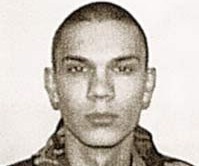
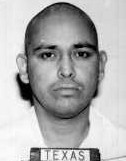
Spotted an error, or have more information about this case?