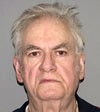
Rudy Bladel
Serial killer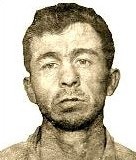 Donald Henry Gaskins
Serial killer · USA · 1969
Donald Henry Gaskins, also known as Donald “Pee Wee” Gaskins, was a serial kill…
200 victims
Donald Henry Gaskins
Serial killer · USA · 1969
Donald Henry Gaskins, also known as Donald “Pee Wee” Gaskins, was a serial kill…
200 victims
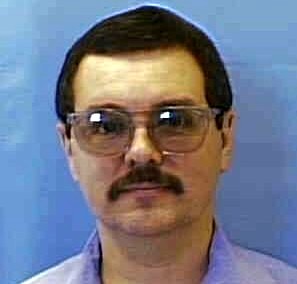 Donald Harvey
Serial killer · USA · 1970
Donald Harvey was known as an American serial killer and a self-professed “Ange…
87 victims
Donald Harvey
Serial killer · USA · 1970
Donald Harvey was known as an American serial killer and a self-professed “Ange…
87 victims
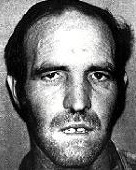 Ottis Toole
Serial killer · USA · 1961
Ottis Elwood Toole (sometimes misspelled as “Otis”) was an American serial kill…
65 victims
Ottis Toole
Serial killer · USA · 1961
Ottis Elwood Toole (sometimes misspelled as “Otis”) was an American serial kill…
65 victims
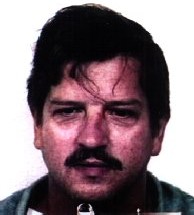 William George Bonin
Serial killer · USA · 1972
William George Bonin was executed by lethal injection in California on February…
44 victims
William George Bonin
Serial killer · USA · 1972
William George Bonin was executed by lethal injection in California on February…
44 victims
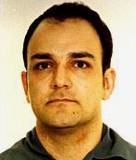 Gerald Stano
Serial killer · USA · 1969
Gerald Eugene Stano (September 12, 1951 – March 23, 1998) was executed by elect…
41 victims
Gerald Stano
Serial killer · USA · 1969
Gerald Eugene Stano (September 12, 1951 – March 23, 1998) was executed by elect…
41 victims
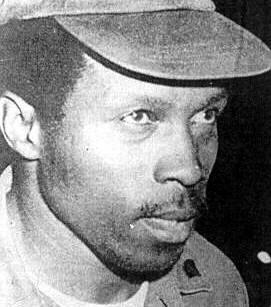 William Henry Hance
Serial killer · USA · 1977
William Henry Hance was executed by electrocution in Georgia on March 31, 1994.…
3 victims
William Henry Hance
Serial killer · USA · 1977
William Henry Hance was executed by electrocution in Georgia on March 31, 1994.…
3 victims
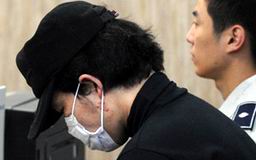 Jeong Sang-jin
Mass murderer · South Korea · 2008
Jeong Sang-jin Jeong Sang-jin was sentenced to death on May 12, 2009. The Nonhy…
6 victims
Jeong Sang-jin
Mass murderer · South Korea · 2008
Jeong Sang-jin Jeong Sang-jin was sentenced to death on May 12, 2009. The Nonhy…
6 victims
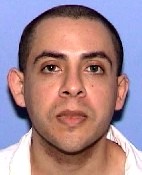 Rodolfo Alvarez Medrano
Mass murderer · 2002
Rodolfo Alvarez Medrano (a/k/a "Kreeper") provided assault weapons used by fell…
10 victims
Rodolfo Alvarez Medrano
Mass murderer · 2002
Rodolfo Alvarez Medrano (a/k/a "Kreeper") provided assault weapons used by fell…
10 victims
 Lindsay Haugen
Murderer · USA · 2015
Lindsay April Haugen was an Army veteran. At the time of the killing, she was a…
1 victim
Lindsay Haugen
Murderer · USA · 2015
Lindsay April Haugen was an Army veteran. At the time of the killing, she was a…
1 victim
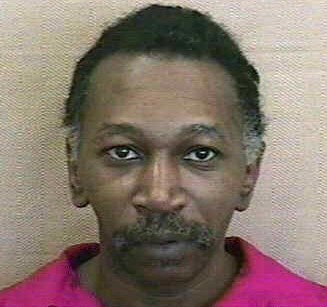 Wendell Flowers
Murderer · USA · 1981
1981 — Wendell Flowers was serving a life sentence for the murder of 81-year-ol…
2 victims
Wendell Flowers
Murderer · USA · 1981
1981 — Wendell Flowers was serving a life sentence for the murder of 81-year-ol…
2 victims
- Gender
- male
- Country
- USA
- Location
- Michigan/Indiana, USA
- Date of birth
- 1933
- Age at first offence
- 30
- Characteristics
- revenge, shooting spree, motive unknown
- Victim profile
- Engineer Roy Bottorf and his fireman, Paul Overstreet / Engineer John Marshall / James McCrory, conductor / Robert Blake, flagman; William Gulak, conductor; and Charles Burton, railroad fireman
- Method of murder
- Shooting
- Date(s) of murder
- 1963/1968/1976/1978
- Years active
- 1963–1978
- Date of arrest
- March 22, 1979
- Status
-
Died in custody
Sentenced to three consecutive life terms in Michigan; died in prison on November 15, 2006
Case record
Rudy Bladel was a laid off railroad worker who used a shotgun to kill railroad employees. Between 1963 and 1978, his killings involved both Michigan and Indiana, and he was suspected in the deaths of four other railroad employees. He was convicted in 1978 of murdering three Michigan railroad employees.
Bladel died of thyroid cancer in Jackson, Michigan while serving his life sentences. His death occurred on November 15, 2006.
Rudy Bladel was dubbed “The Railway Sniper” for his string of shooting throughout the mid 60’s and 70’s.
Background
Rudy Bladel was 73 years old when he died.
Bladel had a longstanding interest in trains. His father was a railroad fireman for the railroad in Chicago, Illinois, and Bladel followed his father’s work.
In 1950, after graduating from high school, Bladel joined the Air Force and was transferred to Korea, where he worked on the railroad during his duty.
After his Air Force stint, Bladel took a job at the same railroad company his father worked for. He worked for the old Rock Island and Pacific in Niles, Illinois.
During 1959, the railroad’s base of operations moved to Elkhart, Indiana. Bladel was among the employees fired after protests from employees based in Niles were unavailing.
Bladel then found another railroad job with Indiana’s Harbor Belt line in Hammond, Indiana after being laid off for the Rock Island and Pacific railroad.
The offence
Bladel shot railroad employees to avenge loss of job.
On the third of August, 1963, Bladel claimed his first two victims at Hammond, Indiana. Engineer Roy Bottorf and his fireman, Paul Overstreet, were found dead on that date in the cab of their train in the Harbor Belt rail yards. Each man had been hit by two rounds from a .22-caliber weapon. The crime remained unsolved.
On the sixth of August, 1968, a shotgun ambush claimed engineer John Marshall as he climbed aboard his train in Elkhart, Indiana. Witnesses described a hulking stranger glimpsed in silhouette who waddled from the murder scene with a distinctive, almost ape-like stride.
Police later secured permission for surveillance after Bladel drew a pistol in the railroad yard and shot another engineer. The engineer managed to disarm him, wounding Bladel with a bullet from his own .357 magnum. Bladel pleaded guilty to aggravated battery and received a prison term of one to five years. He served eighteen months and was paroled in 1973. Harbor Belt executives refused to reinstate him in his old position with the line.
On April 5, 1976, James McCrory was seated in his locomotive in the yard at Elkhart. A shotgun slug crashed through the window, shattering his skull and killing him on impact.
On New Year’s Eve in 1978, Bladel carried a shotgun into the rail yards at Jackson, Michigan. He surprised flagman Robert Blake and William Gulak, a conductor, in the depot while they were waiting for a train. Bladel cut them down with close-range blasts of buckshot. Charles Burton, a railroad fireman, was shot and killed as he came to work. The depot’s ticket manager described the gunman for police.
Later, serial numbers traced the weapon to Rudy, and a test-fire linked the firing pin to cartridges recovered at the murder scene. Bladel had been suspected in additional railroad deaths, and approximately eight victims were claimed with the murders being spaced about apart.
Investigation
Bladel was suspected in murders spanning thirteen years until police could not connect him to the murders at one stage, after he was arrested on weapons charges.
An engineer in Hammond, Indiana, who had shared a cab with Rudy in the old days, told police about a fireman who had seemed obsessed with graphic reenactments of the early shootings. Bladel was briefly held for questioning about the Jackson massacre and was soon released for lack of solid evidence.
Three months elapsed before a group of hiker’s found Bladel’s shotgun in a park outside of Jackson. The weapon was traced to Bladel, and a test-fire linked the firing pin to cartridges recovered at the murder scene.
Bladel was booked for triple murder on March 22, 1979, and he confessed to the Jackson crimes. He changed his story at his trial in August.
Arrest
In January 1978, Bladel was arrested as he left a South Bend gun shop carrying a brand-new magnum. Ownership of firearms is forbidden for convicted felons. He served eleven months on weapons charges.
After purchasing a firearm while under police custody, Bladel was arrested. The bullet pattern from the gun matched that of bullets found at the murder scene.
Bladel was seen at the scene of a crime that had been just committed toward another engineer of the Jackson, Michigan railroad, and the witness described Bladel to police, leading to his arrest. He was finally arrested and sentenced to three life terms to be spent in a prison in Jackson, Michigan.
Trial
At trial, Bladel contended that he sold the shotgun to an unknown individual before the murders.
Bladel confessed to the Jackson crimes before trial. At his trial in August, he changed his story.
Bladel was convicted in the face of his contention and drew three consecutive life terms in prison.
Sentencing
Bladel drew three consecutive life terms in prison for three Michigan railroad murders.
In the second trial held in June of 1987, Bladel was convicted once again. The life imprisonment terms were made consecutive, ensuring he would not be able to walk the streets.
Appeals
In 1985, the Michigan Supreme Court overturned the verdict in his murder trial on grounds that Bladel had confessed without a lawyer present to advise him of his rights.
The ruling was upheld by the United States Supreme Court on April Fool’s Day, 1986.
A second trial was held in June of 1987.
Outcome
Rudy Bladel died in prison of thyroid cancer in Jackson, Michigan on November 15, 2006.
Aftermath
After Bladel’s death, statements were made by people connected to local law enforcement and journalism. Thomas Hutton, a retired Jackson police detective, said: “I'm not going to shed any tears for him,” and “He destroyed three families' lives.” David Kolb, a former Citizen Patriot reporter who covered Bladel’s crimes, said: “Good riddance,” and “A lot of families can sleep better tonight,” and Gerald Rand, another retired detective, said: “A lot of families can sleep better tonight.”
Russ Marlan, a Department of Corrections spokesman, said Bladel had been in and out of hospital care since 1988.
For years, Bladel sent letters of complaint to the outside world. The Department of Corrections lists one alias for Bladel: “Amtrak.”
Other details
The motive was described as PC-revenge, and the method of offence was stated as “Shot railroad employe e s to avenge loss of job.”
Bladel did not drink and did not smoke.
When describing Bladel, Thomas Hutton said: “He relished the fact they were frightened of him,” and also said: “He was legend among the guys who worked for the railroad. He would glare down from overpasses when trains went by. He called it 'giving them static.' ”
Gerald Rand said: “He had no feeling for people,” “He was a loner. He had no friends. He wasn't involved with women. He didn't drink. He didn't smoke. None of that stuff.”
David Kolb said Bladel was “A cold, calculating killer. Cold as ice,” and Hutton said Bladel was “a hulking kind of figure.”
Spotted an error, or have more information about this case?