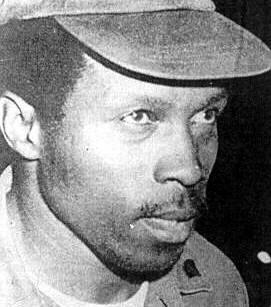
William Henry Hance
Serial killer Donald Henry Gaskins
Serial killer · USA · 1969
Donald Henry Gaskins, also known as Donald “Pee Wee” Gaskins, was a serial kill…
200 victims
Donald Henry Gaskins
Serial killer · USA · 1969
Donald Henry Gaskins, also known as Donald “Pee Wee” Gaskins, was a serial kill…
200 victims
 Carl Eugene Watts
Serial killer · USA · 1974
Carl Eugene Watts (born November 7, 1953; died September 21, 2007), also known…
100 victims
Carl Eugene Watts
Serial killer · USA · 1974
Carl Eugene Watts (born November 7, 1953; died September 21, 2007), also known…
100 victims
 Rodney Alcala
Serial killer · USA · 1977
Rodney James Alcala (born August 23, 1943) was also known as Rodrigo Jacques Al…
100 victims
Rodney Alcala
Serial killer · USA · 1977
Rodney James Alcala (born August 23, 1943) was also known as Rodrigo Jacques Al…
100 victims
 Donald Harvey
Serial killer · USA · 1970
Donald Harvey was known as an American serial killer and a self-professed “Ange…
87 victims
Donald Harvey
Serial killer · USA · 1970
Donald Harvey was known as an American serial killer and a self-professed “Ange…
87 victims
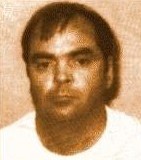 Donald Leroy Evans
Serial killer · USA · 1975
Donald Leroy Evans (born July 5, 1957) was an American serial killer who murder…
60 victims
Donald Leroy Evans
Serial killer · USA · 1975
Donald Leroy Evans (born July 5, 1957) was an American serial killer who murder…
60 victims
 Michael Swango
Serial killer · USA · 1981
Michael Swango (Joseph Michael Swango) was a physician and American serial kill…
60 victims
Michael Swango
Serial killer · USA · 1981
Michael Swango (Joseph Michael Swango) was a physician and American serial kill…
60 victims
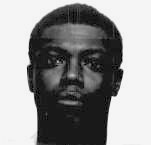 Carl Johnson
Murderer · USA · 1978
Carl Johnson (#633) was executed by lethal injection in Texas on September 19,…
1 victim
Carl Johnson
Murderer · USA · 1978
Carl Johnson (#633) was executed by lethal injection in Texas on September 19,…
1 victim
 Renuka Shinde
Murderer · India · 1990
Renuka Shinde was sentenced to death on June 29, 2001. The High Court upheld th…
9 victims
Renuka Shinde
Murderer · India · 1990
Renuka Shinde was sentenced to death on June 29, 2001. The High Court upheld th…
9 victims
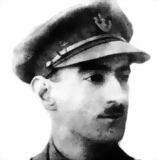 Frederick Holt
Murderer · United Kingdom · 1919
Frederick Rothwell Holt was a Lieutenant during the First World War. After bein…
1 victim
Frederick Holt
Murderer · United Kingdom · 1919
Frederick Rothwell Holt was a Lieutenant during the First World War. After bein…
1 victim
 John Tawell
Murderer · United Kingdom · 1845
John Tawell was a British murderer. In 1845, he became the first person to be a…
1 victim
John Tawell
Murderer · United Kingdom · 1845
John Tawell was a British murderer. In 1845, he became the first person to be a…
1 victim
- Gender
- male
- Country
- USA
- Location
- Georgia, USA
- Date of birth
- 1951
- Age at first offence
- 26
- Characteristics
- murder for hire, torture, mutilation, rape, rapist
- Victim profile
- Women (prostitutes)
- Method of murder
- Beating with a jack handle
- Date(s) of murder
- 1977 - 1978
- Years active
- 1977–1978
- Date of arrest
- April 4, 1978
- Status
-
Executed
Executed by electrocution in Georgia on March 31, 1994
Case record: William Henry Hance
William Henry Hance was executed by electrocution in Georgia on March 31, 1994.
Background
Hance was a Fort Benning soldier stationed at Fort Benning in Columbus, Georgia. During a period when the city of Columbus experienced killings referred to as the “Stocking Stranglings,” a serial killer named Carlton “The Stocking Strangler” Gary was operating in Columbus, Georgia, and elderly white women were among the victims associated with that case.
Hance sent letters and made threats to draw attention away from his own crimes. The letters were written on Army stationery and were signed “Forces of Evil,” a fictitious group Hance created. The letters threatened that a black woman would die unless authorities could locate the “Stocking Strangler,” and the letters also demanded a $10,000 ransom.
The offence
Karen Hickman murder
On September 16, 1977, the nude body of Karen Hickman, 24, was found at Fort Benning near Colombus, Georgia. Hickman had been beaten and run over with a car. Authorities initially developed no real clues or leads, and the murder was put on the backburner because of the presence of serial killer Carlton “The Stocking Strangler” Gary, who was operating in Colombus at that time.
Hance was later tried for the Hickman murder in military court and was found guilty. He received a sentence of life imprisonment with hard labor. A review board did not agree and a re-trial was ordered. Military prosecutors decided against this, and Hance began his wait on Georgia’s death row, where he was put to death in 1994.
Brenda Gail Faison (Gail Jackson) murder and attempted extortion
On or about February 28, 1978, Hance, a soldier stationed at Fort Benning in Columbus, Georgia, killed prostitute Gail Jackson, also known as Brenda Gail Faison, after she propositioned him. Hance knocked her unconscious with a karate chop and then repeatedly struck her in the face with a jack handle. The beating destroyed her face; bone fragments were scattered about the area, and brain tissue was beaten from the skull. Hance buried Gail’s body in a shallow grave he dug with an entrenching tool.
A car her body had been connected to was discovered on March 5, 1978, at the Sand Hill Bar and Grill in Columbus, Georgia.
Irene Thirkield murder
On March 15, Hance killed prostitute Irene Thirkield in a similar manner. Her body was left on Fort Benning grounds. Detectives learned that Hance was the last person seen with Irene Thirkield. Hance attacked her after she asked for a ride to the Sand Hill bar and then solicited him after removing her clothes. The attack was described as so severe that her entire head was missing from her body, and her body was hidden on the military reservation behind a pile of logs. Her headless body was later recovered behind some logs near a rifle range.
Investigation
A series of unsolved strangulation murders terrorized Columbus between September 1977 and April 1978, and evidence had determined that the “Stocking Strangler” was black.
Hance wrote letters on Army stationery addressed to Columbus authorities and made threats connected to the killings. He also sent a letter to the local newspaper.
Chief Curtis E. McClung of the Columbus Police Department received a series of letters between March 3, 1978, and April 5, 1978, written on United States Army stationery by an individual who identified himself as “Chairman of the Forces of Evil.” The letters were about Ms. Jackson and Irene Thirkield, both black women. The writer threatened them with death if the Columbus, Georgia “stocking strangler” was not apprehended, or, in the alternative, if the “Forces of Evil” did not receive $10,000.
A letter received on March 27, 1978, stated that one of Ms. Jackson’s arms would be broken and that there would be a sharp blow to her head to cause death, and the author indicated authorities would receive a telephone call to detail the location on Sand Hill where the body was located.
On March 30, 1978, Fort Benning Military Police telephone operators and the Columbus Police Communications Department received telephone calls from a black male who identified himself as “Chairman of the Forces of Evil.” The caller described where Jackson’s body was located; the body was found that day. Jackson’s entire face and the front portion of her skull had been smashed; portions of her jawbone, teeth, bone chips, and partial teeth were discovered near the site. Her left elbow had been completely dislocated. According to the medical examiner, the cause of death was multiple blows to the head that could have been inflicted with a tire tool or jack handle.
On April 3, 1978, the body of Irene Thirkield was recovered on the Fort Benning reservation. Her head was virtually missing, and she had sustained considerable skull damage. The cause of death was massive blunt force trauma to the head that could have been inflicted with an automobile jack. Other similarities existed between Jackson and Thirkield: both bodies were recovered from wooded semi-secluded areas not far from access roads and in the same geographical area; both victims had been dragged from the road; both were black females who were discovered in various stages of undress.
Fort Benning Criminal Investigation personnel learned that Hance was the last person seen with Irene Thirkield.
Arrest
On April 4, 1978, after being advised of his Miranda rights, Hance agreed to go to headquarters office. In his statement to the authorities, he admitted to capturing the women, writing letters to the Columbus Police Department, and placing telephone calls, asserting that his actions resulted from threats made to him by the “Forces of Evil.” On April 5, 1978, Hance indicated that he wished to confess, gave a statement, and signed it.
The appeals record described that on April 4, 1978, an officer reviewing tapes of anonymous phone calls recognized the distinctive voice and fingered a 26-year-old private, William Hance, as the caller. He was arrested that day and charged with murder and attempted extortion on April 5.
Trial
Civilian trial: Brenda Gail Faison (Gail Jackson) murder; attempted theft by extortion
In the Superior Court of Muscogee County, Georgia, a jury convicted Hance of the murder of Brenda Gail Faison (a/k/a Gail Jackson) and of attempted theft by extortion. The jury sentenced him to death for the murder. The jury also sentenced him to five years’ imprisonment for attempted extortion.
The Georgia Supreme Court affirmed the convictions and sentences. It was further stated that the Supreme Court of Georgia affirmed the convictions and sentences; certiorari was denied by the United States Supreme Court.
Hance later recanted and claimed innocence in the events leading to the confessions, though he initially confessed in custody.
Military trial: Karen Hickman and Irene Thirkield murders
Hance was tried in military court for the Hickman and Thirkield murders, after a conviction in civilian court for the Jackson/Faison slaying. He was found guilty and sentenced to life with hard labor. Military prosecutors decided against this, allowing Hance to begin his wait on Georgia’s death row.
Sentencing
Hance was sentenced to death for the murder of Brenda Gail Faison (a/k/a Gail Jackson) and was sentenced to five years’ imprisonment for attempted extortion. For the Hickman and Thirkield murders, he was sentenced to life imprisonment with hard labor in military court, and a review board ordered a re-trial. Military prosecutors decided against a re-trial.
Appeals
State and federal habeas history
Hance’s conviction and death sentence were affirmed by the Georgia Supreme Court, with subsequent denial of certiorari.
Hance sought habeas corpus relief in state court, which was dismissed by the Superior Court of Butts County, Georgia, after a hearing. The Georgia Supreme Court denied his application for a certificate of probable cause to appeal, and the United States Supreme Court denied certiorari.
A federal district court denied his habeas corpus application without an evidentiary hearing and granted a certificate of probable cause to appeal and granted a stay of execution pending appeal.
An Eleventh Circuit opinion addressed issues including confessions and waiver, competency to stand trial and the need for a competency hearing, prosecutorial misconduct during sentencing, jury instructions on intent and malice, exclusion of mitigating evidence, removal of prospective jurors opposed to the death penalty, and the failure to charge on venue. The court held that the exclusion of Syble Melton and Mary Turpin was a constitutional violation requiring reversal of Hance’s sentence, and remanded for further proceedings.
The record described that, for reasons stated in Parts VII and X of the Eleventh Circuit opinion, petitioner's death sentence was set aside and the case was remanded to the district court with directions for the State of Georgia to determine, within a reasonable time, whether to conduct a new sentencing proceeding or to vacate the sentence and impose less than death in accordance with state law.
A later Eleventh Circuit decision affirmed the district court’s denial of Hance’s petition for habeas corpus. That appeal addressed an ineffective assistance of counsel claim at a resentencing trial and other arguments, and it affirmed.
Juror and clemency disputes referenced at the time of execution
A last-minute clemency petition was rejected by the Georgia Board of Pardons and Paroles. It was stated that the only black juror, Gayle Daniels, had said she had not voted for the death penalty, believing Hance was too mentally impaired to be executed, and that the jury foreman lied in saying the verdict was unanimous. Another juror, Patricia LeMay, corroborated her story in a signed affidavit.
Hance’s lawyer, Gary Parker, said he would appeal to the Georgia Supreme Court and, if necessary, to the United States Supreme Court. Prosecutors and officials defended actions taken in handling the case.
A United States Supreme Court Justice, Anthony M. Kennedy, lifted a temporary stay that had delayed the execution initially scheduled for 7 P.M. It was also stated that Supreme Court Justice Harry A. Blackmun dissented, describing the case as a delusion about capital punishment’s consistency with the Constitution and stating there was substantial evidence that Hance was mentally retarded and mentally ill, and that there was reason to believe his trial and sentencing proceedings were infected with racial prejudice. The dissent referenced a sentencer coming forward to say she did not vote for the death penalty because of his mental impairments.
It was also described that the Georgia State Board of Pardons and Paroles had a mistaken reference to another person’s name in a key paragraph of an order denying a stay of execution.
Outcome
Hance was executed by electrocution in Georgia on March 31, 1994.
On March 31, 1994, it was stated that Hance was pronounced dead at 10:10 P.M. It was also stated that he maintained his innocence in a seven-minute statement before his execution, asking: “Why are you executing an innocent man?” “Why? Why? Why?” His execution highlighted once again issues of justice and race swirling around the death penalty, including claims regarding the mental condition of Hance and juror statements.
Other details
Hance’s letters and threats
Hance sent five letters to the Chief of Police and one to the local newspaper between March 3, 1978, and April 5, 1978. The letters were written on Army stationery. They demanded that either the Columbus strangler be caught by a certain date or that a female named Gail Jackson be executed. The letters were signed “Forces of Evil,” the fictitious group created by Hance.
In at least the second of these letters, the demand presented was either apprehension of the Columbus strangler or a $10,000 ransom in return for the victim’s safety. The letters included threats connected to Irene Thirkield and indicated she would die on June 1 if demands were not met.
It was stated that Hance placed an Army cap with a different unit insignia than his unit near the crime scene to avert suspicion.
Additional evidentiary details described
Handwriting samples obtained from Hance were matched with handwriting on the letters received by the chief of police. A fingerprint from one of the letters was determined to be that of Hance.
Confessions and recantation described
Hance confessed to the murders in custody but later recanted and claimed innocence. He also gave statements in which he admitted writing letters and making telephone calls for “The Forces of Evil” but said he had been forced to do so by the organization.
In one statement, Hance said Gail Jackson propositioned him for $20. He left with her and drove a short distance when she began to disrobe, and he stopped the vehicle, became upset, and grabbed her. When she attempted to escape, he struck her with a “karate chop” across her head. She fell across the door, bleeding; he pulled her into the woods and returned to his vehicle to pick up a jack handle. Upon finding Jackson still breathing, he hit her in the head until she was dead.
In another statement, Hance indicated Jackson’s proposition severely upset and angered him, admitted hearing “something pop” while dragging her into the woods, and stated he was the only member of the “Forces of Evil.”
Hance’s statements regarding the Irene Thirkield murder were also described as including an admission of killing her.
Psychiatric testimony referenced at resentencing
A clinical psychologist, Lewis R. Lieberman, testified for the defense. He testified that Hance suffered from an atypical personality disorder characterized by egocentrism, an inability to empathize with others, impulsivity, poor judgment, and difficulty admitting wrongdoing. Lieberman stated there was no organic basis for the personality disorder and that Hance knew the difference between right and wrong. He testified that chances of rehabilitation were poor and that people with personality disorders rarely improve over time and that Hance had not “mellowed” in the six years since first examined.
Ineffective assistance of counsel claim referenced in federal appeal
At a resentencing trial, Hance argued ineffective assistance of counsel by Thomas Flournoy. The federal appeal deferred to state habeas findings that Hance instructed Flournoy not to contact and involve members of his family and that Flournoy complied due to fear of losing Hance’s cooperation.
The federal appeal stated that Flournoy engaged Dr. Lewis Lieberman and presented substantial mitigating evidence, including testimony from First Sergeant Ronald R. Nelson, Charles M. Westcott, the warden at the Muscogee County Jail, Assistant Warden Daniel Bettis, and a counselor at the State Prison in Jackson, Georgia, along with Stephen Clemmons urging mercy and forgiveness.
Other factual disputes reflected in contemporaneous statements
It was stated that juror Gayle Daniels said she did not vote for the death penalty and that other jurors pressured her to reach a verdict, and that Patricia LeMay corroborated in an affidavit.
It was also stated that Hance appealed his death sentence on the ground that he was mentally retarded and that juror statements raised concerns about whether deliberations reached a unanimous verdict. Prosecutors and officials denied wrongdoing and defended handling of the case.

Spotted an error, or have more information about this case?