Marie Boyer
Murderer The Marquise de Brinvilliers
Murderer · France · 1664
Marie-Madeleine-Marguerite d'Aubray, Marquise de Brinvilliers (c. 1630–1676) wa…
54 victims
The Marquise de Brinvilliers
Murderer · France · 1664
Marie-Madeleine-Marguerite d'Aubray, Marquise de Brinvilliers (c. 1630–1676) wa…
54 victims
 Florence Rey
Murderer · France · 1994
Florence Rey was born August 25, 1975. She was 19 years old at the time of the…
4 victims
Florence Rey
Murderer · France · 1994
Florence Rey was born August 25, 1975. She was 19 years old at the time of the…
4 victims
 Simone Weber
Murderer · France · 1980
Simone Weber was 60 years old at trial. She was described as “round and dowdy”…
2 victims
Simone Weber
Murderer · France · 1980
Simone Weber was 60 years old at trial. She was described as “round and dowdy”…
2 victims
 Charlotte Corday
Murderer · France · 1793
Marie-Anne Charlotte Corday d'Armont (July 27, 1768 – July 17, 1793), known by…
1 victim
Charlotte Corday
Murderer · France · 1793
Marie-Anne Charlotte Corday d'Armont (July 27, 1768 – July 17, 1793), known by…
1 victim
 Denise Labbé
Murderer · France · 1954
Denise Labbé was convicted of the murder of her 2-year-old daughter, Catherine.…
1 victim
Denise Labbé
Murderer · France · 1954
Denise Labbé was convicted of the murder of her 2-year-old daughter, Catherine.…
1 victim
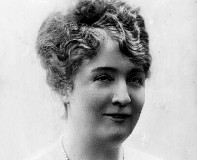 Henriette Caillaux
Murderer · France · 1914
Henriette Caillaux was the wife of France's minister of finance, Joseph Caillau…
1 victim
Henriette Caillaux
Murderer · France · 1914
Henriette Caillaux was the wife of France's minister of finance, Joseph Caillau…
1 victim
 Ryan Matthews
Homicide ? · USA · 1997
Ryan Matthews was an African American juvenile who was 17 years of age at the t…
1 victim
Ryan Matthews
Homicide ? · USA · 1997
Ryan Matthews was an African American juvenile who was 17 years of age at the t…
1 victim
 Leroy Dean McGill
Murderer · USA · 2002
Leroy Dean McGill Leroy Dean McGill was a twice convicted felon for armed robbe…
1 victim
Leroy Dean McGill
Murderer · USA · 2002
Leroy Dean McGill Leroy Dean McGill was a twice convicted felon for armed robbe…
1 victim
 Marcel Petiot
Serial killer · France · 1942
Marcel André Henri Félix Petiot was a French doctor. He was convicted of multip…
27 victims
Marcel Petiot
Serial killer · France · 1942
Marcel André Henri Félix Petiot was a French doctor. He was convicted of multip…
27 victims
 Lisl Auman
Murderer · USA · 1997
Lisl Auman (defendant) · Bruce VanderJagt (Denver police officer; victim) · Ann…
1 victim
Lisl Auman
Murderer · USA · 1997
Lisl Auman (defendant) · Bruce VanderJagt (Denver police officer; victim) · Ann…
1 victim
 Catherine Hayes
Murderer · United Kingdom · 1726
Catherine Hayes (also spelled Catharine Hayes) was an English murderess. Cather…
1 victim
Catherine Hayes
Murderer · United Kingdom · 1726
Catherine Hayes (also spelled Catharine Hayes) was an English murderess. Cather…
1 victim
 Kenneth Biros
Murderer · USA · 1991
Kenneth Biros was a male convicted in Trumbull County. He was incarcerated as I…
1 victim
Kenneth Biros
Murderer · USA · 1991
Kenneth Biros was a male convicted in Trumbull County. He was incarcerated as I…
1 victim
- Gender
- female
- Country
- France
- Location
- Marseille, Provence-Alpes-Côte d'Azur region, France
- Date of birth
- 1859
- Age at first offence
- 18
- Characteristics
- parricide, jealousy
- Victim profile
- Marie Salat Boyer (her mother)
- Method of murder
- Stabbing with knife
- Date(s) of murder
- March 19, 1877
- Years active
- 1877
- Date of arrest
- 4 days after
- Status
-
Released
Sentenced to penal servitude for life; released in 1892 after conduct in prison was repentant and exemplary
Background
Marie Boyer was the daughter of M. Boyer, a retired merchant who lay dying in the town of Montpellier in May 1874. M. Boyer was about forty-six years of age and was confined to his bed for some months, crippled by rheumatic gout.
Marie Boyer was fifteen years old. She was educated in a convent at Marseilles. M. Boyer felt a great longing to see her and embrace her for the last time. M. Boyer’s friend offered to go to Marseilles to fetch her.
A letter from the Mother Superior to Marie Boyer’s mother said:
"You are happy," the Mother Superior had written to her mother, "very happy never to have allowed the impure breath of the world to have soiled this little flower. She loves you and her father more than one can say."
Marie Boyer was found dressed in the costume of a novice, and was told that she had expressed her desire to take, one day, her final vows.
Marie Boyer refused to leave the convent. When asked to go to her dying father, she said:
"Take me away from here?"
The friend and the Mother Superior tried in vain to bend her resolution. Marie Boyer said she would go only if she could save her father, and since it was impossible and she dreaded going out into the world again, she would stay and pray in the chapel for her father. M. Boyer died before he could learn of his daughter’s refusal.
M. Boyer had left a widow, a dark handsome woman forty years of age. Some twenty years before his death, Marie Salat had come to live with M. Boyer as a domestic servant. M. Boyer fell in love with her, she became his mistress, and a few months before the birth of Marie Boyer, M. Boyer made her his wife.
Madame Boyer’s husband’s long illness gave her an opportunity to carry on an intrigue with Leon Vitalis, a young bookseller’s assistant aged twenty-one. At the time of M. Boyer’s death, Madame Boyer spent the night with her lover. M. Boyer was ignorant of her infidelity and accepted help from Vitalis, whom his wife described as a relative, to manage his affairs.
M. Boyer left almost the whole of his fortune—about 100,000 francs—to his daughter, appointing her mother as her legal guardian with a right to the enjoyment of the income on the capital until Marie should come of age.
Madame Boyer withdrew Marie from the convent to prevent the fortune passing into the hands of the sisterhood if Marie persisted in taking the veil. Marie Boyer left the convent with demonstrations of genuine regret, becoming a tall and attractive woman with a slight and elegant figure, dark hair and eyes, and a charming manner. Away from convent influence, her religious devotion became a thing of the past, and she gave herself up to music and theatre.
Leon Vitalis’ influence reached Marie Boyer as her charms were noticed. Vitalis helped himself to money and opportunity with Madame Boyer’s funds, after which Vitalis combined trading, money-lending, and the sale of improper books and photographs.
Madame Boyer was jealous and suspicious. She sent Marie to complete her education at a convent school in Lyons in April 1875.
During Marie Boyer’s absence, Marie and Vitalis arranged to correspond clandestinely. Marie Boyer was ignorant of Vitalis’ relations with her mother. When Marie returned home, Vitalis’ intimacy with Madame Boyer had been displayed before her daughter, with the help of literature from Vitalis.
Marie Boyer did not return to the school at Lyons. In the winter of 1875 Madame Boyer gave up the country house and settled in one of the suburbs of Montpellier with her daughter.
The offence
In the middle of August (after Marie Boyer came home from Lyons), Vitalis made concealment impossible by acting openly, while Madame Boyer paraded her intimacy with Vitalis before her daughter, aggravating jealousy and hatred between mother and daughter.
Madame Boyer was later confined to her bed after falling ill. During the illness, Vitalis suggested a plan and asked Marie Boyer if she had any objection to a crime. Marie hesitated; the victim was her mother. Vitalis promised she should be strangled, and Marie ultimately consented. The crime was planned with the aim of ending the situation, and the plan was linked to Vitalis’ need to dismiss him and to Marie losing her lover.
On the morning of March 19, Madame Boyer rose early to go to Mass. Before she went out, she reminded Vitalis that this was his last day in her service and that when she returned she would expect to find him gone. After a time when Madame Boyer was absent, Vitalis struck Madame Boyer violently in the chest after heated words. Madame Boyer fell back on a sofa, calling to her daughter to assist. Marie Boyer attempted to drown her mother’s cries by banging the doors and opening and shutting drawers.
Vitalis attempted to throttle his victim and called to Marie Boyer to shut the front doors of the two shops. To do so, Marie passed through the sitting-room and witnessed Vitalis’ unsuccessful efforts to strangle her mother. Marie shut the doors and then retired into the milliner’s shop to await the issue. Vitalis later called for the large cheese knife. Vitalis had caught up a kitchen knife, but it slipped from his grasp during struggles. Marie retrieved the knife and returned to the sitting-room, where a struggle took place. Madame Boyer eventually released Vitalis’ hold and sank back exhausted. With the cheese knife, Vitalis killed Madame Boyer.
After the killing, Marie and Vitalis dealt with the body. The cellar under the kitchen seemed an obvious place of concealment. With the help of a cord, the body was lowered into the cellar, and Marie washed the floor of the sitting-room.
Vitalis had already considered disposal of the body. He had bought a pick and spade with the intention of burying Madame Boyer in the soil under the cellar, but the Rue de la Republique was built on a rock and the ground could not be dug.
They decided to throw the body into the sea. Since a sea disposal required access, they decided to dismember the body and disfigure the face so it would be unrecognisable. Marie fetched the large cheese knife earlier during the fight; the dismemberment and face-disfigurement were carried out by Vitalis in the presence of Marie, after which they set out at midnight to look for a convenient place.
On the morning of the 20th, the lovers were seen counting money and valuables taken from Madame Boyer’s cash-box.
Investigation
A shop-boy would be coming back soon after the killing. Vitalis lied to the shop-boy that Madame Boyer would return to Montpellier the same evening and that Vitalis would accompany her to the station, then slip away just as the train started.
The shop-boy returned to the station and did not see Vitalis or Madame Boyer there, then suspected a mystery. In the evening, after the shops were closed, the shop-boy and an inquisitive neighbour consulted together and informed the Commissary of Police about Madame Boyer’s disappearance. The Commissary promised to investigate and was then informed of the discovery of two parcels containing human remains in a ditch outside Marseilles.
The Commissary called back the shop-boy and took him to view the body at the Morgue. The shop-boy identified the body as that of his late mistress by the clothes.
The Commissary went directly to the shops in the Rue de la Republique, where he found the young lovers preparing for flight. They initially denied knowledge of the crime and said that Madame Boyer had gone to Montpellier. They were arrested.
After arrest, they confessed their guilt to the examining magistrate.
Arrest
Vitalis and Marie Boyer were arrested when the Commissary of Police found them in the Rue de la Republique preparing for flight. They initially denied the crime and said Madame Boyer had gone to Montpellier, before confessing their guilt to the examining magistrate.
Trial
Vitalis and Marie Boyer were tried before the Assize Court at Aix on July 2, 1877. Vitalis was described as mean and insignificant in appearance, thin, round-backed, and with a bilious complexion. Marie Boyer was described as a pretty, dark girl with features cold in expression and of dainty and elegant manner.
At her trial, during her interrogatory, the President sent Vitalis out of court because she seemed still to be under Vitalis’ influence.
Marie Boyer wrote to the examining magistrate about her mother’s murder:
"I cannot think how I came to take part in it. I, who wouldn't have stayed in the presence of a corpse for all the money in the world."
Sentencing
Vitalis was condemned to death. He was executed on August 17. He died fearful and penitent, acknowledging his miserable career as a warning to misguided youth.
Extenuating circumstances were accorded to Marie Boyer. She was sentenced to penal servitude for life.
Appeals
No appeal is described.
Outcome
Marie Boyer was sentenced to penal servitude for life. Her conduct in prison was described as repentant and exemplary, and she was released in 1892.
Aftermath
M. Proal acted as examining magistrate in the case of Vitalis and Marie Boyer. M. Proal was described as a distinguished French judge and the author of important works on crime.
M. Proal summed up his impression of the two criminals in a quoted statement:
"Here is an instance of how greed and baseness on the one side, lust and jealousy on the other, bring about by degrees a change in the characters of criminals, and, after some hesitation, the suggestion and accomplishment of parricide, Is it necessary to seek an explanation of the crime in any psychic abnormality which is negatived to all appearances by the antecedents of the guilty pair? Is it necessary to ask it of anatomy or physiology? Is not the crime the result of moral degradation gradually asserting itself in two individuals, whose moral and intellectual faculties are the same as those of other men, but who fall, step by step, into vice and crime? It is by a succession of wrongful acts that a man first reaches the frontier of crime and then at length crosses it."
A declaration made during the illness period was also quoted in the narrative:
"If only God would take her!" said Vitalis.
"Yes," replied her daughter, "she has caused us so much suffering!"
Other details
Madame Boyer planned in part to withdraw Marie from the convent because of the inheritance structure: the fortune was left mainly to Marie, with Madame Boyer as guardian entitled to enjoyment of income on the capital until Marie came of age.
Madame Boyer had been carrying an intrigue with Leon Vitalis while her husband was bed-ridden, and at the time of M. Boyer’s death she spent the night with Vitalis.
In January (year not otherwise specified), a theft occurred in Madame Boyer’s household involving bearer bonds in landed security hidden behind a portrait of M. Boyer, amounting to about 11,000 francs. The disappearance led to her informing the police, and three days later she withdrew her complaint.
In the October of 1876, Marie Boyer wrote Vitalis a letter expressing her attitude toward his proposal to marry. The letter read:
"I thank you very sincerely for your letter, which has given me very great-pleasure, because it tells me that you are well. It sets my mind at rest, for my feelings towards you are the same as ever. I don't say they are those of love, for I don't know myself; I don't know what such feelings are. But I feel a real affection for you which may well turn to love. How should I not hold in affectionate remembrance one who has done everything for me? But love does not come to order. So I can't and don't wish to give any positive answer about our marriage--all depends on circumstances. I don't want any promise from you, I want you to be as free as I am. I am not fickle, you know me well enough for that. So don't ask me to give you any promise. You may find my letter a little cold. But I know too much of life to pledge myself lightly. I assure you I think on it often. Sometimes I blush when I think what marriage means."
Madame Boyer and Marie arrived in Marseilles on October 6, 1876 and bought two adjoining shops in the Rue de la Republique: one a cheese shop and the other a milliner’s shop. The mother arranged for herself to look after the cheese shop and Marie to preside over the milliner’s. There were adjoining rooms including a drawing-room behind the milliner’s and a kitchen behind the cheese shop, connected by a large dark room at the back. A trap-door led from the kitchen to a cellar. The two women shared a bedroom in an adjoining house.
Vitalis opposed the scheme of his mistress to start shop-keeping in Marseilles, and he saw a need to gain control of Madame Boyer’s affairs. He passed in Marseilles as a nephew of Madame Boyer, the cousin of Marie, arriving on January 1. A power of attorney was extracted from Madame Boyer, giving Vitalis authority to deal with her affairs and sell the businesses.
Vitalis planned that Marie and Vitalis would leave together after selling the shops. During the illness period, the narrative describes Vitalis’ suggestion to Marie that their situation should end and that the mother should be strangled.
The narrative referred to the crime of Billoir, an old soldier, who the year before in Paris had killed his mistress in a fit of anger and cut up her body.


Spotted an error, or have more information about this case?