
Jeong Sang-jin
Mass murderer Kim Dae-Han
Mass murderer · South Korea · 2003
Name: Kim Dae-Han · Age: 56 · Occupation/background: He was an unemployed forme…
198 victims
Kim Dae-Han
Mass murderer · South Korea · 2003
Name: Kim Dae-Han · Age: 56 · Occupation/background: He was an unemployed forme…
198 victims
 Lee Ho-seong
Mass murderer · South Korea · 2008
Lee Ho-seong (July 17, 1967 – March 10, 2008) was a South Korean baseball playe…
4 victims
Lee Ho-seong
Mass murderer · South Korea · 2008
Lee Ho-seong (July 17, 1967 – March 10, 2008) was a South Korean baseball playe…
4 victims
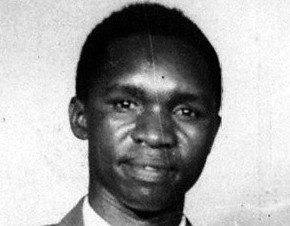 Joseph Kibweteere
Mass murderer · Uganda · 2000
Joseph Kibweteere led a breakaway sect known as the Movement for the Restoratio…
1000 victims
Joseph Kibweteere
Mass murderer · Uganda · 2000
Joseph Kibweteere led a breakaway sect known as the Movement for the Restoratio…
1000 victims
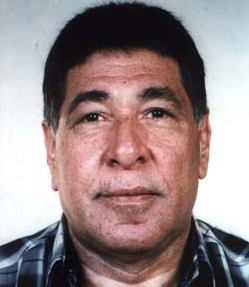 Gameel Al-Batouti
Mass murderer · USA · 1999
Gameel Al-Batouti (also rendered “Gamil ElBatouty” or “El Batouty” in U.S. offi…
216 victims
Gameel Al-Batouti
Mass murderer · USA · 1999
Gameel Al-Batouti (also rendered “Gamil ElBatouty” or “El Batouty” in U.S. offi…
216 victims
 Zhang Pilin
Mass murderer · China · 2002
Zhang Pilin (张丕林) died in the plane crash of China Northern Airlines Flight 613…
111 victims
Zhang Pilin
Mass murderer · China · 2002
Zhang Pilin (张丕林) died in the plane crash of China Northern Airlines Flight 613…
111 victims
 Jin Ruchao
Mass murderer · China · 2001
Jin Ruchao was blamed and arrested for planning and carrying out the Shijiazhua…
108 victims
Jin Ruchao
Mass murderer · China · 2001
Jin Ruchao was blamed and arrested for planning and carrying out the Shijiazhua…
108 victims
 Cevdet Yilmaz
Mass murderer · Netherlands · 1983
Cevdet Yilmaz was a Dutch national of Turkish birth and was aged 27. Cevdet Yil…
6 victims
Cevdet Yilmaz
Mass murderer · Netherlands · 1983
Cevdet Yilmaz was a Dutch national of Turkish birth and was aged 27. Cevdet Yil…
6 victims
 Robert Lee Walden
Murderer · USA · 1991
Robert Lee Walden was a Caucasian defendant. The victim was Hispanic. On June 1…
1 victim
Robert Lee Walden
Murderer · USA · 1991
Robert Lee Walden was a Caucasian defendant. The victim was Hispanic. On June 1…
1 victim
 Gary Krist
Murderer ? · USA · 1959
Gary Krist Gary Steven Krist (born April 29, 1945) lived part of his childhood…
4 victims
Gary Krist
Murderer ? · USA · 1959
Gary Krist Gary Steven Krist (born April 29, 1945) lived part of his childhood…
4 victims
 Stephen Lawrence Anderson
Mass homicide · New Zealand · 1997
1995 — Stephen Lawrence Anderson was diagnosed with schizophrenic. · 8 February…
6 victims
Stephen Lawrence Anderson
Mass homicide · New Zealand · 1997
1995 — Stephen Lawrence Anderson was diagnosed with schizophrenic. · 8 February…
6 victims
 Patrick Dell
Mass murderer · USA · 2010
Patrick Dell (41): fatally shot his estranged wife and four stepchildren; inves…
5 victims
Patrick Dell
Mass murderer · USA · 2010
Patrick Dell (41): fatally shot his estranged wife and four stepchildren; inves…
5 victims
- Gender
- male
- Country
- South Korea
- Location
- Gangnam-gu ward of Seoul, South Korea
- Date of birth
- 1978
- Age at first offence
- 30
- Characteristics
- arson, rape?
- Victim profile
- Women Method of murders: S et fire in a goshiwon and slashed several women with a sashimi knife
- Method of murder
- —
- Date(s) of murder
- October 28, 2008
- Years active
- 2008
- Date of arrest
- Same day
- Status
-
Sentenced to death
Sentenced to death on May 12, 2009
Name
Jeong Sang-jin
STATUS / Legal outcome
Jeong Sang-jin was sentenced to death on May 12, 2009.
Background
The Nonhyeon-dong massacre was a mass murder that occurred in the Gangnam-gu ward of Seoul, South Korea on October 20, 2008, when 30-year-old Jeong Sang-jin set fire in a goshiwon and slashed several women with a sashimi knife.
Jeong Sang-jin was originally from Hapcheon, North Gyeongsang Province, and moved to Seoul in 2002. He worked part time jobs as a food delivery man or parking valet, and as of April 2008 he was unemployed and had to face severe financial difficulties. He could not pay his rent and mobile phone fees for months prior to the rampage.
During interrogations Jeong said he was persecuted since his childhood days and attempted suicide twice during his time at middle school and occasionally suffered from severe headaches since then. Unconfirmed reports stated he was convicted eight times, once for skipping an obligatory training for military reservists, for which he was fined of 1.5 million won.
After his arrest he stated that he didn't want to live anymore, as everyone looked down on him. It was said that he might have wanted to express his anger towards the rich and high authorities, but as they were difficult targets he lashed out against those who were at hand.
Further blame was also laid on the film A Bittersweet Life by Kim Ji-woon, which Jeong was said to like.
The offence
A financially strapped South Korean man went on an arson and stabbing rampage in Seoul on Monday, leaving six people dead and seven others wounded, police said.
At about 8:15 a.m., according to police, Jeong, who lived on the third floor of a four-story gosiwon, a low-cost lodging facility, poured gasoline on his bed and set it ablaze. Dressed all in black, wearing a headlamp and hiding his face with a balaclava and goggles, he emerged from his smoke filled room and, armed with a sashimi knife as well as two fruit-knifes strapped to his legs and a tear gas gun in a belt holster, began slashing and stabbing the residents of the building who were fleeing the fire.
Five people died of the wounds Jeong had inflicted on them with his knife. One woman died when she jumped out of a window in the fourth floor in an attempt to escape. Another seven were injured, four seriously, either by Jeong or the fire.
The fire ravaged in the building for about 30 minutes, before around 100 firefighters finally succeeded to tame the flames.
Jeong was initially thought to be another victim; at 9:20 a.m. he was rescued by a fireman from a storage room in the fourth floor, where he was hiding.
Police seized two more knives and a tear gas gun from Jeong.
Jeong was told police about a combination of psychological distress, financial troubles and a gangster movie as motivations, and police said he was motivated by a combination of psychological distress, financial troubles and a gangster movie.
Investigation and arrest
When police noticed his peculiar behavior, Jeong was interrogated at the scene and he confessed to the crime. He was immediately arrested and brought to Gangnam Police Station, where he was charged with homicide and arson.
Jeong was facing a police investigation for not taking part in annual training for military reservists.
Kim Kap-shik, chief detective at Seoul's Gangnam Police Station, told reporters: "everybody looks down on me."
Seoul Central District Court spokesman Kwon Tae-hyung said Jeong Sang-jin was handed the sentence because his crime was premeditated and "cruel".
Trial
A South Korean court sentenced Jeong Sang-jin to death on May 12, 2009.
Sentencing
Seoul Central District Court spokesman Kwon Tae-hyung said Jeong Sang-jin was handed the sentence today because his crime was premeditated and "cruel".
Outcome
A total of six people died in the incident and seven more were injured.
Three of the dead and three of the injured were Chinese citizens. One of the dead and four of the injured victims were ethnic Korean Chinese citizens working in South Korea, according to media reports.
The lodging facility had 85 tiny rooms on the third and fourth floors of a commercial building. The rooms were rented on a monthly basis and were generally used by low-income people living alone. Sixty-nine people were living in the facility, Yonhap said.
Timeline
- October 20, 2008 — Jeong Sang-jin set fire to a goshiwon room and stabbed residents while they fled the fire in Gangnam-gu, Seoul.
- 8:15 a.m. — Jeong poured gasoline on his bed and set it ablaze.
- 9:20 a.m. — Firefighters rescued Jeong from a storage room on the fourth floor.
- May 12, 2009 — Jeong Sang-jin was sentenced to death.
Other details
Neighboring Japan was struck by a series of random stabbings this year, including the Akihabara massacre in June when a man slammed a truck into a crowd of people, jumped out and began stabbing passers-by at random.
The incident sparked memories of the Daegu subway fire and the arson of the Namdaemun the same year, as well as the Akihabara massacre that happened just a few months earlier.
In 2003, a 56-year-old man with a record of mental illness ignited a carton filled with gasoline on a subway train in Daegu, and the blaze left 198 people dead and 147 injured. In February 2009, a 69-year-old man, upset over a land dispute, started a fire that destroyed a 14th-century gate in Seoul considered one of South Korea's most treasured landmarks.
South Korea had a de facto moratorium on capital punishment and had not executed anyone since December 1997.

Spotted an error, or have more information about this case?