
Nicholas Yarris
Justice miscarriage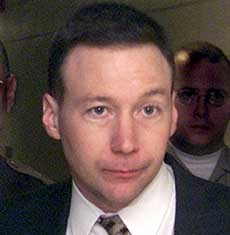 David Camm
Justice miscarriage · USA · 2000
David R. Camm was a former Indiana State Trooper who was acquitted after three…
0 victims
David Camm
Justice miscarriage · USA · 2000
David R. Camm was a former Indiana State Trooper who was acquitted after three…
0 victims
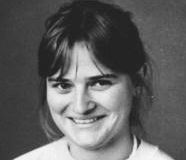 Olivia Riner
Justice miscarriage · USA · 1991
Olivia Riner was a Swiss au pair accused in the arson death of 3-month-old Kris…
0 victims
Olivia Riner
Justice miscarriage · USA · 1991
Olivia Riner was a Swiss au pair accused in the arson death of 3-month-old Kris…
0 victims
 Cynthia George
Justice miscarriage · USA · 2001
Cynthia George was 53 at the time of her release. She faced national media scru…
0 victims
Cynthia George
Justice miscarriage · USA · 2001
Cynthia George was 53 at the time of her release. She faced national media scru…
0 victims
 Cynthia Sommer
Justice miscarriage · USA · 2002
Cynthia Sommer was convicted of first-degree murder with the “special circumsta…
0 victims
Cynthia Sommer
Justice miscarriage · USA · 2002
Cynthia Sommer was convicted of first-degree murder with the “special circumsta…
0 victims
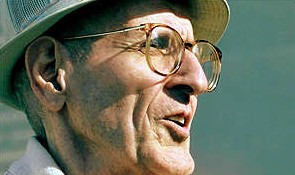 Jack Kevorkian
Homicide · USA · 1990
Jack Kevorkian (born May 26, 1928) was a controversial American pathologist. He…
130 victims
Jack Kevorkian
Homicide · USA · 1990
Jack Kevorkian (born May 26, 1928) was a controversial American pathologist. He…
130 victims
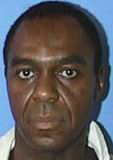 Carl Eugene Watts
Serial killer · USA · 1974
Carl Eugene Watts (born November 7, 1953; died September 21, 2007), also known…
100 victims
Carl Eugene Watts
Serial killer · USA · 1974
Carl Eugene Watts (born November 7, 1953; died September 21, 2007), also known…
100 victims
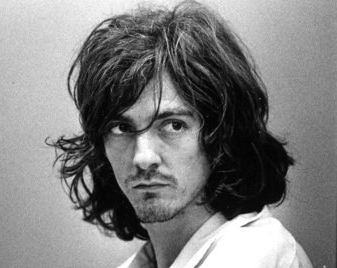 David Lee Powell
Murderer · USA · 1978
David Lee Powell was executed by lethal injection in Texas on June 15, 2010. He…
1 victim
David Lee Powell
Murderer · USA · 1978
David Lee Powell was executed by lethal injection in Texas on June 15, 2010. He…
1 victim
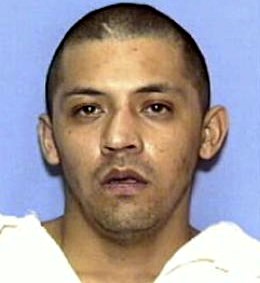 Michael Rosales
Murderer · USA · 1997
Michael Rosales was convicted of capital murder and robbery and was sentenced t…
1 victim
Michael Rosales
Murderer · USA · 1997
Michael Rosales was convicted of capital murder and robbery and was sentenced t…
1 victim
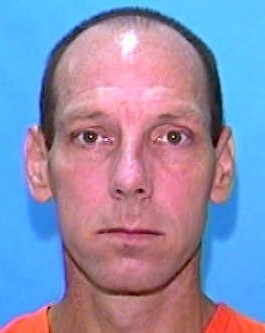 William Happ
Murderer · USA · 1986
Name: William Happ · Prisoner number / identifier: DC# 117027 · Date of birth:…
1 victim
William Happ
Murderer · USA · 1986
Name: William Happ · Prisoner number / identifier: DC# 117027 · Date of birth:…
1 victim
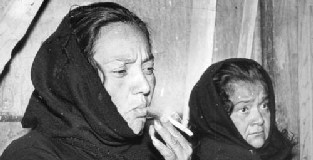 Delfina & Maria de Jesus Gonzalez
Serial killers · Mexico · 1963
Delfina died in prison due to an accident on October 17, 1968. Maria de Jesus f…
91 victims
Delfina & Maria de Jesus Gonzalez
Serial killers · Mexico · 1963
Delfina died in prison due to an accident on October 17, 1968. Maria de Jesus f…
91 victims
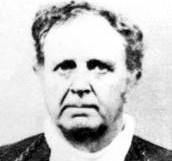 Dr. John Cavaness
Murderer · USA · 1977
January 6, 1986 — Dr. John Dale Cavaness was sentenced to death in Missouri. ·…
2 victims
Dr. John Cavaness
Murderer · USA · 1977
January 6, 1986 — Dr. John Dale Cavaness was sentenced to death in Missouri. ·…
2 victims
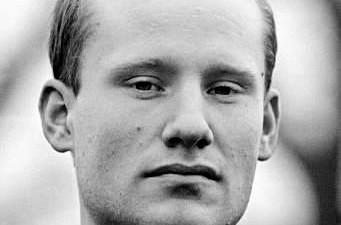 Volkert Van der Graaf
Murderer · Netherlands · 2002
Volkert van der Graaf (born July 9, 1969) was a confessed murderer of Dutch pol…
1 victim
Volkert Van der Graaf
Murderer · Netherlands · 2002
Volkert van der Graaf (born July 9, 1969) was a confessed murderer of Dutch pol…
1 victim
- Gender
- male
- Country
- USA
- Location
- Pennsylvania, USA
- Date of birth
- 1961
- Age at first offence
- 20
- Characteristics
- kidnapping, rape, drug addict, escape
- Victim profile
- Linda Mae Craig, 33
- Method of murder
- St abbing with knife
- Date(s) of murder
- December 15, 1981
- Years active
- 1981
- Date of arrest
- 5 days after
- Status
-
Acquitted / overturned
Sentenced to death January 23, 1983; overturned and exonerated January 2004
Case name
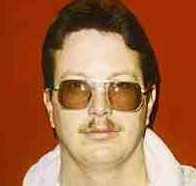
Nicholas Yarris
STATUS / legal outcome
Nicholas Yarris was sentenced to death on January 23, 1983. His conviction was overturned and he was exonerated in January 2004.
Timeline
- December 15, 1981 — Linda May Craig was kidnapped from the parking lot of the Tri State Mall in Delaware, near the border of Pennsylvania.
- December 20, 1981 — Patrolman Benjamin Wright stopped 20-year old Nicholas Yarris in Chester, Pennsylvania, for a traffic violation; an altercation ensued in which Wright’s pistol discharged into the ground.
- April 17, 1982 — The case went to trial; after an hour of deliberation, the jury acquitted Nicholas Yarris of the charges stemming from his altercation with Officer Wright.
- June 5, 1982 — At the suppression hearing for the murder charges, Yarris learned the prosecution sought the death penalty instead of second-degree murder.
- June 27, 1982 — The jury was selected; the trial began under Judge Robert F. Kelly.
- Five days after the trial began — Nicholas Yarris was found guilty of the murder of Linda May Craig.
- January 24, 1983 — He was sentenced to death and received an additional 30 to 60 years.
- February 1985 — En route to a hearing on the destruction of evidence, Yarris escaped from custody of deputies transporting him; he was later captured in Florida.
- October (year not specified) — The sentence and conviction were affirmed by the Pennsylvania Supreme Court.
- March 20, 1988 — Yarris became the first inmate in US history to ask to be allowed to use DNA testing to prove his innocence.
- August 20, 1988 — Cellmark Diagnostics confirmed that it could not use the slides.
- June 1989 — Yarris filed a motion for a new trial based on discovery of the gloves as evidence and on withholding and improper introduction of the evidence into the trial.
- May 6, 1994 — Yarris was brought before Justice Toal to argue his motion for a new trial based on the discovered gloves.
- May 21, 1999 — The petition for appeal was denied on the basis of “timeliness.”
- April 2003 — Dr. Edward Blake managed to get DNA from the pair of men's winter gloves found in the victim’s locked car.
- July 2, 2003 — Dr. Edward Blake obtained DNA from pooled evidence from the same DNA source found inside the gloves and obtained DNA from an unknown male #2; neither profile matched Nicholas Yarris.
- December 2003 — The prosecutor dropped the case in a way that allowed a possible future arrest (Nola prosequi).
- January 2004 — He walked out of prison as a free man following DNA evidence exonerating him.
- July 2005 — He wrote about his case and later efforts on a website.
People
Defendant
- Nicholas Yarris, 20-year old at the time of the December 20, 1981 stop by Patrolman Benjamin Wright
Victim
- Linda May Craig (Linda Mae Craig is also named), 37-year old
Law enforcement
- Patrolman Benjamin Wright — pistol discharged during an altercation with Yarris
- Detective John Davidson (CID) — retained evidence slides in his personal possession while Yarris fought to have them turned over to the coroner
- Sergeant Gerald Murphy — encouraged Yarris to “tell the truth” during an interaction after ongoing attacks
- Delaware County district attorney Barry Gross (also called District Attorney Barry Gross)
Judges and lawyers
- Judge Robert F. Kelly — presided over the murder trial that began June 27, 1982
- Justice Toal — presided over motion proceedings described in the record
- Defence counsel Samuel Stretton — attempted to obtain homicide files and sought a sidebar conference with Judge Kelly and District Attorney Gross
- Joseph Bullen and Spiros Angelos — defenders assigned after Yarris received the death sentence
- Scott Galloway — appointed after Yarris fired Bullen
- Dr. Vincent Cordova — director of a lab at which Yarris sought information about evidence slides
- Dr. Edward Blake — led DNA testing efforts in California with Forensic Science Associates
- Dr. Tahir — joined Dr. Edward Blake in his lab to assist with DNA testing of any remaining evidence (California)
- Dr. Alec Jeffries — developed a new science discussed by Yarris
Other named individuals
- Charles Cataleno — serving time for burglary; testified against Yarris and perjured himself multiple times with leading help of the prosecution
- William Ryan — named as prosecuting district attorney handling the Yarris case (in relation to Cataleno’s burglary conviction)
- Mary Taraboelli — storeowner who saw Nicholas Yarris in her store at approximately 5:30 p.m.
- Ms. Mary Taraboelli — storeowner who saw Yarris
- Linda Craig’s husband — stated he and his wife had sexual intercourse the night before her murder
- Yarris’ parents — accompanied him when he left state prison in Greene County
- Yarris’ uncle — described as being 80 years old in December 2003-era discussion about DNA collection
- Yarris’ cousin — described as a teen in 1981 (name not given); DNA was sought from the cousin
- Gerald Murphy and Scott Galloway are also referenced as having relevant roles described in the record
Background
Nicholas Yarris was an inmate who spent two decades on death row before DNA evidence exonerated him and he walked out of prison in January 2004, accompanied by his parents and describing a desire to go home to be with his family.
He was described as the first Pennsylvania death-row inmate cleared by later DNA testing.
The offence
Victim and abduction
On December 15, 1981, Mrs. Linda May Craig was kidnapped from the parking lot of the Tri State Mall in Delaware, near the border of Pennsylvania. During the week prior to her abduction and murder, she told her husband and co-workers about a man she believed had been watching her and said she was afraid of him.
At the end of her shift as a sales clerk for a kiosk selling blown-glass artifacts, Mrs. Craig was abducted in her own vehicle from the mall’s parking lot.
Vehicle and discovery
By 5:40 p.m., her husband had called police and reported her overdue to arrive home from what was normally a ten minute drive.
Approximately 7:00 p.m. that evening, Mrs. Craig’s 1977 Chrysler Cordoba was found abandoned about one and one-half miles from a church in Chichester Township, Delaware County, Pennsylvania, two hours after she had left her job.
Her shoes were found in the parking lot of the Tri-State Mall.
Mrs. Craig’s body was found the next morning in a parking lot behind a church, less than two miles from her home. She had been raped and murdered.
No one knew exactly where the murder took place.
Sexual assault and physical evidence
The prosecution’s only physical evidence was described as the semen left by the killer in and on the victim. Tests were run for blood grouping, sub-grouping, and secretor status. The tests showed that the secretor was a B+ blood group member who was also a B+ secretor.
The record stated that about 15% of the male population are B+ secretors.
It also stated that the prosecution did not do other testing on the semen, such as paternity identification tests, which would more accurately establish or eliminate suspects in the case.
It was stated that the victim’s husband’s blood type was also B+.
The husband stated that he and his wife had sexual intercourse the night before her murder. When it became clear that Yarris was a suspect, the husband claimed to have worn a condom that night, even though the couple was incapable of having children.
Investigation
The investigation into the murder of Linda May Craig had begun.
The record described that “missing” homicide files contained evidence of conflicting witness accounts, including earlier statements and suspect identifications that conflicted with later accounts.
It further stated that withheld files contained slide evidence of gloves that the killer had worn during the murder and left in Mrs. Craig’s car. During later DNA efforts, pooled evidence testing was described as using material associated with gloves found in the victim’s locked car.
The record later stated that prosecutors said they had no suspects in the 1981 murder of Linda Mae Craig of suburban Philadelphia.
Arrest and initial charges
On December 20, 1981, in Chester, Pennsylvania, Patrolman Benjamin Wright stopped 20-year old Nicholas Yarris for a traffic violation.
Yarris was high on methamphetamine at the time and an altercation ensued during which Wright’s pistol was discharged into the ground.
Yarris was charged with attempted murder and kidnapping, two of many other counts, and was held in the Delaware County jail in lieu of $100,000 bail.
The record described that Yarris became aware of the murder of Craig from reading a newspaper left in his cell.
Yarris decided to concoct a scheme to be released. He told police that a drug-buddy, an acquaintance he believed had recently died of a drug overdose, had committed the murder.
His story backfired when it turned out his drug-buddy was still alive and had an alibi; the record stated it had been the buddy’s brother who died of an overdose.
Detention conditions and gang abuse (as described in the record)
Yarris was placed in solitary confinement in the maximum-security wing of the jail.
The record described constant attacks and his attempt to hang himself, which failed.
He was sent to the hospital in restraints for a short while, until Sergeant Gerald Murphy had him returned to maximum security.
He was placed in a cell with a bare mattress wearing only boxer shorts and was again subjected to verbal, urine and water attacks from outlaw gang members.
The record described that after three days he asked to speak with Murphy, hoping for at least some clothes and a blanket. Murphy encouraged Yarris to “tell the truth” about the crime, to get himself out.
Yarris posed a hypothetical question to Murphy: “What if”he was a participant in the crime, but not in the murder? The next day Nicholas Yarris was arrested based on Murphy’s statement.
The record described that attacks stopped once gang members learned Yarris was charged with murder, and at that point he was also given clothes and a blanket.
Trial
Acquittal on altercation charges
The record stated that Yarris was acquitted of all charges stemming from his altercation with Officer Wright.
It also stated that on April 17, 1982 the case went to trial and after an hour of deliberation the jury acquitted Yarris. When the verdict was read, Officer Wright had to be restrained.
District Attorney Barry Gross made a violent outburst in court and yelled, "M_______, you'll never leave this county alive."
County deputies had to restrain the district attorney when he spat in Yarris’ face.
Suppression hearing and death penalty pursuit
On June 5, 1982, at the suppression hearing for the murder charges, Yarris learned the prosecution was seeking the death penalty instead of second-degree murder, despite the record stating that the facts had not changed.
Murder trial and withheld evidence
The trial began under Judge Robert F. Kelly after jury selection on June 27, 1982.
The record stated that the prosecution refused to hand over more than twenty pages of the homicide file, and that some fifty paragraphs had been deleted from the pages provided to Defense Counsel Samuel Stretton.
Stretton tried and failed to get the homicide files; the judge refused to order the prosecution to comply with discovery rules of evidence.
The withheld files were described as containing evidence of conflicting witness accounts, including evidence of gloves the killer wore that had been left in Mrs. Craig’s car.
When Stretton became aware of the slides, he sought a sidebar conference with Judge Kelly and District Attorney Gross. During the conference, he told the judge that allowing these slides would inflame the jury. Gross countered that the slides showed gloves worn by the killer and implied the jury would surmise why investigators didn’t have Yarris’ prints.
The prosecution had not presented this during the trial as required by law.
Witness testimony and allegations of perjury
Charles Cataleno testified against Yarris, sharing what he had “heard” from Yarris in the Chester County jail.
The record stated that Cataleno perjured himself several times with the leading help of the prosecution.
It was revealed that Cataleno had called Gross the night before his testimony, demanding and receiving a written promise from the prosecutor.
The record stated that Cataleno would receive a sentence concurrent with the one he was presently serving, and that the new sentence would not exceed the 4 to 10 years he had yet to serve.
Verdict
Five days after the trial began (which the record described as a three day trial), Nicholas Yarris was found guilty of the murder of Linda May Craig.
Sentencing
On January 24, 1983, he was sentenced to death and received an additional 30 to 60 years.
Appeals
After receiving the death sentence, Yarris fired Stretton and the case was assigned to defenders Joseph Bullen and Spiros Angelos.
The case was remanded to trial for hearings on the destruction of evidence and withheld files.
The record stated that Joseph Bullen tried to convince Yarris to waive appeals and have the state convert the sentence to life imprisonment, and that Yarris refused.
In February 1985, while en route to his hearing on the destruction of evidence, Yarris escaped from custody of the deputies transporting him.
The prosecutor sought and was granted a dismissal of the hearing for the destruction of case files.
When Yarris was captured in Florida, the appeal in the Pennsylvania Supreme Court was heard, and in October the sentence and conviction were affirmed.
The record stated that, in affirming, the Court reversed eight of its own rulings regarding procedure in capital cases.
DNA testing and later proceedings
Request for DNA testing
The record stated that on March 20, 1988, Yarris became the first inmate in US history to ask to be allowed to use DNA testing to prove his innocence.
He discussed the possibility with his defense lawyer, Bullen.
Bullen discovered that, instead of the evidence being available for testing, all evidence of the case had been “discarded,” and that none of the autopsy material was left except for two stained slides unsuitable for testing.
To confirm the slides were useless, the court allowed them to be sent to Cellmark Diagnostics in Maryland.
On August 20, 1988, Cellmark confirmed it could not use the slides.
National Medical Associates and the gloves
Yarris reexamined the trial transcripts and discovered that several slides of evidence had been sent to National Medical Associates in Willow Grove, Pennsylvania.
He wrote to the lab’s director, Dr. Vincent Cordova, to ask about the evidence. Dr. Cordova responded personally and stated that the coroner had not requested the samples be returned and that they did indeed have two slides similar to the ones sent to Cellmark.
The record stated that Yarris asked Bullen not to tell the prosecution until he obtained approval from the courts for use of a PCR-enhanced DNA testing technique.
Bullen informed the prosecution about the two slides Cordova had. Two detectives were sent under no court supervision or court order to retrieve the slides, and they took the slides under the pretense of transporting them to Cellmark.
The record stated the slides never made it to Cellmark and never arrived at the coroner’s office. They were left in Detective John Davidson’s personal possession and kept there for the next two years while Yarris fought to have a court order to turn them over to the coroner.
The record said Davidson had no forensic qualifications to hold biological evidence; it added that such evidence needed to be stored in a climate-controlled vault.
The court refused to order Davidson to hand over the evidence slides to the coroner’s office, and Yarris fired Bullen as a result.
Motion practice and hearings
The court then appointed Scott Galloway. The record stated Galloway was court ordered to present documentation and expert testimony if he wanted the court to allow PCR-enhanced testing and the funds to pay for it.
In June 1989, Yarris filed a motion for a new trial based on discovery of the gloves as evidence, including allegations of withholding information about the gloves and improper introduction of evidence into the trial.
It described that Yarris initially filed the motion himself and it went unheard. He then asked Galloway to file the motion, and Galloway refused.
Yarris forced a hearing by filing the motion to the Pennsylvania Supreme Court. The record stated that the Delaware County district attorney convinced the Supreme Court to dismiss the attempt, claiming Yarris was attempting to represent himself while represented by a court-appointed attorney.
Yarris filed a complaint about Justice Toal with the judicial review board. The board contacted Galloway, who told the board that Toal scheduled a hearing. Toal never scheduled such a hearing.
Yarris filed a writ of habeas corpus in US District Court seeking federal court intervention in state proceedings.
The record stated that the federal court dismissed the writ; it also stated that Yarris appealed, and that the Delaware County district attorney’s office wrote to the federal judge assuring it would grant the DNA testing he sought by granting his demand and by relinquishing jurisdiction to state court. The federal court was convinced and dismissed the writ of habeas corpus.
The record stated that the prosecution decided to force Yarris to accept the use of a state police laboratory in Alabama, and that Alabama state police laboratory said it had inconclusive results from testing and never issued a report.
Justice Toal hearing on gloves
On May 6, 1994, Yarris was brought before Justice Toal to argue his motion for a new trial. Yarris laid forth supporting facts regarding the discovered gloves.
The record stated that the prosecution’s mitigation attempt was to suggest that the gloves, unlike the DNA prints taken from semen recovered, could hardly be definitive proof, and that the record described this as a departure from earlier argument in federal court.
At the hearing, the prosecution brought what it claimed was the complete collection of evidence from the case for Yarris to examine. Yarris saw that the evidence seal on the envelope had been broken and asked who was responsible.
The prosecution belligerently stated to Yarris: "Look, do you want to see the evidence or not?"
The record stated that Justice Toal denied Yarris’ request for relief without stating a reason in the immediate pronouncement, and that Toal issued a written opinion later that the record described as not discussing the gloves in terms of legality or propriety.
Later denials and timeliness
The record described that the Supreme Court of the State of Pennsylvania denied post-conviction appeals without a fair hearing to present witnesses, evidence, or experts.
The petition for appeal was denied on May 21, 1999 on the basis of “timeliness,” under a new law that took effect a month after the appeal was denied.
The record stated that Yarris was appealing to the federal court system during the time frame in question and Pennsylvania did not consider that action part of a pursuit of relief.
DNA evidence exoneration and release
The record described that Dr. Tahir joined Dr. Edward Blake in his lab at Forensic Science Associates in California to assist with DNA testing of any remaining evidence, with hopes that there was enough remaining evidence for a conclusive PCR-enhanced test result.
The record included extensive additional details from Yarris. It stated that in April 2003, Dr. Edward Blake managed to get DNA from the pair of men's winter gloves found the night of the murder in the victim's locked car. The record stated that on July 2, 2003 Dr. Edward Blake got DNA from the pooled evidence from the same DNA source found inside the gloves left behind by the killer and obtained DNA from an unknown male #2; neither of these DNA profiles matched Nicholas Yarris.
The record stated that in December 2003 the prosecutor dropped the case through a Nola prosequi so he could potentially be arrested again if prosecutors ever chose.
It stated that in January 2004 Yarris walked out of prison in a free man, with DNA evidence exonerating him, and that prosecutors said in December they would not re-try him.
The record also stated that prosecutors kept him in prison due to convictions for robbery and other crimes in Florida, and that a judge in Florida cleared the way for his release by reducing his sentence there to 17 years, less than time served.
It stated that he had 8057 days locked in a box as he described.
Other details
Flight and escape from custody
The record described that Yarris escaped from custody in February 1985 while being transported to a hearing on destruction of evidence, and that he became the most hunted fugitive in the United States on February 15, 1985 until he identified himself to authorities in Florida 25 days after the escape.
Conflicts about charges and jury acquittal on initial charges
The record stated that Yarris was acquitted by a jury on April 24th 1982 of all charges brought falsely by Patrolman Wright, and also stated earlier that the jury acquitted him after an hour of deliberation on April 17, 1982.
Press and threats in court
The record described district attorney Barry Gross yelling at sentencing and outbursts, including the quoted threat to Yarris: "M_______, you'll never leave this county alive."
Evidentiary disputes about gloves and DNA testing (as described in the record)
The record stated that gloves were withheld and later described as part of the case for PCR-enhanced testing. It also described multiple DNA testing attempts that ultimately failed before the later pooled efforts described in 2003.
Companions and evidence custody
The record described conjugal visits arranged by the DA’s office for Charles Cataleno while he shared reports of progress with Yarris.
Alibi and witness in Yarris’ account
The record stated that Yarris held in his possession a bank receipt placing him elsewhere and an eyewitness account.
It stated that during the commission of the crime against Linda Craig, Yarris was more than 20 miles away in one of his neighborhood’s stores.
It named storeowner Ms. Mary Taraboelli, who saw him in her store at approximately 5:30 p.m. that night.
The record further stated that Yarris did not know the victim or her family.
Health and medical treatment claims in Yarris’ account
The record stated that Yarris was stricken with Hepatitis C in 1993 and by 2000 was seriously ill.
He entered treatment to try to fight the illness, and the record stated that prison medical staff blinded him by overdosing him with Interferon and Ribiviron cocktails.
Request to be executed
The record stated that Yarris was diagnosed as “terminal” and wrote to the judge handling his appeals asking to be executed in December 2002.
Quote from Nicholas Yarris
Nicholas Yarris’s words were included in the record as follows:
"To those of you who believe that the appeals courts weed out convictions that are flawed badly according to the Constitution, and/or look for instances where someone is saying, "Hey, I can prove my innocence," you wrongly believe. "The state courts are interested in protecting convictions. The federal court is left to weed through the morass of deceit made by either side as appeals proceed. Period. The galling thing is this: since 1988, I have fought to get a court, any court, to listen to me about how I (meaning myself and my attorneys) uncovered the facts that show I could not have committed this crime. Not a day, not a single day went by that I wasn't pushing and pushing to get my case heard. I even filed a federal lawsuit trying to force the state court to hear my claims. "Now, you hear that guys on death row try to delay their appeals as a "ploy." But here I am, a man who has fought and clawed to be heard, and in the end, this justice speaking on behalf of the Supreme Court of Pennsylvania said I should have tried earlier to file my claims, even though this same court invited me to file it later. I could see if I had nothing filed for 11 years straight, from 1988 to 1999, but to tell me that I basically hadn't filed in time is plainly vicious. "So now, I have to go finally and properly into the federal courts to show all these claims put forth. With the witnesses, evidence and the record to support me, I will finally have a fair chance. Unless, in some convoluted way, the law does not really matter and the facts mean little."
Nicholas Yarris statement about being stopped and charged
The record also included a longer statement attributed to Nicholas Yarris and began:
"On Dec. 20th, 1981 I was stopped in the city of Chester, PA. for a traffic citation by patrolman Benjamin Wright. The unfortunate events that unfolded in a matter of seconds were began by this officer placing his restraining hand on my shoulder as I attempted to stand up out of the car I was in. It precipitated his grabbing me by the arm and a scuffle then ensued as he attempted to overpower a terrified 20 year old man that I was at the time. Enraged and heated from the accidental discharge of his revolver into the ground, this offer reacted by over blowing the incident way out of proportion. Just a few days before Christmas 1981 and I wind up being charged with attempted murder and kidnapping of a police officer. Although it would take a Jury less than an hour of deliberation to clear me of all charges, the damage had already been done. For while I was thrown into prison for attempted murder, it was the brutality of prison, of being placed immediately in solitary confinement, and told that I faced LIFE IN PRISON for the charges placed on me, that my life fell apart. It was because of the desperation I was driven to, to conceive of any way out of this initial nightmare, that my TRUE "Nightmare" began. Sitting in solitary confinement with no hope, I made the mistake of trying to con the authorities into letting me out of solitary and then hopefully out of prison on bail so I could run, I made up a lie and blamed a dead rival for the murder I read about in the news paper I had in the cell with me, hoping the police would believe me. It failed miserably as the dead rival turned up very much alive and with proof of his alibi, the authorities then decided I knew so much that I must be the killer. The Delaware County District Attorney's home had been robbed in 1981 by a well known burglar and drug addict. This man was placed in the cell next to mine so that he could claim I had confessed the murder of Linda Mae Craig (the sensational murder case at the center of this ordeal) to him. He had made a deal with the Prosecutor of his case that instead of 20 years in prison for burglarizing the Prosecutor's home, he would get no additional jail time. The Delaware County detective in charge of the murder of Mrs. Linda Mae Craig then convinced a witness to hide at the public hearing I was being brought to for the original charges leveled by patrolman Wright (What is called a "preliminary hearing") and the Detective then had this witness identify me as having been at the mall where the murder occured as I sat alone in an empty courtroom wearing chains and handcuffs and leg irons. Next, the Detective was to bring forth another witness (who was secretly dating Patrolman Wright's partner from the City of Chester police force) and have this woman claim she too had seen me at the Mall where the murder happened on December 15th 1981. This was the make up of the case that would send me to death row. We would not learn of the deceitful things done to me until DNA evidence set me free in 2004. It was when DNA science proved I was innocent that the witnesses who once lied against me at the behest of the officials who sent me to death row now came forward and told the truth. Thank God witnesses survived to tell how a Detective could trick then into hiding in a public court building to secretly identify me as a murderer. They also explained that they were shown false documents showing I was charged with the MURDER of Patrolman Wright, and not the actual charges of ATTEMPTED murder I was really held under. Thank God as well all of the efforts by the Delaware County Prosecutor to destroy the evidence has been faithfully recorded. My case has the unique distinction of having had a local court defiantly support the destruction of evidence - shockingly even allowing evidence to be destroyed while DNA testing requests where being desperately sought by me. When I was acquitted by a Jury on April 24th 1982 of all the charges brought falsely by Patrolman Wright, the Prosecutor exploded in court and threatened me in front of any who cared to hear. One week later the same Prosecutor was allowed to take over the murder charges of Linda Mae Craig against me. His first act officially in May of 1982, was to ask the Judge handling the case that Delaware County seek the DEATH SENTENCE against me for this murder. Of course the Judge (who also was the same judge who handled the Benny Wright trial in April) allowed the case to now proceed as a death sentence case! The Prosecutor sought to have me executed for murder out of sheer vengence. My trial for the murder charges was speeded up, and in less than 2 months after my first trial in Delaware County I was to be given one of the fastest Capital murder trials in modern U.S. history. The Judge began the murder trial with the opening statement to the Jury saying " In light of the 4th of July Holiday coming on Friday, I intend to make sure you all get to go home and enjoy yourselves in time"...These words he said on Tuesday just three days before this Jury would sentence me to death, (after having a nice meal at a local restaurant full of celebrants who saw me just get convicted of rape and murder). I was demonized by the press and sent off to die in one of the worst prisons ever known in the United States (Huntington Prison high in the mountains of Pennsylvania). En route to a court hearing for the destruction of evidence from my case, I escaped prison and became the most hunted fugitive in the United States on February 15th 1985, until I identified myself to authorities in Florida 25 days after the escape. How I ended up escaping is a story in itself, but I can assure all it was complete madness to be THAT hunted by thousands of law enforcement people! On February 20th 1988 I became the first death row prisoner in the USA to seek to use DNA science to prove my innocence. I had just learned of the new science developed by Dr. Alec Jeffries in England and when I asked for this science to be applied in my case, I was told the Coroner who was handling the case evidence had "accidentally" thrown away all of the evidence used to send me to death row. This would lead to a fifteen year long battle to get DNA science to work for me. Unfortunately for me, every group set up to help prisoners like me failed me. I ended up being assigned lawyers who refused to believe I was innocent, so I was denied so many chances for help. Time and again, I was betrayed, let down or ignored as I fought on to prove my innocence...I went through FIVE different DNA test attempts on every available application of DNA testing known. All failed. I was stricken with Hepatitis “C" in 1993, and by 2000 I was seriously ill. I entered treatment to try and fight the illness I watched ravage and kill three others also stricken with the same illness, only to have the medical staff in the prison I was in (Greene County Prison - home of CHARLES GRANER of the infamous Iraq prison scandals) blind me by overdosing me with Interferon and Ribiviron cocktails. Finally, being diagnosed as "terminal" and with no wish to die an agonizing death as the others who died of the same illness, I wrote to the Judge handling my appeals and I asked to be executed in December of 2002. It was when I asked to die that my attorney then beseeched Dr. Edward Blake to try one last effort on the DNA evidence he had in his lab in California that was untested. In April of 2003, Dr. Edward Blake managed to get DNA from the pair of men's winter gloves found the night of the murder in the victim's locked car (which found abandoned near the murder). A proposal was then made to me...allow Dr. Blake to try one last "pooled" effort on the last remaining DNA evidence, and if I agreed, I would accept death if it failed, or a new trial if he succeeded. On July 2nd 2003, Dr. Edward Blake got DNA from the "pooled" evidence from the same DNA source found inside the gloves left behind by the killer, And he got DNA from an unknown male #2. Neither of these DNA profiles matched me! Of course the prosecution then used every petty act they could to drag out my release while they tormented my family one last time with a phony attempt to "re-investigate the murder case". The prosecutor assigned another old ex-patrol partner of Benny Wright to reopen the Linda Mae Craig case, and he did his best to rip my family apart before a Grand Jury. Finally, in December of 2003, the prosecutor dropped the case in a way that allowed them to arrest me at any given moment if they ever feel they can Fabricate a case against me (in legal terms called "Nola prosequi"). And with this sword hanging over me as I finally walked out of prison in January 2004, I began life all over after 8057 days locked in a box. Even as late as June 2004, the prosecutor was still trying to pin this murder on me by bullying my 80 year old uncle and cousin (who was a mere teen in 1981 when this crime happened) into taking DNA from my cousin in the hope of pinning the murder on him, to then put me back on death row. My response was to get a bull horn and hand out leaflets to citizens going into and out of the courthouse in Delaware County, PA. every week, until they promised to put the DNA from the killer into the FBI data banks to catch him. Since I escaped from death row and was convicted of a third felony in my adult life, I was subject to the USA's "three strike laws" that would allow me to be out away for life if I was to be arrested for any minor thing in the US.. I knew then I had to leave. I did not expect it to be because I met the love of my life and got married and found happiness here in the UK. But I am damn sure glad I did. I now have a home here in the land of my English and Irish forefathers and am so happy to be starting a family with my wife. I am writing my book and doing what I can to create and implement prison reform and social programs here in my new home. I hope to make a serious difference in my world, that's all I can really try for. I will fully update this site in other locations of my webpage, so that the story of my life is better told. For now, I hope this helped. Nick Yarris, July 2005"
Start and stop of the homicide trial (as described)
The record described “The Murder of Linda Craig” and named the mall location, vehicle details, and the discovery locations.
Note about missing bodies / discovery
The record included characterization tags in the prompt, including “the bodies were never found” and “the body was never found,” but the case record itself stated that Mrs. Craig’s body was found the next morning.
Spotted an error, or have more information about this case?