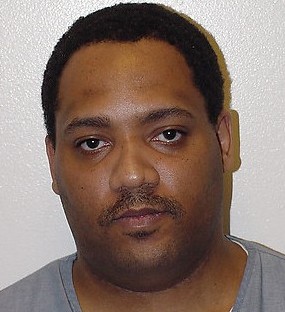
Eurus Waters
Murderer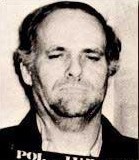 Ervil LeBaron
Murderer · USA · 1972
Ervil Morrell LeBaron (1925 to August 16, 1981) was the leader of a polygamous…
35 victims
Ervil LeBaron
Murderer · USA · 1972
Ervil Morrell LeBaron (1925 to August 16, 1981) was the leader of a polygamous…
35 victims
 Brian Kevin Rosenfeld
Murderer · USA · 1985
Brian Kevin Rosenfeld Brian Kevin Rosenfeld was sentenced to three concurrent l…
23 victims
Brian Kevin Rosenfeld
Murderer · USA · 1985
Brian Kevin Rosenfeld Brian Kevin Rosenfeld was sentenced to three concurrent l…
23 victims
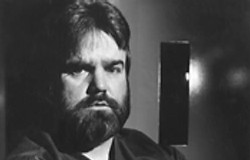 Marvin Gray
Murderer · USA · 1975
Marvin Gray was convicted killer who claimed responsibility for 23 slayings and…
23 victims
Marvin Gray
Murderer · USA · 1975
Marvin Gray was convicted killer who claimed responsibility for 23 slayings and…
23 victims
 Yahweh ben Yahweh
Murderer · USA · 1980
Yahweh ben Yahweh was born and legally named Hulon Mitchell Jr. (October 27, 19…
23 victims
Yahweh ben Yahweh
Murderer · USA · 1980
Yahweh ben Yahweh was born and legally named Hulon Mitchell Jr. (October 27, 19…
23 victims
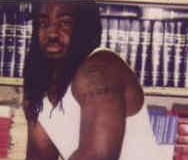 Shawnfatee Bridges
Murderer · USA · 1996
Shawnfatee M. Bridges was sentenced to death on February 23, 1998. On Saturday,…
2 victims
Shawnfatee Bridges
Murderer · USA · 1996
Shawnfatee M. Bridges was sentenced to death on February 23, 1998. On Saturday,…
2 victims
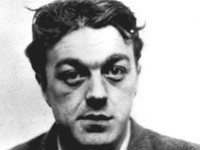 Harry Maurice Roberts
Murderer · United Kingdom · 1966
Name: Harry Maurice Roberts Birth year: 1936 Birthplace: Kennington, London, En…
3 victims
Harry Maurice Roberts
Murderer · United Kingdom · 1966
Name: Harry Maurice Roberts Birth year: 1936 Birthplace: Kennington, London, En…
3 victims
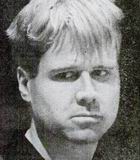 Herbert James Coddington
Murderer · USA · 1981
Herbert James Coddington was accused of luring two teenaged models and holding…
3 victims
Herbert James Coddington
Murderer · USA · 1981
Herbert James Coddington was accused of luring two teenaged models and holding…
3 victims
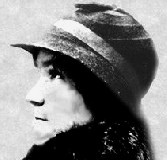 Charlotte Bryant
Murderer · United Kingdom · 1935
Charlotte Bryant, also known as Charlotte McHugh, was born in Londonderry in 19…
1 victim
Charlotte Bryant
Murderer · United Kingdom · 1935
Charlotte Bryant, also known as Charlotte McHugh, was born in Londonderry in 19…
1 victim
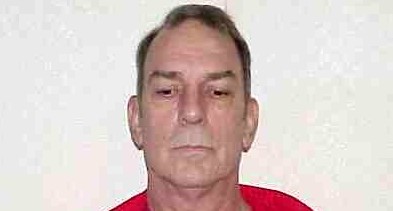 Parramore Sanborn
Murderer · USA · 1983
Parramore Lee Sanborn was born 8-3-45. The case involved the kidnapping, rape,…
1 victim
Parramore Sanborn
Murderer · USA · 1983
Parramore Lee Sanborn was born 8-3-45. The case involved the kidnapping, rape,…
1 victim
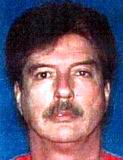
- Gender
- male
- Country
- USA
- Location
- Glynn County, Georgia, USA
- Date of birth
- 1945
- Age at first offence
- 35
- Characteristics
- rape
- Victim profile
- Kathryn Ann Culpepper, 35, and Anita Lynette Paseur, 16
- Method of murder
- Shooting
- Date(s) of murder
- April 25, 1980
- Years active
- 1980
- Date of arrest
- May 5, 1980
- Status
-
Died in custody
Sentenced to death in January 1981; died in prison on February 15, 2006
Case overview
Eurus Kelly Waters was indicted May 13, 1980 for the murders of Anita Lynette Paseur and Kathryn Ann Culpepper. He was found guilty of both murders and sentenced to death. Waters’ defense was insanity. The evidence was described as undisputed that Waters killed Ms. Paseur and Ms. Culpepper.
Timeline
- April 23, 1980 — Waters worked half a day in Waycross.
- April 24, 1980 — Waters worked half a day in Waycross.
- April 25, 1980 — EMTs with the Jekyll Island Fire Department received a call reporting a shooting at a Phillips 66 station on Jekyll Island; Kathryn Culpepper was found bleeding from a chest wound.
- April 25, 1980 — The body of 16-year-old Anita Lynette Paseur was found that night on a back road on Jekyll Island.
- April 29, 1980 — Helen Waters read a paper article about the murders on Jekyll Island and told her husband, “Kelly, this murder, these things that's happened on Jekyll Island, this description fits you.”
- April 30, 1980 — Waters received an injection of Prolixin Decanoate.
- May 1, 1980 — Ms. Culpepper’s burgundy colored, John Romain shoulder bag was found on the west bank of the Satilla River under the Satilla River Bridge.
- May 3, 1980 — Judy Petty finally reached Ed Dixon, a Glynn County policeman.
- May 5, 1980 — At 4:15 p.m., Waters was placed under arrest.
- May 7, 1980 — Agent Curley questioned Waters again.
- April 30, 1980 — Kathryn Culpepper died.
- December 2, 1980 — Waters’ motion for change of venue came on for a hearing.
- January 19, 1981 — Waters’ trial began.
- January 24, 1981 — Waters’ trial ended.
- October 8, 1981 — Decision date.
- October 27, 1981 — Rehearing denied.
- February 15, 2006 — Waters died in prison.
Background
Eurus Kelly Waters was a Waycross cab driver. He had been treated for mental illness since 1978. Dr. Wiley Lewis began treating Waters in 1978 for an unspecified mental illness with symptoms including agitation, anxiety, and restlessness. As part of the treatment, Waters began taking Thorazine.
The case was sent back to the trial court on the issue of mental retardation in December 1995.
The offence
Waters killed Kathryn Ann Culpepper and Anita Lynette Paseur.
At 4:33 p.m. on Friday, April 25, 1980, EMTs with the Jekyll Island Fire Department received a call reporting a shooting at a Phillips 66 station on Jekyll Island. When they arrived, Kathryn Culpepper was sitting in a red AMC Gremlin automobile. She had a gunshot entry wound in her chest and an exit wound in the area of her left kidney. A pair of handcuffs was fastened to her left wrist.
As she was being placed into the ambulance, she asked one of the EMTs to get her purse out of the car; however, he was unable to locate it. A state trooper asked Ms. Culpepper what had happened. She told him that while she and a girlfriend had been fishing, a white male had pulled a gun on them, made them march into the woods, handcuffed them, sexually assaulted her, and then shot both of them. She thought the other woman was dead.
The body of Anita Paseur was found approximately two miles south of the Phillips 66 station in what was known as the New Marina area of Jekyll Island. She was lying on her back, clothed from the waist up, with her bathing suit bottom and shorts pulled down to her ankles. She had a bullet wound in the upper left part of her chest. A later autopsy showed that Ms. Paseur’s death resulted from the gunshot wound. A .38 caliber bullet was removed from her during the autopsy.
Investigation
A GBI agent used a metal detector at the crime scene and found another .38 caliber bullet under some leaves about 10 feet from where Ms. Paseur had been found.
GBI agent Scott Curley talked to Ms. Culpepper in the hospital. He obtained a description of the killer, his car, his gun and holster, and Ms. Culpepper’s missing pocketbook. Agent Curley posted a lookout for a white male in his late thirties, of average height, with light brown hair and light blue eyes, having a country accent, and wearing a light blue shirt, dark blue pants and black shoes; for an older model white, 4-door Pontiac or Buick automobile with a Georgia tag; for a .38 or .357 police-type revolver; for a black leather holster; and for a burgundy colored, John Romain shoulder bag containing personal items belonging to Kathryn Culpepper.
Kathryn Culpepper died April 30. The cause of her death was excessive fluid around the heart and the pericardium, caused by the trauma directly beneath her heart, in the liver and pancreas, which in turn was caused by the bullet wound.
Roger Parian of the State Crime Lab examined the bullets and the gun. Five of the six bullets given to Agent Curley by Ms. Waters were Federal brand, .38 caliber Plus P semi-wadcutter hollow point cartridges. The other was a Federal brand, .38 Plus P round-nose lead cartridge. The bullet removed from the body of Ms. Paseur and the bullet found at the murder scene were .38 caliber semi-wadcutter hollow point lead bullets, probably Federal brand. The two death bullets had six lands and grooves with a right-hand twist and were probably fired from a Taurus or Rossi brand revolver. Test bullets fired from Waters’ Taurus revolver showed similar lands and grooves but had microscopic striations distinctly different from those on the two death bullets.
A subsequent examination of the barrel of Waters’ gun with a stereo microscope revealed randomly placed nicks and gouges throughout the barrel, possibly caused by the insertion of a hard object such as a screwdriver into the barrel.
Arrest
Eurus Kelly Waters was described as a cab driver in Waycross. He worked half a day Wednesday, April 23 and Thursday, April 24. He did not work at all on Friday.
Dorothy Googe was lying by herself on the beach at Jekyll Island early Friday afternoon. A fully dressed man, wearing long, dark pants, a blue shirt, and black shoes, walked by her toward the picnic area. He returned twice during the next few minutes to show her some shells he had collected. The second time, Ms. Googe told him she didn’t want any company. When he approached her a third time, she told him she had to go down to where her husband and son were and she left. The man spoke with a country accent. Ms. Googe later identified Waters, by means of a photographic lineup, as the man on the beach.
Between 4:30 and 5:00 p.m. Friday, Brantley County Deputy Sheriff Jerry Rowell was travelling west on Highway 84. As he came over the top of the Satilla River Bridge, he had to slow down to 20 miles per hour behind a white 4-door 1974 Chevrolet. After following the car for a while, Deputy Rowell, suspecting the driver was intoxicated, stopped the car. When the driver opened his door, Rowell saw a Motorola police-type radio on the transmission hump and asked the driver if he worked for a timber company. The driver told him no, he was a part-time cab driver in Waycross. Deputy Rowell decided the driver was not intoxicated and let him proceed. He later identified Waters, by means of a photographic lineup, as the driver of the car.
Ms. Culpepper’s burgundy colored, John Romain shoulder bag, containing various credit cards but no cash, was found on the west bank of the Satilla River just under the Satilla River Bridge. The Satilla River Bridge was described as 33.2 miles from the New Marina area of Jekyll Island.
Waters told his wife, Helen, when he got home the evening of the 25th that he was late because he had got stuck in the swamp. He went back to work Saturday.
Next Tuesday, April 29, Helen Waters read an article in the paper about the murders on Jekyll Island. The article gave a description of the suspect. She turned to her husband and said, “Kelly, this murder, these things that's happened on Jekyll Island, this description fits you.” Waters looked at her for a few seconds and then said, “call Judy.” When Judy Petty, Waters’ sister, arrived, Waters started crying and said, “Sister, I think I may have killed some people. If I have done this thing, I want to die.” He continued crying for most of the rest of the evening.
Ms. Waters got her husband’s gun, fully loaded, out of the bedroom dresser, and hid it under the sink. Another sister, Georgia Rainey, and her husband arrived. Mr. Rainey got the gun out and smelled it to see if it had been fired. He couldn’t smell anything. He unloaded the gun and Ms. Waters hid the bullets under the television and put the gun back under the sink. After discussion, the family decided not to call the police at that time; Ms. Petty would try to get in touch with a friend of hers, Ed Dixon, a Glynn County policeman, and ask him what to do. Waters and his wife spent Tuesday night with Judy Petty in Brunswick. The next morning, the three of them went to the mental health clinic in Waycross treating Waters since 1978. He was given a shot of Prolixin Decanoate, a long-term major tranquilizer.
Waters told his family that he wasn’t sure where he was Friday but he thought he had got stuck in the swamp and had broken a shovel trying to dig his car out. They went to see if they could find the place. Waters drove to a place showing signs that an automobile had been stuck. Nearby was a broken shovel handle. Waters spent Wednesday night at home.
Ms. Petty finally reached Ed Dixon Saturday, May 3. Sunday afternoon, Waters’ pistol was given to Dixon, who turned it over to GBI agent Curley. Monday afternoon, Agent Curley and Detective Wofford went to Waters’ residence in Waycross and asked Waters to accompany them to the State Patrol station in Waycross, two or three miles from Waters’ house. There, after advising Waters of his rights, Agent Curley interrogated him.
Waters said he couldn’t really remember what he had done Friday afternoon but thought he may have got stuck in a swamp. He remembered that he had been wearing a light blue shirt, dark blue trousers and black boots. He admitted owning the .38 caliber pistol that had been given to Agent Curley. He admitted owning a black leather holster and a pair of handcuffs, but he couldn’t remember where the cuffs were. He agreed to go back to the house to allow Agent Curley to look at the clothes, the holster and the ammunition for the gun. At the house, Helen Waters got the ammunition and the holster and gave them to Agent Curley. Waters retrieved a light blue shirt and dark blue pants that he identified as being the ones worn by him on April 25th.
At 4:15 p.m., Monday, May 5, 1980, Waters was placed under arrest.
Interrogation and statements
On Wednesday, May 7, 1980, Agent Curley again questioned Waters. Curley told Waters he had been seen on Jekyll Island about 1:00 p.m. April 25th. Waters responded that he had been drinking that week. Agent Curley told Waters he thought Waters had done the killings. Waters looked down and then said, “All right. I'll tell you what I remember. I remember being on the beach that Friday. I remember shooting those two women. I saw them fishing, and I pulled my gun on them and sexually assaulted them. I remembered last night what happened.”
Waters further stated that he saw the two women fishing and watched them awhile. He said that as they were getting ready to leave, he walked up to them, pulled his gun out of his hip pocket and made them accompany him into the woods. He gave the older woman (Ms. Culpepper) the handcuffs and ordered her to handcuff herself to the younger woman (Ms. Paseur). He admitted having oral sex with the older woman. He said he shot the two women because after he got through with the oldest one, they flinched toward him. He said he did not touch the younger woman except to tear her clothes off after he shot her. He said that as he left, he got a pocketbook out of their car, took seven dollars out of it, and threw the rest off the Satilla River bridge on the way home. He remembered being stopped by a deputy right after he threw the pocketbook away. When he got home he sprayed his gun with degreaser, reloaded it, and put it up.
Agent Curley showed Waters an aerial photograph of the New Marina area of Jekyll Island. Waters marked where he had parked his car and where the women had been fishing. He drew a line indicating his path from the place of abduction to the place where the sex act and killings had taken place. The last area he indicated was precisely where the body of Ms. Paseur had been found.
Trial
Waters’ trial included a guilt-innocence phase and a sentencing phase.
Guilt-innocence phase
Waters’ defense was insanity. His testimony during trial was described as basically consistent with his confession.
The opinion about pre-trial publicity, voir dire rulings, and trial-counsel hypothetical questions were addressed during appellate review. The trial court did not abuse its discretion in denying Waters’ motion for change of venue. The hearing on the motion for change of venue occurred December 2, 1980.
Waters’ trial was held January 19 through January 24, 1981. Seventy prospective jurors were examined. It was stated that most had heard at least something about the killings on Jekyll Island and the subsequent search for the killer, but only twenty entertained any opinion as to guilt; sixteen were challenged for prejudice resulting from pre-trial publicity; and ten were excused because they stated they would not be able to put aside prejudice from pre-trial publicity and render a verdict based upon the evidence.
In addressing challenges for cause, it was stated that all five potential jurors admitted they had formed a belief as to Waters’ guilt based on newspaper articles or radio newscasts, and none had seen the crime committed or heard any evidence under oath. One prospective juror initially said the defendant would have to put up evidence to overcome her belief of his guilt. It was also stated that they said they could put aside preconceived notions and decide based on evidence and the law. Four jurors were informed of and indicated agreement with the presumption of innocence and the burden of proof resting on the State.
On voir dire, Waters’ counsel asked a prospective juror: “If the State's evidence shows that Mr. Waters did the shooting, and if he himself said he did the shooting, would you be willing to listen to any other evidence about how it could have happened? [the juror: If he states . . .] Say he wasn't in his right mind when he shot them, would you listen to that?” The State’s objection was sustained.
Waters also challenged a ruling about a hypothetical question asked of Dr. Wiley Lewis. The hypothetical question was: “If the patient, Kelly Waters, on April 25, 1980, went up to two women whom he'd never seen before in a remote area of Jekyll Island, Georgia, caused them to be handcuffed together, caused them to lie down, caused one of them to undress from the waist down, committed oral sex with one of them, with that one, and then upon their flinching shot both of them with a .38 caliber revolver, what would be your opinion as to his mental condition?” The State’s objection was sustained.
Dr. Lecumberri was unable to answer the hypothetical questions. Dr. Bosch responded that the question had two answers: the person knew what he was doing, or the person did not know what he was doing; either would be consistent with the hypothetical facts. After neither doctor could answer the hypothetical questions, Waters elected not to recall Dr. Lewis.
Waters challenged another ruling involving testimony from Bobby Gene Strickland. The question asked was: “Now, the kind of fellow that you knew Kelly Waters to be, and from the length of time that you had known him, would you say that, in your opinion, if he had kept the same faculties about him that you knew him to have and retained the same personality you knew him to have, do you think he was the kind of man that could have shot two women?” Strickland had already testified that Waters had always acted normal to him and that he noticed nothing unusual about his behavior. Strickland testified Waters didn’t drink much, never got into trouble; he was a well-behaved, accommodating, somewhat timid person. He subsequently testified that Waters was sane and knew the difference between right and wrong. The court sustained the State’s objection.
The trial court did not err in refusing to give Waters’ requested instruction on insanity. The trial court did not err in charging the jury on flight as evidence of guilt.
It was stated that the evidence supported the two guilty verdicts and the necessarily included finding by the jury that Waters was sane.
Mental health evidence
Dr. Wiley Lewis treated Waters in 1978 for an unspecified mental illness with symptoms including agitation, anxiety, and restlessness. Waters began taking Thorazine.
Dr. Lewis testified that the last time he saw Waters, in July 1979, Waters knew the difference between right and wrong.
Lecumberri last saw Waters on November 26, 1979, when Waters was not psychotic, was in good contact with reality, and knew the difference between right and wrong. Waters returned approximately every four weeks to the mental health clinic for medication monitoring until March 19, 1979. He did not return thereafter until April 30, when he received an injection of Prolixin Decanoate.
After Waters was arrested, he was examined by Dr. Miguel Bosch, a psychiatrist in charge of the forensic psychiatric service at the Georgia Regional Hospital in Savannah, and Jerry Bowman, a psychologist for the forensic services program at the same hospital. Dr. Bosch concurred in the previous diagnosis of paranoid schizophrenia but found Waters well oriented to time, place, person, and situation. Waters’ speech was coherent, relevant, and logical, and his thought processes showed no confusion or disorganization. He was not actively psychotic at the time of the examination and was not actively psychotic, in Dr. Bosch’s opinion, at the time he killed the two women on Jekyll Island. Dr. Bosch opined that on April 25, 1980, Waters was able to judge right from wrong and was not acting under the influence of a delusional compulsion.
Ms. Bowman testified she was unable to form an opinion as to whether Waters knew or did not know right from wrong on April 25, 1980.
Waters was sent to Central State Hospital in Milledgeville for additional evaluation. Dr. Hosea M. Delatorre, the medical director of the forensic services division at the hospital, and Dr. Gerald Lower, the chief psychologist of the forensic services division, examined him. Dr. Delatorre did not concur in the diagnosis of schizophrenia; his diagnosis was anxiety neurosis. He testified that a person who feels anxious reacts differently than normal people, exaggerates his actions, and perhaps becomes violent at times, but is always in good contact with reality. Dr. Delatorre opined Waters knew the difference between right and wrong at the time of the examination.
Dr. Lower concluded Waters knew the difference between right and wrong at the time of the offense.
Several lay witnesses, including Ben Rainey (Waters’ brother-in-law) and Bobby Gene Strickland (a long time friend of Waters), testified that Waters knew the difference between right and wrong.
Waters’ testimony
Waters’ testimony during trial was basically consistent with his confession. It was also stated that he testified he had twice tried to commit suicide. In 1964 he shot himself in the stomach with a .22 caliber rifle. In 1966 he drank a mixture of rubbing alcohol and white linament. He testified he had been on medication for some time and that if he didn’t take the medicine for three or four days, he would get very upset and emotional. He testified that he had not taken his medicine for several days prior to the killings.
Sentencing
After finding Waters guilty on both counts, the jury found three aggravating circumstances as to each murder and recommended the punishment of death as to each count.
For Count One (murder of Anita Paseur), the jury found the murder was committed during the commission of the capital felonies of kidnapping with bodily injury of Kathryn Culpepper, the murder of Kathryn Culpepper, and the aggravated sodomy of Kathryn Culpepper.
For Count Two (murder of Kathryn Culpepper), the jury found the murder was committed during the commission of the capital felonies of kidnapping with bodily injury of Anita Lynette Paseur, the murder of Anita Paseur, and the aggravated sodomy of Kathryn Culpepper.
Appellate disposition of aggravating circumstances
The court addressed whether kidnapping was properly charged during sentencing, stating: “A person commits kidnapping when he abducts or steals away any person without lawful authority or warrant and holds such person against his will.” It held that undisputed evidence showed Waters forced two women at gunpoint to march 100 yards from their car to a woods, so kidnapping occurred.
The court also considered multiple challenges to aggravating circumstances and set aside certain aggravating circumstances.
The court eliminated an aggravating circumstance supporting the death penalty for the murder of Kathryn Culpepper that the murder was committed during the murder of Anita Paseur.
The court also set aside two other aggravating circumstances involving aggravated sodomy, reasoning that aggravated sodomy was not a “capital felony” and could not be used as a (b) (2) aggravating circumstance to support a death penalty.
After those changes, the remaining aggravating circumstances were described as:
- For Count One (murder of Anita Paseur): murder committed during the commission of two other capital felonies—kidnapping with bodily injury of Kathryn Culpepper and murder of Kathryn Culpepper.
- For Count Two (murder of Kathryn Culpepper): murder committed during the commission of another capital felony—kidnapping with bodily injury of Anita Lynette Paseur.
Sentence review standard and findings
It was stated that the death penalties must be reviewed under Code Ann. 27-2537 (c) (1-3), including determination whether death was imposed under passion, prejudice, or any other arbitrary factor; whether evidence supported statutory aggravating circumstances beyond a reasonable doubt; and whether the sentence was excessive or disproportionate compared with similar cases.
The court concluded the sentences of death were not imposed under passion, prejudice, or any other arbitrary factor. It concluded evidence supported the aggravating circumstances as set forth in Division 14 by a rational trier of fact beyond a reasonable doubt. It also stated that one or more aggravating circumstances being set aside did not taint the proceeding so as to invalidate the other aggravating circumstances supporting the death sentences.
The court concluded the jury charge was not subject to the defects dealt with in Hawes v. State and Fleming v. State, and that the charge included application of mitigating circumstances and informed the jury that it could recommend life sentences even if it found a statutory aggravating circumstance.
It was also stated that in reviewing the death penalty, the court had considered cases appealed since January 1, 1970 in which death or life sentences were imposed, and that similar cases supported affirmance of the death penalties.
The court addressed Waters’ arguments that he was under no medication, was drinking alcohol, and was alone at a remote fishing spot with a pistol and handcuffs when he encountered the two women, and that emotional force should have dethroned his reason and silenced his inhibitions. The court disagreed, stating the evidence showed Waters was not incapacitated or unable to form the requisite criminal intent, and citing that Waters came to the beach with his pistol and a pair of handcuffs, approached at least one other woman before kidnapping and murdering the victims, fled the scene immediately after the murders, discarded the pocketbook he stole, and took time after getting home to clean and reload his gun.
The court concluded the sentences of death were not excessive or disproportionate to the penalty imposed in similar cases, considering both the crime and the defendant.
Outcome
Waters’ convictions for the murders of Anita Lynette Paseur and Kathryn Ann Culpepper were affirmed, and the death penalties were affirmed after sentence review.
DECIDED OCTOBER 8, 1981 — REHEARING DENIED OCTOBER 27, 1981.
Other details
Waters worked as a cab driver in Waycross and did not work on Friday April 25, 1980.
The State Crime Lab examination described characteristics of bullets removed from Ms. Paseur’s body and found at the scene, as well as comparison to test bullets fired from Waters’ Taurus revolver.
The court discussed flight as circumstantial evidence of guilt in part based on Waters’ efforts to conceal evidence, including throwing the pocketbook into the river and spraying the gun with degreaser.
Appendix listed attorneys and prosecuting officials:
- Glenn Thomas, Jr., District Attorney
- John B. Johnson III, Assistant District Attorney
- Arthur K. Bolton, Attorney General
- Harrison Kohler, Assistant Attorney General, for appellee
- John W. Davis, Donald E. Manning, for appellant
Waters died in prison on February 15, 2006.
Spotted an error, or have more information about this case?