
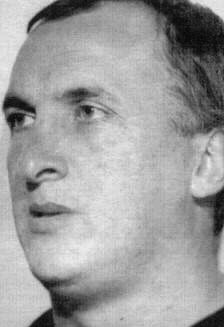
Billy Ray Irick
Murderer Brian Kevin Rosenfeld
Murderer · USA · 1985
Brian Kevin Rosenfeld Brian Kevin Rosenfeld was sentenced to three concurrent l…
23 victims
Brian Kevin Rosenfeld
Murderer · USA · 1985
Brian Kevin Rosenfeld Brian Kevin Rosenfeld was sentenced to three concurrent l…
23 victims
 Marvin Gray
Murderer · USA · 1975
Marvin Gray was convicted killer who claimed responsibility for 23 slayings and…
23 victims
Marvin Gray
Murderer · USA · 1975
Marvin Gray was convicted killer who claimed responsibility for 23 slayings and…
23 victims
 Yahweh ben Yahweh
Murderer · USA · 1980
Yahweh ben Yahweh was born and legally named Hulon Mitchell Jr. (October 27, 19…
23 victims
Yahweh ben Yahweh
Murderer · USA · 1980
Yahweh ben Yahweh was born and legally named Hulon Mitchell Jr. (October 27, 19…
23 victims
 Russell Ellwood
Murderer · USA · 1991
Russell Ellwood was a former taxi driver. Authorities suspected him of killing…
20 victims
Russell Ellwood
Murderer · USA · 1991
Russell Ellwood was a former taxi driver. Authorities suspected him of killing…
20 victims
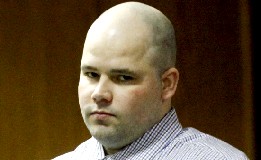 Joshua Durcho
Mass murderer · USA · 2009
Joshua Durcho was an Oklahoma man accused of strangling his ex-girlfriend and h…
5 victims
Joshua Durcho
Mass murderer · USA · 2009
Joshua Durcho was an Oklahoma man accused of strangling his ex-girlfriend and h…
5 victims
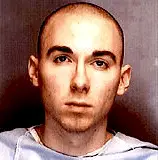 Benjamin Nathaniel Smith
Murderer · USA · 1999
Benjamin Nathaniel Smith committed suicide by shooting himself on July 4, 1999.…
2 victims
Benjamin Nathaniel Smith
Murderer · USA · 1999
Benjamin Nathaniel Smith committed suicide by shooting himself on July 4, 1999.…
2 victims
 Kenneth Eugene Bruce
Murderer · USA · 1990
Kenneth Eugene Bruce was convicted of capital murder in Texas and was executed…
1 victim
Kenneth Eugene Bruce
Murderer · USA · 1990
Kenneth Eugene Bruce was convicted of capital murder in Texas and was executed…
1 victim
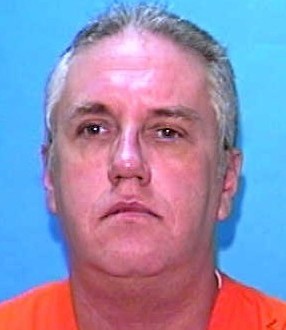 Jim Eric Chandler
Murderer
Jim Eric Chandler was convicted in the Nineteenth Judicial Circuit, Indian Rive…
1980 victims
Jim Eric Chandler
Murderer
Jim Eric Chandler was convicted in the Nineteenth Judicial Circuit, Indian Rive…
1980 victims
 Nikko Jenkins
Murderer · USA · 2013
Nikko Jenkins spent nearly his entire life in prison. In 1993, a 7-year-old boy…
4 victims
Nikko Jenkins
Murderer · USA · 2013
Nikko Jenkins spent nearly his entire life in prison. In 1993, a 7-year-old boy…
4 victims
- Gender
- male
- Country
- USA
- Location
- Knox County, Tennessee, USA
- Date of birth
- August 26, 1958
- Age at first offence
- 27
- Characteristics
- rape, rape?, mentally ill, child killer, torture
- Victim profile
- Paula Kay Dyer, 7
- Method of murder
- Suffocation
- Date(s) of murder
- April 15, 1985
- Years active
- 1985
- Date of arrest
- Next day
- Status
-
Sentenced to death
Sentenced to death on December 3, 1986
Case record: Billy Ray Irick
Background
Billy Ray Irick was convicted for the 1985 rape and murder of 7-year-old Paula Dyer in Knoxville. Irick was a friend of the child’s mother and step-father and lived with them for a time, often caring for the five (5) young children in the family while the parents were working. At the time of the incident, the parents were separated. The step-father and the defendant were living with the victim’s step-father’s mother.
Irick planned to leave Knoxville for Virginia that night and did not want to keep the children.
Irick had a history of severe and persistent mental illness. His mother suffered from a severe psychiatric disorder. In May 1965, when Irick was six years old, a clinical psychologist concluded that he was “suffering from a severe neurotic anxiety reaction with a possibility of mild organic brain damage.” The following year, at age seven, Irick was hospitalized at Eastern State Medical Hospital in Knoxville and was treated with anti-psychotic medications. He remained there for 10 months and was then discharged to the Church of God home where he lived until he was a teenager. During that time, he was rarely if ever visited by his family.
When he was 13, the Children’s Home arranged a visit to his parents’ home that went badly. He destroyed the television with an axe and used a razor to cut up his sister’s pajamas while she slept in them. He returned to the Children’s Home and soon broke into a young girl’s dormitory, hovering over her as she awoke screaming. He was expelled from the home and sent back to Eastern State Hospital, where it was discovered that he had been taken off his psychotropic drugs. He remained at the hospital until age 14 and was released to his parents.
Irick joined the Army at age 17 but was discharged shortly thereafter. There was no indication that he ever received follow-up treatment or further examination until he was tested for competency to stand trial in 1985.
Irick’s court-appointed trial attorneys filed a notice of an insanity defense, which they later withdrew. During the duration of the trial, the only mention of his long history of mental illness came during his sentencing hearing. The only person who testified to his significant mental health issues at that hearing was a clinical social worker who worked with Billy between the ages of six and eight. During the guilt phase of the trial, the defense called no witnesses, and Irick did not testify.
Years later, Irick’s new attorneys interviewed key witnesses. Those interviews confirmed abuse Irick suffered and his psychotic symptoms at the time of the crime. A neighbor saw Irick’s abuse firsthand when the neighbor was 15, when his father hit him in the head with a piece of lumber, knocking him to the ground. Investigators also found that no one had ever interviewed Paula’s grandparents or aunt, with whom Irick had lived just weeks prior to Paula’s death.
Just days and weeks prior to the offense, Irick evidenced signs of insanity. The described behaviors included trying to kill Kenny while he slept with a machete; chasing a young girl down a Knoxville street in broad daylight waving a machete and threatening to kill her because he didn’t like her looks; talking to and taking instruction from “the devil”; hearing voices; expressing fear the police would break into his home and kill him with a chainsaw; and obeying the voice.
Because information about Irick’s psychotic symptoms just prior to the murder was not investigated or presented at trial, the state’s psychiatric expert, Dr. Clifton Tennison, evaluated Irick for one hour and testified at trial that there was no evidence of mental illness that would have prevented Irick from knowing the wrongfulness of his conduct. Dr. Tennison concluded Irick had an anti-social personality disorder. Dr. Tennison testified that “many people with anti-social personality are in jail – or in prison right now…”
According to the state’s pre-sentence report, Irick had only a few misdemeanors on his record. Years later, when the case was on appeal, Dr. Tennison, after reviewing new evidence describing Irick’s behavior prior to the murder, stated in an affidavit: “I am concerned that in light of this new evidence, my previous evaluation and the resulting opinion were incomplete and therefore not accurate… It is my professional opinion to a reasonable degree of medical certainty that without further testing and evaluation, no confidence should be placed in Mr. Irick’s 1985 evaluations of competency to stand trial and mental condition at the time of the alleged offense.”
Two other psychiatrists later performed evaluations and believed Irick was presently functioning at the level of a seven to nine year old.
During the last-ditch effort to avoid execution, a clinical psychologist testified that Irick was blaming then-stepfather Kenneth Jeffers for Paula’s death. That contention came despite decades-old confession and a defense push to show that Irick was in the midst of a psychotic break when he killed Paula and had no real memory of the actions for which he faced execution.
Clinical psychologist Bruce Seidner testified before Knox County Criminal Court Judge Richard Baumgartner that Irick was denying responsibility for the rape and murder and instead blamed Kenneth Jeffers. Seidner testified: “He felt the stepfather was somewhat involved in this,” and “He feels like there was no objective motivation for him, but there was tremendous objective motivation for this stepfather.”
Seidner also testified: “He feels like (his current defense team) is doing everything they can, and he trusts they're working on his behalf.” Baumgartner said he would rule in more than five days.
The U. S. Supreme Court determined in Ford v Wainwright (1986) that, “inflicting the death penalty upon a prisoner who is insane” violates the U.S. Constitution.
The offence
On the night of the occurrence, Paula Dyer was with Irick while Paula’s mother went to work. Paula’s mother was uneasy because Irick had been drinking, although he did not seem to be intoxicated.
Irick was in a bad mood because he had been in an argument with the stepfather’s mother earlier in the day. Irick called for the stepfather to come home, suggesting something was wrong with the little girl and telling him, “I can’t wake her up.”
When the victim’s step-father arrived at the house, Irick was waiting at the door. Paula was lying on the living room floor with blood between her legs. The step-father wrapped her in a blanket and took her to Children’s Hospital. Efforts to resuscitate her failed and she was pronounced dead a short time later.
Physical examinations at the hospital emergency room and during the autopsy indicated asphyxiation or suffocation. The cause of death was cardiopulmonary arrest from inadequate oxygen to the heart.
The described injuries included an abrasion to Paula’s nose near one eye and lesions on her right chin consistent with teeth or fingernail marks. Blood was oozing from Paula’s vagina and she had an extreme tear extending into the pelvic region. There were less severe lacerations around the opening of her rectum, and semen and pubic hair were found. These injuries were consistent with penetration of the vagina and anus by a penis.
After the victim was taken to the emergency room, Irick left Paula’s home and was located by the police the next day hiding beneath a bridge.
Irick stated upon apprehension: “I have been hiding under the bridge all day, and several police cars have gone by and I had thought about turning myself in.”
Irick also gave a statement to the police in which he admitted killing Paula.
Investigation
After Paula was taken to the hospital and was pronounced dead, Irick left and was located by police the next day hiding beneath a bridge.
Police apprehended Irick, and he made the statement about hiding under the bridge and the police cars going by.
After his arrest, Irick gave a statement to the police in which he admitted killing Paula.
Arrest
Irick was located by police hiding beneath a bridge and was apprehended the next day. Upon apprehension, he said: “I have been hiding under the bridge all day, and several police cars have gone by and I had thought about turning myself in.”
Trial
Irick was convicted for the 1985 rape and murder of Paula Dyer in Knoxville. United States Court of Appeals For the Sixth Circuit opinion 01-5638 and opinion 10-5581 are referenced in relation to the case.
His court-appointed trial attorneys filed a notice of an insanity defense, which they later withdrew. During the trial, the defense called no witnesses during the guilt phase, and Irick did not testify.
The only mention of Irick’s long history of mental illness during trial came during his sentencing hearing. A clinical social worker testified about Irick’s mental health issues during that sentencing phase.
The state’s psychiatric expert, Dr. Clifton Tennison, testified at trial that there was no evidence of mental illness that would have prevented Irick from knowing the wrongfulness of his conduct, and Dr. Dr. Tennison testified: “many people with anti-social personality are in jail – or in prison right now…”
Sentencing
A year after Irick confessed, he was sentenced to death.
Irick was sentenced to death on December 3, 1986.
Appeals
The case reached both state and federal appeals and they were lost.
On appeal, Dr. Clifton Tennison stated in an affidavit that his earlier evaluation and resulting opinion were incomplete and not accurate in light of new evidence and that no confidence should be placed in Irick’s 1985 evaluations of competency to stand trial and mental condition at the time of the alleged offense: “I am concerned that in light of this new evidence, my previous evaluation and the resulting opinion were incomplete and therefore not accurate… It is my professional opinion to a reasonable degree of medical certainty that without further testing and evaluation, no confidence should be placed in Mr.
During the last-ditch hearing to avoid execution, Irick’s defense team argued he was psychotic when he raped and strangled Paula. Irick contended he was framed and was blaming then-stepfather Kenneth Jeffers for Paula’s death.
Outcome
Irick remained on death row following his conviction and death sentence.
Aftermath
During the last-ditch hearing to avoid execution, clinical psychologist Bruce Seidner testified that Irick was denying responsibility for the rape and murder and instead blaming Kenneth Jeffers. Seidner testified: “He felt the stepfather was somewhat involved in this,” and “He feels like there was no objective motivation for him, but there was tremendous objective motivation for this stepfather.” Seidner further testified: “He feels like (his current defense team) is doing everything they can, and he trusts they're working on his behalf.”
Baumgartner said he would rule in more than five days, and an appeal was expected.
The described narrative included that Irick was currently facing execution in Tennessee and that he suffered from severe and persistent mental illness since he was a small child. It stated that if all evidence had been available at trial demonstrating the chronic and severe nature of his illness, he would most likely not have been sent to death row. It also stated that it was incumbent upon society not to execute those with severe mental illness but to treat them while protecting the public from the few who were violent.
Other details
Paula Dyer was 7 years old and there were five (5) young children in the family being cared for. Irick’s statement about hiding under the bridge came after Paula had been taken to Children’s Hospital.
Kathy Jeffers and Kenneth Jeffers are mentioned in the narrative. Prior court hearings showed Irick had been living with Kenneth Jeffers' mother in the days before Paula’s death but was kicked out when he grew violent. Kenneth Jeffers allowed Irick to stay at the home he shared with wife Kathy Jeffers and her children, including Paula.
On the night of Paula’s death, Kathy Jeffers was headed to work but grew concerned about leaving Irick with her children because he was drinking and showing signs of anger at her in-laws over being kicked out of their home. Kathy phoned Kenneth Jeffers and asked him to take over baby-sitting duties from Irick. Kenneth Jeffers dallied insisting the children were fine in Irick’s care.
Soon after, Kenneth Jeffers received an urgent call from Irick that Paula was in peril. Kenneth Jeffers returned to the home to discover Paula raped and strangled, according to appellate court records.
Kathy Jeffers testified that after putting the kids to bed around 9:00, she saw Irick on the back porch talking to himself but could not understand what he was saying. After a shower, she spoke with Irick in the kitchen and learned that earlier that day he had been chased from Kenneth Jeffers’ home by Kenneth Jeffers’ mother with a broom.
Kathy testified that after the conversation, Irick went to the porch and brought back a quart of beer from which he was drinking. When Kathy was asked on direct during the trial if Irick was intoxicated at that point, she testified: “I noticed more his being mad than anything else,” and further agreed that the petitioner spoke “coherently.”
The narrative also states that one day after the murder, Kathy Jeffers told police a different version of events, that she said: “Bill was drunk and talking crazy.” It further states that Irick’s trial attorneys never saw this information.
Kathy Jeffers left home around 10:00 p.m. to call Kenneth Jeffers because she did not have a phone, asking him to come home and watch the children since Irick was drinking. She arrived at work around 10:30 p.m. and about an hour later received a call from her husband saying that Irick could not wake up Paula; Paula would be taken to the hospital and pronounced dead from asphyxiation.
The narrative characterized the case as reflecting “a tragic spiral by a very ill person that resulted in the rape and death of a child.” It also states that Irick was “one of the 5-10% of individuals on death rows nationwide who are, in fact, suffering from severe and persistent mental illness,” and that he was clearly very sick at the time of the crime and continues to be.

Spotted an error, or have more information about this case?