
Nikko Jenkins
Murderer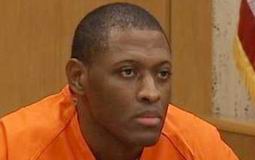 Leon Davis Jr.
Murderer · USA · 2007
Leon Davis Jr. was sentenced to death on April 29, 2011, for the execution-styl…
5 victims
Leon Davis Jr.
Murderer · USA · 2007
Leon Davis Jr. was sentenced to death on April 29, 2011, for the execution-styl…
5 victims
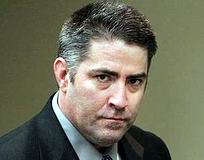 Raymond Lee Oyler
Murderer · USA · 2006
Raymond Lee Oyler was convicted for starting the 2006 Esperanza fire in Riversi…
5 victims
Raymond Lee Oyler
Murderer · USA · 2006
Raymond Lee Oyler was convicted for starting the 2006 Esperanza fire in Riversi…
5 victims
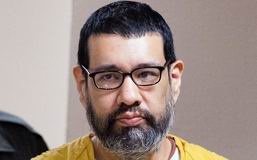 Anthony Garcia
Murderer · USA · 2008
Anthony Garcia was a former doctor who was found guilty on all counts including…
4 victims
Anthony Garcia
Murderer · USA · 2008
Anthony Garcia was a former doctor who was found guilty on all counts including…
4 victims
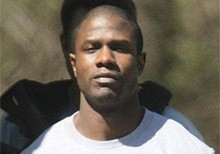 Brian Gene Nichols
Murderer · USA · 2005
Brian Gene Nichols was born December 10, 1971. He was known for his escape and…
4 victims
Brian Gene Nichols
Murderer · USA · 2005
Brian Gene Nichols was born December 10, 1971. He was known for his escape and…
4 victims
 Bruce Mendenhall
Murderer · USA · 2007
Bruce Mendenhall grew up in Crawford County, Illinois. He was married and has t…
4 victims
Bruce Mendenhall
Murderer · USA · 2007
Bruce Mendenhall grew up in Crawford County, Illinois. He was married and has t…
4 victims
 Henry Lee Jones
Murderer · USA · 2003
Henry Lee “Bam” Jones grew up without a father in Cleveland, Miss. He grew up w…
4 victims
Henry Lee Jones
Murderer · USA · 2003
Henry Lee “Bam” Jones grew up without a father in Cleveland, Miss. He grew up w…
4 victims
 Abel Revilla Ochoa
Mass murderer · USA · 2002
Abel Revilla Ochoa (TDCJ number 999450), born 01/23/1973, was convicted of capi…
5 victims
Abel Revilla Ochoa
Mass murderer · USA · 2002
Abel Revilla Ochoa (TDCJ number 999450), born 01/23/1973, was convicted of capi…
5 victims
 Lorraine Thorpe
Homicide · United Kingdom · 2009
Lorraine Thorpe was 15 at the time of the killings and was later 16. Desmond Th…
2 victims
Lorraine Thorpe
Homicide · United Kingdom · 2009
Lorraine Thorpe was 15 at the time of the killings and was later 16. Desmond Th…
2 victims
 Nathan Gale
Mass murderer · USA · 2004
Nathan Gale (September 11, 1979 – December 8, 2004) was a native of Marysville,…
4 victims
Nathan Gale
Mass murderer · USA · 2004
Nathan Gale (September 11, 1979 – December 8, 2004) was a native of Marysville,…
4 victims
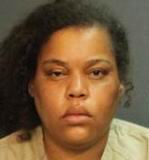 Marilyn Edge
Murderer · USA · 2013
Marilyn Edge was a mother from Scottsdale, Arizona, accused of poisoning and ki…
2 victims
Marilyn Edge
Murderer · USA · 2013
Marilyn Edge was a mother from Scottsdale, Arizona, accused of poisoning and ki…
2 victims
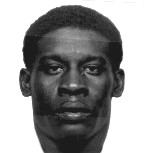 Billy Wayne White
Murderer · USA · 1976
Billy Wayne White was sentenced to death for the capital murder of Martha Laura…
1 victim
Billy Wayne White
Murderer · USA · 1976
Billy Wayne White was sentenced to death for the capital murder of Martha Laura…
1 victim
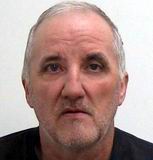 Camille Cleroux
Serial killer · Canada · 1990
Camille Cleroux, 58, pleaded guilty in an Ottawa court to the first-degree murd…
3 victims
Camille Cleroux
Serial killer · Canada · 1990
Camille Cleroux, 58, pleaded guilty in an Ottawa court to the first-degree murd…
3 victims
- Gender
- male
- Country
- USA
- Location
- Omaha, Douglas County, Nebraska, USA
- Date of birth
- 1986
- Age at first offence
- 27
- Characteristics
- spree killer
- Victim profile
- Jorge Cajiga-Ruiz, 29, and Juan Uribe-Pena, 26 / Curtis Bradford, 22 / Andrea L. Kruger, 33
- Method of murder
- Shooting
- Date(s) of murder
- August 11-21, 2013
- Years active
- 2013
- Date of arrest
- August 29, 2013
- Status
-
Convicted of four counts of first-degree murder on April 16, 2014
Case record: Nikko Jenkins
Background
Nikko Jenkins spent nearly his entire life in prison. In 1993, a 7-year-old boy showed up at Omaha's Highland Elementary School with a loaded .25-caliber handgun. He was briefly taken from his mother, and that was the beginning of two decades in and out of group homes, the Douglas County Youth Detention Center, and, eventually, state prison.
When he finally won his freedom on July 30, he had acquired a face full of tattoos and a handful of female admirers each calling herself his wife.
Douglas County authorities accused Jenkins of a killing spree in August that left Jorge Cajiga-Ruiz, Juan Uribe-Pena, Curtis Bradford and Andrea Kruger dead.
Omaha Police Chief Todd Schmaderer said: “Nikko Jenkins maneuvered through his freedom by using fear, intimidation and violence to get what he wanted.”
Douglas County sheriff's deputies remembered him as being barely tall enough to see over a counter in juvenile court.
Prior juvenile and criminal history
After the gun incident at Highland Elementary, Jenkins was free for four years until he was accused of a crime. At age 11, he admitted to stealing on three occasions. It was also around then that he stopped regularly attending school, though he later said he completed his GED in prison.
At first, Jenkins was sent to a group home in Papillion, and his actions soon escalated to violence. In 1998, he was kicked out of the home for repeatedly assaulting other children. A probation officer wrote: “The latest incident occurred on Feb. 26, 1998, when he used a clothes hanger to hit another minor child, leaving whip marks on this minor.”
Jenkins was sent to the Youth Detention Center, then soon released to the care of his mother, Lori Jenkins. But by the end of the year, the 12-year-old boy was back in the detention center for assaulting someone with a knife.
Eventually, he caused so much trouble and run away so many times that his probation was revoked. In August 2001, he was sent to the Youth Rehabilitation and Treatment Center-Kearney. One year later, he was back in Omaha and soon began threatening those around him.
Jenkins' father, David Magee, wrote in court documents that “Nikko Jenkins has threatened my life and pulled a sawed-off shotgun on me at my own home.”
Soon after, Jenkins stole two cars at gunpoint. In one incident, he ordered a 21-year-old man out of his black Honda Civic and took off in it. In the second incident, he asked a 20-year-old woman for a ride. When she declined, he got into the back of her 1983 maroon Cadillac DeVille, brandished a shotgun and told her to drive to 22nd Street and Grand Avenue. There, he ordered her out.
For the robberies, Jenkins was sent to prison in 2003 and was not released for a decade.
While in prison, Jenkins was charged twice: once for assaulting a guard while on furlough at his grandmother's funeral, and once for his part in a prison riot. He also was disciplined several times for his tattoo activities, attacking other inmates, gang activity and fashioning a weapon out of a toilet brush.
Mental health and treatment assertions
Jenkins attributed his problems to mental illness. He told a psychiatrist of a family history of mental illness and said he first went to a psychiatrist at the former Richard Young Center when he was 8 or 9. He said a Tecumseh State Prison doctor diagnosed him as schizophrenic, bipolar and obsessive-compulsive.
In hearings before Douglas County District Judge Gary Randall, Jenkins kept trying to enter an insanity plea. At the same time, he consistently told corrections officers and a judge that he wasn't going to take medications for his mental illness.
At a sentencing hearing in July 2011, Randall asked Jenkins: “You've chosen not to take those?”
Jenkins answered: “Because of the hostile environment that I'm currently living in, the medication is to basically kill my adrenaline, because when I have mental breakdowns, I become enraged and I lash out on others. So the medicine that they give me, it slows me down and it basically puts me in almost a paralyzing, you know, state of mind.”
Jenkins told the judge that his attack on a Tecumseh corrections officer was “a mental breakdown as a result of my mental disorders.”
A psychiatrist evaluating Jenkins' ability to stand trial in 2010 wrote that he believed the inmate was making up at least some of his symptoms. Randall had ordered an evaluation by a Lincoln Regional Center psychiatrist.
On July 20, 2010, Dr. Scott Moore met with Jenkins at the Douglas County Correctional Center. Moore reported that Jenkins said his problems stemmed from abuse he said he suffered at the hands of family members when he was young. Moore also reported that Jenkins said he heard voices from Egyptian gods.
Moore wrote: “After a little bit, (Jenkins) went on to tell me that he was told that he should eat human brains because that's where the pituitary gland was and it would strengthen him to do so.”
Moore's conclusion was that Jenkins was faking it. Moore wrote that Jenkins seemed to have thought out the symptoms beforehand. Moore wrote that if Moore didn't accept Jenkins' symptoms, the inmate would escalate his descriptions.
Moore wrote: “I believe his major diagnosis is Antisocial Personality Disorder, and I doubt the presence of psychosis.”
Assistant Public Defender Gary Olson took exception to Moore’s view, saying that a nurse at the Douglas County Correctional Center had recommended that Jenkins be transferred to the Lincoln Regional Center. Olson said: “The idea that Jenkins ‘was making up his mental illness, I think, is contradicted by the number, quite frankly, the number of tattoos on his face.”
Legal proceeding: competency and mental illness disputes
Douglas County Judge Peter Bataillon ruled that Jenkins was competent to stand trial. Bataillon refused to send Jenkins to the state's psychiatric hospital, noting that Jenkins was aware of what was happening in the prosecution against him.
Bataillon ruled that the decision concerned only Jenkins' ability to understand the court proceedings, not whether he was sane or insane at the time of the alleged crimes.
Bataillon noted Jenkins carried on a clear conversation with the judge during a competency hearing, and noted that Jenkins was concerned that specific constitutional rights were violated. Bataillon wrote: “This was evidence of defendant's ability to comprehend his rights, convey his reasons why he believed his rights had and were being violated, and to follow the request(s) of the court.”
Bataillon also noted defense psychiatrist concern about Jenkins' ability to have rapport with his attorneys, and Bataillon found Jenkins could assist in his defense if he so desired.
The report described that Jenkins repeatedly asserted he was schizophrenic and hears commands from an Egyptian god he called Opophis or Ahpophis. The materials stated that two doctors had declared him schizophrenic, while three other psychiatrists suggested Jenkins was feigning mental illness.
On the competency issue, doctors were trying to decide whether Jenkins met a three-pronged test: understanding the charges, understanding the court process, and being able to actively participate in his defense. Dr. Bruce Gutnik, Jenkins' hired psychiatrist, said Jenkins was incompetent in part because Jenkins would be unable to have rapport with his attorneys. A state psychiatrist said Jenkins was not only competent but also crafty.
Bataillon’s ruling came a day after Jenkins filed a federal lawsuit against the Nebraska prison system that housed him for 10 years before his release. Jenkins blamed corrections officials for “4 killings.”
In the handwritten six-page lawsuit filed Wednesday, Jenkins claimed spending half his prison time in solitary confinement resulted in suicide attempts and facial scars from self-mutilation. Jenkins wrote: “These state officials Failed to protect public Safety By not seeking the civil Committment oF A dangerous person oF mental illness,” and “Released After July 30th, 2013, Nikko Allen Jenkins confessed to Four 4 Killings murdering 4 omaha Nebraska citizens In Human Sacrifice to Ahpophis Egyptian WAR GOD.”
The materials described that Jenkins named defendants including former corrections director Robert Houston, a warden, three state prison therapists, an assistant state ombudsman, and State Sen. Ernie Chambers of Omaha. The materials further stated Chambers and the ombudsman tried to get Jenkins help or a commitment to a mental hospital before his release.
Jenkins wrote: “I Am Seeking monetary damages in 24.5 million dollors $ As the four large Facial Wounds I Suffered Have deeply scared my Face For life yet the Emotional destress pain And Suffering is Also life long.”
About 9 a.m. Wednesday, Jenkins left a voicemail on a World-Herald reporter's phone by reading from pleadings in a complaint against Douglas County Attorney Don Kleine. The materials said Kleine stated there was no merit in Jenkins' contention that Kleine improperly revealed Jenkins had been ruled competent.
Release from prison
The materials described that Jenkins was released from prison on July 30 and that the rampage occurred after his July 30 release from prison without supervision.
The materials also described that in late July, sheriff's officials were concerned about Jenkins' release and emailed and posted a bulletin at the Douglas County Courthouse. The bulletin urged sheriff's deputies, security staff and officials to be on the lookout for Jenkins because of erratic letters he had written to two judges in the weeks before his prison release. The letters were described as indecipherable.
In a July 14 letter to Douglas County District Judge Gary Randall, Jenkins wrote: “Goddess Queens I leave you wealth & Royalty In My Intellects Brilliance. The kingdoms power I protect With Nature of Animalistic Savage Brutality.”
The materials said Jenkins wrote the missive to Randall in a diamond shape and attached a picture of a tattoo on his forehead. The materials stated Jenkins wrote a letter to District Judge Shelly Stratman in a circle shape, with sentences described as mostly incomprehensible. Officials said Jenkins called himself a lethal warrior and closed the letter with something to the effect of: “I will see you very soon.”
A bulletin and letters were described as leading deputies to be on alert to watch for Jenkins if he entered the courthouse.
The offence (four killings in August)
Prosecutors said Jenkins executed a 10-day spree in August, killing four Omahans in three separate Omaha ambushes.
Victims and ages:
- Jorge Cajiga-Ruiz (age 29)
- Juan Uribe-Pena (age 26)
- Curtis Bradford (age 22)
- Andrea Kruger (age 33)
Aug. 11 deaths The court found Jenkins guilty of the Aug. 11 deaths of Jorge Cajiga-Ruiz and Juan Uribe-Pena. The materials stated that the two men were lured to Spring Lake Park on the pretense of receiving sex acts from two of Jenkins' female relatives. Jenkins shot both men in the head. The materials described that Cajiga-Ruiz had been covering his face when he was shot, and the bullet pierced his hand and exited his brain.
The materials also stated that police said Jenkins used a sawed-off 12-gauge shotgun loaded with deer slugs on August 11 to kill Cajiga-Ruiz and Uribe-Pena. The materials stated that their bodies were found inside a pickup truck in southeast Omaha. A patrol officer discovered the bodies about 5 a.m. inside a Ford pickup truck parked near the public swimming pool at Spring Lake Park. Both were shot in the head.
Aug. 19 death 19 death of Curtis Bradford. The materials stated that Jenkins lured Bradford to the area of 18th and Clark Streets on the pretense that they would “do a lick,” meaning commit a robbery. The materials stated that after Jenkins' sister, Erica, shot Bradford, Jenkins executed him, telling her she didn't do it right.
The materials also stated that police said Jenkins used a small-caliber gun to kill Bradford, and that Bradford was a one-time prison acquaintance. Bradford’s body was found shot in the head about 7 a.m. near 18th and Clark Streets. A bullet hole in the back of his hoodie was described. The materials stated Bradford was planning to study business at ITT Technical Institute. The materials also said Bradford and Jenkins met in prison, and the materials said they posed together for a photo that was posted Aug. 18 on Facebook.
Aug. 21 death 21 death of Andrea Kruger. The materials stated she was a mother of three driving home from her job at a bar to tend to a sick child. Jenkins and three relatives scouted out Kruger looking for an SUV to steal so they could rob people in town for the Lil Wayne concert. The materials stated that they pulled in front of Kruger at a stop sign at 168th and Fort Streets, blocking her way so they could jump her. Jenkins pulled Kruger out of the driver's side and shot her in the head, neck and back, killing her in the middle of the road. The materials stated he then took off in her SUV.
The materials further stated that on August 21, Douglas County sheriff's deputies found Kruger's body shortly after 2 a.m. in the street near the intersection of 168th and Fort Streets. The materials stated she was shot multiple times. The materials stated Kruger was married and the mother of three. It described that she was on her way home from her bartending job near 178th and Pacific Streets. Sheriff Tim Dunning said Kruger was shot sometime between 1:47 a.m., when she closed the bar, and 2:08 a.m., when deputies responded to a call of shots fired. The materials stated her 2012 Chevrolet Traverse was located by police about 16 hours later in an alley near 43rd and Charles Streets, and that Dunning said someone made “a feeble attempt” to set the vehicle on fire.
Method and weapons described in court materials The materials described that prosecutors said Jenkins planned the killings to cover up robberies of the victims or to keep them from identifying him. Jenkins disputed memory of the killings and said an Egyptian god named Ahpophis ordered him in a foreign language to kill the four as human sacrifices.
Investigation and evidence collection
After Kruger was killed, the materials said Crime Stoppers began receiving calls about Jenkins. Tips about all four homicides started to come in, and authorities began to connect the dots.
Douglas County Sheriff Tim Dunning said technology helped track Jenkins from shortly after the Kruger killing until Jenkins' arrest. Dunning declined to elaborate.
There were anxious moments described as authorities feared Jenkins was on to them, and they feared he might have fled to Kansas City, Mo. Omaha Police Chief Todd Schmaderer said: “He had gone underground,” and added: “We thought he was on the run.”
Authorities eventually tracked Jenkins to a relative's home, where he was arrested Aug. 29.
The materials stated high-resolution security cameras helped solve the case. Sheriff Dunning said at least one image of Kruger's stolen sport utility vehicle was captured on a surveillance tape. Schmaderer said: “Had this occurred maybe 10 years ago, this might have been a whodunit,” and “If you can't corroborate what people tell you, it becomes almost meaningless.”
The materials also stated authorities were searching Jenkins' apartment in the Tudor Heights complex on 108th Street, north of West Maple Road, and they searched the house near 100th and Birch Streets where he was arrested. Investigators were also running DNA and ballistics tests.
The materials described investigators exploring similarities among killings, including that Cajiga-Ruiz and Uribe-Pena were shot while sitting in a pickup truck in Spring Lake Park in South Omaha, Bradford was shot in the head in north Omaha, and Kruger was shot multiple times.
The materials also included a theory that Jenkins killed Bradford after the duo went out to commit a robbery or burglary together, and described that a photo had been posted on Facebook of Jenkins and Bradford arm in arm with both men flashing a gang sign.
Arrest and associated detentions
The materials described that late Thursday afternoon, police surrounded a house near 100th and Birch Streets where Jenkins was hanging out with friends and he emerged and was arrested without incident.
Jenkins was taken into custody on a separate terroristic threats charge. The materials stated that Jenkins reportedly didn't make admissions to investigators. Authorities had yet to charge him or publicly name him as a suspect in the slayings at that point.
Another set of materials described that Jenkins first court appearance was Thursday and a judge denied bail. The judge set bail at $1 million for Wells.
The materials stated other people arrested in connection with the four homicides included Anthony Wells and Erica Jenkins.
Two other arrested defendants appeared in court on Thursday: Anthony Wells and Erica Jenkins. Erica Jenkins was being held on $350,000 bail in two counts of assault of a confined person, charges described as growing out of a jail scuffle. The materials said Erica Jenkins was also held on a criminal mischief warrant out of Sarpy County, and that she shouted at court officials as her bail was being set. She hollered: “Why you keep (expletive) with my bail?”
The materials said Douglas County Judge Joseph Caniglia asked her if she wanted a muzzle. Erica Jenkins responded: “Do you want a (expletive) muzzle?” The materials described that when hands were cuffed, she toppled the lectern inmates stand near during arraignments and corrections officers ushered her out.
Confession and statements to police
The materials described that after refusing to speak to detectives about crimes including the August killings, Jenkins changed his mind.
The materials stated Jenkins placed a phone call from the Douglas County Jail on Sept. 3 telling homicide detectives he wanted to meet and tell them everything he knew about the slaying of Andrea Kruger. He was transferred to an interview room at Central Police Headquarters.
Douglas County Sheriff’s Sgt. John Pankonin testified that Jenkins greeted investigators and said: “It’s going to be a long night,” and then said: “I’m going to give you everything you need.”
The materials said Jenkins asked first for all the information detectives had on the weapons and whether they had been tested in connection with the killings. The second thing he needed was “a wire, complete with recording devices,” so detectives could send Jenkins out into the ’hood to help figure out who killed Kruger, because “he had street cred.” Detectives did not take Jenkins up on the offer.
The materials stated that authorities alleged Jenkins took detectives on a journey that night, and the narrative helped them identify Jenkins as the killer.
Pankonin testified Jenkins initially told detectives he didn’t want to talk in the jail because there were too many family members there. Once at the police station, Jenkins got comfortable, requested coffee and water, and ordered food including two double cheeseburgers, a chicken sandwich, fries and milk from McDonald’s.
Over the next seven hours, Pankonin said Jenkins dominated the room, with Pankonin stating: “Pretty much, he did most of the talking,” and “We just listened.”
The materials said Jenkins fingered two young men, his cousins, as killers at first, but he later admitted to the killings of four Omahans: the Aug. 11 slayings of Juan Uribe-Pena and Jorge Cajiga-Ruiz, the Aug. 19 slaying of Curtis Bradford and the Aug. 21 slaying of Kruger.
Pankonin testified Jenkins was sometimes emotional but always coherent and calculated. Jenkins disagreed and said his mental illness—purported schizophrenia—clouded his mind and ability to consent to the interview.
The materials stated Jenkins swallowed rash cream at the jail in an effort to kill himself. Jenkins also referenced three “phases” in the interview that led to the confession.
The materials described Phase one as Jenkins acting “cocky and strong” and ready to find Kruger’s killer. Pankonin recalled Jenkins said he had “a ton of street connections that could lead him to the killers.” Pankonin said: “You said you were a powerhouse.”
Phase two described Jenkins speaking in tongues. Pankonin said he didn’t remember such yammering but described a moment when Jenkins stood on a chair and replicated how he said he “inflicted Opophis” on the men who killed Kruger. The materials stated Jenkins maintained he acted under commands of Opophis, called an Egyptian serpent god.
The materials also stated that later Jenkins pointed out he sat on the floor. Pankonin said hardly was a sign of irrational behavior, and Pankonin said: “Without a doubt, you understood everything that was going on inside that interview room.” Pankonin said: “I thought you were a very intelligent person, very clever, very wise.” Pankonin said Jenkins “went on to predict things,” including predicting he would get a bench trial and saying: “We should put a lid on this thing — all this blame is going to be put on the Nebraska Department of Corrections (for releasing him).”
Phase three described Jenkins breaking down in tears toward the end of the interrogation as Pankonin hugged him. Pankonin testified Jenkins broke down as a sign Jenkins was distraught, not disturbed.
Jenkins asked: “Did you give me a hug and hold my head and console me — as a father would to a child?” Pankonin replied: “I did.” Jenkins asked: “Why?” Pankonin replied: “That’s the type of person I am. You just confessed to four homicides. I saw the look in your face, like you wanted a hug. I gave you a hug.” Jenkins asked: “What was the look in my face?” Pankonin answered: “The look of someone who just confessed to four homicides.”
Trial proceedings and plea
Jenkins opened proceedings by speaking in tongues or some language of his supposed serpent god. He smirked and laughed briefly as prosecutors recounted details of his victims' deaths.
Jenkins pleaded guilty, then refused to accept prosecutors' accounts of the shootings. He then pleaded no contest, and a judge found him guilty.
Jenkins blamed the Nebraska prison system for the deaths of the four Omahans, saying the system released him despite his purported schizophrenia.
Jenkins first said he wanted to go to death row. He then asked Douglas County Attorney Don Kleine to take the death penalty off the table.
The materials described that on Wednesday, Jenkins' plea hearing included a rare, in-chambers meeting between Judge Peter Bataillon and Jenkins with Jenkins' advisory attorneys present, without prosecutors. Bataillon disclosed the move to answer questions, and noted that there was a 45-minute delay before the plea hearing began. The materials stated Jenkins aired complaints about prosecutors, police and jailers during that delay.
Bataillon told Jenkins: “Some of these complaints can be resolved by this court.” Bataillon continued: “However, I had advised if he pleads guilty, he is waiving all these concerns and complaints.”
The materials stated Jenkins told the judge he felt he had “no other choice but to plead” because his “constitutional rights and human rights are not being recognized.”
Bataillon repeatedly told Jenkins he had other choices: go to trial, plead not guilty, or plead not guilty by reason of insanity.
Jenkins told the judge: “The main thing is, I'm ready to go where I'm going to go.” Jenkins also said: “I'm not trying to sit in Douglas County Jail. I don't want to be sitting here going through this little dumb litigation bullshit ... in this jurisdiction.”
The materials stated that Jenkins' pleas were described as not heartfelt. It also described he had vowed last fall to try to spare victims' families a trial where they would have to see grisly crime-scene photos.
Bataillon later abandoned an earlier insistence that Jenkins plead guilty or go to trial after Jenkins claimed he couldn't remember shooting each of his victims.
The materials stated Bataillon later met with Jenkins, with advisory attorneys present, to answer questions. The materials stated Bataillon disclosed he had advised Jenkins about waiving concerns if he pleaded guilty.
The materials said Jenkins was representing himself.
Prosecutors recounted the killings. The materials stated that in the deaths of Cajiga-Ruiz and Uribe-Pena, Jenkins emerged from a wooded area to execute both men and then turned their pockets inside out as he stripped them of cash.
In Bradford's death, prosecutors described Jenkins corrected his sister, Erica, on the proper way to execute someone. Jenkins smirked and said: “You lying,” and added: “Dude is crazy.” The materials also described that when prosecutors described four shots to Kruger, Jenkins asked the judge: “Where was the gunshot wound — to the head?” Jenkins asked: “I didn't hear him.” Bataillon replied: “To the head.”
The materials described Jenkins claimed he had not remembered any killings and did not bring up voices until the end of the hearing when the judge asked if he had killed each victim.
Jenkins claimed “command voices” clouded his memory and said he remembered that the voices matched phrases tattooed on his face. Jenkins said: “Kill them, destroy them, attack them,” and added: “I was alone. And weapons. And the demons and Ahpophis and Lucifer.” Jenkins said: “They were attempting to kill me. So I killed them under orders of Ahpophis.”
The materials stated that two Omaha police detectives in the front row rolled their eyes. Douglas County Attorney Don Kleine noted none of Jenkins' accomplices relayed accounts of Jenkins claiming to have heard voices or of him speaking in tongues at the crime scenes.
As Kleine recounted the deaths, Bradford's mother, Velita Glasgow, rushed out of the courtroom crying. Kruger's husband, Michael-Ryan Kruger, sat near Bradford's mother as Kruger's death was recounted. Kruger had cupped Glasgow's hand as he passed.
After the plea, Glasgow's family piled out crying and saying: “He's guilty, baby.'' Glasgow said the death-penalty hearing would be just as tough as the hearing that week and said no date had been set. Glasgow said: “I am ready for this next stage,'' “This is too hard for me. This is too hard for my family.” and “I am ready for all parties to have closure. We need closure now.''
Findings and guilty adjudication
Judge Peter Bataillon found Jenkins guilty of the four Aug. deaths.
The materials described the judge's findings:
- Guilty of the Aug.
- Guilty of the Aug. 19 death of Curtis Bradford.
- Guilty of the Aug. 21 death of Andrea Kruger.
The materials stated that Judge Peter Bataillon found Jenkins guilty of all charges including the plea of no contest.
The materials described Jenkins as convicted of four counts of first-degree murder.
Sentencing and death penalty posture
The materials stated Jenkins asked to waive his presence for the death-penalty hearing and to be notified by letter. Jenkins said: “I would like to waive my presence and be notified through letter.”
He also asked Kleine to consider “taking the death penalty off the table.” Jenkins noted he had written letters before his release asking a judge, prosecutors, and even a state senator to get him help before his prison release.
Bataillon told Jenkins to call a press conference if he wanted to air those matters. The materials stated the judge indicated he was “strongly considering appointing an attorney” to represent Jenkins in the death-penalty hearing. Jenkins responded: “That's only if I care about it,” and said he scoffed.
The materials stated prosecutors still planned to seek the death penalty. It stated Jenkins waived his right to a jury trial on whether he should be sentenced to death or life in prison without parole. It described that a three-judge panel would decide his fate.
Aftermath and related civil matters
The materials described that Jenkins did not think the case was over because he was serving attorneys with court documents related to his civil rights lawsuit over his complaints.
The materials also described that prosecutors were considering death penalty procedure and that Kleine said there was no knowledge of a Nebraska case where a person was executed after pleading no contest to first-degree murder, while stating Jenkins was not the first defendant to plead no contest and be convicted of first-degree murder.
The materials described that Jenkins' release from prison was one of several that prompted the state to reconsider supervised release programs. It described that he threatened violence while incarcerated and begged corrections officials to commit him to a mental health institution. It further described a state ombudsman's report released in January that faulted the department for its handling of the case.
The materials stated that two bills introduced by Senator Brad Ashford passed by the Nebraska Legislature were awaiting the governor's approval. It described that one would provide more supervision for former inmates and another would create programs to help them transition back to society.
Other individuals, witnesses, and related cases mentioned
The materials described Anthony Wells' trial for being a felon in possession of a weapon associated with the prison-release party. On Monday, for the first time, prosecutors unveiled the shotgun in court.
The materials stated Douglas County District Judge Peter Bataillon expected to announce a decision at 2 p.m. Wednesday on whether Wells, 31, was guilty. The materials stated prosecutors sought to convict him as a habitual criminal, which would make his minimum sentence 10 years.
It described witnesses and people at the prison-release party at the Travelodge at 71st and Grover Streets. The materials named Sherry Floyd as a girlfriend who tattooed her face at the behest of Jenkins. It described Lori Jenkins as Jenkins' mother, and it said she called the event simply a “family-first” get-together.
The materials described that Sherry Floyd testified that she saw Wells hand Jenkins a pistol-grip shotgun at the hotel. It stated Lori Jenkins called Floyd a liar. The materials also stated Lori Jenkins acknowledged she and all but one of her five children were facing charges either distantly or directly connected to the slayings.
The materials said Lori Jenkins denied Wells handled the weapon and said Floyd brought it. Lori Jenkins said: “Took it in (the hotel) and took it out,” and the materials said she said Wells did not handle it.
The materials stated Floyd admitted she took a shower with Jenkins that night and that Lori Jenkins alleged that Floyd threatened Chalonda with the weapon, while Floyd denied that.
The materials stated that July 30 release day included Jenkins' alleged plans to move to Florida and commit robberies there, possibly go to Cuba to become a mixed martial arts fighter or to join the military to fight against the United States, as described in Floyd's testimony.
The materials stated Wells pointed an index finger at Floyd and called out: “You lying (expletive).”
The materials stated Floyd testified Wells handed Jenkins two shotgun shells and told him one was good and one wasn't, and Floyd said she asked: “Why would you wipe bullets down if is one is good and one isn't?” The materials also stated Wells called out.
The materials stated Schaefer, Wells' attorney, told the judge his client was innocent and described the real culprit as Floyd, described as a woman who lived “under the influence of Nikko Jenkins.”
The materials described Floyd's background, including that she said she met Jenkins in 2009 at his grandmother's funeral in Omaha, the same funeral at which he attacked a prison guard. The materials said Floyd said she felt an instant surge and had to leave because she was spooked. The materials said that sparked several prison visits between her and Jenkins.
The materials stated that under Schaefer's questioning, Floyd said she probably gave at least $30,000 to Jenkins while he was in prison and that she tattooed her face at his request. The materials said a tattoo on her forehead carries the word “perniciousness,” and it described another tattoo translated to “I will die and kill for you.” Floyd said: “That was what Nikko said it meant, but it didn't mean that to me.”
The materials stated Schaefer accused Floyd of providing the weapon, noting she once admitted she “agreed to” give a weapon to Jenkins. Floyd said: “There's a difference between agreeing to — and actually doing it,” and said she lived in fear now and had moved because of the case.
The materials stated Floyd testified that Jenkins called out to her after Wells handed him the gun, and Floyd said he said: “You see what my homie does for me?”
The materials described that Erica Jenkins refused to answer questions about who provided Jenkins with a shotgun. It said she was “far along in a pregnancy,” and that her attorney said she asserted her Fifth Amendment right. It said she talked over her attorney and said: “That's false,” and “I didn't kill anybody.”
The materials said a distant relative Anthony Wells stood trial accused of giving Jenkins the shotgun he purportedly used in some slayings.
Unsolved homicide interviews and related locations of bodies
The materials described investigators hope to interview Jenkins about unsolved homicides and list details of discovering the bodies:
- Aug. 11: a patrol officer discovered bodies of Juan Uribe-Pena (26) and Jorge C. Cajiga-Ruiz (29) about 5 a.m. inside a Ford pickup truck near the public swimming pool at Spring Lake Park. Both had been shot in the head.
- Aug. 19: the body of Curtis Bradford (22) found about 7 a.m. outside a detached garage near 18th and Clark Streets, shot in the head. Bradford was planning to study business at ITT Technical Institute. The materials said Bradford and Jenkins met in prison and posted photo on Facebook Aug. 18.
- Aug. 21: Douglas County sheriff's deputies found Andrea L. Kruger (33) shortly after 2 a.m. near 168th and Fort Streets, she was shot multiple times, and the materials restated the timeline between 1:47 a.m. and 2:08 a.m. The materials also said her 2012 Chevrolet Traverse was located about 16 hours later near 43rd and Charles Streets, and that there was a “feeble attempt” to set the vehicle on fire.
Quotes and courtroom reactions
During the plea hearing, Jenkins used religious or mythological explanations and did so in direct statements.
Jenkins said: “Ahpophis” commanded him to. It also recorded Jenkins' statement: “You can ask any woman in north Omaha, 'Have I ever raised a hand at them?' I haven't,” and the materials stated Jenkins argued he wouldn't hurt a woman unless “Ahpophis” commanded him to. The materials also stated Jenkins said he had a history of successful carjackings in which he didn't kill and pointed out he didn't take cash in Kruger's purse.
The materials also recorded Jenkins' explanation of being human sacrifices and his claimed role as vessel carrying commands of Ahpophis:
- Jenkins said: “Ahpophis,” “In long, at times indecipherable dialogue,” and later, after the judge asked, he said: “They were attempting to kill me.
- Jenkins said: “Kill them, destroy them, attack them,” and “They were attempting to kill me.
Velita Glasgow and other family reactions were recorded as the materials described them crying and saying: “He's guilty, baby.''
Spotted an error, or have more information about this case?