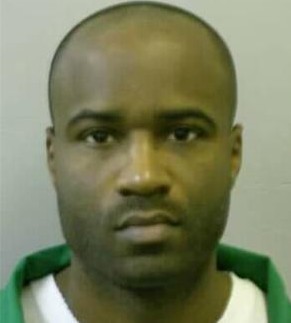
Thomas Ivey
Murderer Brian Kevin Rosenfeld
Murderer · USA · 1985
Brian Kevin Rosenfeld Brian Kevin Rosenfeld was sentenced to three concurrent l…
23 victims
Brian Kevin Rosenfeld
Murderer · USA · 1985
Brian Kevin Rosenfeld Brian Kevin Rosenfeld was sentenced to three concurrent l…
23 victims
 Russell Ellwood
Murderer · USA · 1991
Russell Ellwood was a former taxi driver. Authorities suspected him of killing…
20 victims
Russell Ellwood
Murderer · USA · 1991
Russell Ellwood was a former taxi driver. Authorities suspected him of killing…
20 victims
 Robert Martines Perez
Murderer · USA · 1994
Name: Robert Martines Perez · Other name used in proceedings: Robert Martinez P…
15 victims
Robert Martines Perez
Murderer · USA · 1994
Name: Robert Martines Perez · Other name used in proceedings: Robert Martinez P…
15 victims
 Billy Frank Vickers
Murderer · USA · 1993
Billy Frank Vickers Vickers was executed by lethal injection in Texas on Januar…
14 victims
Billy Frank Vickers
Murderer · USA · 1993
Billy Frank Vickers Vickers was executed by lethal injection in Texas on Januar…
14 victims
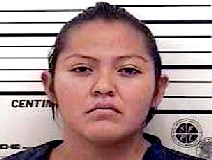 Patricia Ignacio
Murderer · USA · 2008
Patricia Ignacio was a 21-year-old woman of Nageezi accused of beating another…
1 victim
Patricia Ignacio
Murderer · USA · 2008
Patricia Ignacio was a 21-year-old woman of Nageezi accused of beating another…
1 victim
 Doil Edward Lane
Homicide · USA · 1980
Doil Edward Lane was sentenced to death in Texas on February 25, 1994. His deat…
2 victims
Doil Edward Lane
Homicide · USA · 1980
Doil Edward Lane was sentenced to death in Texas on February 25, 1994. His deat…
2 victims
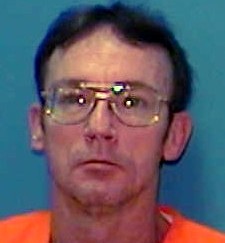 Norman Mearle Grim
Murderer · USA · 1998
Norman Mearle Grim was indicted in First Judicial Circuit, Santa Rosa County, u…
1 victim
Norman Mearle Grim
Murderer · USA · 1998
Norman Mearle Grim was indicted in First Judicial Circuit, Santa Rosa County, u…
1 victim
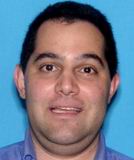 Paul Merhige
Mass murderer · USA · 2009
Paul Merhige was held without bail and remained in prison awaiting trial. · 200…
4 victims
Paul Merhige
Mass murderer · USA · 2009
Paul Merhige was held without bail and remained in prison awaiting trial. · 200…
4 victims
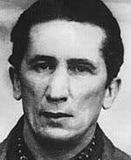 Zdislaw Marchwicki
Serial killer · Poland · 1964
Zdislaw Marchwicki, called the "Zagłębie vampire", was a Polish serial killer.…
14 victims
Zdislaw Marchwicki
Serial killer · Poland · 1964
Zdislaw Marchwicki, called the "Zagłębie vampire", was a Polish serial killer.…
14 victims
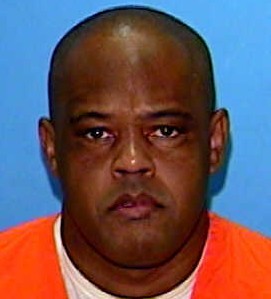 Kayle Barrington Bates
Murderer · 1982
Kayle Barrington Bates was convicted of first-degree murder, kidnapping, armed…
1 victim
Kayle Barrington Bates
Murderer · 1982
Kayle Barrington Bates was convicted of first-degree murder, kidnapping, armed…
1 victim
- Gender
- male
- Country
- USA
- Location
- Alabama/South Carolina, USA
- Date of birth
- May 27, 1974
- Age at first offence
- 19
- Characteristics
- fugitive, kidnapping, robbery
- Victim profile
- ??? / Robert Montgomery, 30 (businessman) / Thomas C. Harrison , 38 ( Orangeburg police sergeant )
- Method of murder
- Shooting
- Date(s) of murder
- ??? / January 13/15, 1993
- Years active
- 1993
- Date of arrest
- —
- Status
-
Executed
Executed by lethal injection in South Carolina on May 8, 2009
Case overview
Thomas Treshawn Ivey was executed by lethal injection in South Carolina on May 8, 2009. He had escaped from jail in Alabama and was held in connection with a murder charge before the events that led to his convictions and death sentences.
Ivey escaped with Vincent Neuman from jail in Alabama, stole a truck, and drove to South Carolina. In South Carolina, they kidnapped businessman Robert Montgomery, drove Montgomery to rural Orangeburg County, and later visited a mall in Orangeburg where a clerk accused them of trying to pass a stolen check.
At the mall, Orangeburg police officer Tommy Harrison responded to a call. Ivey told police that a handgun in his pocket fired accidentally as he walked away, with the bullet ricocheting off the floor and hitting Harrison in the leg. Ivey said he then panicked and shot the officer five more times.
Neuman testified against Ivey and was serving a life sentence for murder in South Carolina. Ivey was convicted and sentenced to death for both murders, but his execution on May 8, 2009 was for Harrison’s death.
Timeline
- January 1993 — Ivey and another inmate escaped from the Barbour County Jail in Clayton, Alabama, where Ivey was being held on a murder charge.
- January 13, 1993 — Ivey and Vincent Neuman kidnapped Robert Montgomery in Columbia and drove him to the town of North, South Carolina, where Ivey shot Montgomery and killed him.
- January 15, 1993 — Ivey, Neuman, and Patricia Perkins drove to Orangeburg to forge blank checks; they entered a Belk’s store and attempted to purchase items using a forged check.
- May 8, 2009 — Ivey was executed by lethal injection in South Carolina.
- May 9, 2009 — Reports described Ivey’s execution and related details.
Background
Thomas T. Ivey was an inmate in South Carolina with DOC#: 5001. The record stated his date of birth as 05/27/74, and his race as Black. The record stated that his county was Orangeburg and his date received was 01/20/95.
The record also provided an identification of the trial judge as L. Brown, Jr. and described the case as involving “Double murderer put to death; Alabama man killed businessman, officer.”
The offence
Kidnapping and killing of Robert Montgomery
Ivey and Vincent Neuman escaped from jail in Alabama in early January 1993. They stole a truck and drove to Columbia, Neuman’s hometown. There, they kidnapped businessman Robert Montgomery, who was working downtown with his janitorial service.
The pair drove Montgomery to rural Orangeburg County. Neuman later testified that Ivey shot Montgomery in the head and chest, leaving his body to be discovered by hunters. Another account described Ivey leading Montgomery into Owens Steel at gunpoint to obtain keys to the vehicle, with Montgomery begging not to be hurt and saying he had a young child at home and his wife was expecting another child. In that account, Neumon drove to North, South Carolina, and the pair stopped when Ivey told him it was “far enough,” after which Ivey told Montgomery to get out of the vehicle and Neumon remained in the vehicle. Neumon testified he saw the “flame” flash from the gun twice, and that Ivey later told him when he shot Montgomery in the back of the head his hair “jumped up,” and that he then rolled Montgomery over and shot him in the chest.
The record also described that Ivey and Neuman drove away in Montgomery’s vehicle and later stole another vehicle, with the vehicle containing the owner’s identification and some blank checks.
Mall incident involving forged checks and officer shooting
Two days after the Montgomery killing, the pair visited a mall in Orangeburg where a clerk accused them of trying to pass a stolen check. Orangeburg police officer Tommy Harrison responded to the call but let Ivey go when he realized Neuman was trying to use the check rather than Ivey.
In one account, Ivey told police that a handgun in his pocket fired accidentally as he walked away; the bullet ricocheted off the floor and struck Harrison in the leg. The account stated that Ivey then panicked and shot Harrison five more times, according to court records.
Another account described Ivey’s .357 Magnum being in his left coat pocket, with evidence that the firearm fired, the bullet hit the ground, ricocheted, and struck Officer Harrison. That account stated that Ivey then pulled the gun out of his pocket and directly shot Officer Harrison five more times. It also described that after the shooting, Ivey tried to escape, and officers chased him out of the mall, shooting at him as he zigzagged into the parking lot where he was finally arrested.
Investigation
The record included details of a forensic description at trial regarding the shooting. It stated that a forensic pathologist testified that the cause of death was two gunshot wounds to Officer Harrison’s vital organs. It also stated that a wound exhibiting the effects of a ricochet pattern was found on Harrison’s right leg.
The record described that a South Carolina Law Enforcement Department crime scene technician found a projectile or bullet had struck the floor near where Ivey and Officer Harrison were standing, and that there was evidence that Ivey’s left coat pocket was blown out by a gunshot.
Arrest and custody
After the shooting, officers chased Ivey out of the mall and into the parking lot, where he was finally arrested.
Before his execution, prison officials reported that Ivey used the blade from a disposable razor to cut himself on the neck. The record stated that the wounds were not considered serious, and that officials kept him strapped in a chair until he was brought to the death chamber. Ivey wore a white bandage on his neck and was clad in a white paper gown during the execution.
Trial
Jury verdicts and sentencing
In State v. Ivey, Ivey was tried and convicted by a jury of murder of Officer Harrison.
The State sought the death penalty, and the record stated that it relied on three aggravating circumstances:
- The defendant by his act of murder knowingly created a great risk of death to more than one person in a public place by means of a weapon or device which would normally be hazardous to the lives of more than one person.
- Thomas C. Harrison, a local law enforcement officer, was murdered during or because of the performance of his official duties.
- Two or more persons, including Thomas C. Harrison, were murdered by the defendant by one act or pursuant to one scheme or course of conduct.
The jury was instructed on four statutory mitigating circumstances and nine non-statutory mitigating circumstances. Finding the existence of the first two aggravating circumstances, the jury recommended a sentence of death, and the judge sentenced Ivey to death.
Additional convictions in direct review
A later direct review described that Ivey was convicted in the Circuit Court, Orangeburg County, Charles W. Whetstone, Jr., J., of capital murder, kidnapping and armed robbery. It stated that Ivey was sentenced to death for murder and thirty years imprisonment for armed robbery. It also stated that his direct appeal was consolidated with mandatory review, and that the Supreme Court affirmed.
Appeals
State v. Ivey (direct appeal)
In State v. Ivey, 325 S.C. 137, 481 S.E.2d 125 (S.C. 1997), the Supreme Court affirmed.
The decision described that the appeal involved issues including whether the trial court erred in refusing to charge voluntary manslaughter, whether the trial court erred in allowing testimony by Officer Harrison’s mother in violation of Payne v. Tennessee, and whether the trial court erred in preventing the defense from ensuring that the jury had a correct understanding of “life imprisonment.”
The decision recounted Ivey’s claims about the shooting:
- Ivey argued that his gun went off accidentally and described: “... the male officer was standing beside me and the gun was in my left pocket on the inside; and I stuck my hand in there and the hammer was already cocked back, and it went off in my pocket when I had my hand on it.”
- Ivey also described: “... and the officer jumped back, and he was going for his gun, and I just panicked and I pulled it out and started shooting....”
- The decision also quoted Ivey as having said: “was scared.”
- The decision included Ivey’s statement about the officer’s reaction: “[T]he officer jumped back, and he was going for his gun, and I just panicked, and I pulled it out and started shooting.”
- The decision also included a quotation attributed to Ivey: “I don't know why I shot the officer.”
The decision recounted the victim-impact testimony dispute. It included a verbatim exchange:
Q: Could you tell us how your son's death has affected your life?
A: Well, it's certainly left a big void in our lives. I mean, I don't know how to express it, you know, unless-I mean, it's just-We miss him terribly because of the constant relationship we had with him. He was the kind of person that was nearly always in a good mood. He could come by the house, and just the way he came; he'd say, ‘Hi, Mama; what's happening,’ or ‘How's it going’ or something like that; just always kind of could cheer us up a little bit and-
Q: What the hardest part now about his death and the way he died?
A: Well, when I think about the way he died, I can't help but feel sort of angry because I just feel like it was so useless. Mr. Johnson: Your honor, I sincerely apologize, but I think we're going out of the bounds now. The Court: All right, sir. I'll allow it. Go ahead. A: Somebody-this man who shot my son-said that he ran out of the store, and when he realized he was going to be arrested, he laid down on the ground and said, ‘Don't shoot; don't kill me; don't kill me.’ But he didn't think about that when my son was lying on the floor in front of him in the store saying ‘Don't do this; don't do this.’ And-well, it hurts.
Q: Are there particular occasions that are worse than others?
A: ....
The decision also included a quotation from Ivey’s proposed voir dire question:
- “What is their conception, their notion, about what life imprisonment means?”
It also included a quotation from the jury instruction:
- “I instruct you that when considering the two possible sentences, that is life imprisonment means life imprisonment, and death penalty means the death penalty.”
In the sentencing analysis, the record stated that it performed proportionality review under S.C. Code Ann. § 16-3-25 (1985) and concluded the sentence was not the result of passion, prejudice, or other arbitrary factors and was not excessive or disproportionate.
State v. Ivey (consolidated direct appeal and mandatory review)
In State v. Ivey, 331 S.C. 118, 502 S.E.2d 92 (S.C. 1998), the Supreme Court affirmed again.
The decision described that Ivey had been convicted of murder, kidnapping and armed robbery, sentenced to death for murder and thirty years imprisonment for armed robbery. It also listed holdings that included whether Ivey’s request to ask additional questions of a juror was untimely, statutes on the scope of voir dire did not apply in the described situation, a juror who knew an individual who allegedly loaned the murder weapon to Ivey’s accomplice could remain seated, and that the death penalty was not excessive nor disproportionate.
The decision included verbatim excerpts from the voir dire examination of juror Young after a note was received:
Q. Okay, Ms. Young, you sent out a note that says, “I know the person, Fletch, that Mr. Neumon was talking about.”
A. Uh huh.
Q. Do you feel like you know that same person?
A. Yes.
Q. If it is the same person, would that have any effect (sic) on your ability to be fair and impartial in this case, just because you know Fletch?
A. No, it shouldn't.
Q. Ma'am.
A. It shouldn't affect me.
Q. Okay. It shouldn't have any effect (sic) on you at all, you just wanted us to know that?
A. Yeah.
Q. Okay. All right, we appreciate it.
The decision stated that Neumon and appellant were convicted based on the trial evidence, and referenced that “Fletch” was not identified as a potential witness during voir dire and did not testify at either stage.
Habeas corpus appeal
In Ivey v. Ozmint, 304 Fed. Appx. 144 (4th Cir. 2008), the Court of Appeals affirmed the district court’s denial of habeas relief.
The record described that in January 1993, Ivey and Vincent Neumon escaped from jail in Alabama, stole a vehicle, and drove to Neumon’s hometown of Columbia, South Carolina. It then described that they abducted Robert Montgomery in his minivan and, according to Neumon, Ivey later shot Montgomery to death. It described that they drove to Atlanta with Patricia Perkins, stole another car, and then drove to a mall in Orangeburg where Perkins and Neumon aroused suspicion by attempting to buy merchandise with checks and identification taken from the stolen car.
The record described that during the Harrison case, Neumon later confessed and entered a plea agreement requiring him to testify against Ivey. The Harrison case was prosecuted first and Ivey was found guilty of Harrison’s murder and sentenced to death. It described that Neumon testified in both guilt and penalty phases of that trial, and that Ivey was later prosecuted for Montgomery’s kidnapping, robbery, and murder.
The habeas decision described Kawiana Young’s responses during voir dire. It stated that during voir dire, Young at times indicated she would always vote to impose the death penalty upon a defendant convicted of murder, while at other times she indicated she would keep an open mind and determine the best outcome based on the case. The trial court found “she's a qualified juror given the totality of her responses.”
The habeas record described that during the Montgomery trial’s sentencing phase, Neumon refused to testify, and the trial court granted the prosecution’s motion to call Neumon as a court’s witness, then cited him for contempt, declared him an unavailable witness, and allowed the prosecution to read portions of his testimony from the Harrison trial. It described Ivey’s objection that reading the prior testimony prevented cross-examination and was prejudicial. The trial court overruled the objection.
The habeas record described the state collateral review issue involving Ivey’s counsel. It stated that in 2001, while pursuing state collateral review, Ivey discovered that Doyet “Jack” Early and Michael Culler were involved, and that Culler had been appointed to represent Perkins in proceedings related to the earlier Harrison trial. It stated that Culler had been permitted to withdraw from representing Perkins based on a letter written to the trial court stating he had a “conflict of interest” because “Officer Tom Harrison, who was killed in this incident, was a personal friend.” It stated that when Ivey raised the issue, Culler confirmed he had written the letter but denied any personal relationship with Harrison or any conflict, and he testified the relationship was merely professional and tangential and that the letter was inaccurate.
The habeas decision quoted Early: “Culler never acted less than zealous in Ivey's defense and he appeared to be absolutely interested in saving Ivey's life.”
The habeas record described that the state court found Culler had no personal relationship with Officer Harrison and that no conflict of interest existed. It also stated that the state court concluded Savitz was not ineffective because Neumon’s testimony from the Harrison trial did not violate the Confrontation Clause and that Ivey did not prove Savitz was ineffective for failing to challenge Young’s inclusion because Savitz had raised the challenge on appeal.
The habeas decision addressed Ivey’s contentions that (1) Young’s responses during voir dire established she was not impartial, (2) Culler’s withdrawal letter proved an actual conflict adversely affecting counsel, and (3) Savitz’s failure to raise a Confrontation Clause challenge constituted ineffective assistance of appellate counsel. It affirmed denial of relief.
Outcome
Ivey was convicted and sentenced to death for killings that included the killing of Officer Tommy Harrison and the killing of Robert Montgomery, with his execution in South Carolina carried out for Harrison’s death.
Ivey’s execution by lethal injection on May 8, 2009 occurred after his bid for a stay was denied by the U.S. Supreme Court about an hour before he was put to death. The record stated that Ivey made no final statement and that he kept his eyes trained on the ceiling while the drugs were administered.
Aftermath and reported personal statements
David Montgomery’s statements
David Montgomery spoke immediately following the execution and said: “Some people would come out here and say this is a day of closure. This is not closure. “We don’t have my brother back.”
The record also included David Montgomery’s remarks:
- “I knew this day was coming. It really hasn’t done much for me today as for making this the end of it. My focus has been on my brother. I miss him,”
- “I just consider him an animal,”
- “This was just senseless, but I guess this is just a day of reckoning,”
- “This is not closure. We don't have my brother back.”
The record described that David Montgomery noted his brother Robert had an 18-year-old who would start college next fall and a 16-year-old daughter he never got the chance to meet. It also stated that David Montgomery described his brother Robert’s marriage to Jackie in October 1992 and said that a letter stating Ivey was appealing arrived in the mail just two days before Christmas one year.
Harrison family comments
The record stated that the Harrison family declined to speak after the execution. It further stated that Harrison’s brother-in-law Richard Walker attended the execution and said: “We agree with the sentence wholeheartedly. At this point, we no longer have to worry about Ivey receiving another appeal or hearing to review his case. Now, we can just focus on Tommy and Shaye (Harrison’s late wife) and their memory and Mr. Montgomery.”
Final meal and final words
The record stated that Ivey’s final meal was pizza and donuts. It stated that his final words were: None.
Other details
The record described the method of execution process with detail about the death chamber setting and witnesses. It stated that a dark red curtain concealed Ivey while nine witnesses sat in wooden chairs with faded red padding, stoically staring straight ahead, and that when the curtain was lifted at 6 p.m., Ivey was revealed strapped to a gurney and covered by a white sheet. It also described that plastic tubes served as a conduit between Ivey and a black panel containing the lethal injection cocktail, and that three men wearing identical black suits with white dress shirts and dark ties were inside the death chamber with Ivey.
The record included a quote from one of the men during the execution:
- “Thomas Ivey has not elected not to make a last statement,”
The record stated that lethal injection began after that statement and that Ivey was pronounced dead at 6:15 p.m. The record also stated that Ivey was the 42nd person executed in South Carolina since the death penalty was reinstated in 1976 and the 283rd in the state’s history. It also stated that inmates usually wore a dark green prison uniform during executions, while Ivey wore a white paper gown during his execution.
Spotted an error, or have more information about this case?