Anthony J. Jackson
Serial killer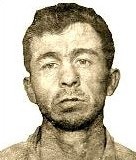 Donald Henry Gaskins
Serial killer · USA · 1969
Donald Henry Gaskins, also known as Donald “Pee Wee” Gaskins, was a serial kill…
200 victims
Donald Henry Gaskins
Serial killer · USA · 1969
Donald Henry Gaskins, also known as Donald “Pee Wee” Gaskins, was a serial kill…
200 victims
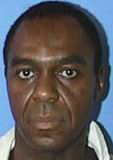 Carl Eugene Watts
Serial killer · USA · 1974
Carl Eugene Watts (born November 7, 1953; died September 21, 2007), also known…
100 victims
Carl Eugene Watts
Serial killer · USA · 1974
Carl Eugene Watts (born November 7, 1953; died September 21, 2007), also known…
100 victims
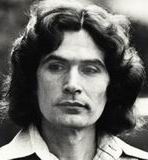 Rodney Alcala
Serial killer · USA · 1977
Rodney James Alcala (born August 23, 1943) was also known as Rodrigo Jacques Al…
100 victims
Rodney Alcala
Serial killer · USA · 1977
Rodney James Alcala (born August 23, 1943) was also known as Rodrigo Jacques Al…
100 victims
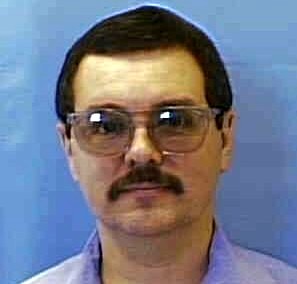 Donald Harvey
Serial killer · USA · 1970
Donald Harvey was known as an American serial killer and a self-professed “Ange…
87 victims
Donald Harvey
Serial killer · USA · 1970
Donald Harvey was known as an American serial killer and a self-professed “Ange…
87 victims
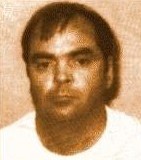 Donald Leroy Evans
Serial killer · USA · 1975
Donald Leroy Evans (born July 5, 1957) was an American serial killer who murder…
60 victims
Donald Leroy Evans
Serial killer · USA · 1975
Donald Leroy Evans (born July 5, 1957) was an American serial killer who murder…
60 victims
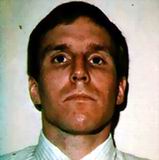 Michael Swango
Serial killer · USA · 1981
Michael Swango (Joseph Michael Swango) was a physician and American serial kill…
60 victims
Michael Swango
Serial killer · USA · 1981
Michael Swango (Joseph Michael Swango) was a physician and American serial kill…
60 victims
 Rachael Mullenix
Homicide · USA · 2006
Defendant: Rachael Scarlett Mullenix (also referred to as Rachael Mullenix), 16…
1 victim
Rachael Mullenix
Homicide · USA · 2006
Defendant: Rachael Scarlett Mullenix (also referred to as Rachael Mullenix), 16…
1 victim
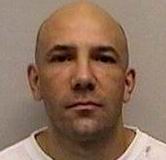 Lawrence Scott Dame
Mass murderer · USA · 2000
Lawrence Scott Dame was convicted in connection with the deaths of his sister,…
5 victims
Lawrence Scott Dame
Mass murderer · USA · 2000
Lawrence Scott Dame was convicted in connection with the deaths of his sister,…
5 victims
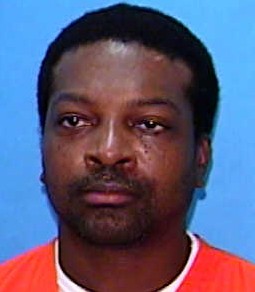 Lancelot Armstrong
Murderer · USA · 1990
Lancelot Armstrong was the defendant in Florida Supreme Court Lancelot Armstron…
1 victim
Lancelot Armstrong
Murderer · USA · 1990
Lancelot Armstrong was the defendant in Florida Supreme Court Lancelot Armstron…
1 victim
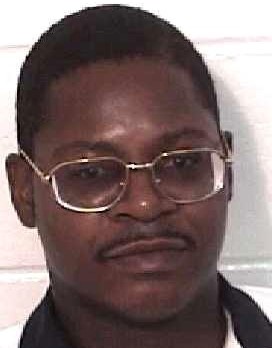 Roger Collins
Murderer · USA · 1977
Name: Roger Collins Age: 38 Status/outcome: Sentenced to death on February 17,…
1 victim
Roger Collins
Murderer · USA · 1977
Name: Roger Collins Age: 38 Status/outcome: Sentenced to death on February 17,…
1 victim
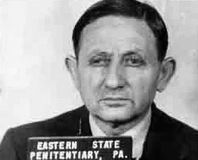 Morris Bolber
Serial killer · USA · 1932
Morris Bolber was prosecuted as part of a Philadelphia poison-murder ring invol…
50 victims
Morris Bolber
Serial killer · USA · 1932
Morris Bolber was prosecuted as part of a Philadelphia poison-murder ring invol…
50 victims
- Gender
- male
- Country
- USA
- Location
- Massachusetts, USA
- Date of birth
- 1939
- Age at first offence
- 33
- Characteristics
- rape
- Victim profile
- Kathleen Randall, 18 / Debra Stevens, 19 / Ellen Reich, 19 / Sandra Ehramjian, 21 / Damaris Synge Gillispie, 22
- Method of murder
- Strangulation - Shooting
- Date(s) of murder
- September-December 1972
- Years active
- 1972
- Date of arrest
- December 26, 1972
- Status
-
Judgments affirmed; Denial of motion for new trial affirmed
Case identification
Anthony J. Jackson
Background
Anthony J. Jackson was convicted of murder in the first degree and sentenced to life imprisonment. The defendant appeals from his conviction of armed assault with intent to murder and unlawful carrying of a firearm, and in later proceedings he challenged multiple aspects of his convictions arising from the same overall series of offences.
The offence
Murder of Ellen Ann Reich (first-degree murder)
The body of Ellen Ann Reich, age nineteen, was found on November 13, 1972, in a closet in an abandoned apartment at 132 Seaver Street, Roxbury. Reich had lived at 31 Massachusetts Avenue in Boston. She was last seen on Thursday morning, November 8, 1972, by her roommate, Eileen Wacks. Wacks testified that the victim usually hitchhiked to Emerson College, where she attended school. One Belin McArthur found the body while helping a friend, Mary Lee Cobb, move furniture from her apartment at 132 Seaver Street. While waiting for the moving truck to return, he looked around the building and saw a nailed closet door, became curious, and pried it open. The victim’s body was inside. Dr. George W. Curtis, medical examiner for Suffolk County, performed an autopsy on the body on November 14, 1972. This autopsy, in combination with a later exhumation and second autopsy, established that the victim was killed by strangulation and two gunshot wounds to the chest and abdomen. One bullet was retrieved from near the victim’s vertebrae, and sperm was found in the victim’s vagina. Human hairs were found on the panties and jeans of the victim, who was white. The hair found on the victim’s jeans was determined to be negroid pubic hair, but it did not match the pubic hair of the defendant, who is black. The head hairs found on the victim’s panties were negroid in origin, and an expert in microscopic examinations testified for the Commonwealth that he compared them to hair samples of the defendant and found those samples to be microscopically alike in all identifiable characteristics.
Robert P. Spalding, special agent for the FBI in forensic serology, testified that he examined stains in the crotch area of the victim’s jeans and found the presence of factors from blood types “A” and “B,” factors which appear when an individual is a “secretor.” He stated that a secretor has substances in his or her other bodily fluids which indicate that person’s blood type, eighty per cent of the population are secretors, and forty per cent of the population have type “A” blood. William A. Gavin, also a special agent for the FBI, had studied a sample of the defendant’s saliva, and found that he was a secretor, and had type “A” blood. He also found type “B” blood on the victim’s sweater, jacket, and slacks. The victim had type “B” blood. Evidence of male spermatozoa was discovered in the victim’s panties, together with traces of both “A” and “B” blood type factors. The results of his examination were consistent with the involvement of a female secretor with type “B” blood and a male secretor with type “A” blood. They were also consistent with fluids from one individual having group “AB” blood. Such individuals comprise about five per cent of the population.
William Tobin, a special agent for the FBI in metallurgy, compared nails taken from the frame of the closet where the body was found with nails from a milk carton taken from the defendant’s residence at 154 Washington Street, Dorchester. He found hundreds of similarities between the samples, and concluded that the nails originated from the same source.
Armed assault with intent to murder and unlawful carrying of a firearm (shoot-out with Cambridge police)
Several Cambridge police officers testified, over the defendant’s objections and exceptions, that they pursued, exchanged gunfire with, and arrested the defendant in Cambridge on the evening of December 26, 1972. Officer John Conroy related that at about eight o’clock that evening he was on cruiser patrol in Cambridge, when he observed the defendant in a dark-colored Cadillac automobile motioning to a young woman walking down the street. He followed the defendant’s car until the defendant suddenly “took off” at a high rate of speed. Cambridge police Officer Joseph J. McSweeney soon thereafter spotted the vehicle, which was empty, and located the defendant. He walked toward the defendant, who drew a gun from a black holster, shot at the officer, and kept firing at him while running down the street. McSweeney returned the fire, and saw the defendant drop to one knee. He lost the defendant for two to three minutes, but found him again, lying on the ground with two police officers beside him. The police looked for a gun, but did not find one. Several days later, a man who worked near the spot where the defendant was apprehended discovered a pearl-handled, silver-colored gun in a snowbank. This gun was turned over to the police. Test bullets fired from this gun were matched microscopically to a bullet retrieved from a building at the site of the Cambridge shooting incident and to the bullet retrieved from the victim’s body. Ballistics experts concluded that all of the bullets came from the same gun.
The defendant told the officer who first approached him, “I don’t have the gun.” A spent bullet was found in the defendant’s clothing. The bullet was of the same caliber as the guns of the officers who had been involved in the shoot-out. Keys to the Cadillac automobile were found, along with material identifying the defendent, in an alley between the location of the shooting and the location of the defendant’s arrest. A gun was found in that alley eight days later. There was evidence that a bullet recovered from the scene of the shooting had been fired from that gun.
Investigation
The investigation used forensic evidence linking hair, nails, blood factors, spermatozoa, and ballistic evidence to the defendant.
Arrest
Anthony J. Jackson was arrested on December 26, 1972, following a high-speed chase and shootout with Cambridge patrolmen. He was booked on charges of assault with a deadly weapon, operating an automobile to endanger, and illegal possession of firearms, and he was indicted for the Gillespie murder on February 3, 1973.
Trial
Conviction challenged in the first appeal
The defendant appealed from his conviction of armed assault with intent to murder and unlawful carrying of a firearm. The defendant argued that he was unfairly forced to go to trial, representing himself, in circumstances where a continuance should have been granted and counsel appointed. The appellate court concluded that there was no abuse of discretion in proceeding to trial on the day designated, with the defendant acting for himself.
The evidence described included the December 26, 1972 pursuit and shootout, the abandonment of the Cadillac automobile shortly after the chase, and the subsequent seizure of evidence and ballistic matches. The defendant presented no substantial evidence in his defence and suggested that police failed to investigate other suspects, including the registered owner of the Cadillac automobile.
Continuance and self-representation
The appellate court rejected the claim that the judge abused discretion in denying the defendant’s requests for a continuance. At a hearing on June 3, 1976, trial was set for June 14, 1976. The defendant requested a continuance in order to prepare for trial, and the judge denied the request.
The appellate court also rejected the claim that the judge improperly concluded that the defendant waived his constitutional right to counsel. The court described the colloquy and the judge’s subsequent filing on June 4, 1976, noting:
- “the defendant stated in open court that he wished to proceed ‘pro se,’”
- and added that “if the defendant does not desire to make use of appointed counsel, I appoint said counsel as legal advisor in all proceedings.”
The appellate court concluded that the record showed the defendant was “literate, competent, and understanding,” and that the finding of waiver was fully justified.
The appellate court treated the defendant’s later request to abandon self-representation and use his court-appointed legal advisor as defence counsel as an abuse-of-discretion claim. The defendant made the request on June 14, 1976, before the jury were selected. The appellate court concluded that the judge did not abuse his discretion in turning down the request at that late date.
Juror questioning regarding newspaper publicity
The defendant argued that he was denied a fair trial because the judge declined to question empanelled jurors separately about the impact of newspaper publicity. The appellate court concluded there was no abuse of discretion and no substantial risk of a miscarriage of justice. The appellate court described the process by which the judge asked the jury collectively whether they had heard about the case and whether anything from a Boston Globe article published on the second day caused an opinion or prejudice. Thirteen of the sixteen jurors answered that they had seen the article. One juror answered in the affirmative to questions about forming an opinion and about it preventing impartiality. The judge instructed the jury not to read, listen to, or discuss any media reference and then questioned and excused the affected juror.
The appellate court also adopted prospective procedures for handling potentially prejudicial material arising during trial when reliably brought to the judge’s attention after jury selection, including collective questioning and then individual questioning outside of other jurors when a juror indicates exposure.
Conviction of murder in the first degree and appeal (subsequent phase)
In later proceedings, the defendant was convicted by a Superior Court jury of murder in the first degree and sentenced to life imprisonment.
The defendant appealed asserting error in multiple areas:
- admission of evidence of other crimes,
- the trial judge’s advisory ruling concerning admission of prior conviction,
- the prosecutor’s opening statement,
- partial violation of an order sequestering witnesses,
- denial of speedy trial,
- denial of motion to suppress certain physical evidence,
- admission of certain other evidence during trial.
The appellate court affirmed and found no reversible error and no reason to order a new trial.
Convictions and direct appeal after multiple verdicts
In another appeal, on December 22, 1976, the defendant had been convicted of murder in the first degree, kidnapping, rape, and unarmed robbery, and he was sentenced to life imprisonment at the Massachusetts Correctional Institution at Walpole on the murder conviction. Further sentences included a term of from nine to ten years for kidnapping and not more than thirty nor less than twenty years for rape and for unarmed robbery, with concurrent service after expiration of the murder sentence, as described in a footnote.
The appellate court affirmed convictions and also denied the motion for a new trial.
Appeal regarding Damaris Synge Gillispie
In another appeal, the defendant was convicted of murder in the first degree and kidnapping, sentenced to life imprisonment and a consecutive term from nine to ten years. The appellate court affirmed and denied relief under G. L. c. 278, Section 33E. The court summarized evidence including the discovery of the body of Damaris Synge Gillispie, the autopsy indications about the time of death, jewelry and clothing described, hotline telephone coverage, installation of recording systems, and testimony about calls received by the hotline.
The appellate court also addressed:
- pretrial publicity and a claim of prosecutorial misconduct related to a full page political advertisement and leaflet distribution,
- juror prejudice and denial of challenges for cause,
- evidence of other crimes through conversation testimony by Donald McDonald,
- evidence of flight and arrest,
- admission of tape recorded telephone conversations.
The appellate court held that the claims lacked merit and affirmed judgments and the denial of a motion for a new trial.
Sentencing
The defendant was sentenced to life imprisonment after a conviction of murder in the first degree. In one phase, the life sentence was to be served from and after any other previously imposed sentence he was serving or was to serve.
In another phase, the defendant received a sentence of life imprisonment at the Massachusetts Correctional Institution at Walpole for murder in the first degree, with additional concurrent terms described in a footnote for kidnapping, rape, and unarmed robbery.
In another phase, the defendant received life imprisonment and a consecutive term of from nine to ten years for kidnapping, to be served from and after any sentences previously imposed.
Appeals
Commonwealth v. Anthony J. Jackson (armed assault with intent to murder / unlawful carrying of a firearm appeal)
The defendant appealed from conviction of armed assault with intent to murder and unlawful carrying of a firearm. The appellate court concluded there was no abuse of discretion in proceeding to trial on the day designated with the defendant acting for himself, rejected a separate voir dire contention as not properly before the court, found no reversible error related to continuance, waiver of counsel, denial of retraction of self-representation, and the handling of potentially prejudicial publicity. The court adopted prospective procedures for potentially prejudicial material during trial.
The appellate court stated: “Judgments affirmed.”
Appeals after conviction of murder in the first degree
In a later appeal, the appellate court found no reversible error and affirmed the convictions. The court also affirmed denial of a motion for a new trial.
Appeals after conviction of murder in the first degree, kidnapping, rape, and unarmed robbery
The appellate court concluded the defendant’s claims lacked merit, affirmed the convictions, and affirmed denial of motion for new trial.
Appeals after conviction involving Damaris Synge Gillispie
The appellate court concluded the defendant’s claims lacked merit and affirmed convictions under G. L. c. 278, Section 33E.
Outcome
Judgments were affirmed in the appeals described. A motion for a new trial was denied and that denial was affirmed.
Other details
Jury selection and courtroom instructions (quotes and details)
The following exchange occurred during the June 3, 1976 colloquy when the defendant asserted a right to self-representation:
THE DEFENDANT: “Your Honor, Barry versus California says I have a right to try without legal counsel, without any assistance, without any attorney sitting at the table with me; and that is a U.S. Supreme Court, recent case, 1975.” THE JUDGE: “You are a highly intelligent person, Mr. Jackson, but you are not trained in the--” THE DEFENDANT: “I understand.” THE JUDGE: “You are not trained as a lawyer.” THE DEFENDANT: “I understand that, Your Honor. It says that--the last statement of the decision says that: we bestow on the defendant the right to defend himself--although one who defends himself may have a fool for a client. And I ask the Court for that right. If I must sail the sea, I want to be at the helm of my own ship, Your Honor, without counsel.” THE JUDGE: “I will take those matters under advisement.”
The appellate court also quoted the instruction referenced in the record as part of the judge’s response to media influence:
- The judge instructed the jury not to read, listen to, or discuss any media reference to the case, that cases are decided on evidence in the courtroom, and that they should ignore the newspaper article.
- In the final charge, the judge instructed that anything they read outside the courtroom was not evidence, that they must decide the case only on the evidence, that indictments are not evidence in any respect, and that “[t]he defendant cannot be found guilty upon suspicion or conjecture.”
Evidence and statements involving other offences (quotes and context)
Donald McDonald testified that in February 6 or 7, 1973 the defendant told him that “the one in New Hampshire was not [the defendant’s].”
Bens testimony included a statement made by the defendant in response to reading his indictment, and McDonald testimony included statements about progression in committing acts:
- Bens testimony included: “Wait until the spring thaw. You will find more.”
- McDonald testimony included: “There’s couple they don’t even know about.”
- McDonald testimony included: “I was becoming more professional with every one . . . [;] the more you do a thing, the better you get at it. I was getting bolder and bolder.”
In another appeal, McDonald testified to the defendant’s statements about newspaper pictures and respect for an agency:
- “The one in New Hampshire, that's not mine. You know me better than that. I've got more respect for the FBI.”
- “The one in New Hampshire, that's not mine,” and “You know . . .
- Also in another context: “The one in New Hampshire, that's not mine,” and “The one they found in New Hampshire . . . [t]hat wasn’t mine.”
In the context of hotline telephone calls, recorded statements included:
- “You know, I know the phone is tapped -- I'm hep to that, but I'm going to get in touch.”
- “I know the thing is being taped, but that's cool too.”
Libel-proof civil action outcome (separate matter referenced in the record)
A subsequent civil appeal involved a claim brought by Anthony Jackson against Longcope and another party, with the dispute arising from an allegedly libelous Boston Globe article. The appellate court concluded that Jackson was libel-proof at the time of publication and affirmed summary judgment entered for the defendants. The opinion described the article as printed by the Boston Globe approximately one month after a Plymouth County jury found Jackson not guilty of the 1972 rape and murder of a twenty-one year old Cambridge woman, and it described statements in the article about why jurors returned verdicts of not guilty, and also addressed that Jackson had convictions for murder in the first degree, armed assault with intent to murder and other convictions by the time of publication. The court affirmed the judgment.
Victim and person details explicitly described in the record
Ellen Ann Reich, age nineteen, was found on November 13, 1972. Damaris Synge Gillispie, age twenty-two, was found on February 3, 1973. The record also described other victims in its background material, including Kathleen Randall, Debra Stevens, Sandra Ehramjian, and Synge Gillespie in relation to the overall series, along with details such as hitchhiking and methods described.
Spotted an error, or have more information about this case?