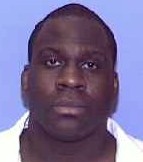
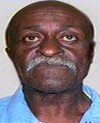
Corey James Jennings
Murderer Russell Ellwood
Murderer · USA · 1991
Russell Ellwood was a former taxi driver. Authorities suspected him of killing…
20 victims
Russell Ellwood
Murderer · USA · 1991
Russell Ellwood was a former taxi driver. Authorities suspected him of killing…
20 victims
 Robert Martines Perez
Murderer · USA · 1994
Name: Robert Martines Perez · Other name used in proceedings: Robert Martinez P…
15 victims
Robert Martines Perez
Murderer · USA · 1994
Name: Robert Martines Perez · Other name used in proceedings: Robert Martinez P…
15 victims
 Billy Frank Vickers
Murderer · USA · 1993
Billy Frank Vickers Vickers was executed by lethal injection in Texas on Januar…
14 victims
Billy Frank Vickers
Murderer · USA · 1993
Billy Frank Vickers Vickers was executed by lethal injection in Texas on Januar…
14 victims
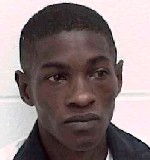 Dallas Bernard Holiday
Murderer · USA · 1986
Dallas Bernard Holiday Holiday was sentenced to death for the murder. The sente…
1 victim
Dallas Bernard Holiday
Murderer · USA · 1986
Dallas Bernard Holiday Holiday was sentenced to death for the murder. The sente…
1 victim
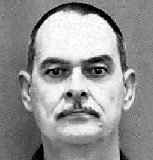 Larry Romine
Murderer · USA · 1981
Larry Romine, 45, was convicted for the shotgun slayings of his parents, Roy Le…
2 victims
Larry Romine
Murderer · USA · 1981
Larry Romine, 45, was convicted for the shotgun slayings of his parents, Roy Le…
2 victims
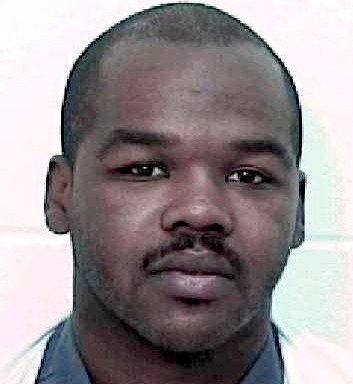 Curtis Osborne
Murderer · USA · 1990
Curtis Osborne was a male inmate convicted by a Spalding County jury of the mur…
2 victims
Curtis Osborne
Murderer · USA · 1990
Curtis Osborne was a male inmate convicted by a Spalding County jury of the mur…
2 victims
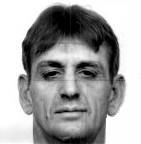 Harold Joe Lane
Murderer · USA · 1982
Harold Joe Lane — inmate; capital murder defendant Harold Joe Lane robbed the W…
1 victim
Harold Joe Lane
Murderer · USA · 1982
Harold Joe Lane — inmate; capital murder defendant Harold Joe Lane robbed the W…
1 victim
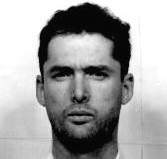 John Michael Lamb
Murderer · USA · 1982
John Michael Lamb was convicted of capital murder in Texas and sentenced to dea…
1 victim
John Michael Lamb
Murderer · USA · 1982
John Michael Lamb was convicted of capital murder in Texas and sentenced to dea…
1 victim
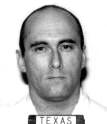 Joseph Prystash
Murderer · USA · 1994
Joseph Andrew Prystash was charged with capital murder in connection with the h…
1 victim
Joseph Prystash
Murderer · USA · 1994
Joseph Andrew Prystash was charged with capital murder in connection with the h…
1 victim
- Gender
- male
- Country
- USA
- Location
- Harris County, Texas, USA
- Date of birth
- March 31, 1975
- Age at first offence
- 25
- Characteristics
- robbery, rapist
- Victim profile
- Quy Quang, 20 (male convenience store clerk)
- Method of murder
- Shooting
- Date(s) of murder
- March 6, 2000
- Years active
- 2000
- Date of arrest
- —
- Status
-
Died in custody
Sentenced to death on April 11, 2001; died in prison on April 12, 2006
Case identification
- Name: Corey James Jennings
- TDCJ Number: 999382
- Date of Birth: 03/31/1975
- Date received: 04/11/2001
- Age at time received: 26
- Education level: 11
- Date of offense: 03/06/2000
- Age at the offense: 24
- County: Harris
- Race: Black
- Gender: Male
- Hair color: Black
- Height: 6 ft 1 in
- Weight: 274
- Eye color: Brown
- Native: Native
- State: St. Louis Missouri warehouseman, laborer
- Prior prison record: None
Status
Corey James Jennings was convicted in March 2001 of capital murder, and the trial judge sentenced him to death. On direct appeal, the Texas Court of Criminal Appeals affirmed his conviction and sentence.
The offence
On 3/6/2000, in Houston, Jennings fatally shot a 20 year old male while robbing a convenience store. The convenience store was a Stop Then Got store in the Spring area of Harris County.
At approximately 10:30 p.m. on March 6, 2000, Quy Quang Lam was working at the Stop Then Got convenience store when a large man wearing a stocking cap, a bandana, and black clothing entered the store. The man forced Lam into a back room at gunpoint, shot him in the neck, and Lam died as a result. The perpetrator took $400 in cash from the cash register. The perpetrator’s image was captured on the store’s surveillance videotape.
Investigation
The lead investigator with the Harris County Sheriff's Department, Pam Klim, testified to receiving four or five calls in response to images shown on television, and stated that all of the callers named Jennings as the person depicted. After the calls were interviewed, Jennings was arrested.
The videotape was given to news stations, and the following day they played clips and showed enhanced still photos taken from the tape.
An F.B.I. video specialist, Ronald Evans, received a copy of the time-lapse surveillance tape and converted it to a “real-time” videotape with clarification and enhanced images. Evans testified that while the quality of the original surveillance tape was “marginal,” the images were such that if someone were to recognize the individuals on the tape, they would be identifiable. Evans agreed that he would be comfortable identifying someone on a tape of that quality if he knew the person shown on the tape. Evans also testified that the time-lapse technique meant that gait or walk was not as smooth as a person’s actual gait or walk.
On cross-examination, Evans stated that the surveillance tape did not have enough clarity to allow him to match photographs of tattoos on Jennings’s arms to markings visible on the perpetrator’s arms, and that the markings appeared “similar” but were not clear enough to make a positive identification. Evans could not say that the person depicted was Jennings.
During the search of Jennings’s apartment, Detective William Valerio showed Jennings’s wife, Bobbie Jennings, still photographs taken from the surveillance videotape. Klim testified that when Bobbie saw the photos she started shaking, trembling, and crying, and said: "Oh, my God, why did he do it." Bobbie agreed to go to the police station to view the videotape. Klim testified that before viewing the tape Bobbie appeared a little anxious but generally fine; once Bobbie began viewing the videotape, she became very upset, began crying and shaking, and said: "I can't believe he did it." Klim also testified that Bobbie said "I can't believe he killed somebody like that. . . ." and then sobbed and cried hysterically, put her hands up over her face, and cried for several minutes.
Detective Valerio testified that when he told Bobbie Jennings her husband was a suspect in a capital murder, her reaction was appropriate—"upset, but not overly upset." He testified that he did not tell her she had to make an identification or that the man in the photos was Jennings. Valerio testified he told her: "I would like to show you a photograph." He described her reaction as follows:
[H]er knees buckled, she started to fall to the ground. It wasn't as if she was unconscious, but it did appear that sh - her knees involuntarily buckled. She fell to the ground. She was able to stop the fall with her hands. I wasn't close enough to reach out for her. As she started to fall, she started to whimper. And after hitting the ground she said something to the effect of, I can't believe he did it. And then she said, I can't believe he killed somebody like that. . . . After that point she just began to sob and cry hysterically. She put her hands up over her face and cried for several minutes.
Thomas Page, Deputy Sheriff with the Harris County Sheriff’s Department, assisted with the search. Donald Bock, with the Harris County Sheriff’s Department, also testified about Bobbie’s demeanor, and his testimony was consistent with the other officers’ testimony.
Bock testified that several items of men’s clothing were seized from the apartment, including several stocking caps, black jogging pants, black boots, and a bandana. On cross-examination, Bock admitted no blood was found on any of the clothing seized, even though there was a lot of blood at the scene of the crime. Bock also testified he was not aware of any physical evidence linking Jennings to the crime.
Trial
Appeal court framing and procedural posture
In the Court of Criminal Appeals of Texas, No. 74,122, Corey James Jennings, Appellant v. The State of Texas, the case proceeded on direct appeal. The opinion was delivered by Keasler, J. and joined by Keller, P.J., and Meyers, Price, Womack, Johnson, Hervey, and Holcomb, J.J. Cochran, J., concurred in point of error three and otherwise joined the opinion. DATE DELIVERED: June 25, 2003 and DO NOT PUBLISH.
Offender conviction and sentencing
The Court of Criminal Appeals described that Jennings was convicted in March 2001 of capital murder. In response to the jury’s answers to the special issues set forth in Texas Code of Criminal Procedure article 37.071 sections 2(b) and 2(e), the trial judge sentenced Jennings to death.
Identity evidence and witness testimony
The Court addressed Jennings’s point of error one regarding factual insufficiency on identity, including concerns about surveillance video quality and reliability of identification.
At trial, jurors viewed the surveillance videotape, the F.B.I. enhancement, and still photographs taken from the tape.
People connected to Jennings and identification certainty
- Jason Richardson and his wife, Holly Richardson, became friends with Jennings and moved in with him and Bobbie for a short time. Jason testified he would recognize Jennings even if Jennings had his head covered and stated Jennings had a unique body size and build and a unique way of walking or carrying himself.
- Jason and Holly lived near the store and were frequent customers. When they first saw the tape on the news in Livingston, Texas, watching on a television set with poor reception, they thought the perpetrator was Caucasian. When Jason viewed the tape a second time and heard the robber was a black man, he stated: “knew it was Corey.” Jason stated he was “positive,” to a number ten on a scale of one to ten, that the man on the surveillance tape, the F.B.I. tape, and in still photos was Jennings.
- Jason testified he had seen Jennings with a handgun and that Jennings had told him before the offense that he planned to use a pistol to rob the Pizza Hut where Bobbie used to work. Holly’s testimony was consistent with Jason’s. On a scale of one to ten, Holly stated certainty to a number eight after viewing the original store surveillance tape, the enhanced F.B.I. tape, and still photographs.
- Michael Davis and Jennings were friends for five or six months before the offense. Davis testified that after viewing the surveillance materials, he believed the robber on the tape was Jennings, and placed certainty at eight or higher. Davis stated he identified the person as Jennings based on stature, size, the way he carried himself, and gestures. On cross-examination, Jennings’s attorney pointed out that Davis’s name was mentioned to Davis by the investigator before Davis saw the video, and that Davis had not previously mentioned gestures or movements but only size and stature.
- Mitchell Gardiner testified Jennings had been to his house many times. After viewing the tapes and photos, he was certain to a number seven.
- On cross-examination, Gardiner admitted he had not identified Jennings when he had first seen the videotape on the news and when he was first shown the video by police. Gardiner also admitted he did not initiate Jennings’s name; it was mentioned to him first by law enforcement.
- Michael Lara lived in the neighborhood and frequented the Stop Then Got store daily. Lara testified that on the night of the offense he and two friends, Bobby Hubert and Brad Kny, were walking after Kny got off work at the restaurant next door, smoked marijuana near the back of the Klein Bank, and then decided to go get something to drink. As they walked toward the store, they saw a man Lara described as big wearing a black shirt and pants. Lara estimated they were within twenty-five or thirty feet. Lara testified he did not recognize the man as Jennings because he was “really high” and “wasn't even paying attention.” The three entered the store, noticed something was wrong (including that no one was there to wait on them, the cash register was open, and there was money on the floor), and one of them called the police. Before police arrived, they discovered Lam’s body in the back. They agreed they would not tell police they had seen someone leaving the store because they did not want to get involved. Lara admitted that the next day when police confronted him with time-lapse photography from the ATM at the Klein Bank showing they approached at the same time the perpetrator left, he admitted they had seen someone leave.
- In his statement he gave to police on that day, Lara stated: “When I saw the video and thought about it, I believe the big black guy that I have known since August 1999 whose name is Corey Jennings is the person I saw coming out of the store and the person in the video.”
- At trial, Lara testified he had not understood that his statement was under oath, and said the statement was not in his own words. He claimed he said “maybe,” “there might be a chance,” or “it’s a possibility” that the man he saw was Jennings. He testified he never told police “word for word” that he saw was Jennings.
- On cross-examination, Lara agreed he was seventeen when he made the statement, police picked him up at his house, took him alone to the station, threatened him with possible perjury charges, suggested Jennings’s name as a suspect, and gave him a polygraph exam before he was told he could leave. On redirect, Lara agreed he was not coerced or tricked, that it would not make sense to be coerced to give a false statement and then asked to take a polygraph exam, and that he was treated fairly and not mistreated.
- Bradley Kny testified he went to the store daily and knew Jennings by name. Kny’s testimony was generally consistent with Lara’s but included that he saw the person who left the store get into a dark red vehicle with tinted windows, and the only detail he could say was that the person was black. Kny testified he told police on the evening of the offense that he did not see anyone leave the store, but the next day he admitted he saw someone leave and did not know who it was.
- Kny denied telling his coworker, Daniel Wynn, the day after the offense that he recognized the person as Jennings and saw Jennings get into his black Honda.
- Daniel Wynn worked at the restaurant next door to Stop Then Got. Wynn had been to Jennings’s apartment and had socialized with him on many occasions. Wynn testified that about four or five months before the offense he saw a gun at Jennings’s apartment described as a chrome revolver. A month before the offense, Wynn entered the store and heard Lam and Jennings talking in loud voices. Wynn testified it was unusual because Lam was normally polite. Wynn testified Jennings grabbed his purchases and left the store.
- Wynn testified that the day after the offense, Kny told him he had seen Jennings coming out of the store the night before and was “positive” it was him. Wynn also testified Kny told him he noticed a black car with tinted windows that looked like Jennings’s car.
- Wynn testified that on viewing the surveillance tape, F.B.I. enhanced video, and still photographs, Wynn believed, on a scale of one to ten, to a certainty of eight or nine, that the perpetrator was Jennings. On cross-examination, it was noted Wynn did not mention the conversation with Kny in the statement he gave police the day after the offense.
Bobbie Jennings’s out-of-court and trial testimony about identification
Jennings was tried with evidence including Bobbie Jennings’s out-of-court statements identifying Jennings as the person depicted.
The defense called:
- Matthew Galloway, who testified for the defense that he overheard a man thanking Jason and Holly Richardson for their help and telling them that as soon as there was an arrest, they would get the reward money.
- Bobbie Jennings, who testified she refused to look at the photos offered by Detective Valerio while officers searched the apartment. She stated she would not look and turned her head and refused to take them, and denied collapsing, sitting down, crying out, expressing remorse, or stating anything concerning the photos. Bobbie testified she was crying due to stress and the news of her husband’s arrest, not because of the photos.
Bobbie testified that at the Sheriff’s Department, Klim “narrated” the video by using Jennings’s name to describe the perpetrator depicted on the tape. She said she imagined the perpetrator was him because Klim had put that image in her mind. Bobbie agreed she gave a statement averring Jennings was depicted in the video, but she said she no longer believes Jennings was the perpetrator. She testified that when she made the statement she was very upset and Klim’s narration and her statements about Jennings’s guilt led her to believe he must be guilty. Since signing the statement and watching the video again, she no longer believes the man on the video was Jennings. Bobbie testified the man on the video has broader shoulders and a smaller lower body than Jennings, and that it was not consistent with her husband’s character to commit the crime. She testified she was convinced Jennings was at home with their three-year-old son. She spoke with Jennings on the home phone at 10:09 the night of the offense.
On cross-examination, the prosecutor went through Bobbie’s sworn statement. When questioned about the portion of her statement stating, “An officer showed me a copy of the pictures of the robbery and I recognized the man as Corey,” Bobbie said she only glanced at the photos and should have read her statement more thoroughly. She stated she never identified her husband from the photos and that the sentence from her statement was false, although she agreed she initialed the beginning of the sentence and the end of the paragraph and signed the bottom of the page and had sworn to the entire statement under oath. Bobbie testified she believed officers took advantage of her emotionally-vulnerable condition and convinced her it was her husband in the video.
Issues raised and rulings on appeal
Point of error one: factual insufficiency of identity
Jennings argued the surveillance videotape was too poor-quality and that evidence linking him to the crime was weak and unreliable, and challenged State evidence of perpetrator identity. The Court held the evidence of Jennings’s identity was not so weak as to be manifestly unjust. Point of error one was overruled.
Point of error two: admissibility and taint of identification testimony
Jennings argued the trial court erred in admitting identification testimony as expert or lay opinion, and argued identifications were tainted by suggestive procedures creating an irreparable risk of mistaken identity. The Court reviewed the trial court’s denial of Jennings’s motions to suppress identification testimony after a hearing. The trial court had ruled the identification testimony appeared to be 701 testimony by lay witnesses and, if not, met Daubert and Kelly requirements. The Court also discussed the totality-of-circumstances approach and rejected Jennings’s burden.
The Court concluded Jennings had not met his burden of showing by clear and convincing evidence that in-court identifications were tainted by suggestive procedures. Point of error two was overruled.
Point of error three: extraneous offense/misconduct evidence
The Court addressed Jennings’s claim that evidence of a Pizza Hut plan was inadmissible extraneous offense evidence. The Court stated that Jennings mischaracterized the Pizza Hut plan as an extraneous offense, noting that thoughts and expressions about committing a crime without conduct did not amount to evidence of other crimes, wrongs, or acts. It also addressed waiver and harmlessness. Point of error three was overruled.
Point of error four: limiting instruction request
Jennings claimed the trial court erred in refusing to allow the defense to waive part of a limiting instruction on extraneous offense evidence, compromising his right to limiting instruction and denying due process and effective assistance. The Court held the evidence of Jennings’s plans did not involve evidence of other crimes, wrongs, or acts and thus was not affected by the instruction. Point of error four was overruled.
Point of error five: Bobbie Jennings’s statements and spousal privilege/excited utterance
Jennings claimed the trial court erred in admitting Bobbie’s out-of-court statements identifying him from photos and video under circumstances showing intent to produce an “excited utterance” and circumvent spousal privilege, and argued admission violated hearsay/privilege and due process. The Court described the circumstances in point of error one and held nothing supported Jennings’s allegations about orchestrating excited utterance or circumventing spousal privilege. The Court found the trial court did not abuse its discretion in allowing the statements as “excited utterances” under Rule of Evidence 803(2). Point of error five was overruled.
Point of error six: jury deliberation form
Jennings claimed his guilty verdict was obtained in violation of due process because a Harris County form response to the jury’s request for testimony during deliberations was unnecessarily restrictive and unfairly deprived him of jury consideration of defensive evidence. The Court held Jennings waived the argument because he did not object to the form. Point of error six was overruled.
Point of error seven: impeachment and limiting instruction
Jennings claimed the trial court abused discretion under Rule of Evidence 403 by allowing the State to call Bradley Kny solely to impeach with otherwise inadmissible hearsay, and also argued the court erred by denying an instruction that impeachment could not be used substantively. The Court discussed Rule 607 and referenced its holding in Hughes. The Court distinguished Hughes based on additional reasons for calling Kny. It noted Kny was one of two eyewitnesses available to testify about the flight of the perpetrator, and Kny provided a description of the car. It also held the failure to instruct was due to timing of the request; if a limiting instruction was not requested at the first opportunity, evidence was admitted for all purposes. Point of error seven was overruled.
Point of error eight: future dangerousness and forty-year parole eligibility
Jennings argued the State failed to prove beyond a reasonable doubt the probability that he would constitute a continuing threat for forty years and then remain a threat if paroled. The Court rejected that minimum parole terms impacted the burden and held the State had the burden of proving probability of future criminal acts of violence constituting a continuing threat whether in or out of prison. Point of error eight was overruled.
Point of error nine: future dangerousness special issue constitutionality
Jennings claimed the future dangerousness special issue was unconstitutional because it was not susceptible to proof beyond a reasonable doubt and jurors could not fairly consider it, including concerns that jurors would apply a lower standard. The Court held jury instructions were proper and there was no evidence to rebut the presumption jury followed instructions. Point of error nine was overruled.
Point of error ten: definition of “society”
Jennings claimed failure to define “society” in the special issue on future dangerousness violated his rights under the Eighth and Fourteenth Amendments. The Court held “society” should be understood in its ordinary connotation and declined to depart from precedent. Point of error ten was overruled.
Points of error eleven and twelve: 12-10 rule and failure to inform life-sentence consequences
Jennings argued the 12-10 rule of Article 37.071 violated the Eighth Amendment, and also argued the trial court erred by denying a request to inform the jury that failure to answer a special issue would result in a life sentence, violating the Eighth Amendment. The Court rejected both claims based on prior rejections of identical claims. Points of error eleven and twelve were overruled.
Point of error thirteen: “proper punishment” language
Jennings argued the charge language about “proper punishment” misled jurors in a way that violated the Eighth Amendment. The Court rejected the argument as speculative and found nothing in the phrase in context would lead to the suggested implication. Point of error thirteen was overruled.
Point of error fourteen: statutory mitigation instruction scope and childhood abuse/discrimination/school experiences
Jennings claimed the trial court erred in denying a request to clarify mitigation instruction scope so jurors understood they were not limited to reduced moral blameworthiness facts. He argued it placed outside jury effective reach childhood abuse, racial discrimination, and school experiences offered as basis for life sentence more appropriate than death rather than excuse. The Court rejected similar arguments and overruled. Point of error fourteen was overruled.
Point of error fifteen: prosecutor’s mitigation arguments
Jennings claimed prosecutor’s argument improperly characterized mitigation issue and denied fair consideration, violating Eighth and Fourteenth Amendments. The Court noted Jennings objected only once and waived errors regarding similar arguments where he did not object. The Court found any error as to other arguments harmless due to similar arguments without objection. Point of error fifteen was overruled.
Points of error sixteen to eighteen: burden of proof in mitigation issue and appellate review
Jennings raised arguments under Mosley v. State and Apprendi v. New Jersey regarding infirmity of mitigation special issue under Eighth Amendment due to omission of burden of proof, inability to meaningfully review, and facial unconstitutionality when interpreted with Article 44.251 and Article 37.071 §2(e). The Court rejected these points, noting Apprendi inapplicable to Article 37.071 and addressing the concept of who the factfinder should be.
Points of error sixteen, seventeen, and eighteen were overruled.
Point of error nineteen: residual doubt as mitigating circumstance
Jennings requested an instruction allowing jurors to consider residual doubt as a mitigating circumstance when answering mitigation special issue. He argued without such instruction he was deprived of right to place all mitigating evidence, including circumstances of the offense, within jury effective reach. The Court rejected the request, declining to hold that a defendant was entitled to an instruction on residual doubt.
Point of error nineteen was overruled.
The Court quoted the relevant discussion from Franklin v. Lynaugh:
At the outset, we note that this Court has never held that a capital defendant has a constitutional right to an instruction telling the jury to revisit the question of his identity as the murderer as a basis for mitigation. Petitioner suggests that our discussion of the "residual doubt" question in Lockhart v. McCree supports his position that he has such an entitlement. . . . Lockhart did not endorse capital sentencing schemes which permit such use of "residual doubts," let alone suggest that capital defendants have a right to demand jury consideration of "residual doubts" in the sentencing phase. . . . * * * Our edict that, in a capital case, "'the sentencer ...[may] not be precluded from considering as a mitigating factor , any aspect of a defendant's character or record or any of the circumstances of the offense,'" in no way mandates reconsideration by capital juries, in the sentencing phase, of their "residual doubts" over a defendant's guilt. Such lingering doubts are not over any aspect of petitioner's "character," "record," or a "circumstance of the offense." This Court's prior decisions, as we understand them, fail to recognize a constitutional right to have such doubts considered as a mitigating factor. Two judges in concurrence stated that the petitioner's residual doubt claim should fail because the Eighth Amendment does not require it. (36) Thus, a majority of the Court rejected the residual doubt claim. We decline Jennings's invitation to hold he was entitled to an instruction on residual doubt.
Point of error twenty: juror Rebecca Smith’s affidavit
Jennings argued the trial court erred in denying admission of juror Rebecca Smith’s affidavit in support of his motion for new trial and that without it he would be denied effective assistance on appeal and a meaningful appeal. The Court stated the trial judge admitted the affidavit for the limited purpose of Jennings’s new trial motion, so Jennings’s claim that the trial court erred in denying admission was without merit. Because the affidavit was admitted only for the limited purpose, the Court would not consider it as evidence supporting unrelated points of error in the appeal, and it rejected the argument about effective assistance and meaningful appeal without the affidavit. Point of error twenty was overruled.
Confirmation of trial judgment
The Court affirmed the judgment of the trial court.
Timeline
- 03/06/2000 — Quy Quang Lam was working at a Stop Then Got convenience store; the perpetrator forced Lam into a back room at gunpoint, shot him in the neck, and took $400; Jennings was later arrested.
- 04/11/2001 — Jennings received and was sentenced to death.
- 06/25/2003 — The Court of Criminal Appeals delivered its opinion in No. 74,122.
- 04/12/2006 — Jennings died in prison.
Other details
Pizza Hut plan testimony
During the guilt or innocence phase, Jason Richardson testified that Jennings told him Jennings planned to rob the Pizza Hut using a pistol where Bobbie used to work. Jason also testified Jennings told him that his cousin would hit manager Bill Deskin over the head with a crutch and if Deskin got up, Jennings would shoot him in the leg. Holly Richardson testified that she did not believe it and stated: “thought it was all talk.”
Appellate decision and outcome
The Court rejected twenty points of error and affirmed Jennings’s conviction and sentence.
Affiliations and other individuals named
- Bobbie Jennings — Jennings’s wife; consented to search; viewed photos and videotape; testified for the defense.
- Quy Quang Lam — 20-year-old male victim; died after being shot in the neck.
- Pam Klim — lead investigator with Harris County Sheriff’s Department.
- Detective William Valerio — participated in showing still photographs and described Bobbie’s reactions.
- Thomas Page — Deputy Sheriff with Harris County Sheriff’s Department; assisted with search.
- Donald Bock — testified about clothing seized and Bobbie’s demeanor.
- Ronald Evans — F.B.I. video specialist.
- Mitchell Gardiner, Jason Richardson, Holly Richardson, Michael Davis, Michael Lara, Bradley Kny, Daniel Wynn, Matthew Galloway — witnesses at trial.
- Bobby Hubert and Brad Kny — Michael Lara’s companions.
- Bill Deskin — manager of the Pizza Hut referenced in testimony.
Statements and descriptions preserved verbatim
- Bobbie Jennings to Klim/Valerio (photos): "Oh, my God, why did he do it."
- Bobbie Jennings during viewing (Klim’s testimony): "I can't believe he did it."
- Bobbie Jennings during viewing (Klim’s testimony): "I can't believe he killed somebody like that. . . ."
- Detective Valerio’s testimony about Bobbie’s reaction: "upset, but not overly upset."
- Detective Valerio to Bobbie: "I would like to show you a photograph."
- Lara’s statement to police: “When I saw the video and thought about it, I believe the big black guy that I have known since August 1999 whose name is Corey Jennings is the person I saw coming out of the store and the person in the video.”
- Holly Richardson: “thought it was all talk.”
- Lara’s description at trial: "knew it was Corey." and Lara’s stated condition: "really high" and "wasn't even paying attention."
- Jason’s statement of identification certainty: “positive,” to a number ten on a scale of one to ten.
- Holly’s stated certainty: to a number eight.
- Bobbie Jennings’s refusal description: she refused to look at the photos and turned her head and refused to take them.
- Quote block from Franklin v. Lynaugh included by the Court under point of error nineteen.
Spotted an error, or have more information about this case?