
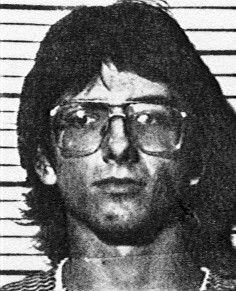
Harold Joe Lane
Murderer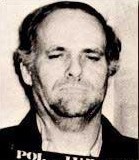 Ervil LeBaron
Murderer · USA · 1972
Ervil Morrell LeBaron (1925 to August 16, 1981) was the leader of a polygamous…
35 victims
Ervil LeBaron
Murderer · USA · 1972
Ervil Morrell LeBaron (1925 to August 16, 1981) was the leader of a polygamous…
35 victims
 Brian Kevin Rosenfeld
Murderer · USA · 1985
Brian Kevin Rosenfeld Brian Kevin Rosenfeld was sentenced to three concurrent l…
23 victims
Brian Kevin Rosenfeld
Murderer · USA · 1985
Brian Kevin Rosenfeld Brian Kevin Rosenfeld was sentenced to three concurrent l…
23 victims
 Marvin Gray
Murderer · USA · 1975
Marvin Gray was convicted killer who claimed responsibility for 23 slayings and…
23 victims
Marvin Gray
Murderer · USA · 1975
Marvin Gray was convicted killer who claimed responsibility for 23 slayings and…
23 victims
 Yahweh ben Yahweh
Murderer · USA · 1980
Yahweh ben Yahweh was born and legally named Hulon Mitchell Jr. (October 27, 19…
23 victims
Yahweh ben Yahweh
Murderer · USA · 1980
Yahweh ben Yahweh was born and legally named Hulon Mitchell Jr. (October 27, 19…
23 victims
 Russell Ellwood
Murderer · USA · 1991
Russell Ellwood was a former taxi driver. Authorities suspected him of killing…
20 victims
Russell Ellwood
Murderer · USA · 1991
Russell Ellwood was a former taxi driver. Authorities suspected him of killing…
20 victims
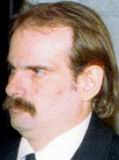 John Charles Lesko
Spree killer · USA · 1979
December 27, 1979 — Peter Levato was killed. · January 1, 1980 — Marlene Sue Ne…
4 victims
John Charles Lesko
Spree killer · USA · 1979
December 27, 1979 — Peter Levato was killed. · January 1, 1980 — Marlene Sue Ne…
4 victims
 Bryan Hower
Murderer · USA · 2010
Bryan Hower was charged in the death of his wife, Bonnie Hower. Bryan Hower’s d…
1 victim
Bryan Hower
Murderer · USA · 2010
Bryan Hower was charged in the death of his wife, Bonnie Hower. Bryan Hower’s d…
1 victim
 Charles Ebo Quansah
Serial killer · Ghana · 1993
Charles Ebo Quansah, also known as Charles Papa Kwabena Ebo Quansah, was born i…
34 victims
Charles Ebo Quansah
Serial killer · Ghana · 1993
Charles Ebo Quansah, also known as Charles Papa Kwabena Ebo Quansah, was born i…
34 victims
 Stephen Wayne Anderson
Serial killer · USA · 1970
May 24, 1979 — Stephen Wayne Anderson escaped from Utah State Prison. · May 26,…
8 victims
Stephen Wayne Anderson
Serial killer · USA · 1970
May 24, 1979 — Stephen Wayne Anderson escaped from Utah State Prison. · May 26,…
8 victims
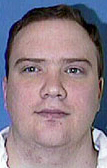 Ron Shamburger
Murderer · USA · 1994
Ron Scott Shamburger was executed by lethal injection in Texas on September 18,…
1 victim
Ron Shamburger
Murderer · USA · 1994
Ron Scott Shamburger was executed by lethal injection in Texas on September 18,…
1 victim
 Denis Lortie
Murderer · Canada · 1984
Denis Lortie was a Canadian army corporal in the Royal 22 e Régiment of the Can…
3 victims
Denis Lortie
Murderer · Canada · 1984
Denis Lortie was a Canadian army corporal in the Royal 22 e Régiment of the Can…
3 victims
- Gender
- male
- Country
- USA
- Location
- Dallas County, Texas, USA
- Date of birth
- August 30, 1945
- Age at first offence
- 37
- Characteristics
- robbery, drunken rage, drugs
- Victim profile
- Tammy Davis, 17 (female store cashier)
- Method of murder
- Shooting (.357 Magnum)
- Date(s) of murder
- November 20, 1982
- Years active
- 1982
- Date of arrest
- —
- Status
-
Executed
Executed by lethal injection in Texas on October 4, 1995
Case record
People
- Harold Joe Lane — inmate; capital murder defendant
The offence
Harold Joe Lane robbed the Winn-Dixie store in Dallas, Texas. While robbing the grocery store, Lane shot and killed a seventeen-year-old female cashier with a .357 Magnum. Authorities said Lane shot the girl, Tammy Davis, a cashier, when he became frustrated by an automatic door that would not open as he tried to flee. Miss Davis apparently was unaware that a robbery was taking place; she told Lane he was trying to go out the "in" door and pointed out the button that would let him out. Lane raised his .357 magnum and shot her in the head.
Lane said he was high on drugs and alcohol when he robbed the Winn-Dixie store.
Lane was captured after firing at police during a chase.
Investigation
Authorities said Lane shot Tammy Davis in the head.
Arrest
Trial
A state jury convicted Lane of capital murder and sentenced him to death. On direct appeal, the Texas Court of Criminal Appeals reversed and remanded for a new trial due to an error in the jury selection process. On retrial, a jury again found Lane guilty of capital murder. The jury answered two special statutory issues in the affirmative, and under Texas law the state trial judge sentenced Lane to death.
Special statutory issues
Texas Code of Criminal Procedure article 37.071 (West 1981) required the court to submit the following issues to the jury:
- whether the conduct of the defendant that caused the death of the deceased was committed deliberately and with the reasonable expectation that the death of the deceased or another would result;
- whether there is a probability that the defendant would commit criminal acts of violence that would constitute a continuing threat to society;
- if raised by the evidence, whether the conduct of the defendant in killing the deceased was unreasonable in response to the provocation, if any, by the deceased.
The excerpted procedure also provided:
- “If the jury returns an affirmative finding on each issue submitted under this article, the court shall sentence the defendant to death. If the jury returns a negative finding on any issue submitted under this article, the court shall sentence the defendant to confinement in the Texas Department of Corrections for life.”
The relevant issue discussed in Lane’s appeal was special issue number two, which asked whether there was a probability that Lane would commit criminal acts of violence that would constitute a continuing threat to society.
Sentencing
Lane was sentenced to death after the jury answered two special statutory issues in the affirmative.
Appeals
Texas Court of Criminal Appeals
On December 4, 1991, the Texas Court of Criminal Appeals affirmed Lane’s conviction. Lane v. State, 822 S.W.2d 35 (Tex. Ct. Crim. App. 1991) (en banc).
Earlier on direct appeal, the Texas Court of Criminal Appeals reversed and remanded for a new trial due to an error in the jury selection process. Lane v. State, 743 S.W.2d 617 (Tex. Ct. Crim. App. 1987).
United States Supreme Court
On May 18, 1992, the United States Supreme Court denied Lane’s petition for a writ of certiorari. Lane v. Texas, 112 S. Ct. 1968 (1992).
Earlier in the day of the execution, the United States Supreme Court refused to block the execution.
Habeas corpus proceedings and Fifth Circuit decision
Filing and procedural history
After Lane’s direct appeals were exhausted, the state trial court set an execution date of July 23, 1992.
On July 20, 1992, Lane filed a petition for a writ of habeas corpus and a motion for a stay of execution. The state trial court and the Texas Court of Criminal Appeals denied both in unpublished decisions. Ex Parte Lane, No. 23,826-01 (Tex. Ct. Crim. App. July 22, 1992), cert. denied, 113 S. Ct. 2 (1992).
On July 22, 1992—one day prior to his scheduled execution—Lane filed a petition for a writ of habeas corpus with the federal district court in the Northern District of Texas. The district court granted Lane’s request for a stay of execution pending disposition of his petition on the merits because there was not sufficient time to review the merits prior to the scheduled execution. The district court then referred Lane’s petition to a Magistrate Judge.
On September 6, 1994, the Magistrate Judge recommended that Lane’s petition be denied on the merits.
On October 24, 1994, the district court adopted the Magistrate Judge’s findings, denied Lane’s petition on the merits, and vacated its earlier stay of execution.
On November 22, 1994, the district court issued a certificate of probable cause.
On November 23, 1994, Lane filed a timely notice of appeal to the Fifth Circuit.
Fifth Circuit caption
IN THE UNITED STATES COURT OF APPEALS FOR THE FIFTH CIRCUIT No. 94-11080 HAROLD JOE LANE, Petitioner-Appellant, v. WAYNE SCOTT, Director, Texas Department of Criminal Justice, Institutional Division, Respondent-Appellee.
Appeal from the United States District Court for the Northern District of Texas (3:92 CV 1500 R) June 16, 1995
Before KING, DAVIS and WIENER, Circuit Judges.
PER CURIAM:
Habeas corpus claim and issues
Lane petitioned for a writ of habeas corpus under 28 U.S.C. § 2254, claiming that his Texas state court conviction for capital murder was constitutionally infirm.
Lane contended that mitigating evidence was improperly excluded at the sentencing phase in violation of the Eighth and Fourteenth Amendments. Specifically, Lane contended:
- mitigating evidence—his co-defendant’s lesser sentence—was improperly excluded; and
- mitigating evidence—facts surrounding his prior conviction for manslaughter—was improperly excluded.
The Fifth Circuit concluded to affirm the district court’s denial and held that “the judgment of the district court denying Lane’s petition for a writ of habeas corpus is in all respects AFFIRMED.”
Co-defendant’s sentence evidence: Grady Moffett
Lane sought to introduce evidence regarding the sentence received by his co-defendant, Grady Moffett. Lane sought to introduce evidence that Moffett, who played an active role as an armed lookout in the robbery, successfully plea bargained for a five-year sentence. Lane argued that the jury should have been informed of Moffett’s lesser sentence because it was relevant to statutory special issue number two regarding future dangerousness.
Lane argued that if the jury knew the district attorney was willing to accept a plea bargain of only five years for Moffett, it indicated that the district attorney did not believe Moffett posed a continuing threat to society. Lane argued that if Moffett was not a continuing threat to society, the jury could infer neither was Lane, and it would have answered special issue number two “no,” resulting in a life sentence rather than death.
The Fifth Circuit discussion referenced Lockett v. Ohio and held that Parker did not alter the conclusion from Brogdon v. Blackburn that Lockett did not require admission of a co-defendant’s life sentence as mitigating evidence because such evidence was not relevant to the defendant’s character or offense.
The Fifth Circuit stated that it declined to interpret Parker’s dicta broadly.
Prior manslaughter offense evidence: Defendant’s Exhibit 15 and victim’s blood alcohol content
Lane also argued that the state trial court erred in excluding Defendant’s Exhibit 15. Defendant’s Exhibit 15 was a certified copy of the Louisiana Supreme Court opinion in Lane v. Louisiana, 292 So. 2d 711 (La. 1974), concerning Lane’s 1973 conviction for manslaughter in Louisiana.
Lane argued that, of his collateral offenses, the only one resulting in loss of life was his 1973 manslaughter conviction in Louisiana. Lane argued the excluded exhibit would have shown that the coroner found that the victim had a blood alcohol content of .258 percent. Lane also asserted that his actions were taken in self defense because, prior to the shooting, the decedent came at him in a threatening manner with a pool stick or cue or both.
Lane argued that if the jury had known that his manslaughter victim was drunk, it would have been more inclined to answer special issue number two “no” and conclude Lane did not pose a continuing threat to society.
The Fifth Circuit found that argument lacked merit because the information Lane argued should have been placed before the jury—victim’s drunkenness—was actually placed before the jury during closing argument.
Verbatim closing argument
Lane’s counsel told the jury prior to sentencing:
“When you go back there you're going to find out something and it will also tie up that evidence we brought up at the first phrase [sic] of the trial about alcohol intoxication. It will tell you a couple of things. First of all, the man that was killed was a point .258. Translation-- he was dead drunk. This is an important part of that [manslaughter] conviction. . . .”
The Fifth Circuit also stated that Defendant’s Exhibit 15 was admitted in a revised form that deleted portions dealing with Louisiana law, but the portion relating to the victim’s drunkenness was permitted to remain. The redacted version was admitted before the jury with the agreement of both parties. The redacted version stated:
“There is no expert testimony as to how much the group had been drinking, except the coroner's finding that the victim had a blood alcohol content of .258 percent.”
Outcome
The Texas Court of Criminal Appeals affirmed the conviction. The United States Supreme Court denied Lane’s petition for a writ of certiorari. The federal district court denied Lane’s petition for a writ of habeas corpus and vacated its earlier stay of execution. The Fifth Circuit affirmed the district court’s denial.
Aftermath
Texas today put Lane to death by injection. Lane was pronounced dead at 6:28 P.M., nine minutes after lethal drugs began flowing into his arm.
Lane’s lawyer, Michael Schulman, argued in a last-minute appeal that the jurors in Lane’s trial should have been told that an accomplice had received only a five-year prison term. The appeal was rejected by the Texas Court of Criminal Appeals on Tuesday and by the Supreme Court early that day on a 7-to-2 vote.
Miss Davis’s mother, Brenda Ruiz, said the execution “finally closes the book on the trauma that has taken place.” Ruiz said:
“I have come here to see justice finally is served in this case,”
The new law would have allowed Ruiz to view the execution, but renovations to make room in the death chamber had not been completed.
Lane had a long criminal history, including imprisonment in Colorado for robbery and assault and in Louisiana for manslaughter.
In a recent interview, Lane was sarcastic about the milestone that would be set by his execution—his becoming the 100th inmate to be executed in Texas since the state resumed executions in 1982. Lane said:
“Great honor, huh?”
“It's something to tell my kids. Something for them to look back on. My dad is 100.”
Background
The case involved a dispute over jury selection in Lane’s first direct appeal, which resulted in reversal and remand for a new trial.
The Fifth Circuit stated that the issues in the habeas corpus petition were purely legal and that a detailed exposition of facts giving rise to the conviction was not necessary, but it summarized that while robbing a grocery store in Dallas, Texas, Lane shot and killed a seventeen-year-old female cashier with a .357 Magnum.
The Fifth Circuit also addressed Lane’s claim regarding exclusion of mitigating evidence related to his co-defendant’s lesser sentence and his prior manslaughter conviction.
Timeline
- July 23, 1992 — state trial court set an execution date
- July 20, 1992 — Lane filed a petition for a writ of habeas corpus and a motion for a stay of execution; both were denied by the state trial court and the Texas Court of Criminal Appeals in unpublished decisions
- July 22, 1992 — Lane filed a petition for a writ of habeas corpus with the federal district court in the Northern District of Texas; the district court granted a stay of execution pending disposition on the merits
- May 18, 1992 — the United States Supreme Court denied Lane’s petition for a writ of certiorari
- December 4, 1991 — the Texas Court of Criminal Appeals affirmed Lane’s conviction
- September 6, 1994 — Magistrate Judge recommended Lane’s petition be denied on the merits
- October 24, 1994 — district court adopted the Magistrate Judge’s findings, denied Lane’s petition on the merits, and vacated the earlier stay of execution
- November 22, 1994 — district court issued a certificate of probable cause
- November 23, 1994 — Lane filed a timely notice of appeal to the Fifth Circuit
- June 16, 1995 — Fifth Circuit panel date
- October 4, 1995 — execution by lethal injection in Texas
- 6:28 P.M. (October 4, 1995) — Lane was pronounced dead
- 7-to-2 vote (October 4, 1995) — Supreme Court rejected Lane’s last-minute appeal to block execution
Spotted an error, or have more information about this case?