
Yang Jia
Mass murderer Zhang Pilin
Mass murderer · China · 2002
Zhang Pilin (张丕林) died in the plane crash of China Northern Airlines Flight 613…
111 victims
Zhang Pilin
Mass murderer · China · 2002
Zhang Pilin (张丕林) died in the plane crash of China Northern Airlines Flight 613…
111 victims
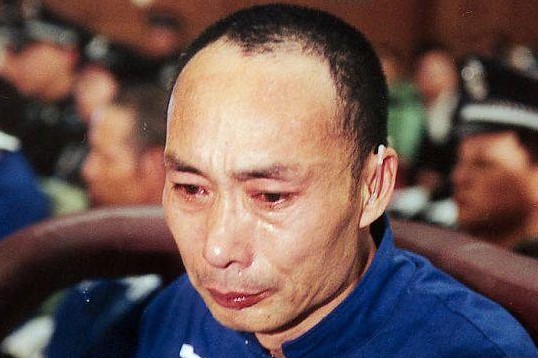 Jin Ruchao
Mass murderer · China · 2001
Jin Ruchao was blamed and arrested for planning and carrying out the Shijiazhua…
108 victims
Jin Ruchao
Mass murderer · China · 2001
Jin Ruchao was blamed and arrested for planning and carrying out the Shijiazhua…
108 victims
 Chen Shuizong
Mass murderer · China · 2013
Chen Shuizong (simplified Chinese: 陈水总; traditional Chinese: 陳水總; pinyin: Chén…
46 victims
Chen Shuizong
Mass murderer · China · 2013
Chen Shuizong (simplified Chinese: 陈水总; traditional Chinese: 陳水總; pinyin: Chén…
46 victims
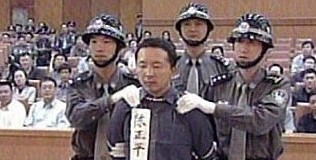 Cheng Zhengping
Mass murderer · China · 2002
Cheng Zhengping was executed on October 13, 2002. Cheng Zhengping confessed to…
42 victims
Cheng Zhengping
Mass murderer · China · 2002
Cheng Zhengping was executed on October 13, 2002. Cheng Zhengping confessed to…
42 victims
 Zhang Yunliang
Mass murderer · China · 2009
Zhang Yunliang Zhang Yunliang died in the fire on 5 June 2009. The Chengdu bus…
26 victims
Zhang Yunliang
Mass murderer · China · 2009
Zhang Yunliang Zhang Yunliang died in the fire on 5 June 2009. The Chengdu bus…
26 victims
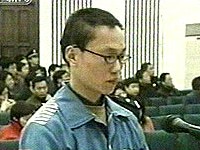 Chen Fuzhao
Mass murderer · China · 2003
Chen Fuzhao was a 29-year-old Falun Gong practitioner. He was described as an a…
16 victims
Chen Fuzhao
Mass murderer · China · 2003
Chen Fuzhao was a 29-year-old Falun Gong practitioner. He was described as an a…
16 victims
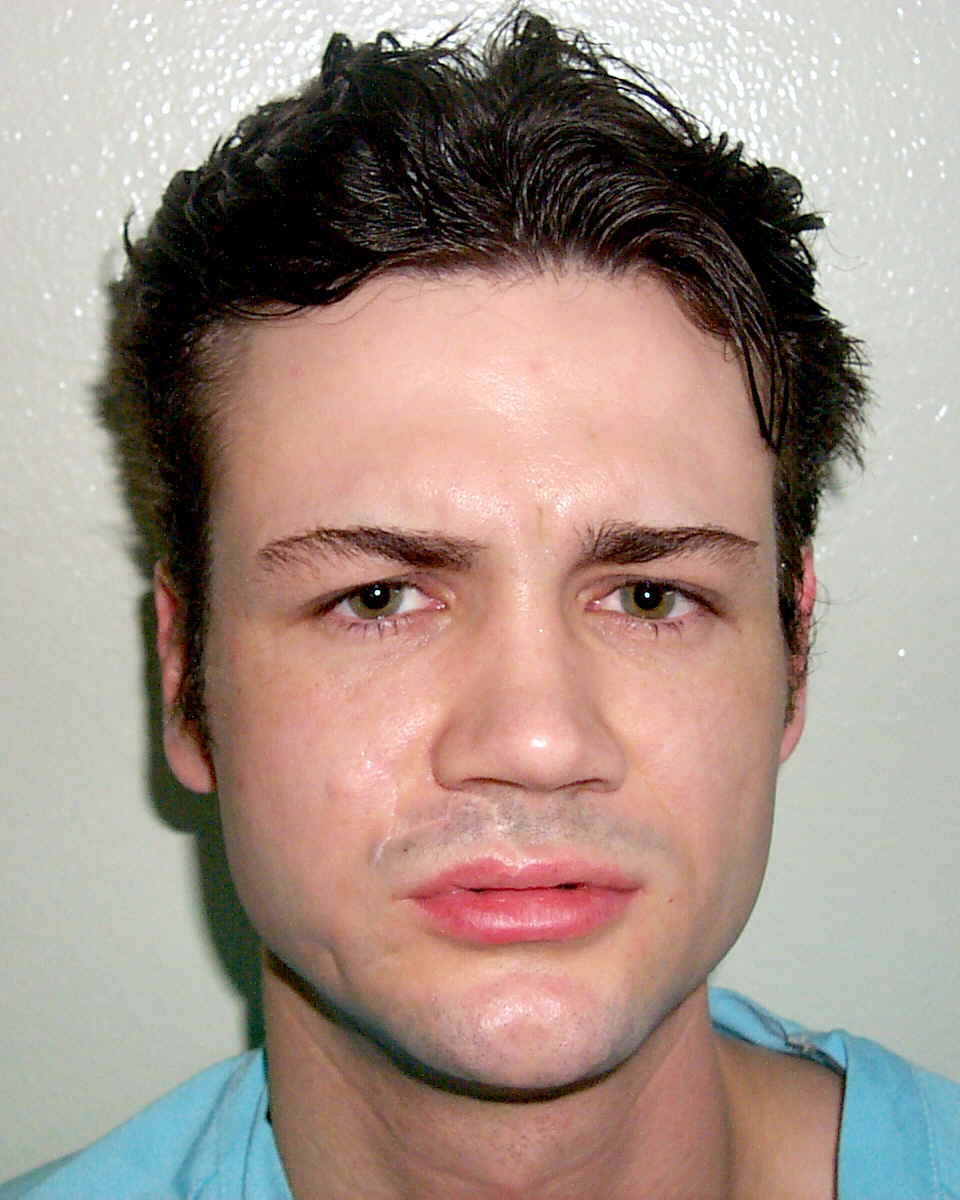 Christopher James Beck
Murderer · USA · 1995
Christopher James Beck was executed by lethal injection in Virginia on October…
3 victims
Christopher James Beck
Murderer · USA · 1995
Christopher James Beck was executed by lethal injection in Virginia on October…
3 victims
 Luis Caballero
Murderer · USA · 1995
Luis Caballero was born on 09/23/73. He was indicted in the Seventeenth Judicia…
1 victim
Luis Caballero
Murderer · USA · 1995
Luis Caballero was born on 09/23/73. He was indicted in the Seventeenth Judicia…
1 victim
 Anthony Arkwright
Mass murderer · United Kingdom · 1988
Anthony Arkwright lived in children’s home and local authority care from a youn…
4 victims
Anthony Arkwright
Mass murderer · United Kingdom · 1988
Anthony Arkwright lived in children’s home and local authority care from a youn…
4 victims
 Frank Martinez Garcia
Murderer · USA · 2001
Name: Frank Martinez Garcia TDCJ Number: 999418 Date of Birth: 10/21/1972 Age a…
2 victims
Frank Martinez Garcia
Murderer · USA · 2001
Name: Frank Martinez Garcia TDCJ Number: 999418 Date of Birth: 10/21/1972 Age a…
2 victims
 Leo Boatman
Murderer · USA · 2006
Leo Boatman was described by the Marion County sheriff as a "would-be serial ki…
3 victims
Leo Boatman
Murderer · USA · 2006
Leo Boatman was described by the Marion County sheriff as a "would-be serial ki…
3 victims
- Gender
- male
- Country
- China
- Location
- Shanghai, China
- Date of birth
- August 27, 1980
- Age at first offence
- 28
- Characteristics
- revenge, police officer
- Victim profile
- Six Shanghai police officers
- Method of murder
- St abbing with knife
- Date(s) of murder
- July 1, 2008
- Years active
- 2008
- Date of arrest
- Same day
- Status
-
Executed
Executed by lethal injection on November 26, 2008
Case record: Yang Jia
Background
Yang Jia (Chinese: 杨佳 ; pinyin: Yáng Jiā ; born 27 August 1980 – 26 November 2008) was a Chinese citizen executed for murdering six Shanghai police officers with a knife.
Yang was described as a jobless 28-year old Beijing resident who was reported to be a loner. Beijing lawyer and blogger Liu Xiaoyuan prominently defended Yang. Exiled writer Ma Jian said Yang had become "a sort of national hero." Yang received international media attention for the public sympathy accorded to him in China.
Yang was reported to have been arrested and interrogated by the Shanghai police in October 2007 for riding an unlicensed bicycle. Yang later testified that he was insulted during interrogation and beaten after being brought back to the station, leaving bruises on his arms and back. He sued the police for maltreatment, to no avail.
Yang was defended by Xie Youming and Xie Jin of Shanghai Mingjiang Law Firm. Xie Youming was appointed, and reporting pointed out he might have had a conflict of interest because he was also a legal adviser for the city district that oversees the police station at issue.
Yang earlier demanded 10,000 yuan in compensation from the police for psychological damage he told the court he suffered after police beat him during his overnight detention in October 2007. Police denied that any beating took place. When his demands were not met, he decided to take revenge.
Yang’s mother, Wang Jingmei, who raised Yang as a single parent, was detained and placed in a mental home following the murders. Wang told Xinhua on Tuesday night she received a copy of the supreme court's judgement dated November 21. She said: “They said he would be executed within seven days and that I could request a final meeting with him.” Officials brought her to Shanghai to see her son on Monday morning, the day after releasing her from the Beijing mental institution where she had been held since the attack. She had no idea Monday would be the last time she would see her son.
Yang’s father, Yang Fu, said his son must “have been greatly wronged” and added that he hoped Yang’s almost inevitable death sentence would help spur the Chinese legal system to change in the future.
Yang was described as a Beijing native who loved surfing the Internet and reading, particularly art books.
The offence
Chinese authorities and media said Yang ignited eight petrol bombs at the front gate of the police headquarters in Zhabei, a Shanghai suburb, at about 9:40 am on 1 July 2008, the anniversary of the founding of the Chinese Communist Party. He then stabbed security guard Gu Jianming, who tried to stop Yang, with a knife.
Yang then charged into the building and randomly stabbed nine unarmed police officers, four in the lobby and duty room and five more while making his way up to the 21st floor, before police managed to subdue him. Six policemen suffered stab-wounds in their lungs, livers and necks and bled to death.
Besides the knife and the molotov cocktails Yang carried a hammer, a dust mask, and tear-gas spray.
The court recounted a tale of revenge that left six officers dead and four injured at the Zhabei District Public Security Bureau. The prosecution said Yang acted out of “revenge” after he was caught riding an unlicensed bicycle and interrogated.
Investigation
The chain of events began when Yang was questioned by a patrol officer in Zhabei District on October 15, 2007 as he was riding an unlicensed bicycle in an area where several thefts had occurred. When asked to show his ID card and provide information about the bike, Yang refused to cooperate. He was taken to the police station and released only after the officers were able to confirm he had rented the bike.
Yang complained of “wrongful treatment” and sought 10,000 yuan in compensation from the police for causing him “mental anguish.” When his demands were not met, he decided to take revenge.
Police denied Yang’s accusation that he had been beaten. The court said it could find no evidence to support Yang’s claim.
Arrest
Yang was arrested at the scene after he attacked the police station where he was held. He began his attack by igniting petrol bombs at the gates, before forcing his way in. He stabbed nine police officers and a security guard and made it to the 21st floor of the district police headquarters before he was overpowered and arrested.
Trial
Yang’s trial was delayed on account of the 2008 Summer Olympics.
On 27 August 2008, Yang was tried behind closed doors in a one-hour trial at the Shanghai No. 2 Intermediate People’s Court.
During the proceeding, the court recounted the events that left six officers dead and four injured. The court said revenge seemed to be the motive behind Yang’s killing frenzy.
In the prosecution’s presentation, Yang acted out of “revenge” after his arrest and interrogation connected to his riding an unlicensed bicycle.
Yang’s lawyers argued that Yang wanted to take revenge on officer Wu Yuhua, who was in charge of dealing with his complaint. The lawyers said that when Yang was stopped by other police officers, he stabbed them with a knife. They argued that Yang hadn’t intended to kill the officers, so he should be charged with assault instead of murder. They said Wu was only slightly injured in the attack.
The lawyers also said Yang may have psychological problems and appealed for another appraisal of his mental condition. As psychology experts had already pronounced Yang mentally sound, the court rejected that request.
Four days later, the official news agency Xinhua announced that Yang had been found guilty of premeditated murder and received a death sentence.
Sentencing
Yang received a death sentence after being found guilty of premeditated murder.
The appeals court confirmed the death verdict in an appeal trial, also conducted behind closed doors, on 20 October 2008. The appeals court concluded that Yang was of sound mind.
On 21 November 2008, the Supreme People’s Court of China confirmed the death verdict.
Yang was executed by lethal injection on 26 November 2008.
Appeals
Yang’s trial was followed by a delay and then a sentencing process, after which the death verdict was confirmed on appeal.
The appeals court concluded Yang was of sound mind during the appeal trial on 20 October 2008. The appeals court’s decision followed another attempt by Yang’s legal team to obtain an appraisal of his mental condition, which the court had rejected.
Yang’s case became a lightning rod for controversy because of questions raised about police harassment and the legal process, including assertions that courts refused to look further into Yang’s lawyers’ claims that he was mentally unstable. The appellate court deprived him an opportunity to be examined for mental illness despite a request by Yang’s new attorney to allow it.
Outcome
U.S. Department of State’s 2008 Human Rights report mentioned Yang Jia: “On 26 November, Yang Jia, who was accused of killing six Shanghai police officers on 1 July, was executed following a decision by the Shanghai High Court to uphold his conviction. Yang's case included serious irregularities at trial, and the appellate court deprived him an opportunity to be examined for mental illness despite a request by Yang's new attorney to allow it”.
Aftermath
Yang’s execution led to continued internet tributes in China.
A message left on Yang’s MySpace account was reported to have read: “You have done what most people want to do, but do not have enough courage to do.”
A public protest in support of Yang occurred outside the Shanghai court in which Yang’s appeal was heard on 13 October 2008. Agence France-Presse reported that about a dozen protesters wearing T-shirts with Yang’s face showed up and were arrested by police.
A quote used on protesters’ T-shirts read: “If you don't give me a reason, then I will teach you a lesson.”
After the execution was reported, internet users posted tributes, including: “When you hold a knife up to the police, it's doomed to end this way. But Chinese history will remember Yang Jia's name forever.”
Other posts included: “Don't forget Yang Jia is a murderer.”
AFP reported very few internet users expressed the opinion that Yang deserved his fate, and reproduced a typical contribution by a Chinese forum user: “When you hold a knife up to the police, it's doomed to end this way.
Yang was described as having initially benefited from unusually sympathetic coverage in state-controlled Chinese press. The Beijing News pointed out that Yang’s appointed lawyer, Xie Youming, might have had a conflict of interest as he was also a legal adviser for the city district that oversees the police station at issue. Southern Weekend published a long, sympathetic front-page story, while other Chinese papers hinted Yang was wronged and demanded a fair trial.
In the week leading up to the trial, Shanghai media fell silent on the case and Chinese authorities increased efforts to censor Chinese internet coverage on the subject.
The Daily Telegraph quoted one Chinese blogger as praising Yang’s “strong sense of the law” and another comparing him to Wu Song, a hero in Chinese literature.
Zi Bingyue wrote: “Yang Jia is not bad. He has no previous criminal record. On the contrary, he has a strong sense of the law. He gave seats to older people on the bus and carried luggage for weak travellers.”
Qing Feng wrote: “He would have self-destructed one way or another since he has lost hope. He has no job, no degree, no income, no background, no relationship or normal family.”
An AFP report dated November 25, 2008 said Chinese authorities announced Yang’s execution on Wednesday, and stated that Yang was executed following the Supreme People’s Court approval of the sentence. It stated that Yang was convicted in September of going on a stabbing frenzy in a Shanghai police station on July 1 in revenge for apparently being wrongfully detained on suspicion of stealing a bicycle. It also said Yang lost an appeal after judicial proceedings that supporters said were flawed.
A quote attributed to Liu Xiaoyuan to AFP was: “Yang Jia is dead, there are a lot of holes in the legal process and many unanswered questions,” and he also said: “I just spoke to his father, he's very sad and doesn't want to talk.”
Timeline
- October 15, 2007 — A patrol officer questioned Yang Jia in Zhabei District while he rode an unlicensed bicycle; Yang refused to cooperate with requests for identification, and he was taken to the station before being released after confirmation he had rented the bike.
- July 1, 2008 — Yang ignited petrol bombs at the front gate of the police headquarters in Zhabei at about 9:40 am, stabbed security guard Gu Jianming, entered the building, and stabbed nine unarmed police officers before police managed to subdue him.
- August 26, 2008 — Trial coverage described Yang Jia appearing in Shanghai charged with an alleged attack against the police on July 1.
- 27 August 2008 — Yang Jia was tried behind closed doors in a one-hour trial at the Shanghai No. 2 Intermediate People’s Court.
- 20 October 2008 — A behind-closed-doors appeal trial confirmed the death verdict, with the appeals court concluding Yang was of sound mind.
- 13 October 2008 — A public protest in support of Yang occurred outside the Shanghai court where Yang’s appeal was heard.
- November 21, 2008 — The Supreme People’s Court of China confirmed the death verdict.
- November 25, 2008 — Reporting described Chinese authorities announcing Yang Jia’s execution following Supreme People’s Court approval of the sentence.
- November 26, 2008 — Yang Jia was executed by lethal injection.


Spotted an error, or have more information about this case?