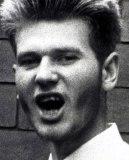
Anthony Arkwright
Mass murderer Thomas Hamilton
Mass murderer · United Kingdom · 1996
Thomas Hamilton committed suicide by shooting himself on 13 March 1996. · 13 Ma…
17 victims
Thomas Hamilton
Mass murderer · United Kingdom · 1996
Thomas Hamilton committed suicide by shooting himself on 13 March 1996. · 13 Ma…
17 victims
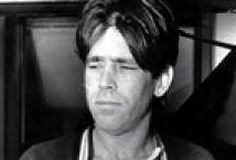 George Stephenson
Mass murderer · United Kingdom · 1986
George Stephenson — defendant · John Daly — co-defendant · George Daly — co-def…
5 victims
George Stephenson
Mass murderer · United Kingdom · 1986
George Stephenson — defendant · John Daly — co-defendant · George Daly — co-def…
5 victims
 Jeremy Bamber
Mass murderer · United Kingdom · 1985
Jeremy Bamber was jailed for life in 1986 for killing five members of his adopt…
5 victims
Jeremy Bamber
Mass murderer · United Kingdom · 1985
Jeremy Bamber was jailed for life in 1986 for killing five members of his adopt…
5 victims
 Derrick Bird
Mass murderer · United Kingdom · 2010
Derrick Bird committed a killing spree on 2 June 2010 in the county of Cumbria,…
12 victims
Derrick Bird
Mass murderer · United Kingdom · 2010
Derrick Bird committed a killing spree on 2 June 2010 in the county of Cumbria,…
12 victims
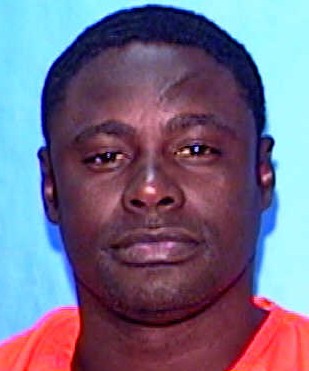 Michael Coleman
Murderer · 1998
Name: Michael Coleman Date of birth: 07/24/61 Jurisdiction: First Judicial Circ…
4 victims
Michael Coleman
Murderer · 1998
Name: Michael Coleman Date of birth: 07/24/61 Jurisdiction: First Judicial Circ…
4 victims
 Jaturun Siripongs
Murderer · USA · 1981
Jaturun Siripongs was a native of Thailand and was known as “Jay” to friends an…
2 victims
Jaturun Siripongs
Murderer · USA · 1981
Jaturun Siripongs was a native of Thailand and was known as “Jay” to friends an…
2 victims
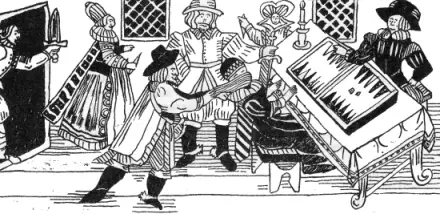 Alice Arden
Murderer · United Kingdom · 1551
Alice Arden (1516–1551) was the daughter of John Brigantine and Alice Squire. S…
1 victim
Alice Arden
Murderer · United Kingdom · 1551
Alice Arden (1516–1551) was the daughter of John Brigantine and Alice Squire. S…
1 victim
 Crossan Hoover
Homicide · USA · 1982
Crossan David Hoover was a seventeen-year-old employee of Mark Richards and And…
1 victim
Crossan Hoover
Homicide · USA · 1982
Crossan David Hoover was a seventeen-year-old employee of Mark Richards and And…
1 victim
 Pamela Moss
Murderer · USA · 1996
Pamela Moss was convicted in connection with the March 13, 2012 murder of Doug…
2 victims
Pamela Moss
Murderer · USA · 1996
Pamela Moss was convicted in connection with the March 13, 2012 murder of Doug…
2 victims
- Gender
- male
- Country
- United Kingdom
- Location
- Wath & Mexborough, South Yorkshire, England, United Kingdom
- Date of birth
- 1968
- Age at first offence
- 20
- Characteristics
- torture, dismemberment, incest, alcohol, drugs, to collect insurance money
- Victim profile
- His 68-year-old grandfather Stasys Puidokas and neighbors Raymond Ford, 46, and Marcus Law, 26 / Suspected of killing his grandfather's elderly housekeeper Elsa Konradaite, 73
- Method of murder
- Stabbing with knife
- Date(s) of murder
- August 26-29, 1988
- Years active
- 1988
- Date of arrest
- August 29, 1988
- Status
-
Life imprisonment
Sentenced to life imprisonment; recommendation that he serve at least 25 years; whole life tariff imposed and upheld on appeal.
Case record: Anthony Arkwright
Background
Anthony Arkwright lived in children’s home and local authority care from a young age, and his childhood was described as “very distorted and disturbed”. He was known to police as a petty criminal, and he served 30 month youth custody sentences for burglary and disorder. He was frequently at odds with neighbours, and he had also served a 6 month jail term.
Arkwright idolised Peter Sutcliffe and Jack The Ripper. He used to boast to whoever would listen that one day he would emulate their crimes and become as infamous as them.
Arkwright was known to have several spells in children’s homes and care from a very early age. He drifted into criminality and, by the age of 21, he was described as well known to police as a prolific petty criminal. He was described as a violent bully and a habitual burglar, with spells in Borstal, young offenders institutions, and ultimately prison. During his time in custody, he used to read about serial killers in prison libraries. He was expelled from school after a dysfunctional childhood.
When he was released from his latest incarceration, Arkwright lived in a council flat on Denman Road in the town of Wath, South Yorkshire, where he had been born and raised. He built a series of dens around the area. He arming himself with a hunting knife spent hours sat in these hideouts fantasising about people he wanted to hurt or kill.
He did work periodically. In 1988 he worked in a scrapyard in Mexborough.
Arkwright later claimed or believed that his maternal grandfather was actually his father, and that he was the product of an incestuous relationship between his grandfather and his mother.
The offence
Killings in August 1988
On Friday 26 August 1988 at 4:30pm, after being sacked from his job for bad attendance and a bad attitude, Arkwright went straight to find his grandfather at Ruskin Drive, Mexborough. His motive was described as being incorrect belief that his grandfather was his father and that he had been born from an incestuous relationship between his grandfather and his mother.
Arkwright attacked his 68-year-old Lithuanian-born grandfather, Stasys Puidokas, while he tended to his allotment at Ruskin Drive, Mexborough. Arkwright stabbed him in the neck, severing an artery and rendering the old man almost instantly unconscious. Arkwright then attacked him with an axe and a lump hammer before locking the body in a shed.
That night, Arkwright visited several pubs in the area, including with neighbours, and was described as dropping hints about his crime and behaving oddly even for him. Neighbours later reported that he behaved in a very odd way.
On Saturday 27 August 1988 at 3am, Arkwright returned to Wath and entered the flat of his neighbour, 45-year-old ex-teacher Raymond Ford. Arkwright was naked and wore a “Prince of Darkness” devil-mask covering his face. Arkwright stabbed Mr Ford 250 times, plunging his knife into every part of his body. He gutted and disembowelled the corpse with a surgical precision, which criminologists later said was remarkably similar to the technique used by Jack the Ripper.
Mr Ford’s body was discovered three days later at his Wath home. His entrails were draped around the room. Some of his internal organs were scattered around the corridor and hallway.
Four hours later, Arkwright was arrested on suspicion of burglary at Mr Ford’s house, kept in custody, and then released to appear at court the following weekend. At that stage, police were said to have had no ideas that Arkwright had become a murderer only hours before.
On Sunday 28 August 1988, Marcus Law died after a frenzied attack at his Denman Road, Wath home after an argument. Law was described as being in a wheelchair after a motorbike accident and completely defenceless against Arkwright. Arkwright stabbed him over 70 times, and disembowelment was attempted. Arkwright left him with cigarettes stuffed in his mouth and ears, gouged out his eyes, and placed cigarettes in the sockets. Arkwright later said it was revenge for cigarettes Lee had scrounged.
After a routine visit, Marcus Law’s mother discovered the scene and police were called. Police quickly realised that Arkwright was a suspect, and a few hours later he was picked up and arrested on suspicion of murder. He denied the murder.
Arkwright was also suspected of killing his grandfather’s elderly housekeeper, Elsa Konradaite, but the case never reached court and was ordered to lie on his file.
Quotes and scene descriptions
Anthony Arkwright told a barman that evening: “It’s been murder on the allotment today”.
Arkwright told Mrs Law: “Sorry about poor old Marcus – he’s killed himself”.
Anthony Arkwright told detectives: “I can read the future from these cards. This is the master card – it means you have four bodies and a madman on the loose. I can see Marcus Law, but the others are indescribable. They are just too horrible to describe”.
When PC David Winter discovered the remains of Raymond Ford, the following statement was included: “All the bits and pieces in the hallway, that were his internal organs. He’d removed practically every internal organ in his body”.
Investigation and arrest
Police officers at the scene of the Raymond Ford murder described it as “the most horrific crime scene they had ever encountered”.
At 8:00am on Saturday 27 August 1988, police knocked on Arkwright’s door and arrested him on suspicion of the burglary earlier in the week at Mr Ford’s house. He was detained for a few hours before being released on bail to attend court the next week.
Police held Arkwright in custody while they set about making enquiries in the Denham Road area. They went to speak to Raymond Ford because Arkwright was due to appear in court on the burglary charge.
PC David Winter discovered deep bloodstaining to the entirety of the flat and, in the bedroom, the remains of Raymond Ford.
Six days after Stasys and Elsa were murdered, their bodies were discovered.
Arkwright soon confessed to the murders of his grandfather, Raymond Ford, and Marcus Law. He stopped short of confessing to the murder of Elsa but stated that he had stood over her body with the axe in his hand.
Arkwright was charged and was incarcerated at Hull prison whilst awaiting trial.
Arkwright “invented” a fifth victim, leading police to search a nearby lake and drainage ditch.
Arkwright staged “dirty protests”, smearing his cell walls with excrement, while awaiting trial.
When Arkwright was transferred to Rampton Secure Hospital in Merseyside, detailed examinations found that his claim to be insane was a ruse and that he was fit to plead.
A psychiatrist at Rampton Secure Hospital was quoted: “He is the sanest man in the building”.
Trial
In July 1989, Anthony Arkwright came to trial for the murders he had committed.
After an adjournment requested by his legal representation, Arkwright changed his not guilty plea to guilty of the murders of his grandfather, Raymond Ford, and Marcus Law. He maintained a plea of not guilty to the murder of Elsa Konradite. Mr Justice Boreham ordered that charge to be left on file.
During the trial, Arkwright’s defence portrayed a picture of a young man suffering from severe personality damage and disorder.
Sentencing
Anthony Arkwright was sentenced to life imprisonment, with a recommendation that he serve at least 25 years.
Appeals
In 1990, the then Home Secretary Jack Straw declared the term as too lenient and increased the term to that of a whole life tariff.
On 19 February 2014, Arkwright, along with killer Arthur Hutchinson, appealed against the whole life tariff. Three high court judges rejected the appeal, saying the government’s “Whole Life tariff” was completely lawful.
Outcome
Anthony Arkwright remained subject to a whole life tariff and was on the Home Office list of prisoners, never to be released.
Aftermath and later coverage
A retired police officer who worked on the inquiry into Arkwright’s crimes was quoted supporting the sentence Arkwright received: “From the day we brought him in for the Marcus Law murder to the day he was jailed, Arkwright seemed genuinely proud of what he had done. He expected everyone to revere him, to be fascinated by him. He was a messed up kid, desperate for attention. In his defected mind he chose murder to get the attention he craved. He’s the most dangerous person I ever met in 25 years on the job – he should never get out” – (Ret’d) Det Insp Bob Meek – South Yorkshire Police.
On a list of notorious convicts who would die in prison, Arkwright was described as a murderer who killed at least three people in South Yorkshire, and as being named among 35 killers that judges agreed must never be freed from jail because of the seriousness of their crimes.
Arkwright was described as aged 40 at that time, and as having been jailed for the savage murder of his grandfather and two neighbours in Wath and Mexborough 20 years earlier. The killings were described as occurring in August 1988, and involving his 68-year-old grandfather Stasys Puidokas and neighbours Raymond Ford and Marcus Law.
Arkwright was also described as being suspected of killing his grandfather’s elderly housekeeper Elsa Konradaite, aged 73, but the case never reached court and was ordered to lie on his file.
Timeline
- 26 August 1988 — Arkwright was sacked from his job in a Mexborough scrapyard; he went to his grandfather’s home in Ruskin Drive, Mexborough, and attacked Stasys Puidokas.
- 27 August 1988 — Arkwright entered Raymond Ford’s flat in Wath at 3am, stabbed him more than 250 times, and police later arrested Arkwright at 8:00am on suspicion of burglary earlier in the week.
- 28 August 1988 — Marcus Law died after being attacked in his Denman Road home following an argument.
- 29 August 1988 — Marcus Law’s mother discovered the scene; police were called and Arkwright was arrested on suspicion of the murder of Marcus Law.
- July 1989 — Arkwright came to trial; he changed his plea to guilty of the murders of his grandfather, Raymond Ford, and Marcus Law, and was sentenced to life imprisonment with a recommendation that he serve at least 25 years.
- 1990 — Home Secretary Jack Straw reviewed the term and increased it to a whole life tariff.
- 19 February 2014 — Arkwright and Arthur Hutchinson appealed against the whole life tariff; the appeal was rejected by three high court judges.
Other details
Arkwright’s sentencing was described as “a whole life tariff”. He was described as never being released, and as being on the Home Office list of prisoners.
A retired detective inspector Bob Meek was quoted describing the scene of the Raymond Ford murder: “It was the most brutal act of slaughter I have ever seen. It is all the more chilling when you realise that he must have spent at least half an hour inflicting those terrible wounds”.
In additional descriptions, it was stated that Arkwright stole his grandfather’s life savings of “£3000” and smashed Elsa Konradite’s skull with an axe, leaving her dead in the kitchen.
Additional descriptions included that Arkwright broke into Mr Ford’s home through a broken window that Arkwright had broken previously, and that Mr Ford had named Arkwright as the likely perpetrator. Mr Ford’s heavy drinking and his habits were described, including that he was rarely venturing out except to buy more cheap cider and The Guardian.
In additional descriptions, police officers described Arkwright’s actions as performed with sadistic and deliberate conduct, and it was stated that Arkwright showered the blood off himself and went to bed after mutilating Raymond Ford.
It was stated that Arkwright had a pack of playing cards and selected the “four of hearts” when speaking to detectives.
In later aftermath, it was stated that 14 years after Marcus Law’s murder, Marcus Law’s father Tony committed suicide by gassing himself in his car, and he had never got over his son’s death.

Spotted an error, or have more information about this case?