
Zhang Yunliang
Mass murderer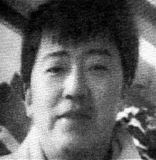 Zhang Pilin
Mass murderer · China · 2002
Zhang Pilin (张丕林) died in the plane crash of China Northern Airlines Flight 613…
111 victims
Zhang Pilin
Mass murderer · China · 2002
Zhang Pilin (张丕林) died in the plane crash of China Northern Airlines Flight 613…
111 victims
 Jin Ruchao
Mass murderer · China · 2001
Jin Ruchao was blamed and arrested for planning and carrying out the Shijiazhua…
108 victims
Jin Ruchao
Mass murderer · China · 2001
Jin Ruchao was blamed and arrested for planning and carrying out the Shijiazhua…
108 victims
 Chen Shuizong
Mass murderer · China · 2013
Chen Shuizong (simplified Chinese: 陈水总; traditional Chinese: 陳水總; pinyin: Chén…
46 victims
Chen Shuizong
Mass murderer · China · 2013
Chen Shuizong (simplified Chinese: 陈水总; traditional Chinese: 陳水總; pinyin: Chén…
46 victims
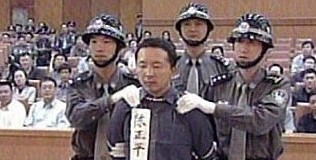 Cheng Zhengping
Mass murderer · China · 2002
Cheng Zhengping was executed on October 13, 2002. Cheng Zhengping confessed to…
42 victims
Cheng Zhengping
Mass murderer · China · 2002
Cheng Zhengping was executed on October 13, 2002. Cheng Zhengping confessed to…
42 victims
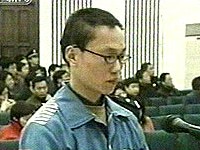 Chen Fuzhao
Mass murderer · China · 2003
Chen Fuzhao was a 29-year-old Falun Gong practitioner. He was described as an a…
16 victims
Chen Fuzhao
Mass murderer · China · 2003
Chen Fuzhao was a 29-year-old Falun Gong practitioner. He was described as an a…
16 victims
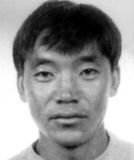 Guo Zhongmin
Mass murderer · China · 2003
Guo Zhongmin was a Chinese mass murderer. He killed 13 people in Yangxiaoxiang,…
13 victims
Guo Zhongmin
Mass murderer · China · 2003
Guo Zhongmin was a Chinese mass murderer. He killed 13 people in Yangxiaoxiang,…
13 victims
 Rebecca Olenchock
Murderer · USA · 2010
Rebecca Olenchock was found guilty but mentally ill and was sentenced to life i…
1 victim
Rebecca Olenchock
Murderer · USA · 2010
Rebecca Olenchock was found guilty but mentally ill and was sentenced to life i…
1 victim
 Charles Carl Roberts
Mass murderer · USA · 2006
Charles Carl Roberts IV was an American milk truck driver who was involved in t…
5 victims
Charles Carl Roberts
Mass murderer · USA · 2006
Charles Carl Roberts IV was an American milk truck driver who was involved in t…
5 victims
 Jonathon Edington
Murderer · USA · 2006
Jonathon Edington (born October 29, 1976) was a patent lawyer in Fairfield, Con…
1 victim
Jonathon Edington
Murderer · USA · 2006
Jonathon Edington (born October 29, 1976) was a patent lawyer in Fairfield, Con…
1 victim
 David Westerfield
Murderer · USA · 2002
David Westerfield was sentenced to death on August 21, 2002. David Westerfield…
1 victim
David Westerfield
Murderer · USA · 2002
David Westerfield was sentenced to death on August 21, 2002. David Westerfield…
1 victim
 Leon Davis Jr.
Murderer · USA · 2007
Leon Davis Jr. was sentenced to death on April 29, 2011, for the execution-styl…
5 victims
Leon Davis Jr.
Murderer · USA · 2007
Leon Davis Jr. was sentenced to death on April 29, 2011, for the execution-styl…
5 victims
- Gender
- male
- Country
- China
- Location
- Chengdu, Sichuan Province, China
- Date of birth
- November 26, 1948
- Age at first offence
- 61
- Characteristics
- arson, spree killer, the bodies were never found, abuse
- Victim profile
- Bus passengers
- Method of murder
- Fire (gasoline)
- Date(s) of murder
- June 5, 2009
- Years active
- 2009
- Date of arrest
- —
- Status
-
Died in custody
Died in the fire on 5 June 2009
Name
Zhang Yunliang
Status
Zhang Yunliang died in the fire on 5 June 2009.
Background
The Chengdu bus fire occurred as a mass murder suicide attack on a bus in Chengdu, China, on 5 June 2009. It resulted in 27 deaths and 76 injuries. The attacker was an unemployed man in his sixties named Zhang Yunliang, native of Suzhou, Jiangsu, who was also killed in the fire. Zhang reportedly threatened suicide because his family refused to continue supporting him financially. Zhang had been addicted to gambling before arriving in Chengdu in 2006, and was dependent on the financial assistance from his daughter. The night before the arson, Zhang told his daughter he wanted to "die differently".
The offence
The fire was an arson attack on a bus. The diesel bus was engulfed in flames at around 8:00 am local time. Casualties were aggravated by the rear door not opening, and by firefighters and other emergency service crews being blocked 1 km from the scene by bad traffic. Pedestrians outside the bus rushed to help break the windows to allow passengers to escape. Remains of 3 emergency hammers were found at the scene. The bus was built in February 2005 and had logged 270,000 km at the time of the incident. Gasoline carried on board by a passenger was soon blamed, and authorities did not rule out arson as the cause as the investigation proceeded. Several passengers, including the bus driver, reported smelling gasoline, and traces of gasoline were found in the bus, which did not use gasoline as fuel. Following the government probe, investigators stated that gasoline brought on board by a passenger did indeed cause the fire, but they could not immediately determine if the fire was a deliberate act of arson or an accident. The initial probe did rule out an explosion as the cause of the fire. Including those who died in hospital following the incident, the total death toll was 27. The fire affected 101 families.
Investigation
The exact cause of the fire was not immediately known by the Chinese government. The diesel engines were intact, and authorities quickly determined that a mechanical glitch did not cause the fire. Authorities initially blamed gasoline carried on board by a passenger and did not rule out arson as the cause while the investigation proceeded. Investigators later stated that the gasoline brought on board by a passenger did indeed cause the fire, but they could not immediately determine whether it was a deliberate act of arson or an accident. The initial probe ruled out an explosion as the cause.
Aftermath
Li Shuguang, the chairman of the bus company, resigned, saying he hoped his resignation would "arouse society's attention to the safety of public transport." A bus company in Chengdu promised to financially reward passengers who report others who bring flammable liquids or other prohibited items onboard. Chinese cities such as Beijing, Shenyang, and Guangzhou reacted by reviewing bus safety measures. The coastal city of Haikou reacted by outfitting public buses with 400 emergency hammers, but over half of the hammers were stolen from the buses within three days. As local hospitals were running low on blood needed for transfusions to help the victims, over 60 Chengdu citizens and 55 soldiers volunteered for blood donations after an urgent call from hospital authorities. In the days after the Chengdu bus fire, buses also caught fire in Shenzhen on 13 June, in Wuhai on 15 June and in Zhoushan on 16 June. There was no evidence initially of any terrorist connection. No passengers were killed in the three other bus fires. PRC national law does not require buses to maintain hammers for the purpose of breaking the windows in an emergency.


Spotted an error, or have more information about this case?