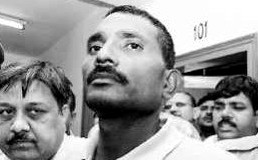
Chandrakant Jha
Serial killer Jaishankar
Serial killer · India · 2006
Jaishankar was also known as M Shankar and M Sankar. He was also described as a…
21 victims
Jaishankar
Serial killer · India · 2006
Jaishankar was also known as M Shankar and M Sankar. He was also described as a…
21 victims
 Devendra Sharma
Serial killer · India · 2002
Devendra Sharma was an Indian doctor of ayurvedic medicine practising in Aligar…
20 victims
Devendra Sharma
Serial killer · India · 2002
Devendra Sharma was an Indian doctor of ayurvedic medicine practising in Aligar…
20 victims
 Mohan Kumar
Serial killer · India · 2005
Mohan Kumar was a former primary school teacher who was convicted in a third ca…
20 victims
Mohan Kumar
Serial killer · India · 2005
Mohan Kumar was a former primary school teacher who was convicted in a third ca…
20 victims
 Surender Koli
Serial killer · India · 2005
Surender Koli was the domestic help of businessman Moninder Singh Pandher in th…
19 victims
Surender Koli
Serial killer · India · 2005
Surender Koli was the domestic help of businessman Moninder Singh Pandher in th…
19 victims
 Mahanand Naik
Serial killer · India · 1994
Mahanand Naik was a three-wheel rickshaw driver from Ponda in the Indian state…
18 victims
Mahanand Naik
Serial killer · India · 1994
Mahanand Naik was a three-wheel rickshaw driver from Ponda in the Indian state…
18 victims
 Darbara Singh
Serial killer · India · 2004
Darbara Singh was sentenced to death on January 7, 2008. His death sentence was…
17 victims
Darbara Singh
Serial killer · India · 2004
Darbara Singh was sentenced to death on January 7, 2008. His death sentence was…
17 victims
 Carlette Parker
Murderer · USA · 1998
Carlette Elizabeth Parker was indicted in connection with the death of Alice Co…
1 victim
Carlette Parker
Murderer · USA · 1998
Carlette Elizabeth Parker was indicted in connection with the death of Alice Co…
1 victim
 Yuan Baojing
Murderer · China · 2003
Yuan Baojing (simplified Chinese: 袁宝璟; traditional Chinese: 袁寶璟) (1966 – March…
1 victim
Yuan Baojing
Murderer · China · 2003
Yuan Baojing (simplified Chinese: 袁宝璟; traditional Chinese: 袁寶璟) (1966 – March…
1 victim
 Jonathon Edington
Murderer · USA · 2006
Jonathon Edington (born October 29, 1976) was a patent lawyer in Fairfield, Con…
1 victim
Jonathon Edington
Murderer · USA · 2006
Jonathon Edington (born October 29, 1976) was a patent lawyer in Fairfield, Con…
1 victim
 Shoko Asahara
Murderer · Japan · 1995
Shoko Asahara was the founder of Japan's controversial Buddhist religious group…
12 victims
Shoko Asahara
Murderer · Japan · 1995
Shoko Asahara was the founder of Japan's controversial Buddhist religious group…
12 victims
 Earl Richmond
Murderer · USA · 1991
Earl Richmond was convicted of first-degree rape and three counts of first-degr…
4 victims
Earl Richmond
Murderer · USA · 1991
Earl Richmond was convicted of first-degree rape and three counts of first-degr…
4 victims
 Christer Pettersson
Murderer · Sweden · 1970
Christer Pettersson was a Swedish criminal and a suspect in the assassination o…
2 victims
Christer Pettersson
Murderer · Sweden · 1970
Christer Pettersson was a Swedish criminal and a suspect in the assassination o…
2 victims
- Gender
- male
- Country
- India
- Location
- New Delhi, India
- Date of birth
- 1967
- Age at first offence
- 31
- Characteristics
- beheading, dismemberment, serial rapist, torture
- Victim profile
- Men (his employees)
- Method of murder
- Strangulation with a nan chaku (a chain attached to two wooden handles used by martial arts practitioners)
- Date(s) of murder
- 1998 / 2003 - 2007
- Years active
- 1998–2007
- Date of arrest
- May 20, 2007
- Status
-
Sentenced to death
Sentenced to death (gallows ordered) in February 2013
Background
Chandrakant Jha functioned as a serial killer. He was said to help young men—usually migrants from Uttar Pradesh and Bihar—get petty jobs, provide them meals, and pamper them “like his children”; he also kept them at his house in JJ Colony, Hyderpur. Police alleged that he killed his victims at the slightest provocation, and then scattered their mutilated limbs in different parts of Delhi.
Jha acted on a perceived revenge motive against the Delhi Police for harassment he faced. A Delhi court also took serious note of Jha’s allegation against the police that he committed the murders to avenge the police harassment he faced.
Jha threatened and challenged the police by letters left with the dismembered body parts found outside Tihar Jail, and he dared police to catch him. He also made PCR calls in two cases to inform police about bodies and wrote letters after the murders, threatening that he would send “similar gifts” (decapitating bodies) after every 15 days.
The offence
The killings followed a pattern that included beheading and chopping dismembered body parts. The court said Jha “killed the victims by decapitating their heads and, thereafter, chopped the body and threw the decapitated bodies of these young men outside the Tihar Central Jail and scattered their dismembered body parts at various places around Delhi.” In Jha’s modus operandi, police said he would begin a “death ritual” mostly around 8 pm by tying a victim’s hands on the pretext of punishing him. Police described him as strangling victims using a nunchaku.
After killing his victims, he preferred to have dinner in the same room where the victims lay lifeless. In his own words, he was “a specialist in chopping bodies.”
Police said he packed off body parts in a plastic bag. He then loaded body parts onto a scooter engine-fitted cycle rickshaw and drove to dump torsos near Tihar. Police also stated that Jha dumped head and limbs in the Yamuna in some cases.
In the case of Upender, police said Jha chopped “the head, hands, legs and private parts of Upender, who was residing with him, leading to his death.” Police said Jha then wrapped the beheaded body of Upender in a gunny bag and dumped it outside gate number 3 of Central Jail, Tihar. Police further alleged that Jha threw the head and other body parts at various places.
A court observed that Jha made PCR calls in two cases to inform police about the bodies and that, in a three-page letter found with Dalip’s body, Jha threatened to “send similar gifts” to police every 15 days.
Victims and case links mentioned
Jha was held guilty of murders involving Dalip, Upender Singh (also referred to as Upender), and Amit.
Police records referenced 14 FIRs, including seven murder cases, lodged against Jha.
Jha was also named as an accused in at least four other murder cases and was said to have been involved in at least six more murders after his first recorded murder.
Investigation
Police said they had been closing in on Jha and had short-listed him as one of the four accused. They said they had photographs of all four accused and had zeroed in on Jha before the sixth murder.
A key lead came from a letter Jha sent to police after leaving Amit’s torso in front of Tihar. In the letter, Jha blamed former Additional Deputy Commissioner Manish Agarwal and Head Constable Balbir Singh for forcing him to take to the killing spree. The letter also admitted that he had committed a murder in November 2003 and dumped the body near Tihar. Police said this helped them conclude he was already out of Tihar by November 2003.
Police said Jha’s letter blamed Agarwal for trapping him in a false case. Police concluded that the killer was involved in a criminal case in North West district in 2003. Another clue police said came from the letter was that he was externed due to these cases.
Another lead police said came from Jha calling the Hari Nagar SHO immediately after dumping Amit’s body in front of Tihar on October 20. Police described the phone conversation as lasting seven minutes and said it produced more clues.
Police also said Jha’s next mistake was his ability to be identified through handwriting comparisons between notes found with bodies and handwritten statements of internees/externees.
Police said they identified Jha’s hideout by comparing handwriting on the note found with the bodies and handwritten statement of externees, and then by combining other clues including how he drove a scooter-fitted rickshaw.
Police said they knew at least four hideouts: Yamuna Vihar, Alipur, Badola village, and Haidarpur. Police said they found him in Alipur while he was eating halwa with his children.
Police also stated that divers were sent to the Yamuna to look for the body parts as Jha claimed he severed the parts in the river.
Police said they recovered mobile numbers of Upender and Dilip, which they said were the sixth and seventh victims of Chandrakant Jha.
Arrest
Police arrested Jha after his final murder in 2007 and described that he confessed to police about murders.
Police said Jha was arrested from his hideout in Hyderpur, near Shalimar Bagh, on Sunday. Police described him as being in police custody for seven days.
In May 2007 context, police said Jha was arrested by Delhi Police on May 25, 2007 in Mianwali Nagar.
In connection with an earlier arrest, police said he was arrested in 1998 in connection with a murder case but was acquitted for want of evidence.
Trial
Additional Sessions Judge Kamini Lau handled the sentencing proceedings.
The court held that Jha “followed a definite pattern” in the multiple murders, where he “killed the victims by decapitating their heads and, thereafter, chopped the body and threw the decapitated bodies of these young men outside the Tihar Central Jail and scattered their dismembered body parts at various places around Delhi.”
Dalip
Dalip was described as 25 years old. In the sentencing for Dalip, the court awarded life imprisonment to Chandrakant Jha, making clear that he would have to spend the rest of his life in jail.
The court said the post-mortem report had “confirmed” that “death in this case was a result of decapitation” and not a case where the head was cut off after death.
Dalip’s dismembered torso was left outside Gate No.1 of Tihar Jail on May 18, 2007. His arms and genitals were found outside the Tis Hazari court in a carton the next morning.
Police received a phone call informing them about the body outside Tihar; it was later proved to have been made by Jha.
A court pulled up police for not being able to identify Dalip and failing to trace his family. No formal identification was done of the body and court records named him “Dalip” only because Jha identified him as such. The police were directed to preserve DNA evidence from the body and “ensure that coordinated steps are taken along with counterparts in Bihar” to trace the family of the victim.
Noting that the “intent of the convict was to cause public outrage,” the court observed that Jha made PCR calls in two cases to inform police about the bodies and also wrote letters daring the police to catch him. In a three-page letter found with Dalip’s body, Jha threatened to “send similar gifts” to the police every 15 days.
Jha pleaded for leniency, saying he had five minor daughters and that the oldest daughter was about 14 years old. He said his family was completely dependent on him. The court said he was a “mission-oriented and task-oriented serial killer whose only motive/mission is to expose, mock and challenge the police.”
Upender Singh
Upender Singh was described as 20 years old, and he was referred to as residing with Jha in Haiderpur. A court sentencing for Upender involved a death penalty.
The court held Upender had been decapitated in an “extremely brutal, diabolical, revolting and dastardly manner.” The court held that the case fell within the definition of “rarest of the rare” because it was not only “in cold blood and without any immediate provocation,” but there was also the “probability that the convict would again commit a similar act of violence and constitute a continuing threat to the society.”
A resident of Maharajganj in Uttar Pradesh, Upender worked with Jha in the Azadpur Sabzi Mandi and lived with him in Haiderpur. Police and court proceedings described that Upender’s headless and limbless body was found packed in a carton outside Gate 3 of Tihar Jail, with forensic teams lifting Jha’s fingerprints and tying him to the crime.
Court proceedings described that Jha threw one arm outside Tis Hazari court. The other arm and the genitals were packed in two cartons and left by Jha at a fruit market in Loni, East Delhi. One of Upender’s legs was found near Ram Mandir in Pitampura. His head was never found and he was identified through a DNA match with his parents.
Upender’s relative Pankaj Rathore testified that when he had asked Jha about Upender over the phone, Jha told him that Upender had been “sent where he deserved.”
Amit
Amit was described as one of the men whose murder was part of three convictions. Specific age details for Amit were not stated in the supplied text.
The sentencing proceedings referenced that, for the second of the three murders held guilty, Jha was sentenced to death on Tuesday, and for the first of the three murders he was sentenced to life imprisonment earlier.
The court also took serious note of Jha’s allegation against the police.
In the account describing investigation and leads, Jha’s letter was after leaving Amit’s torso in front of Tihar last October 20, and police said the letter blamed specific police officials.
Court characterisation and quotes in sentencing
The court said Jha “followed a definite pattern.” It also stated that Jha did “not possess basic humanness and lacked the psyche or mind-set, which may be amenable for any reform.”
In the sentencing for Upender, the judge told Jha:
"He be hanged by the neck till he is dead"
and also told him: "Aapko Sazaae maut sunayi gayi hai ise mukadame me (You have been awarded death penalty in this case),"
The court said there was a probability Jha would again commit similar violence and constitute a continuing threat to society.
The court also described the manner of killing as “extremely brutal, diabolical, revolting and dastardly manner,” and it said Jha was beyond reform.
The court said that certain categories of perpetrators of crime who, if not removed from circulation, would destroy society.
The court said the “intent of the convict was to cause public outrage” and that Jha made PCR calls in two cases and wrote letters daring the police to catch him. The court characterised the murder of Upender as in cold blood without immediate provocation, and said the motive was to avenge wrongs done to him by the police system in falsely implicating him.
The court also said Jha’s threatening the police that he would “send such gifts” again reflected “lack of remorse” and intention to “repeat his criminal act.”
The court noted that Jha threatened and challenged the police by writing several letters to them to nab him and that he would send “similar gifts” after every 15 days.
The court imposed a fine of Rs 20,000 on Jha.
Sentencing
Jha was sentenced in three murder cases referred to in the supplied text.
- Jha received life imprisonment for the murder of Dalip; the court said he would have to spend the rest of his life in jail.
- Jha received the death penalty for the murder of Upender Singh; the court ordered the gallows.
- Separate sentences were to be pronounced for the remaining murder case, including a reference to a murder of Anil in 2006.
The supplied text also indicated that, in another sentencing on the timeline of the same court, he was sentenced to life imprisonment till his death in another case of murder in which he chopped off the head and limbs of the victim and dumped the body near Tihar Jail.
Outcome
A Delhi court ordered the gallows for Chandrakant Jha in two cases. The court ordered the gallows for him last week in two cases, and in February 2013 it ordered the death penalty in the Upender case. The court pointed out the necessity for police reforms.
After the brutality with which the crimes were committed, Additional Sessions Judge Kamini Lau refused to show any leniency and said he cannot be reformed.
The police were directed by the court to preserve DNA evidence and coordinate with counterparts in Bihar to trace the victim’s family in Dalip’s case.
Aftermath
Police alleged that Jha confessed after being arrested and that he admitted to perfecting the art of cutting bodies leading to minimum blood oozing out after mutilation.
The proceedings described Jha as seeking the copy of judgment in Hindi.
The sentencing narratives included references to court observations about public outrage, police reforms, and that Jha was a menace to society.
Other details
Police case history and charges referenced
Police records cited 14 FIRs including seven murder cases were lodged against Jha.
Police said three chargesheets had been filed in as many murder cases invoking Sections 302 (murder) and 201 (destruction of evidence) of the IPC.
In connection with later arrests, police said the police accused Jha of murder of one Upendra Rathore (22) after an altercation regarding a mobile phone. It stated that Rathore’s torso was recovered from a carton outside the Tihar Jail on April 25, and that other parts were recovered from Loni police station area under Loni police station in Ghaziabad district on April 29 and later discovered from Pitampura.
In the description of one release in an earlier case, Metropolitan Magistrate Manish Gupta ordered the release of Jha in the case relating to the murder of one Umesh. The court said there was no sufficient evidence against the accused and that he may be released. It cited that there was no cogent evidence except his alleged disclosure statement, and that no recovery could be effected even after two days’ police remand.
Police said Jha had been in jail until 2002 and was acquitted for want of evidence in his first murder case.
Related persons and investigative context mentioned
Rajesh Kumar was described as Joint Commissioner of Police who spoke about the killings and police closing in.
P K Verma was described as Senior Public Prosecutor and Public Prosecutor in the sentencing narratives.
Amicus curiae Deepak Sharma appeared for Jha and sought a lenient view based on asthma and impacts on Jha’s wife and five minor daughters. The court turned down the plea.
Ombir Singh was described as Investigating Officer who said there was no cogent evidence against Jha except his alleged disclosure statement in the release case.
Manish Gupta was described as Metropolitan Magistrate in the release case.
Metropolitan Magistrate Manish Gupta’s release order in the Umesh case followed a finding of no sufficient evidence.
Locations and related objects mentioned
JJ Colony, Hyderpur; Haiderpur; Alipur; Yamuna; Tihar Jail (including Gate 1 and Gate 3 and “Central Jail, Tihar”); Tis Hazari court; Loni, East Delhi; fruit market in Loni; Ram Mandir in Pitampura; Sulabh Sauchalya in Mongol Puri; Kishanganj nullah; Adarsh Nagar; Hari Nagar Police Station; Mianwali Nagar; Yamuna Vihar; Badola village; Maharajganj in Uttar Pradesh; Azadpur Sabzi Mandi; Subzi Mandi.
Earlier alleged victim chronology mentioned
Jha’s first recorded murder charge was described as being in 1998. The text also listed a sequence of murders alleged by police with victim names including Mangal, alias Aurangzeb; Shekhar; Umesh; Guddu; Amit; Upender; and Dilip, with some dates and disposal locations described (including Adarsh Nagar, Alipur, near gate number 1 of Tihar Jail, near Sulabh Sauchalya in Mongol Puri, torso thrown in front of Tihar Jail, and bodies outside Tihar on May 18).
The text also described that in May 2007 Dilip was killed and his body was found outside Tihar on May 18.
Other personal details mentioned
Jha was described as 46-year-old in the sentencing narratives. He was described as from Madhepura in Bihar and also described as a native of Madhepura in Bihar.
The text described that Jha worked as a fruit-seller and earlier worked in Subzi Mandi. It also described that he had studied up to Class X and came to Delhi in 1986 to work as a labourer in Subzi Mandi.
The text described that he married twice, abandoned his first wife, and within a year married Mamta. The couple had five daughters aged between 2 and 10 years in the description of his life story.
The text described that police said he changed residence routinely, living away from family; he was based in Hyderpur while his family lived in Alipur.
The text described that Jha was involved in three cases of burglaries in 1997 and that three Arms Act cases were also registered against him.
The text described that in 1998 he was arrested on his first murder charge and remained in jail till 2002, when the case ended in acquittal.
Police described that he was suspected by police to have been a psychopath and they said he “enjoyed” each of his killings.
The text described that Jha sought copy of judgment in Hindi.


Spotted an error, or have more information about this case?